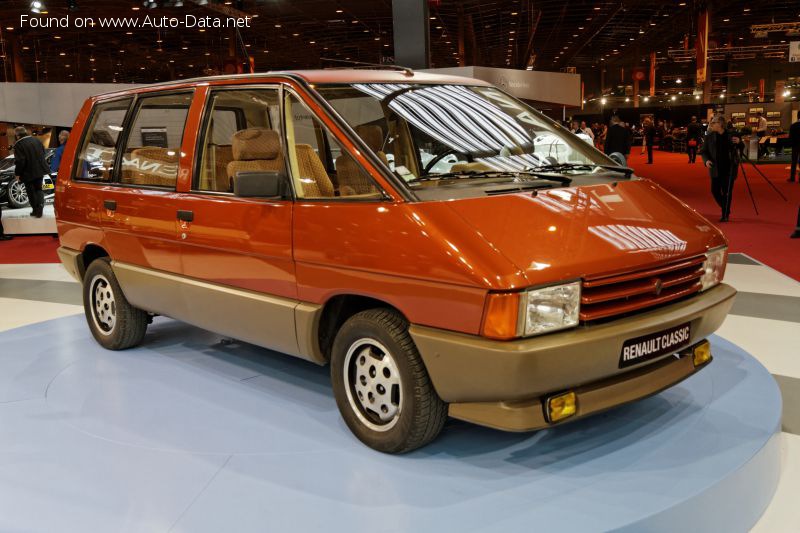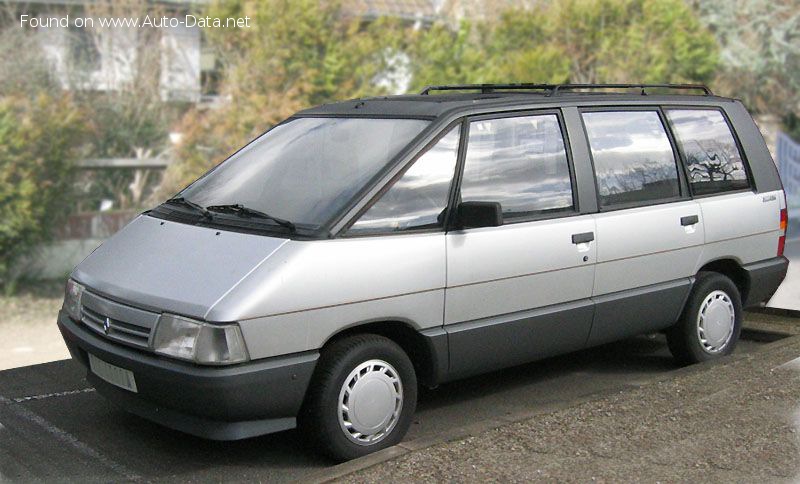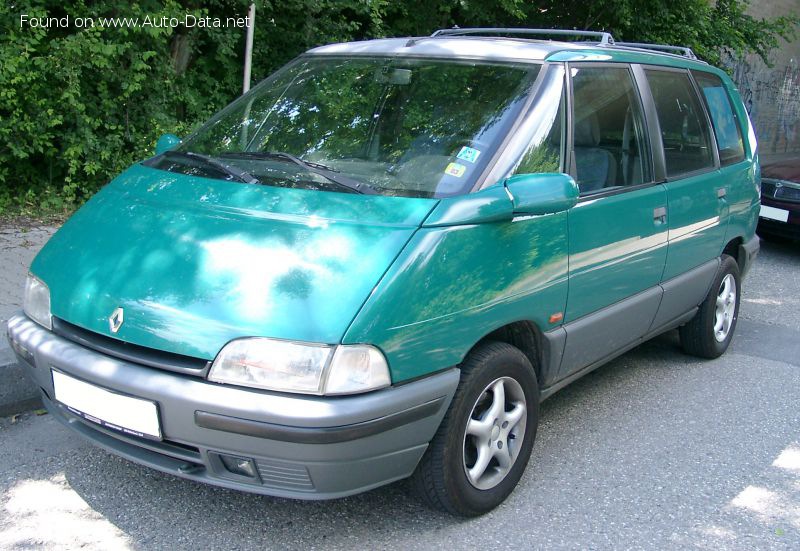
The Renault Espace II (J63) 2.8 V6 (150 Hp) Automatic represents a pivotal moment in the evolution of family transportation in Europe. Launched in 1991, this second-generation Espace continued the groundbreaking legacy of its predecessor, solidifying the multi-purpose vehicle (MPV) or minivan segment as a viable and desirable choice for families across the continent. While never officially sold in the United States, the Espace’s influence on global automotive design and its role in popularizing the one-box family hauler cannot be overstated. This model, produced until 1996, refined the original concept, offering enhanced comfort, improved performance, and a more sophisticated design, particularly with its top-tier V6 engine option.
The Renault Espace II (J63): A European MPV Pioneer
Developed by Matra and sold by Renault, the Espace was renowned for its innovative space utilization, modular interior, and comfortable ride quality. The J63 generation built upon this foundation, presenting a more aerodynamic and visually cohesive design while retaining its core strengths. It was a vehicle designed from the ground up to prioritize passenger comfort and versatility, setting benchmarks for what a family vehicle could offer in terms of adaptability and ease of use. The inclusion of a powerful 2.8-liter V6 engine, coupled with an automatic transmission, provided a level of performance and refinement that elevated the Espace beyond a mere utility vehicle, making it a compelling option for discerning European buyers.
Engine & Performance
At the heart of this variant of the Renault Espace II (J63) was a robust 2.8-liter (2849 cm3 or 173.86 cu. in.) V6 gasoline engine, designated Z7W. This naturally aspirated, longitudinally mounted powerplant delivered a respectable 150 horsepower at 5400 rpm. The power output, translating to 52.7 Hp per liter, provided ample motivation for the Espace, ensuring confident highway cruising and adequate acceleration for a vehicle of its size and purpose.
Torque figures were equally impressive, with the engine producing 225 Nm (165.95 lb-ft) at a relatively low 2500 rpm. This broad torque band was crucial for a minivan, providing excellent low-end grunt for moving a fully loaded vehicle or for relaxed driving in urban environments. The power was channeled to the front wheels via a smooth 4-speed automatic transmission, a popular choice for its convenience and ease of use, particularly in family vehicles. This combination allowed the Espace II V6 to accelerate from 0 to 60 mph in a brisk 10.5 seconds (0-100 km/h in 11.1 seconds) and reach a top speed of 118 mph (190 km/h), making it one of the faster and more capable MPVs of its era.
Fuel efficiency for the 2.8 V6 model was rated at a combined 20.3 US mpg (11.6 l/100 km), which was competitive for a V6-powered vehicle of its size and weight in the early 1990s. The engine featured a multi-port manifold injection system and a compression ratio of 9.5:1, utilizing two valves per cylinder. Its substantial 7-liter engine oil capacity and 10-liter coolant capacity underscored its design for durability and sustained performance.
Design & Features
The Renault Espace II (J63) maintained the revolutionary “one-box” design philosophy pioneered by its predecessor, characterized by a steeply raked windshield that seamlessly blended into the hood line, creating a single, voluminous silhouette. This design was not just aesthetic; it was fundamental to the Espace’s exceptional interior space and practicality. The body type was clearly defined as a Minivan or MPV, offering five doors and seating for up to seven occupants.
Measuring 174.37 inches (4429 mm) in length, 70.67 inches (1795 mm) in width (81.1 inches or 2060 mm including mirrors), and 66.65 inches (1693 mm) in height, the Espace II was a substantial vehicle. Its generous 101.57-inch (2580 mm) wheelbase contributed significantly to interior roominess and ride comfort. The interior was the Espace’s true party trick, offering unmatched modularity. The rear seats could be individually removed, swiveled, or folded, allowing for numerous configurations to prioritize passenger space or cargo volume. With all rear seats removed, the Espace transformed into a cavernous cargo hauler, boasting a maximum trunk space of 105.94 cubic feet (3000 liters), shrinking to a still respectable 8.83 cubic feet (250 liters) with all seven seats in place.
Safety features for the early 1990s included a robust chassis, hydraulic power steering (rack and pinion type), and a capable braking system comprising ventilated discs at the front and disc brakes at the rear. The suspension setup, with double wishbones at the front and a semi-independent coil spring arrangement at the rear, provided a comfortable and stable ride, crucial for long-distance family travel. The vehicle rode on 195/65 R15 tires mounted on 15-inch wheel rims, a common specification for family cars of that period, balancing ride comfort with handling predictability.
Technical Specifications: Renault Espace II (J63) 2.8 V6 (150 Hp) Automatic
| Category | Specification |
| Brand | Renault |
| Model | Espace |
| Generation | Espace II (J63) |
| Type (Engine) | 2.8 V6 (150 Hp) Automatic |
| Production Start | 1991 |
| Production End | 1996 |
| Powertrain Architecture | Internal Combustion engine |
| Body type | Minivan, MPV |
| Seats | 7 |
| Doors | 5 |
| Fuel Consumption (Combined) | 11.6 l/100 km (20.3 US mpg) |
| Fuel Type | Petrol (Gasoline) |
| Acceleration 0 – 60 mph | 10.5 sec |
| Acceleration 0 – 100 km/h | 11.1 sec |
| Maximum Speed | 118.06 mph (190 km/h) |
| Weight-to-Power Ratio | 9.3 kg/Hp (107.9 Hp/tonne) |
| Weight-to-Torque Ratio | 6.2 kg/Nm (161.9 Nm/tonne) |
| Power | 150 Hp @ 5400 rpm |
| Power per liter | 52.7 Hp/l |
| Torque | 225 Nm (165.95 lb.-ft.) @ 2500 rpm |
| Engine Layout | Front, Longitudinal |
| Engine Model/Code | Z7W |
| Engine Displacement | 2849 cm3 (2.8 liters, 173.86 cu. in.) |
| Number of Cylinders | 6 |
| Engine Configuration | V-engine |
| Cylinder Bore | 91 mm (3.58 in.) |
| Piston Stroke | 73 mm (2.87 in.) |
| Compression Ratio | 9.5:1 |
| Valves per Cylinder | 2 |
| Fuel Injection System | Multi-port manifold injection |
| Engine Aspiration | Naturally aspirated engine |
| Engine Oil Capacity | 7 l (7.4 US qt) |
| Coolant Capacity | 10 l (10.57 US qt) |
| Kerb Weight | 1390 kg (3064.43 lbs.) |
| Max. Weight (GVWR) | 2140 kg (4717.89 lbs.) |
| Max Load | 750 kg (1653.47 lbs.) |
| Trunk (boot) space – minimum | 250 l (8.83 cu. ft.) |
| Trunk (boot) space – maximum | 3000 l (105.94 cu. ft.) |
| Fuel Tank Capacity | 77 l (20.34 US gal) |
| Max. Roof Load | 60 kg (132.28 lbs.) |
| Permitted Trailer Load with Brakes (12%) | 1700 kg (3747.86 lbs.) |
| Permitted Trailer Load without Brakes | 650 kg (1433 lbs.) |
| Length | 4429 mm (174.37 in.) |
| Width | 1795 mm (70.67 in.) |
| Width including mirrors | 2060 mm (81.1 in.) |
| Height | 1693 mm (66.65 in.) |
| Wheelbase | 2580 mm (101.57 in.) |
The Renault Espace II (J63) was more than just a car; it was a cultural phenomenon in Europe, defining the family vehicle segment for a generation. Building on the success of the original Espace, the J63 solidified Renault’s position as a pioneer and leader in the MPV market. Its distinctive “space-age” design, coupled with unparalleled interior versatility, resonated deeply with European families seeking practical yet stylish transportation solutions. Its primary market was, of course, Europe, where it faced competition from a growing number of rivals attempting to emulate its success. The Espace’s lasting legacy is its profound impact on automotive design and consumer expectations for family vehicles. It proved that a dedicated MPV could be hugely successful and influenced countless designs that followed, both within Europe and globally.