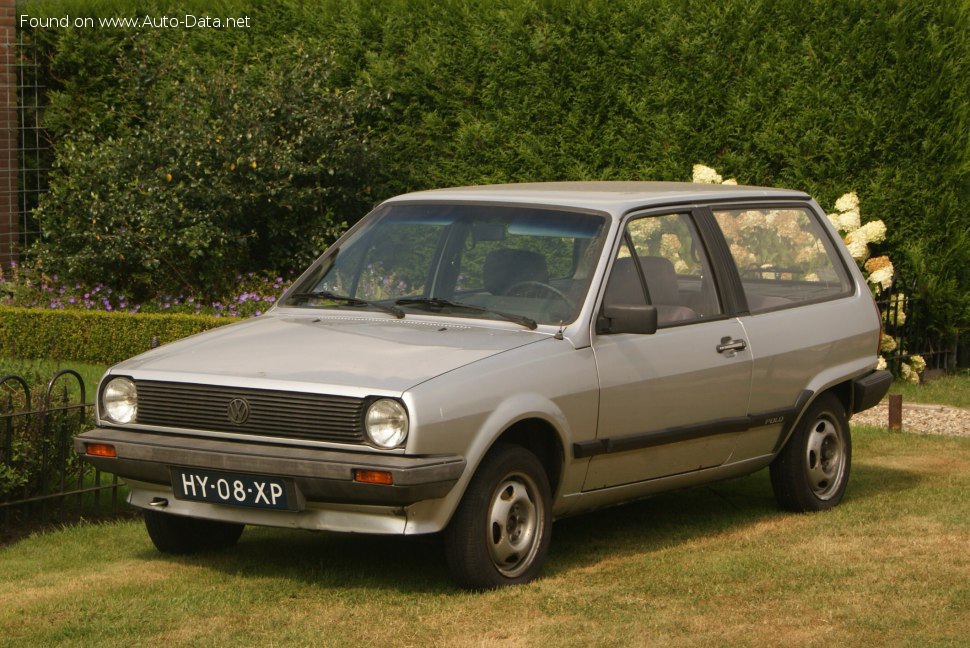
The Volkswagen Polo II, internally designated as the 86C, represents a significant chapter in the history of compact European automobiles, particularly with the introduction of the Volkswagen Polo II (86C) 1.1 (50 Hp) variant. Launched in 1981, this second-generation Polo built upon the successful foundation of its predecessor, solidifying Volkswagen’s presence in the burgeoning supermini segment. Designed primarily for the European market, where small, efficient, and practical vehicles were in high demand, the Polo II (86C) 1.1 (50 Hp) was a testament to sensible engineering and economical motoring. It offered a blend of compact dimensions, robust mechanics, and a surprisingly spacious interior for its class, making it an ideal choice for urban dwellers and budget-conscious families across the continent. Its production run for this specific 1.1-liter engine spanned from 1981 to 1983, marking it as an early and foundational model within the broader Polo II generation.
The Evolution of the Volkswagen Polo II (86C)
The Volkswagen Polo II (86C) succeeded the original Polo (86) and represented a thoughtful evolution rather than a radical redesign. While the first Polo, launched in 1975, was essentially a rebadged Audi 50, the 86C generation truly established the Polo’s distinct identity within the Volkswagen lineup, positioning it as a smaller, more accessible alternative to the Golf. The 86C generation was notably more angular and upright than its predecessor, a design choice that maximized interior space and practicality within a compact footprint. This design philosophy was crucial for cars in its segment, where every inch of cargo and passenger room mattered. The 1.1-liter engine variant, producing 50 horsepower, was one of the entry-level options, emphasizing fuel efficiency and affordability, which were paramount considerations for buyers in the early 1980s.
Engine & Performance: The 1.1-liter (50 Hp) Powertrain
At the heart of the Volkswagen Polo II (86C) 1.1 (50 Hp) was a robust and straightforward internal combustion engine, specifically the HB code unit. This 1.1-liter (1093 cc) naturally aspirated gasoline engine delivered a modest but entirely adequate 50 horsepower. In an era where fuel economy and reliability often took precedence over outright speed for compact cars, this powertrain was perfectly suited to its purpose. The naturally aspirated design meant simplicity in engineering, reducing manufacturing costs and maintenance complexities. It was designed to be a workhorse, capable of enduring daily commutes and longer journeys across European landscapes, albeit at a leisurely pace.
While 50 horsepower might seem modest by today’s standards, it was respectable for a supermini in the early 1980s. The engine’s characteristics were geared towards accessible torque at lower RPMs, making it tractable in city traffic and surprisingly capable on winding country roads. The Polo II (86C) 1.1 (50 Hp) was not a performance car; its strengths lay in its frugality and dependability. Owners could expect reasonable fuel consumption and low running costs, which were significant selling points in a period of fluctuating fuel prices. The engine’s simple construction also contributed to its longevity, a trait that many classic Volkswagen models are still celebrated for today. With an engine oil capacity of 3.5 liters (3.7 US quarts) and a coolant capacity of 4.5 liters (4.76 US quarts), maintenance was straightforward and manageable for the average owner or technician.
Design and Features
The design of the Volkswagen Polo II (86C) marked a departure from the smoother lines of the original Polo, embracing a more angular, “two-box” hatchback silhouette that became characteristic of the era. This design was not merely aesthetic; it was fundamentally practical. The upright rear window and nearly vertical tailgate maximized cargo volume, making the Polo a highly versatile vehicle for its size. The hatchback body type was incredibly popular in Europe due to its flexibility, allowing for easy loading of groceries, luggage, or even larger items when the rear seats were folded down.
Inside, the Polo II (86C) 1.1 (50 Hp) offered a functional and ergonomic cabin. While features were basic by modern standards, they were well-executed and durable. Instrumentation was clear and easy to read, and controls were intuitively placed. The focus was on utility and durability, with hard-wearing fabrics and plastics designed to withstand years of use. Depending on the trim level, amenities might have included a simple radio, heating and ventilation controls, and perhaps a rear wiper. Safety features, common in the early 1980s, were rudimentary, primarily consisting of seatbelts and a robust body structure for its class. The visibility from the driver’s seat was excellent thanks to the large glass areas and compact dimensions, aiding in urban maneuverability and parking.
Technical Specifications: Volkswagen Polo II (86C) 1.1 (50 Hp)
| Category | Specification |
| Brand | Volkswagen |
| Model | Polo |
| Generation | Polo II (86C) |
| Type (Engine) | 1.1 (50 Hp) |
| Start of Production | 1981 year |
| End of Production | 1983 year |
| Powertrain Architecture | Internal Combustion engine |
| Body type | Hatchback |
| Fuel Type | Petrol (Gasoline) |
| Power | 50 Hp |
| Engine Model/Code | HB |
| Engine aspiration | Naturally aspirated engine |
| Engine oil capacity | 3.5 l (3.7 US qt) |
| Coolant | 4.5 l (4.76 US qt) |
Legacy & Market Impact
The Volkswagen Polo II (86C), particularly its early 1.1-liter (50 Hp) variant, carved out a significant niche in the highly competitive European supermini market. It competed directly with formidable rivals such as the Ford Fiesta, Fiat Uno, Renault 5, and the Opel Corsa (Vauxhall Nova in the UK). What set the Polo apart was its reputation for solid German engineering, build quality, and reliability, traits that were highly valued by consumers. While some competitors might have offered more flair or slightly better performance in certain configurations, the Polo consistently delivered on its promise of dependable, economical transportation.
Its market impact was substantial. The Polo II (86C) became a common sight on European roads, symbolizing practical mobility and affordability. It cemented Volkswagen’s strategy of offering a full range of vehicles, from the entry-level Polo to the Golf and Passat, catering to diverse customer needs. The 1.1-liter engine, though not powerful, was instrumental in establishing the Polo’s image as an economical choice, appealing to first-time buyers, students, and urban families seeking a no-nonsense vehicle.
Over its extended production run (the 86C platform continued until 1994, albeit with numerous updates and engine options), the Polo II became renowned for its robustness and low running costs, contributing to its enduring appeal. Even decades later, many examples of the Polo II (86C) can still be found on the road, a testament to its durable construction and simple, maintainable mechanics. As a classic car, the Polo II (86C) 1.1 (50 Hp) represents an accessible entry into vintage motoring, celebrated for its utilitarian charm and historical significance as a cornerstone of Volkswagen’s small car success story.