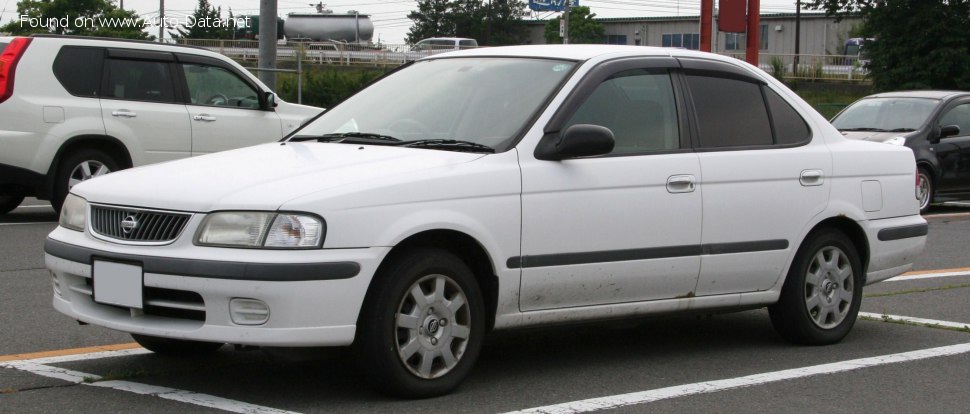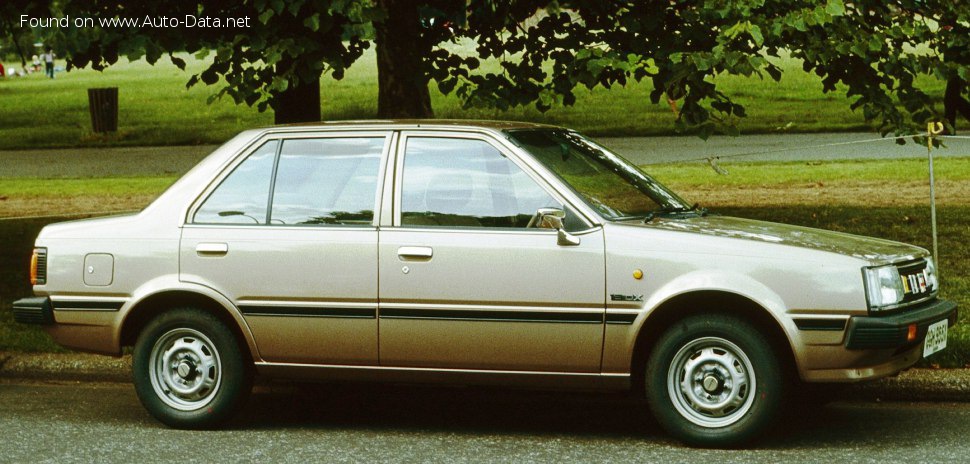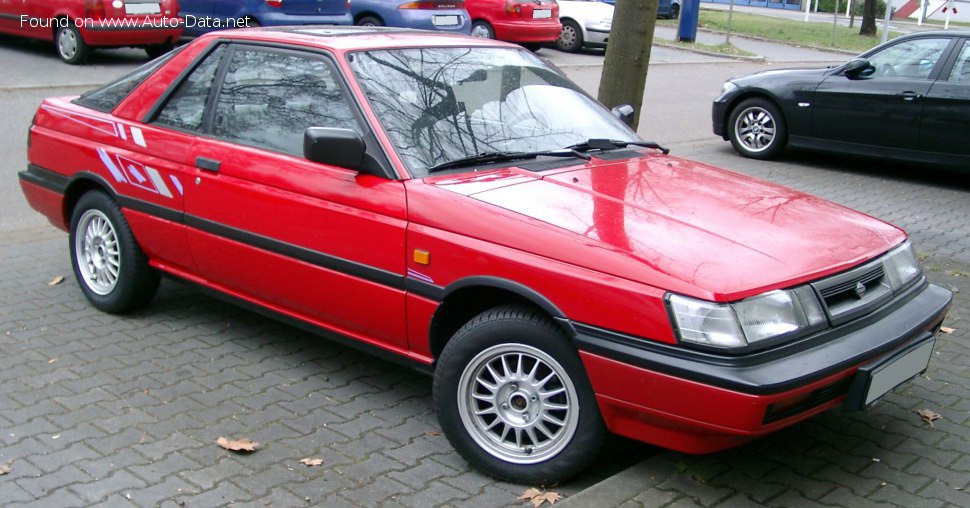
The Nissan Sunny, a nameplate synonymous with reliability and affordability, has a storied history spanning several decades and generations. Among these, the Sunny II Coupe, internally designated B12, holds a particular place as a representative of compact automotive design during the mid-to-late 1980s. Produced from 1986 to 1989, the Nissan Sunny II Coupe (B12) 1.6 i (73 Hp) was a key offering in Nissan’s global lineup, catering to markets demanding an economical yet stylish personal vehicle. While often badged as the Sentra in North America, the Sunny B12 lineage globally provided a foundation for Nissan’s success in the compact segment. This particular 1.6 i variant, with its 73 horsepower engine, exemplifies the era’s focus on practical performance, fuel efficiency, and a straightforward driving experience within a compact, two-door coupe body style.
Nissan Sunny II Coupe (B12) 1.6 i (73 Hp): A Detailed Overview
The Nissan Sunny II Coupe (B12) represents a significant chapter in Nissan’s history, particularly in markets outside of North America where it was sold under the Sunny name. It was designed to appeal to a broad customer base seeking a practical and affordable vehicle, offering a blend of style and functionality in a compact package. The B12 generation marked a refinement of Nissan’s compact car offerings, building upon the success of previous Sunny models and establishing a strong presence in the competitive global automotive landscape.
Engine & Performance
At the heart of the Nissan Sunny II Coupe (B12) 1.6 i (73 Hp) lies the E16 engine, a naturally aspirated, inline four-cylinder gasoline unit displacing 1598 cm³ (97.52 cu. in.). This engine was engineered for durability and cost-effective operation, utilizing a single-point fuel injection system – a common technology of the period offering a balance between efficiency and simplicity. The E16 produced 73 horsepower at 5100 rpm and 112.11 lb.-ft. of torque. This output, while modest by contemporary standards, was well-suited to the vehicle’s lightweight 2160.53 lbs. (980 kg) curb weight, resulting in a weight-to-power ratio of 13.4 kg/Hp. Power was channeled to the front wheels through a standard 5-speed manual transmission, providing drivers with direct control and contributing to fuel efficiency. Performance figures included a 0 to 60 mph acceleration time of approximately 11.2 seconds and a top speed of 111.85 mph (180 km/h). The Sunny Coupe achieved a combined fuel economy of 31.8 US mpg (7.4 l/100 km), highlighting its design as an economical compact car. It also met the Euro 2 emission standard, demonstrating Nissan’s commitment to evolving automotive regulations.
Design & Features
The Nissan Sunny II Coupe (B12) showcased a distinctive 1980s Japanese compact car aesthetic. Its 3-door coupe body style offered a sportier profile compared to the sedan versions, attracting younger buyers or those desiring a more personal vehicle. The design featured angular lines and a relatively boxy silhouette, prioritizing outward visibility. The low beltline and generous glass area created a light and airy cabin environment, a common design element before increased emphasis on crash safety led to thicker pillars and higher beltlines.
The interior of the Sunny II Coupe was configured to accommodate four occupants, offering reasonable space for front passengers and occasional rear seat use. The focus was on functionality and durability, with straightforward ergonomics and robust materials designed for longevity. Features were generally basic, prioritizing reliability over luxury. The vehicle incorporated a rack and pinion steering system for direct and predictable handling. Suspension utilized an independent McPherson strut setup at both the front and rear, providing a comfortable ride and stable handling for a car of its class. Braking was achieved through disc brakes at the front and drum brakes at the rear, a common and effective combination for vehicles of this size and performance level. The standard tire size was 175/70 R13, mounted on 13-inch wheel rims, balancing grip, comfort, and affordability.
Technical Specifications
| General Information | |
| Brand | Nissan |
| Model | Sunny |
| Generation | Sunny II Coupe (B12) |
| Type (Engine) | 1.6 i (73 Hp) |
| Start of Production | 1986 year |
| End of Production | 1989 year |
| Powertrain Architecture | Internal Combustion engine |
| Body type | Coupe |
| Seats | 4 |
| Doors | 3 |
| Performance Specs | |
| Fuel consumption (economy) – urban | 8.2 l/100 km (28.7 US mpg) |
| Fuel consumption (economy) – extra urban | 6.2 l/100 km (37.9 US mpg) |
| Fuel consumption (economy) – combined | 7.4 l/100 km (31.8 US mpg) |
| Fuel Type | Petrol (Gasoline) |
| Acceleration 0 – 60 mph | 11.2 sec |
| Maximum speed | 180 km/h (111.85 mph) |
| Emission standard | Euro 2 |
| Weight-to-power ratio | 13.4 kg/Hp |
| Weight-to-torque ratio | 6.4 kg/Nm |
| Engine Specs | |
| Power | 73 Hp @ 5100 rpm |
| Power per litre | 45.7 Hp/l |
| Torque | 152 Nm (112.11 lb.-ft.) |
| Engine layout | Front, Transverse |
| Engine Model/Code | E16 |
| Engine displacement | 1598 cm³ (97.52 cu. in.) |
| Number of cylinders | 4 |
| Engine configuration | Inline |
| Cylinder Bore | 76 mm (2.99 in.) |
| Piston Stroke | 88 mm (3.46 in.) |
| Compression ratio | 9.5:1 |
| Number of valves per cylinder | 2 |
| Fuel injection system | Single-point injection |
| Engine aspiration | Naturally aspirated engine |
| Space, Volume and Weights | |
| Kerb Weight | 980 kg (2160.53 lbs.) |
| Max. weight | 1680 kg (3703.77 lbs.) |
| Max load | 700 kg (1543.24 lbs.) |
| Fuel tank capacity | 45 l (11.89 US gal) |
| Drivetrain, Brakes and Suspension Specs | |
| Drivetrain Architecture | The Internal combustion engine (ICE) drives the front wheels of the vehicle. |
| Drive wheel | Front wheel drive |
| Number of gears and type of gearbox | 5 gears, manual transmission |
| Front suspension | Independent type McPherson |
| Rear suspension | McPherson |
| Front brakes | Disc |
| Rear brakes | Drum |
| Steering type | Steering rack and pinion |
| Tires size | 175/70 R13 |
| Wheel rims size | 13 |
The Nissan Sunny II Coupe (B12) 1.6 i (73 Hp), alongside its Sunny and Sentra counterparts, established a significant presence in the late 1980s compact car market. Its enduring appeal stemmed from its reputation for reliability, low operating costs, and a practical approach to personal transportation. In key markets like Europe, Asia, and North America (as the Sentra Coupe), the B12 Sunny competed with rivals such as the Honda Civic, Toyota Corolla, Mazda 323, Ford Escort, and Volkswagen Golf/Jetta. While not a performance leader, the Sunny consistently offered a dependable and economical option for daily commuting and family use. The B12 generation represented a period of refinement for Nissan’s compact offerings, with the E16 engine gaining a reputation for longevity. Today, the Sunny II Coupe (B12) is remembered as a symbol of 1980s automotive engineering – functional, durable, and efficient, leaving a lasting legacy of accessibility and dependability.