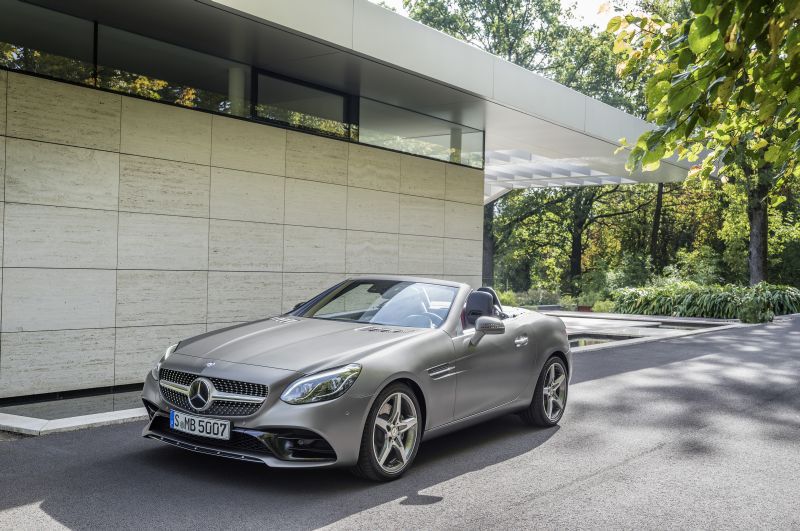
The Mercedes-Benz SLC (R172 facelift 2016) signified a substantial update and rebranding of the well-regarded compact luxury roadster previously known as the SLK. Introduced in April 2016, this version represented the concluding phase for the R172 generation, continuing production until July 2020. Designed as a sophisticated and dynamic two-seat coupe-cabriolet, the SLC sought to combine the thrill of open-top motoring with the renowned comfort, technology, and premium quality characteristic of Mercedes-Benz. The SLC 300 (245 horsepower) equipped with the 9G-TRONIC automatic transmission was a key model within the range, delivering a desirable combination of lively performance and respectable fuel economy, establishing it as a competitive offering in the luxury roadster market.
The SLC: A Rebranding and Refinement
The transition from SLK to SLC wasn’t merely a cosmetic change; it reflected Mercedes-Benz’s evolving naming strategy. Aligning the model with the C-Class family – signified by the “SLC” designation – aimed to clarify its positioning within the Mercedes-Benz portfolio and emphasize its connection to the brand’s core passenger car lineup. The R172 generation, initially launched in 2011, had already established a reputation for its retractable hardtop, a feature that provided coupe-like security and refinement with the convenience of open-air driving. The 2016 facelift built upon this foundation, introducing a more assertive design language, enhanced technology, and improved efficiency across the range. While the SLK had been a successful model in its own right, the SLC aimed to broaden its appeal by offering a more cohesive brand identity and a more contemporary driving experience.
Design Evolution
The visual changes introduced with the facelift were significant. The SLC received a new front fascia featuring a prominent grille with a large Mercedes-Benz star, redesigned headlights with LED technology, and a more sculpted bumper. These alterations gave the car a more aggressive and modern appearance. At the rear, the taillights were also redesigned, and the bumper was reshaped to complement the new front-end styling. Inside, the cabin benefited from updated trim materials, revised switchgear, and the latest generation of Mercedes-Benz’s infotainment system. The overall effect was to elevate the SLC’s perceived quality and create a more luxurious and technologically advanced interior environment.
Engine & Performance
The SLC 300, a pivotal variant, was powered by a 2.0-liter turbocharged four-cylinder engine. This engine, part of Mercedes-Benz’s modular engine family, produced 245 horsepower and 273 lb-ft of torque. The 9G-TRONIC nine-speed automatic transmission was standard, providing smooth and efficient gear changes. This powertrain combination allowed the SLC 300 to accelerate from 0 to 60 mph in approximately 5.6 seconds, with a governed top speed of 155 mph. The engine’s turbocharging technology delivered strong low-end torque, making the SLC 300 responsive and enjoyable to drive in a variety of conditions. Mercedes-Benz also focused on improving fuel efficiency, with the SLC 300 achieving an estimated combined fuel economy of around 25 mpg. The suspension system was tuned to provide a balance between comfort and handling, offering a refined ride quality while still allowing for confident cornering. Optional features, such as the Dynamic Handling package, further enhanced the driving experience with adaptive dampers and a sportier suspension setup.
Design & Features
The SLC maintained the R172’s defining characteristic: a retractable hardtop. This Varitop roof could be opened or closed in approximately 20 seconds, transforming the car from a coupe to a convertible with ease. When retracted, the hardtop neatly stowed away into the trunk, providing a secure and weatherproof cabin. The interior of the SLC was designed with a focus on luxury and comfort. High-quality materials, such as leather upholstery and aluminum trim, were used throughout the cabin. The seats were supportive and comfortable, providing excellent cushioning for long journeys. The infotainment system featured a central display screen controlled by a rotary dial and buttons, offering access to navigation, audio, and vehicle settings. Standard features included automatic climate control, power-adjustable seats, and a premium sound system. Available options included features such as a panoramic sunroof, heated seats, and a driver assistance package with features like lane keeping assist and adaptive cruise control. Safety features were also a priority, with the SLC equipped with a range of active and passive safety systems, including airbags, anti-lock brakes, and electronic stability control. The design prioritized a sporty aesthetic while maintaining the comfort expected of a luxury roadster.
Technical Specifications
| Engine Type | 2.0L Turbocharged Inline-4 |
| Displacement | 1,991 cc (121.4 cu in) |
| Horsepower | 245 hp @ 5,500 rpm |
| Torque | 273 lb-ft @ 1,300-4,000 rpm |
| Transmission | 9G-TRONIC 9-speed automatic |
| Drivetrain | Rear-Wheel Drive |
| 0-60 mph | 5.6 seconds (approx.) |
| Top Speed | 155 mph (governed) |
| Fuel Economy (Combined) | 25 mpg (estimated) |
| Curb Weight | 3,505 lbs (approx.) |
| Length | 172.5 in (4,381 mm) |
| Width | 70.9 in (1,806 mm) |
| Height | 50.2 in (1,275 mm) |
| Wheelbase | 98.4 in (2,500 mm) |
| Fuel Tank Capacity | 13.2 gallons (50 liters) |
The Mercedes-Benz SLC (R172 facelift 2016) ultimately represented a successful evolution of a popular roadster formula. By refining the design, enhancing the technology, and improving the efficiency of the SLK, Mercedes-Benz created a compelling and desirable luxury roadster that appealed to a wide range of buyers. While production ended in 2020, the SLC remains a well-regarded example of a modern, open-top driving experience, embodying the brand’s commitment to quality, performance, and innovation. The SLC’s legacy continues in the current Mercedes-Benz roadster lineup, building upon the foundations laid by the R172 generation.