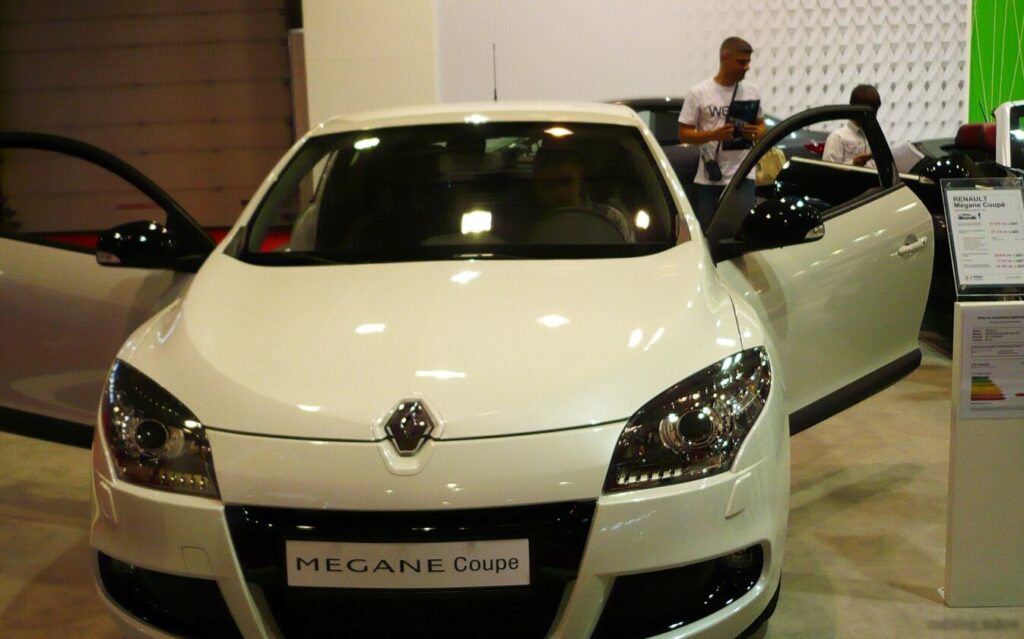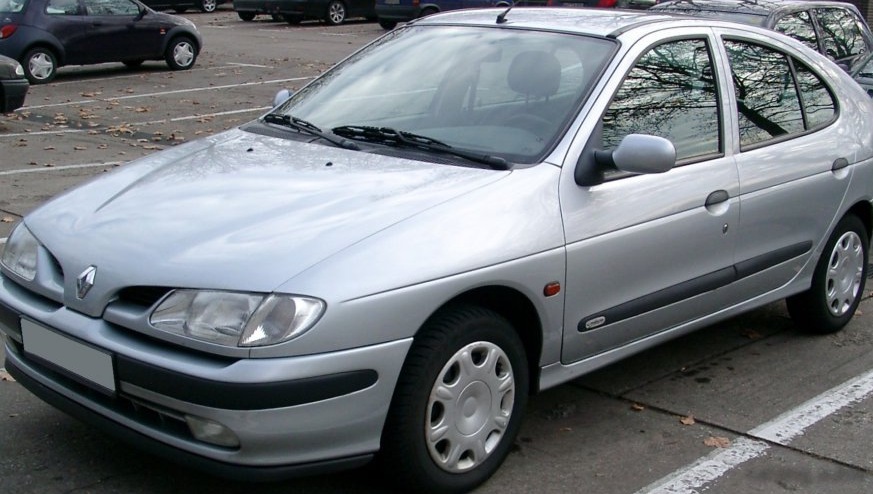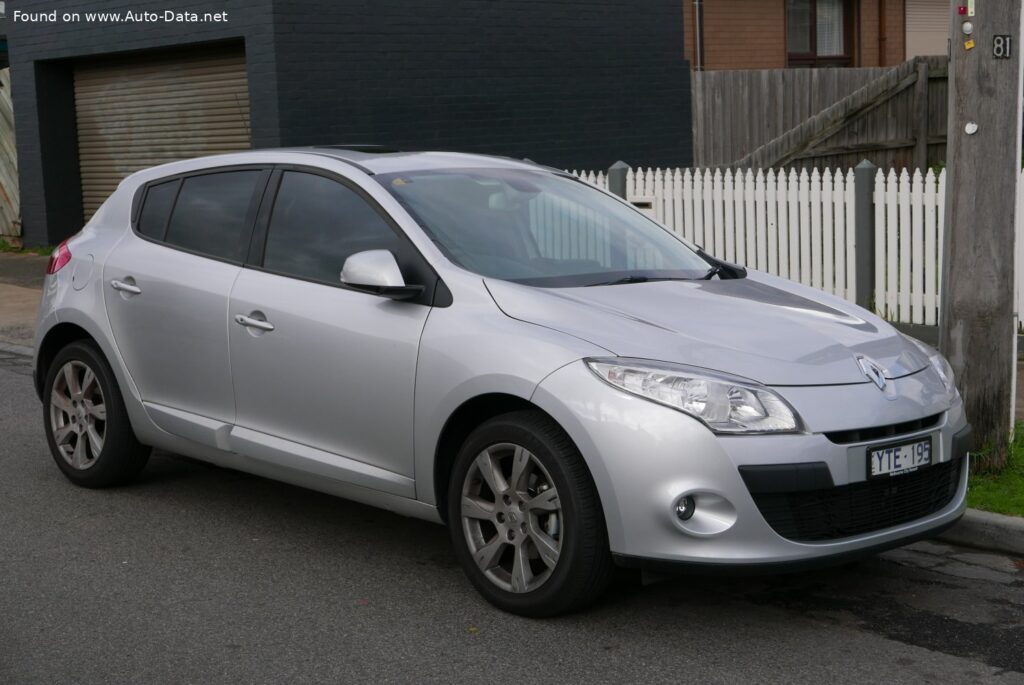
The Renault Megane III, launched in late 2008, represented the third generation of Renault’s popular compact family car, a significant player in the highly competitive European C-segment. This generation marked a strategic shift for Renault, moving away from the more polarizing design language of its predecessor towards a more universally appealing and refined aesthetic. While the Megane nameplate has been a staple in markets across Europe, Asia, and other regions, it was never officially sold in the United States, given Renault’s withdrawal from the American passenger car market decades prior. The specific variant under discussion, the Renault Megane III 1.6 16V (110 Hp) Ethanol, was produced for a brief period between 2009 and 2010, primarily targeting European markets where flex-fuel vehicles and alternative fuels like E85 (a blend of up to 85% ethanol and 15% gasoline) were gaining traction due to environmental considerations and tax incentives. This particular model offered a compelling blend of practicality, efficiency, and a commitment to reducing fossil fuel dependency within its class.
The Renault Megane III 1.6 16V (110 Hp) Ethanol: A Flexible Powertrain
At the heart of this specific Megane III variant was the K4M 858 engine, a 1.6-liter (1,598 cm³ or 97.52 cu. in.) naturally aspirated inline-four gasoline engine. This powerplant featured a DOHC (Double Overhead Camshaft) valvetrain with 16 valves (four per cylinder), a configuration known for its balance of efficiency and responsiveness in compact applications. It delivered a respectable 110 horsepower at 6000 rpm and 111.37 lb.-ft. of torque at 4250 rpm. What truly set this engine apart, however, was its flex-fuel capability, allowing it to run on either standard gasoline or E85 ethanol. This adaptability was a key selling point in markets where E85 was readily available and offered economic or environmental benefits.
Power was sent to the front wheels via a smooth-shifting 6-speed manual transmission, providing an engaging driving experience while optimizing fuel consumption across various driving conditions. Performance figures for the Renault Megane III 1.6 16V (110 Hp) Ethanol were competitive for its segment, with an acceleration time from 0 to 60 mph recorded at approximately 10 seconds and a top speed of 118.06 mph (190 km/h).
Fuel efficiency, particularly when running on E85, was a significant consideration. The combined fuel economy was rated at 34.1 US mpg (6.9 l/100 km), with urban consumption at 25.3 US mpg (9.3 l/100 km) and extra-urban figures reaching 42.8 US mpg (5.5 l/100 km). These figures, while subject to the energy content differences between gasoline and E85, underscored Renault’s efforts to offer a more environmentally conscious option. The vehicle met the Euro 4 emission standard, with CO2 emissions of 158 g/km, reflecting its relatively low environmental impact for the era.
Engine Details
The K4M engine family, used extensively by Renault and Nissan, is known for its durability and relatively simple design. The 1.6-liter version, as found in the Megane III, was a workhorse, providing a good balance between performance and economy. The flex-fuel capability required modifications to the fuel system, including ethanol-resistant materials and a fuel composition sensor to detect the ethanol percentage in the fuel. This allowed the engine control unit (ECU) to adjust the fuel injection and ignition timing accordingly, ensuring optimal combustion regardless of the fuel blend.
Design and Features of the Megane III Hatchback
The Megane III Hatchback, a 5-door, 5-seat compact car, represented a more conventional yet elegantly styled approach compared to its predecessor. Its design language was characterized by smoother lines, a more cohesive front fascia, and a generally less controversial appearance. The dimensions of the vehicle were well-suited for European urban environments, with a length of 169.09 inches (4295 mm), a width of 71.18 inches (1808 mm), and a height of 57.91 inches (1471 mm). A wheelbase of 103.98 inches (2641 mm) contributed to a stable ride and a reasonably spacious interior for its class.
Inside, the Megane III prioritized practicality and comfort. The cabin offered seating for five occupants, with a focus on ergonomic design and quality materials for its segment. Storage was ample, featuring a minimum trunk volume of 14.3 cu. ft. (405 liters), which could be expanded to a generous 41.04 cu. ft. (1162 liters) with the rear seats folded down, making it highly versatile for daily use or longer trips.
Key features included a robust chassis with an independent McPherson strut front suspension and a torsion beam rear suspension, providing a comfortable ride and predictable handling. Safety was a strong suit for the Megane III, as is typical for European compacts of its time, incorporating systems like ABS (Anti-lock Braking System) as standard. The electric power steering system offered ease of maneuverability, particularly in city driving, and contributed to overall fuel efficiency. The car was typically fitted with tire sizes such as 195/65 R15T or 205/55 R16H, mounted on 6.5J x 15 or 6.5J x 16 wheel rims, respectively.
Interior and Technology
The Megane III’s interior featured a driver-focused layout with intuitive controls. Depending on the trim level, features such as air conditioning, a CD player with MP3 compatibility, and power windows were standard. Higher-end models offered options like a navigation system, Bluetooth connectivity, and automatic climate control. The dashboard design was relatively straightforward, prioritizing functionality over excessive ornamentation. The use of quality plastics and fabric upholstery contributed to a perceived sense of durability and refinement.
Technical Specifications
| Category | Specification |
|---|---|
| General Information | |
| Brand | Renault |
| Model | Megane |
| Generation | Megane III |
| Type (Engine) | 1.6 16V (110 Hp) Ethanol |
| Production Start | 2009 |
| Production End | 2010 |
| Body Type | Hatchback 5 Doors, 5 Seats |
| Engine & Performance | |
| Engine Model/Code | K4M 858 |
| Engine Layout | Front, Transverse |
| Engine Configuration | Inline 4-cylinder |
| Engine Displacement | 1598 cm³ (97.52 cu. in.) |
| Cylinder Bore x Piston Stroke | 79.5 mm x 80.5 mm (3.13 in. x 3.17 in.) |
| Compression Ratio | 9.7:1 |
| Valvetrain | DOHC, 4 valves per cylinder (16 valves total) |
| Fuel Injection System | Multi-port manifold injection |
| Engine Aspiration | Naturally aspirated |
| Fuel Type | Petrol / Ethanol – E85 (Flex-Fuel) |
| Power | 110 Hp @ 6000 rpm |
| Torque | 151 Nm @ 4250 rpm (111.37 lb.-ft. @ 4250 rpm) |
| Power per liter | 68.8 Hp/l |
| Acceleration 0-60 mph | 10 seconds (Calculated) |
| Acceleration 0-62 mph (0-100 km/h) | 10.5 seconds |
| Maximum Speed | 190 km/h (118.06 mph) |
| Fuel Economy (Combined) | 6.9 l/100 km (34.1 US mpg) |
| Fuel Economy (Urban) | 9.3 l/100 km (25.3 US mpg) |
| Fuel Economy (Extra Urban) | 5.5 l/100 km (42.8 US mpg) |
| CO2 Emissions | 158 g/km |
| Emission Standard | Euro 4 |
| Drivetrain, Brakes & Suspension | |
| Drivetrain Architecture | Front-wheel drive (FWD) |
| Gearbox Type | 6-speed manual transmission |
| Front Suspension | Independent, McPherson type |
| Rear Suspension | Torsion beam |
| Front Brakes | Ventilated discs |
| Rear Brakes | Disc |
| Assisting Systems | ABS (Anti-lock Braking System) |
| Steering Type | Steering rack and pinion, Electric Power Steering |
| Tire Sizes | 195/65 R15T; 205/55 R16H |
| Wheel Rims Size | 6.5J x 15; 6.5J x 16 |
| Dimensions, Weights & Capacities | |
| Length | 4295 mm (169.09 in.) |
| Width | 1808 mm (71.18 in.) |
| Width (including mirrors) | 2037 mm (80.2 in.) |
| Height | 1471 mm (57.91 in.) |
| Wheelbase | 2641 mm (103.98 in.) |
| Ground Clearance | 120 mm (4.72 in.) |
| Kerb Weight | 1215 kg (2678.62 lbs.) |
| Maximum Weight | 1762 kg (3884.55 lbs.) |
| Trunk Space (Minimum) | 405 l (14.3 cu. ft.) |
| Trunk Space (Maximum) | 1162 l (41.04 cu. ft.) |
| Fuel Tank Capacity | 60 l (15.85 US gal) |
Legacy and Market Impact
The Renault Megane III entered a fiercely competitive European compact segment, going head-to-head with established rivals such as the Volkswagen Golf, Ford Focus, Opel Astra, Peugeot 308, and Citroën C4. Its more conservative styling was generally well-received, helping it appeal to a broader audience than the more avant-garde Megane II. The third generation was lauded for its improved interior quality, enhanced refinement, and a comfortable ride, making it a strong contender in terms of overall package.
The 1.6 16V (110 Hp) Ethanol variant, in particular, highlighted Renault’s commitment to offering environmentally friendlier options at a time when fuel efficiency and emissions were becoming increasingly important to consumers and regulators in Europe. While E85 availability varied by country, its presence in the lineup allowed Renault to cater to specific market demands for alternative fuels, sometimes benefiting from lower fuel costs or tax incentives in certain regions, such as France or Sweden. This flex-fuel capability, combined with a robust and proven K4M engine, gave the Megane III a distinct edge for a niche but growing segment of buyers.
Despite its relatively short production run for this specific flex-fuel engine variant, the Megane III contributed significantly to Renault’s market share in Europe, solidifying its reputation as a producer of safe, practical, and well-equipped compact cars. Its impact was primarily felt in its home continent, where it served as a reliable family hatchback and fleet vehicle. The Megane III’s overall success paved the way for future generations, continuing the lineage of one of Europe’s most enduring and popular compact models, even as it remained an interesting, but distant, automotive expert focus for those in the North American market.