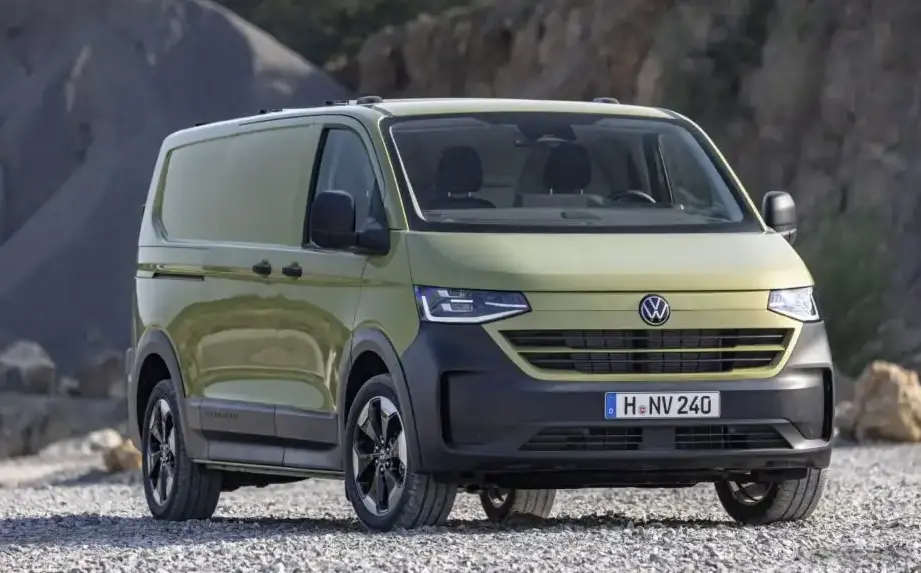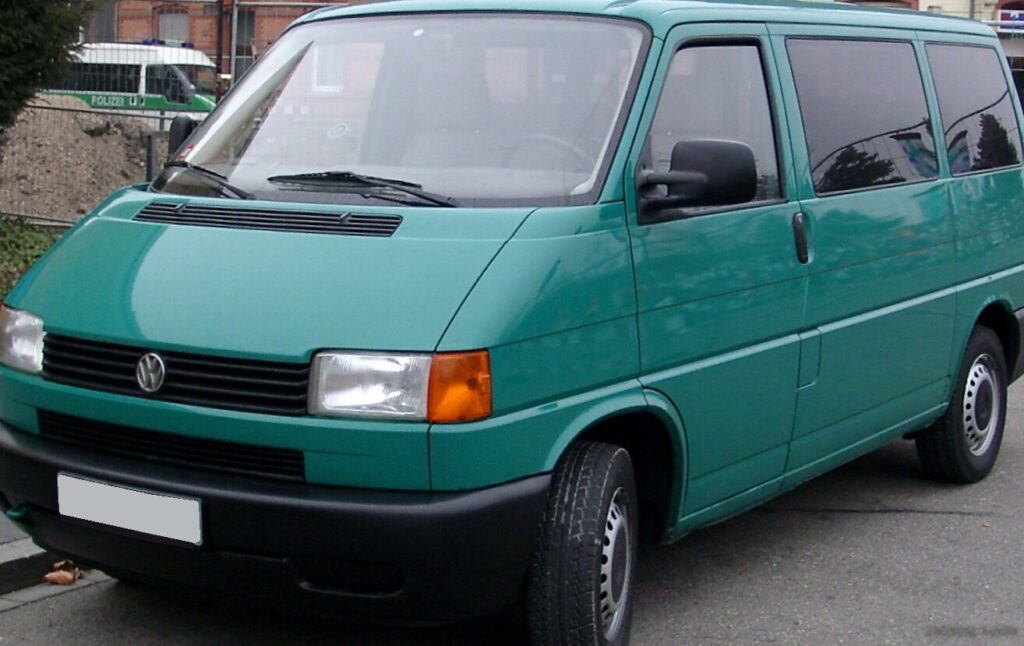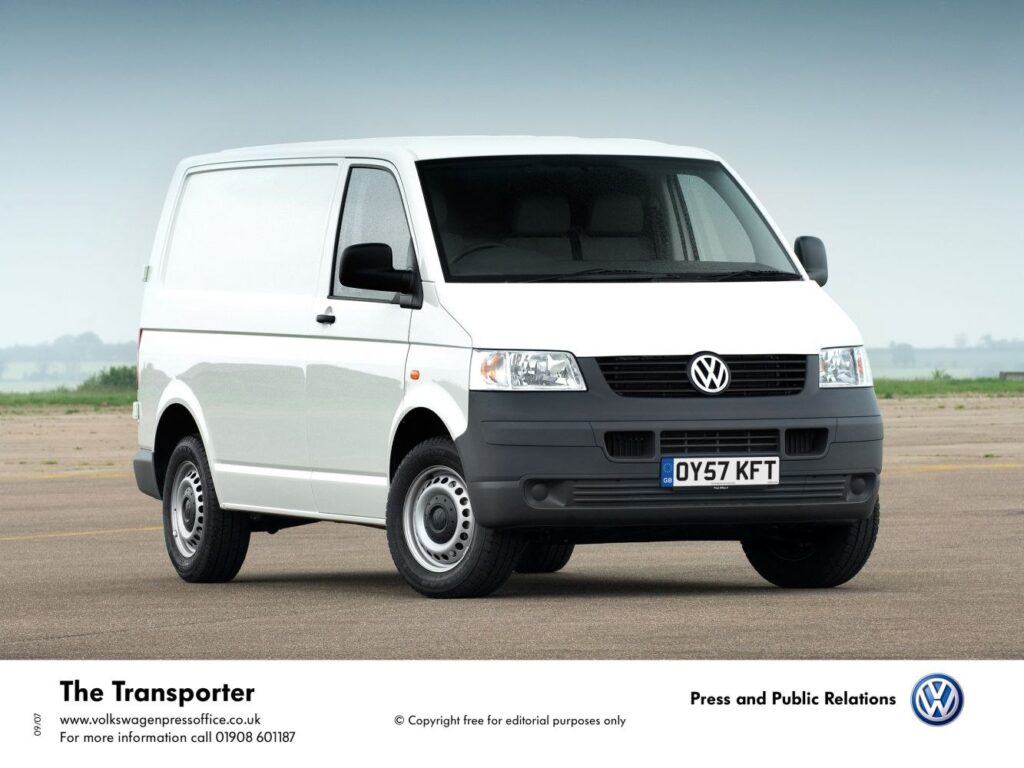
The Volkswagen Transporter (T5) Panel Van is a globally recognized light commercial vehicle celebrated for its versatility and robust engineering. This article focuses on the Volkswagen Transporter (T5) Panel Van, specifically the 1.9 TDI (84 Hp) DPF L1H1 variant produced between 2006 and 2009. While the Transporter series has seen limited direct sales as a commercial panel van in the North American market, its importance as a light commercial vehicle (LCV) in Europe and other international markets is undeniable. The T5 generation solidified its position as a preferred vehicle for businesses, tradespeople, and service providers, offering a blend of practicality, efficiency, and Volkswagen’s renowned build quality. The 1.9 TDI (84 Hp) DPF L1H1 model represented a common entry-level offering, prioritizing fuel economy and reliability for daily commercial operations within its primary European market.
Evolution and Market Positioning of the Volkswagen Transporter (T5) Panel Van
The T5 generation marked a significant evolution from its T4 predecessor, introducing more modern styling, improved ergonomics, and a range of advanced powertrains. As a panel van, its core mission was utility: to transport goods and equipment efficiently and reliably. The L1H1 designation signifies the standard wheelbase (L1) and standard roof height (H1) configuration, making it a compact yet capable option for urban deliveries and various trades where maneuverability and accessibility were key. Competing in the fiercely contested European LCV segment, the T5 Transporter faced rivals such as the Ford Transit, Mercedes-Benz Vito, and Renault Trafic, distinguishing itself with its car-like driving dynamics and solid brand perception.
Engine & Performance: The 1.9 TDI Powerplant
The Volkswagen Transporter (T5) Panel Van variant was powered by the 1.9-liter (1896 cm³) TDI (Turbocharged Direct Injection) diesel engine, an inline four-cylinder unit identified by the engine codes EA188 / BRR. This powerplant delivered 84 horsepower at 3500 rpm, coupled with 147.51 lb-ft (200 Nm) of torque at a low 2000 rpm. This low-end torque was crucial for a commercial vehicle, providing ample pulling power for loaded vans despite its relatively low horsepower rating.
The engine’s architecture featured a Single Overhead Camshaft (SOHC) valvetrain with two valves per cylinder and employed a pump-nozzle (unit injector) fuel injection system, a hallmark of Volkswagen’s TDI technology during this era. This system, combined with a turbocharger and intercooler, ensured efficient combustion and a responsive power delivery despite the engine’s smaller displacement. A high compression ratio of 18.5:1 further contributed to its diesel efficiency.
Performance figures for the 1.9 TDI (84 Hp) DPF L1H1 reflected its utilitarian purpose. Acceleration from 0 to 60 mph was estimated at 22.4 seconds, with a top speed of approximately 90.72 mph (146 km/h). While not designed for speed, these figures were more than adequate for urban and highway commercial driving. Fuel economy was a strong suit, with a combined cycle rating of 29.4 US mpg (8.0 l/100 km), making it an economical choice for businesses mindful of operating costs. The inclusion of a Diesel Particulate Filter (DPF) was a significant feature for its time, helping the vehicle meet Euro 4 emission standards by reducing harmful particulate matter from the exhaust.
Power was delivered to the front wheels via a robust five-speed manual transmission, a common and reliable setup for commercial vehicles, offering direct control and proven durability. The drivetrain architecture, with the internal combustion engine driving the front wheels, provided good traction, especially when the rear cargo area was unladen.
Design and Features: Practicality and Utility
The Volkswagen Transporter (T5) Panel Van was designed for practicality. Its L1H1 configuration provided a total length of 192.52 inches (4890 mm), a width of 74.96 inches (1904 mm), and a height of 77.13 inches (1959 mm). This relatively compact footprint, combined with a turning circle of just 39.04 feet (11.9 meters), ensured excellent maneuverability in tight city streets and loading docks.
The panel van body type, with 4-5 doors and a 2-3 seat configuration, was optimized for cargo. The vast cargo area boasted a maximum volume of 204.83 cubic feet (5800 liters), allowing for substantial load carrying capabilities. The kerb weight ranged from 3968.32 to 4409.25 lbs (1800-2000 kg), with a maximum permissible gross weight of 5732.02 to 6613.87 lbs (2600-3000 kg). This translated to a generous maximum payload capacity of 1763.7 to 2204.62 lbs (800-1000 kg), making it suitable for a wide array of commercial tasks.
Suspension on the T5 was designed for comfort and load-carrying ability. The front featured an independent McPherson strut setup with coil springs and an anti-roll bar, while the rear utilized an independent coil spring system with a transverse stabilizer and trailing arms. This configuration provided a stable and controlled ride, even when fully loaded. Braking was handled by ventilated discs at both the front (308×29.5 mm) and rear (294×22 mm), complemented by an Anti-lock Braking System (ABS) for enhanced safety and control. Hydraulic power steering, a rack-and-pinion type, offered good feedback and ease of operation, crucial for a vehicle that spends much of its life navigating various environments.
Other practical features included an 80-liter (21.13 US gal) fuel tank, offering a substantial range between fill-ups, and a maximum roof load of 220.46 lbs (100 kg). The ability to tow up to 4850.17 lbs (2200 kg) with brakes further extended its utility, allowing businesses to haul trailers for additional equipment or materials.
Technical Specifications
| Category | Specification |
| General Information | |
| Brand | Volkswagen |
| Model | Transporter |
| Generation | Transporter (T5) Panel Van |
| Type (Engine) | 1.9 TDI (84 Hp) DPF L1H1 |
| Start of Production | 2006 year |
| End of Production | 2009 year |
| Powertrain Architecture | Internal Combustion engine |
| Body type | Van |
| Seats | 2-3 |
| Doors | 4-5 |
| Performance Specs | |
| Fuel consumption (economy) – urban | 9.8 l/100 km (24 US mpg) |
| Fuel consumption (economy) – extra urban | 7.0 l/100 km (33.6 US mpg) |
| Fuel consumption (economy) – combined | 8.0 l/100 km (29.4 US mpg) |
| CO2 emissions | 211 g/km |
| Fuel Type | Diesel |
| Acceleration 0 – 62 mph (0 – 100 km/h) | 23.6 sec |
| Acceleration 0 – 60 mph (Calculated) | 22.4 sec |
| Maximum speed | 90.72 mph (146 km/h) |
| Emission standard | Euro 4 |
| Weight-to-power ratio | 21.4 kg/Hp (46.7 Hp/tonne) |
| Weight-to-torque ratio | 9 kg/Nm (111.1 Nm/tonne) |
| Engine Specs | |
| Power | 84 Hp @ 3500 rpm |
| Power per liter | 44.3 Hp/l |
| Torque | 147.51 lb.-ft. (200 Nm) @ 2000 rpm |
| Engine layout | Front, Transverse |
| Engine Model/Code | EA188 / BRR |
| Engine displacement | 1.9 liters (1896 cm³ / 115.7 cu. in.) |
| Number of cylinders | 4 |
| Engine configuration | Inline |
| Cylinder Bore | 3.13 in. (79.5 mm) |
| Piston Stroke | 3.76 in. (95.5 mm) |
| Compression ratio | 18.5:1 |
| Number of valves per cylinder | 2 |
| Fuel injection system | Pump-nozzle (Unit Injector) |
| Engine aspiration | Turbocharger, Intercooler |
| Valvetrain | SOHC |
| Engine oil capacity | 6.3 liters (6.66 US qt) |
| Coolant capacity | 7.1 liters (7.5 US qt) |
| Engine systems | Particulate filter |
| Space, Volume and Weights | |
| Kerb Weight | 3968.32 – 4409.25 lbs. (1800-2000 kg) |
| Max. weight (GVWR) | 5732.02 – 6613.87 lbs. (2600-3000 kg) |
| Max load | 1763.7 – 2204.62 lbs. (800-1000 kg) |
| Trunk (boot) space – maximum | 204.83 cu. ft. (5800 l) |
| Fuel tank capacity | 21.13 US gal (80 l) |
| Max. roof load | 220.46 lbs. (100 kg) |
| Permitted trailer load with brakes (8%) | 4850.17 lbs. (2200 kg) |
| Permitted trailer load with brakes (12%) | 4850.17 lbs. (2200 kg) |
| Permitted trailer load without brakes | 1653.47 lbs. (750 kg) |
| Permitted towbar download | 220.46 lbs. (100 kg) |
| Dimensions | |
| Length | 192.52 in. (4890 mm) |
| Width | 74.96 in. (1904 mm) |
| Width including mirrors | 88.27 in. (2242 mm) |
| Height | 77.13 in. (1959 mm) |
| Wheelbase | 118.11 in. (3000 mm) |
| Front track | 64.09 in. (1628 mm) |
| Rear (Back) track | 64.09 in. (1628 mm) |
| Front overhang | 35.2 in. (894 mm) |
| Rear overhang | 39.21 in. (996 mm) |
| Ride height (ground clearance) | 6.5 in. (165 mm) |
| Minimum turning circle (turning diameter) | 39.04 ft. (11.9 m) |
| Approach angle | 22° |
| Departure angle | 16° |
| Ramp-over (brakeover) angle | 14° |
| Wading depth | 11.81 in. (300 mm) |
| Drivetrain, Brakes and Suspension Specs | |
| Drivetrain Architecture | The Internal combustion engine (ICE) drives the front wheels of the vehicle. |
| Drive wheel | Front wheel drive |
| Number of gears and type of gearbox | 5 gears, manual transmission |
| Front suspension | Independent, type McPherson with coil spring and anti-roll bar |
| Rear suspension | Independent coil spring, Transverse stabilizer, Trailing arm |
| Front brakes | Ventilated discs, 308×29.5 mm |
| Rear brakes | Ventilated discs, 294×22 mm |
| Assisting systems | ABS (Anti-lock braking system) |
| Steering type | Steering rack and pinion |
| Power steering | Hydraulic Steering |
| Tires size | 205/65 R16; 215/65 R16 |
| Wheel rims size | 6.5J x 16 |
Legacy and Market Impact
The Volkswagen Transporter (T5) Panel Van, particularly in its 1.9 TDI (84 Hp) DPF L1H1 configuration, established a significant presence in the European light commercial vehicle market. Its legacy is built on a reputation for reliability, durability, and a surprisingly refined driving experience for a commercial vehicle. Volkswagen’s strong brand image for quality and engineering excellence undoubtedly contributed to its widespread adoption by businesses of all sizes, from independent tradespeople to large fleet operators.
In its primary markets, the T5 competed against formidable rivals. The Ford Transit, often lauded for its robust chassis and diverse configurations, was a perennial bestseller. The Mercedes-Benz Vito offered a more premium option, while models like the Renault Trafic and Opel Vivaro (Vauxhall Vivaro in the UK) provided competitive alternatives with a focus on value and practicality. Despite this intense competition, the T5 held its own, often being praised for its solid build, ergonomic cabin, and car-like handling, which made long hours behind the wheel less fatiguing for drivers.
The 1.9 TDI engine, even in its lower 84 horsepower tune, was a testament to Volkswagen’s commitment to diesel efficiency and longevity. Its ability to deliver acceptable performance while maintaining impressive fuel economy was a key selling point for cost-conscious businesses. The inclusion of the Diesel Particulate Filter (DPF) also highlighted Volkswagen’s efforts to meet evolving environmental regulations, a crucial factor for fleet compliance in Europe.
The Transporter T5’s impact extended beyond just commercial use; its platform was also adapted for passenger variants like the Multivan and California camper van, showcasing its inherent versatility. However, it was the panel van that truly underpinned its commercial success, becoming an indispensable tool for countless enterprises. Its enduring popularity is evident in the continued demand for used T5 models, which retain strong resale values due to their proven reliability and robust construction.
In summary, the Volkswagen Transporter (T5) Panel Van 1.9 TDI (84 Hp) DPF L1H1 was more than just a utilitarian vehicle; it was a cornerstone of European commerce during its production run. It represented a blend of German engineering, practical design, and efficient performance, cementing the Transporter’s status as a benchmark in the light commercial vehicle segment and continuing a proud heritage of Volkswagen workhorses.