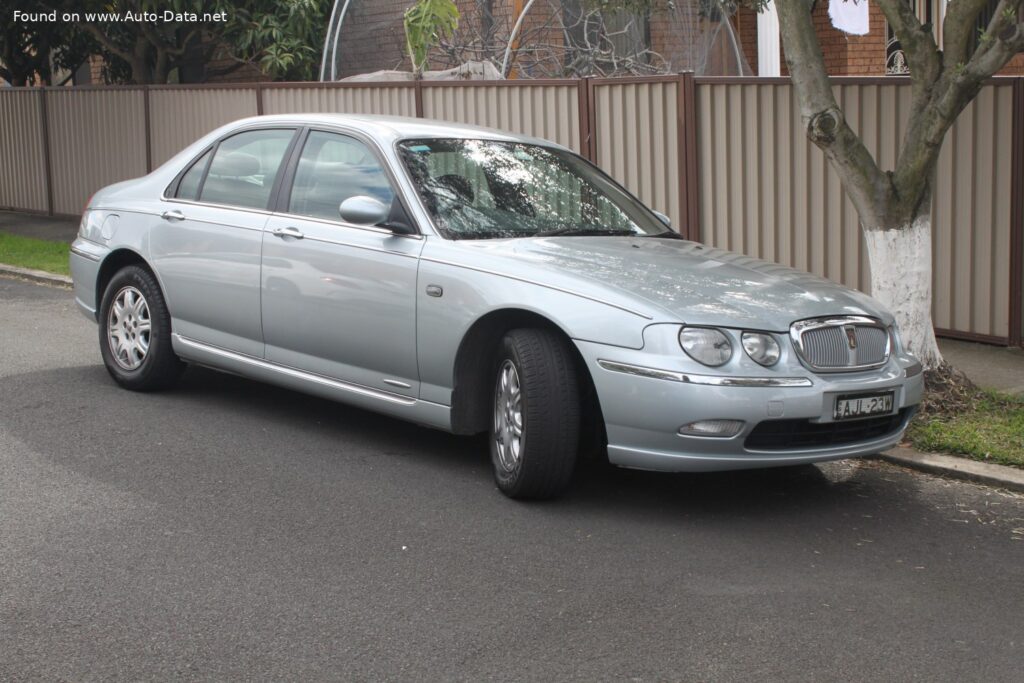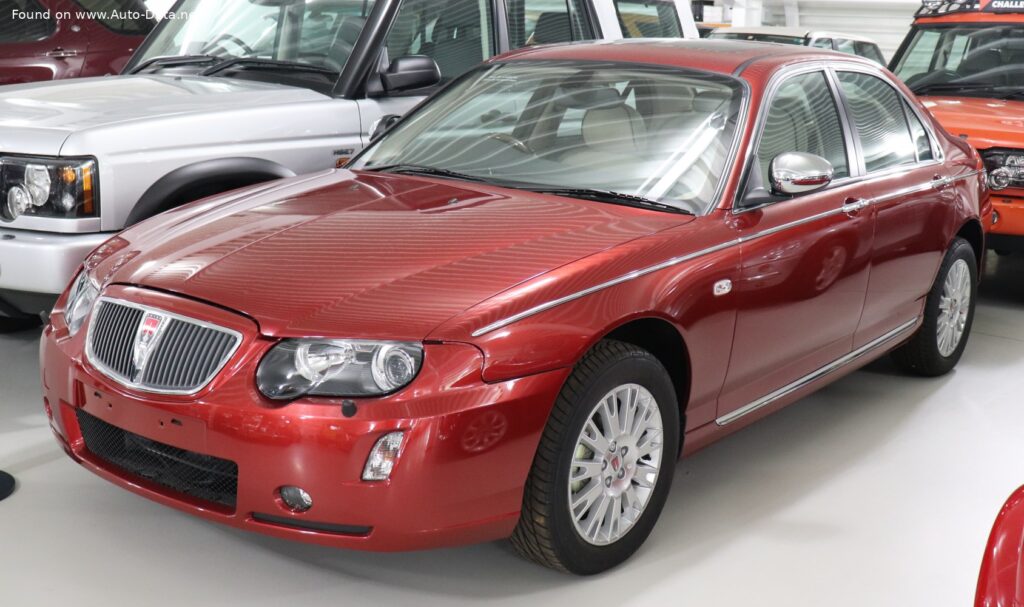
The Rover 75 (facelift 2004) 2.5 V6 (177 Hp) represents a poignant chapter in British automotive history. Launched in 2004, this updated version of the Rover 75 sedan was a final attempt to revitalize the flagship model of the financially troubled Rover Group. Positioned within the European mid-size executive segment, the Rover 75 aimed to combine traditional British luxury and craftsmanship with modern engineering, offering a unique alternative to German and Japanese competitors. Though never officially sold in the United States, the Rover 75 earned a reputation in Europe for its comfortable ride, distinctive styling, and a well-appointed interior reminiscent of classic British automobiles. The 2.5-liter V6 variant provided a balance of performance and refinement until the company’s unfortunate demise in 2005.
Rover 75 (facelift 2004): A Detailed Overview
The Rover 75, particularly the facelifted 2004 model, was a significant undertaking for the Rover Group. It represented a substantial investment in a new platform and design language, intended to restore the brand’s image and competitiveness. The facelift addressed some criticisms of the original design, enhancing its appeal to a broader audience. Despite its merits, the Rover 75 ultimately became a symbol of the challenges faced by British automotive manufacturers in the face of global competition and economic difficulties.
Engine & Performance
The Rover 75 (facelift 2004) 2.5 V6 was powered by Rover’s KV6 engine, a 2.5-liter (2497 cm³ or 152.38 cu. in.) naturally aspirated V6 powerplant. The KV6, designated with the code KV6 / 25K4F, was known for its smooth power delivery and refined sound, qualities highly valued in the executive car segment. It featured a DOHC (Double Overhead Camshaft) valvetrain with four valves per cylinder, optimizing airflow and performance. A multi-port fuel injection system precisely controlled fuel delivery, contributing to both power output and reasonable fuel economy for its class.
This engine produced 177 horsepower at 6500 rpm, resulting in a power-per-liter ratio of 70.9 hp/l. Torque was rated at 177.01 lb.-ft. (240 Nm) at 4000 rpm, providing ample power for everyday driving and highway cruising. Power was transferred to the front wheels through a standard 5-speed manual transmission, offering drivers engaging control. This powertrain enabled the sedan to accelerate from 0 to 60 mph in 8.2 seconds and achieve a top speed of 136.7 mph (220 km/h).
Despite its performance capabilities, the Rover 75 2.5 V6 prioritized a balance of power and efficiency, meeting Euro 3 emission standards. Fuel economy figures were 24.5 US mpg (9.6 l/100 km) for the combined cycle, with 33.6 US mpg (7 l/100 km) on the extra urban cycle and 16.8 US mpg (14 l/100 km) in urban driving. CO2 emissions were rated at 229 g/km, reflecting the technology available at the time.
Design & Features
The 2004 facelift of the Rover 75 introduced subtle aesthetic updates while preserving the car’s stately and distinctive character. The body style remained a conventional four-door sedan, comfortably seating five passengers. Exterior changes included revised headlights, a more prominent grille, and updated bumpers, giving the car a slightly more modern appearance compared to the original, which some considered overly retro.
The Rover 75 measured 186.97 inches (4749 mm) in length, 70 inches (1778 mm) in width (77.56 inches or 1970 mm including mirrors), and 54.84 inches (1393 mm) in height, giving it a substantial presence on the road. Its 108.11-inch (2746 mm) wheelbase contributed to a spacious cabin and a comfortable ride. The trunk offered a practical capacity of 15.26 cu. ft. (432 liters), expanding to 23.8 cu. ft. (674 liters) with the rear seats folded.
The interior of the Rover 75 continued the tradition of British luxury. The cabin featured high-quality materials, often incorporating wood and chrome accents, plush seating, and a thoughtful layout. While infotainment systems may seem basic by today’s standards, the Rover 75 offered a comfortable and well-appointed environment for its time. Safety features included an Anti-lock Braking System (ABS). The chassis utilized an independent McPherson strut front suspension with an anti-roll bar, paired with an independent multi-link spring suspension and stabilizer at the rear, providing a supple yet controlled ride. Braking was provided by ventilated discs at the front and solid discs at the rear, complemented by hydraulic power steering with a rack and pinion system. The car rode on 215/55 R16 or optional 215/50 R17 tires, mounted on 16 or 17-inch wheels.
Technical Specifications: Rover 75 (facelift 2004) 2.5 V6 (177 Hp)
| Category | Specification |
| General Information | |
| Brand | Rover |
| Model | 75 |
| Generation | 75 (facelift 2004) |
| Type (Engine) | 2.5 V6 (177 Hp) |
| Production Start | 2004 |
| Production End | 2005 |
| Body Type | Sedan |
| Seats | 5 |
| Doors | 4 |
| Engine Specifications | |
| Power | 177 Hp @ 6500 rpm |
| Power per liter | 70.9 Hp/l |
| Torque | 177.01 lb.-ft. (240 Nm) @ 4000 rpm |
| Engine Layout | Front, Transverse |
| Engine Model/Code | KV6 / 25K4F |
| Engine Displacement | 2.5 liters (2497 cm³ / 152.38 cu. in.) |
| Number of Cylinders | 6 |
| Engine Configuration | V-engine |
| Cylinder Bore | 3.15 in. (80 mm) |
| Piston Stroke | 3.26 in. (82.8 mm) |
| Compression Ratio | 10.25:1 |
| Valves per Cylinder | 4 |
| Fuel Injection System | Multi-port manifold injection |
| Engine Aspiration | Naturally aspirated |
| Valvetrain | DOHC |
| Engine Oil Capacity | 5.49 US qt (5.2 l) |
| Coolant Capacity | 7.93 US qt (7.5 l) |
| Performance Specifications | |
| Fuel Type | Petrol (Gasoline) |
| Acceleration 0 – 60 mph | 8.2 sec |
| Maximum Speed | 136.7 mph (220 km/h) |
| Fuel Consumption (Urban) | 16.8 US mpg (14 l/100 km) |
| Fuel Consumption (Extra Urban) | 33.6 US mpg (7 l/100 km) |
| Fuel Consumption (Combined) | 24.5 US mpg (9.6 l/100 km) |
| CO2 Emissions | 229 g/km |
| Emission Standard | Euro 3 |
| Weight-to-Power Ratio | 8.3 kg/Hp |
| Weight-to-Torque Ratio | 6.1 kg/Nm |
| Dimensions & Weights | |
| Length | 186.97 in. (4749 mm) |
| Width | 70 in. (1778 mm) |
| Width (incl. mirrors) | 77.56 in. (1970 mm) |
| Height | 54.84 in. (1393 mm) |
| Wheelbase | 108.11 in. (2746 mm) |
| Front Track | 59.49 in. (1511 mm) |
| Rear Track | 59.21 in. (1504 mm) |
| Front Overhang | 36.02 in. (915 mm) |
| Rear Overhang | 42.8 in. (1087 mm) |
| Minimum Turning Circle | 37.17 ft. (11.33 m) |
| Kerb Weight | 3240.8 – 3505.35 lbs. (1470-1590 kg) |
| Max. Weight | 4409.25 lbs. (2000 kg) |
| Max. Load | 903.9 – 1168.45 lbs. (410-530 kg) |
| Trunk Space (minimum) | 15.26 cu. ft. (432 l) |
| Trunk Space (maximum) | 23.8 cu. ft. (674 l) |
| Fuel Tank Capacity | 17.17 US gal (65 l) |
| Max. Roof Load | 176.37 lbs. (80 kg) |
| Permitted Trailer Load (with brakes) | 3527.4 lbs. (1600 kg) |
| Permitted Trailer Load (without brakes) | 1653.47 lbs. (750 kg) |
| Permitted Towbar Download | 220.46 lbs. (100 kg) |
| Drivetrain, Brakes and Suspension | |
| Drivetrain Architecture | Internal Combustion engine drives front wheels |
| Drive Wheel | Front wheel drive |
| Number of Gears | 5 |
| Type of Gearbox | Manual transmission |
| Front Suspension | Independent, McPherson with coil spring and anti-roll bar |
| Rear Suspension | Independent multi-link spring suspension with stabilizer |
| Front Brakes | Ventilated discs |
| Rear Brakes | Disc |
| Assisting Systems | ABS (Anti-lock braking system) |
| Steering Type | Steering rack and pinion |
| Power Steering | Hydraulic Steering |
| Tires Size | 215/55 R16; 215/50 R17 |
| Wheel Rims Size | 16; 17 |
Legacy and Market Impact
The Rover 75 (facelift 2004) occupies a significant, though bittersweet, place in automotive history. It was the last major vehicle launched by the struggling MG Rover Group before its collapse in April 2005. Despite the company’s financial difficulties, the 75 was praised for its build quality, refined driving dynamics, and luxurious interior, often surprising critics with its capabilities. It represented a final attempt to uphold Rover’s heritage of producing elegant, comfortable, and distinctly British automobiles.
In the competitive European market, the Rover 75 faced strong competition from established premium brands. Its rivals included the BMW 3 Series, Audi A4, and Mercedes-Benz C-Class, as well as well-appointed sedans like the Ford Mondeo and the Vauxhall Vectra. While it couldn’t match the technology or brand prestige of its German counterparts, the 75 appealed to buyers who appreciated its classic styling, comfortable ride, and understated British luxury.
The car’s reputation was one of quiet competence and comfort, often described as a “gentleman’s car.” Its smooth KV6 engine was a highlight, offering a level of refinement that belied the company’s situation. The facelift aimed to broaden its appeal, but ultimately could not save the company. After Rover’s collapse, Nanjing Automobile Group (NAC) of China acquired the rights to the 75. The tooling and production lines were moved to China, resulting in the Roewe 750, a Chinese-market derivative that continued the Rover 75’s legacy under a new brand and on a different continent. This transition demonstrates the enduring quality and appeal of the Rover 75’s design and engineering, which, despite its manufacturer’s tragic end, found a second life abroad.