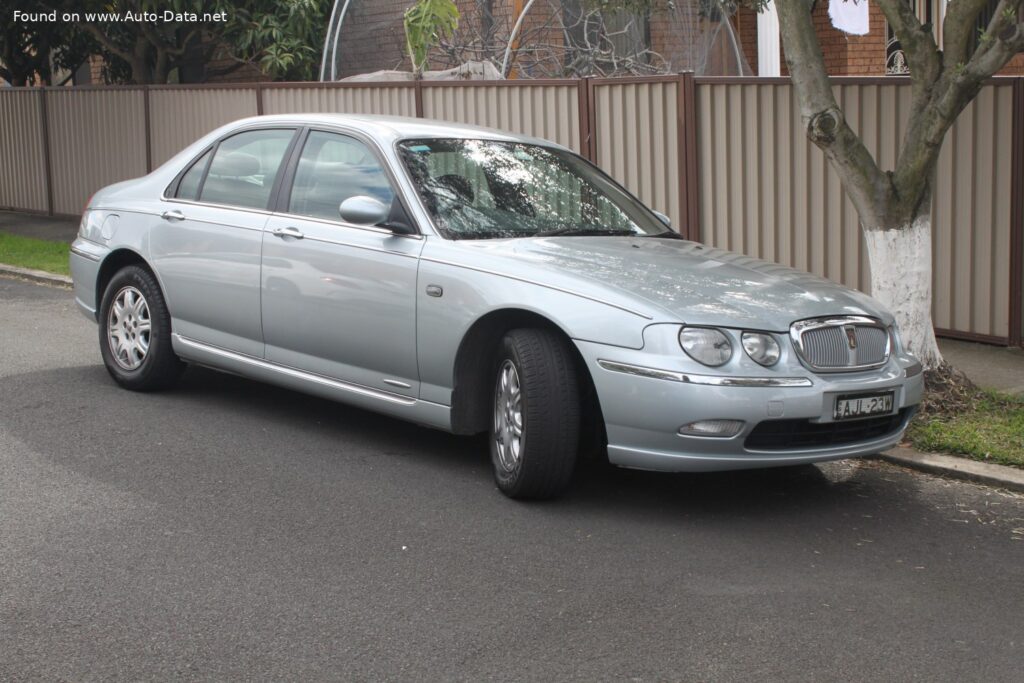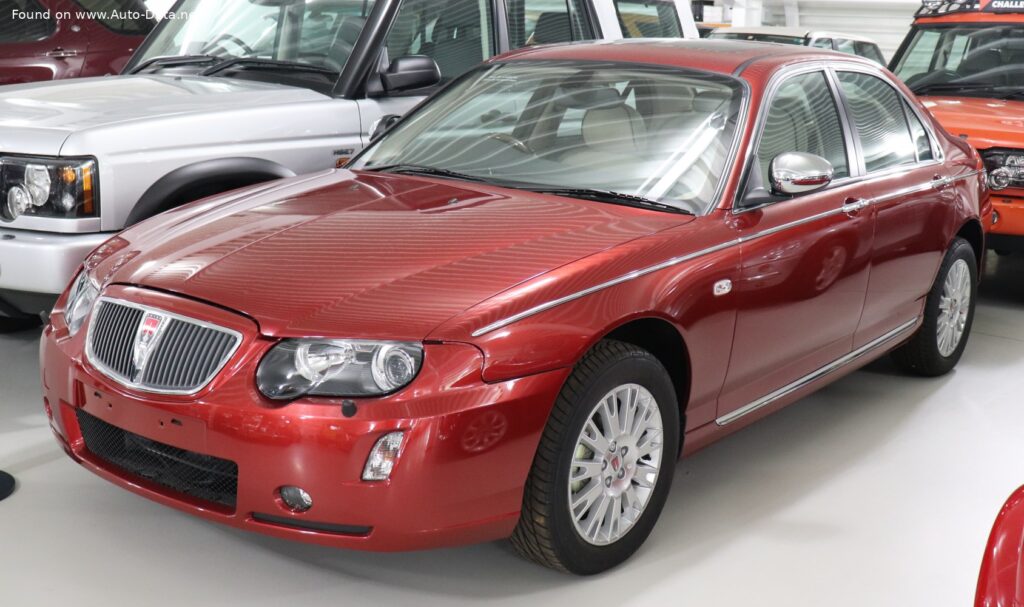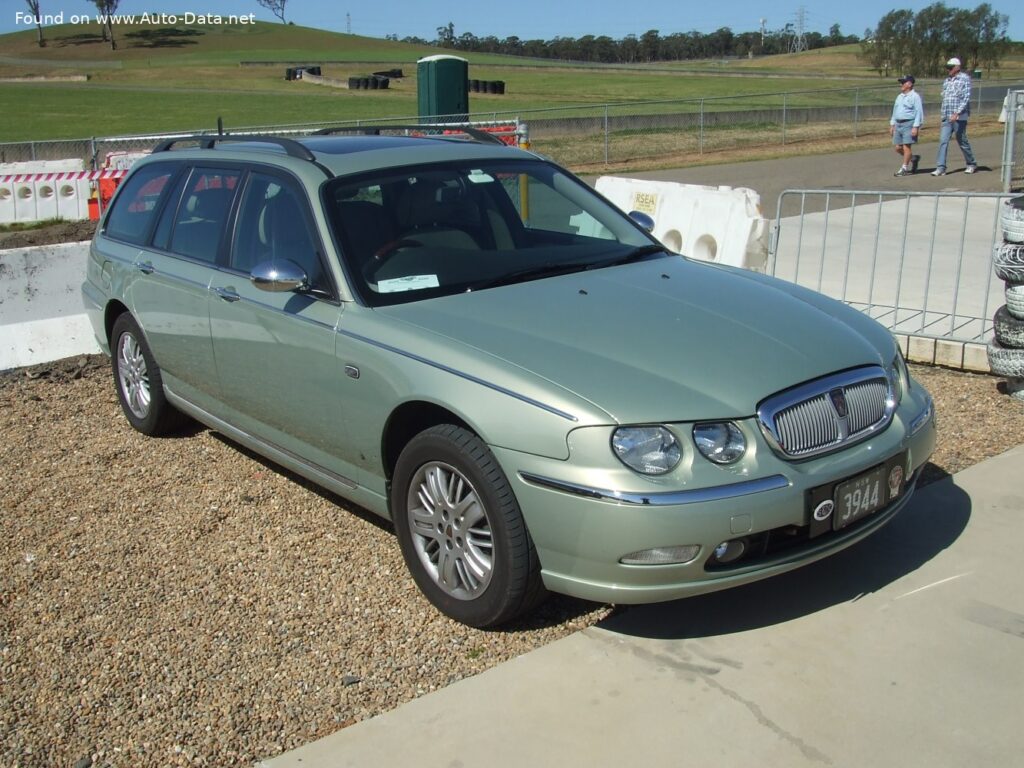
The Rover 75 Tourer 1.8 (120 Hp) represents a significant chapter in the storied history of the British automotive manufacturer, Rover. Launched in 2001, the 75 Tourer was the station wagon variant of the critically acclaimed Rover 75 sedan, which had debuted in 1998. Designed during BMW’s ownership of the Rover Group, the 75 series aimed to blend traditional British luxury and styling with German engineering prowess. Positioned in the executive compact segment, primarily for the European market, the 75 Tourer was conceived as a sophisticated family hauler, offering a compelling blend of comfort, practicality, and a distinctive retro-modern aesthetic that harked back to classic Rovers of the past.
The Rover 75 Tourer 1.8 (120 Hp): A Detailed Overview
The Rover 75 Tourer, produced until 2004, was a five-door, five-seat station wagon (or estate car, as it’s known in Europe) that sought to appeal to buyers looking for an alternative to mainstream offerings from Ford, Opel, and Volkswagen, while also providing a more accessible option than premium German marques like BMW and Audi. This particular variant, equipped with the 1.8-liter naturally aspirated engine, offered a balanced approach to performance and fuel efficiency, making it a popular choice for families and business users across the United Kingdom and continental Europe. While never officially sold in the United States, the Rover 75 Tourer remains a fascinating example of British automotive design and engineering from a pivotal era for the brand.
Engine & Performance
At the heart of the Rover 75 Tourer 1.8 (120 Hp) was Rover’s K-series engine, specifically the 18K4F variant. This 1.8-liter (1796 cm3 or 109.6 cu. in.) inline four-cylinder engine was a DOHC (Dual Overhead Camshaft) unit, featuring four valves per cylinder, totaling 16 valves. It was a naturally aspirated engine, employing a multi-port manifold injection fuel system. The engine was transversely mounted at the front of the vehicle, driving the front wheels through a five-speed manual transmission.
The engine produced 120 horsepower at 5500 rpm, translating to a power-per-liter output of 66.8 Hp/l. Torque figures stood at 160 Nm, or approximately 118.01 lb.-ft., delivered at 4000 rpm. This power output, combined with the vehicle’s kerb weight of 3196.7 lbs. (1450 kg), resulted in a weight-to-power ratio of 12.1 kg/Hp (82.8 Hp/tonne). While not a performance powerhouse, the 1.8-liter engine provided adequate motivation for the Tourer, allowing it to accelerate from 0 to 60 mph in approximately 11 seconds (0-100 km/h in 11.6 seconds) and reach a maximum speed of 121.17 mph (195 km/h). Fuel economy was competitive for its class, with a combined fuel consumption of 7.8 liters per 100 km, which translates to an estimated 30.2 US mpg.
Design & Features
The Rover 75 Tourer carried over the distinctive “retro” styling of its sedan counterpart, characterized by its elegant lines, prominent chrome grille, and quad headlamps. The station wagon body type seamlessly integrated the extended roofline and larger cargo area while maintaining the sophisticated aesthetic. The overall length of the vehicle was 188.66 inches (4792 mm), with a width of 70 inches (1778 mm) and a height of 56.06 inches (1424 mm). Its wheelbase of 108.11 inches (2746 mm) contributed to a comfortable ride and stable handling.
Inside, the 75 Tourer offered a cabin designed for comfort and a touch of classic British luxury. The five-seat configuration provided ample space for occupants, while the true strength of the Tourer lay in its versatility. The trunk (boot) space was generous, starting at 14.13 cubic feet (400 liters) with all seats in place, and expanding significantly to 43.15 cubic feet (1222 liters) when the rear seats were folded down, making it highly practical for families. The fuel tank capacity was 17.17 US gallons (65 liters), offering a decent cruising range.
The Rover 75 Tourer featured a front-wheel-drive architecture. The suspension system comprised a wishbone setup at the front and coil springs at the rear, designed to provide a compliant ride. Braking was handled by ventilated discs at the front and disc brakes at the rear, augmented by an Anti-lock Braking System (ABS) for enhanced safety. Steering was a rack and pinion type with hydraulic power steering, offering a traditional and communicative driving feel. The car typically rode on 195/65 R15 tires, balancing comfort and grip.
Technical Specifications
| Category | Specification |
| General Information | |
| Brand | Rover |
| Model | 75 |
| Generation | 75 Tourer |
| Type (Engine) | 1.8 (120 Hp) |
| Start of Production | 2001 year |
| End of Production | 2004 year |
| Powertrain Architecture | Internal Combustion engine |
| Body Type | Station wagon (estate) |
| Seats | 5 |
| Doors | 5 |
| Performance Specifications | |
| Fuel Consumption (Economy) – urban | 10.6 l/100 km |
| Fuel Consumption (Economy) – extra urban | 6.1 l/100 km |
| Fuel Consumption (Economy) – combined | 7.8 l/100 km |
| CO2 Emissions | 185 g/km |
| Fuel Type | Petrol |
| Acceleration 0 – 100 km/h | 11.6 sec |
| Acceleration 0 – 62 mph | 11.6 sec |
| Acceleration 0 – 60 mph (Calculated) | 11 sec |
| Maximum Speed | 195 km/h |
| Weight-to-Power Ratio | 12.1 kg/Hp |
| Engine Specifications | |
| Power | 120 Hp @ 5500 rpm |
| Power per Liter | 66.8 Hp/l |
| Torque | 160 Nm @ 4000 rpm |
| Engine Layout | Front, Transverse |
| Engine Model/Code | 18K4F |
| Engine Displacement | 1796 cm3 |
| Number of Cylinders | 4 |
| Engine Configuration | Inline |
| Space, Volume, and Weights | |
| Kerb Weight | 1450 kg |
| Trunk (Boot) Space – minimum | 400 l |
| Trunk (Boot) Space – maximum | 1222 l |
| Fuel Tank Capacity | 65 l |
| Dimensions | |
| Length | 4792 mm |
| Width | 1778 mm |
| Height | 1424 mm |
| Wheelbase | 2746 mm |
Legacy and Market Impact
The Rover 75 Tourer, and indeed the entire 75 range, arrived at a tumultuous time for the Rover brand. Despite BMW’s significant investment and technical input, Rover struggled to shake off its reputation for quality issues and an aging product line. The 75 was intended to be a renaissance for the marque, blending classic British elegance with modern reliability and comfort. Its styling, often described as “heritage-inspired,” was a deliberate move to differentiate it from its more contemporary-looking European rivals.
In its primary markets, particularly the UK and parts of Europe, the Rover 75 Tourer 1.8 (120 Hp) competed against a diverse array of vehicles. Mainstream competitors included the Ford Mondeo Estate, Vauxhall/Opel Vectra Caravan, and Volkswagen Passat Variant, all of which offered similar practicality but often with more contemporary designs. The Rover 75 Tourer carved out a niche for buyers who appreciated its distinctive styling, refined ride, and traditional interior ambiance.
Despite its many merits, the Rover 75 Tourer faced challenges. The K-series engine had a somewhat checkered reputation for head gasket issues. Furthermore, the persistent financial difficulties and eventual collapse of MG Rover Group in 2005 overshadowed the car’s inherent qualities and led to a rapid depreciation in value.
Today, the Rover 75 Tourer holds a unique place in automotive history. It represents one of the last truly British-designed and built executive cars before the demise of its parent company. It is increasingly regarded as a modern classic, particularly among enthusiasts who appreciate its unique blend of traditional British luxury, comfortable ride, and practical station wagon utility.