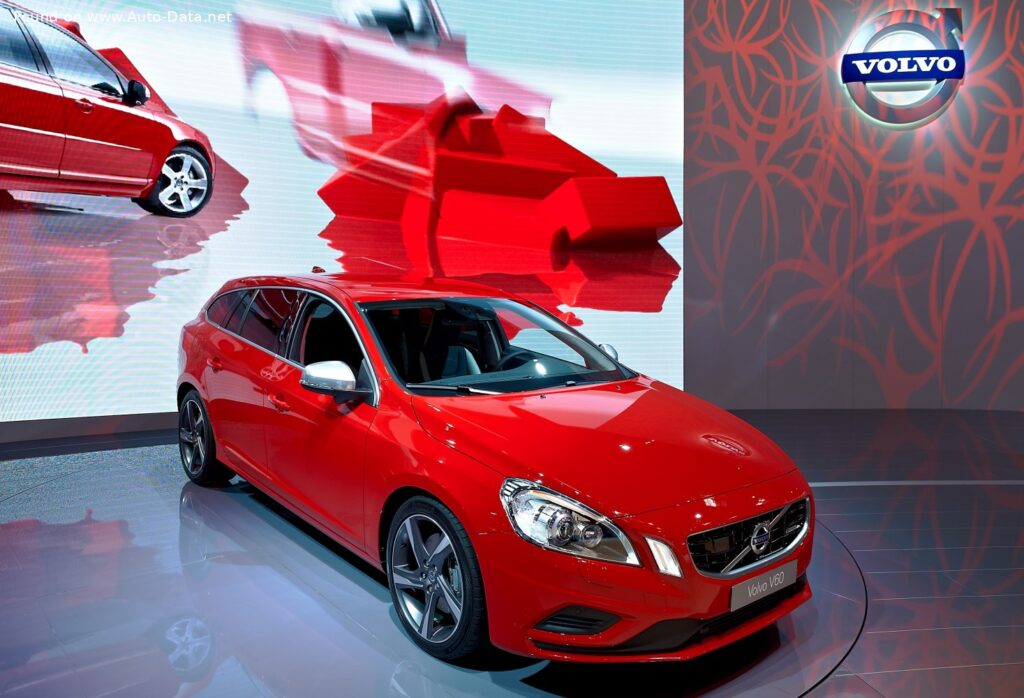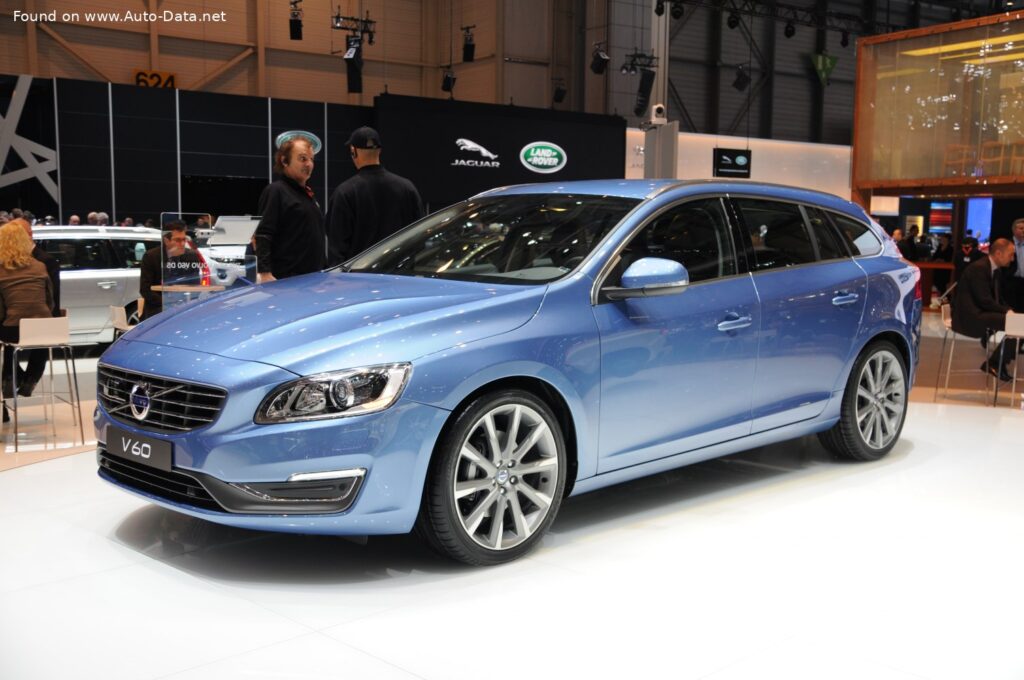
The Volvo V60 I (2013 facelift) 2.0 D4 (190 Hp) Automatic represents a notable iteration of Volvo’s first-generation compact executive station wagon, manufactured between 2015 and 2018. Following a substantial mid-cycle refresh in 2013, this variant, equipped with the 2.0-liter D4 diesel engine and an automatic transmission, exemplified Volvo’s dedication to blending Scandinavian design with efficient, contemporary powertrains. Primarily aimed at the European market, where diesel engines and station wagons remained popular, the V60 D4 offered a compelling combination of performance, fuel economy, and Volvo’s signature safety features. Positioned as a stylish and practical option in the premium segment, the V60 D4 catered to families and professionals seeking a sophisticated daily driver with ample cargo space.
Engine & Performance: The Drive-E D4 Powertrain
The Volvo V60 I (2013 facelift) 2.0 D4 (190 Hp) Automatic is powered by Volvo’s innovative Drive-E powertrain, specifically the D4204T14 engine. This 2.0-liter (1969 cm³, or 120.16 cu. in.) inline four-cylinder turbo-diesel engine was a significant engineering achievement for its time, designed to deliver a robust balance of power and efficiency. It produced 190 horsepower at 4250 rpm, providing spirited acceleration for a family wagon. The engine generated 295.02 lb.-ft. of torque, available from 1750 to 2500 rpm. This ample torque ensured strong pulling power for highway cruising or hauling a fully loaded cabin.
The D4 engine utilized a sophisticated common rail diesel fuel injection system, combined with a turbocharger and intercooler, to optimize combustion and maximize power output while minimizing emissions. With a compression ratio of 15.8:1 and a DOHC valvetrain featuring four valves per cylinder, the engine was designed for smooth operation and responsiveness. Power was delivered to the front wheels through a refined 8-speed automatic transmission, contributing to both the car’s dynamic performance and its fuel efficiency. The V60 D4 could accelerate from 0 to 60 mph in 7.3 seconds and reach a top speed of 139.81 mph.
Fuel economy was a key feature of this V60 variant, boasting a combined fuel consumption rating of 53.5 US mpg (4.4 liters per 100 km). This efficiency was underscored by relatively low CO2 emissions of 116 g/km, reflecting Volvo’s commitment to environmental responsibility. The engine’s front, transverse layout contributed to the vehicle’s front-wheel-drive architecture.
Design & Features: Scandinavian Practicality Meets Modern Elegance
The Volvo V60 I (2013 facelift) retained the sleek profile of the original V60 while incorporating aesthetic enhancements that modernized its appeal. The facelift featured a more cohesive front-end design, replacing the split headlights with a single-piece unit, a wider grille, and redesigned front and rear bumpers. These changes gave the V60 a more sophisticated and contemporary look, aligning it with Volvo’s evolving design language.
As a station wagon, the V60 offered a practical five-door, five-seat configuration. Its dimensions—182.48 inches in length, 71.85 inches in width (82.56 inches including mirrors), and 58.43 inches in height—provided a comfortable and spacious cabin while maintaining a manageable footprint for urban environments. The 109.29-inch wheelbase contributed to a stable ride and generous interior volume. While the minimum trunk space of 15.19 cu. ft. (430 liters) might seem modest, it was intelligently designed for usability, offering a wide opening and a flat load floor.
Inside, the V60 exemplified Scandinavian design principles: minimalist, elegant, and ergonomic. High-quality materials, refined finishes, and intuitive controls created a premium atmosphere. Volvo’s Sensus infotainment system provided essential connectivity and entertainment features. Safety was paramount, with the V60 equipped with ABS, multiple airbags, and Volvo’s renowned structural integrity. Features like City Safety, which automatically brakes to avoid low-speed collisions, were also available.
The V60’s ride and handling were characterized by a comfortable and composed demeanor. It featured an independent McPherson strut front suspension with coil springs and an anti-roll bar, complemented by an independent coil spring rear suspension. This setup provided a smooth ride quality, adept at absorbing road imperfections, while offering predictable handling. The steering system utilized a rack and pinion setup, delivering precise and responsive feedback. Braking duties were handled by ventilated discs at the front and disc brakes at the rear, ensuring strong and consistent stopping power.
Technical Specifications
| Feature | Specification |
| Brand | Volvo |
| Model | V60 |
| Generation | V60 I (2013 facelift) |
| Type (Engine) | 2.0 D4 (190 Hp) Automatic |
| Production Start | 2015 |
| Production End | 2018 |
| Body Type | Station wagon (estate) |
| Seats | 5 |
| Doors | 5 |
| Fuel Consumption (Combined) | 53.5 US mpg (4.4 l/100 km) |
| CO2 Emissions | 116 g/km |
| Fuel Type | Diesel |
| Acceleration 0-60 mph | 7.3 seconds |
| Maximum Speed | 139.81 mph (225 km/h) |
| Power | 190 Hp @ 4250 rpm |
| Power per liter | 96.5 Hp/l |
| Torque | 295.02 lb.-ft. @ 1750-2500 rpm (400 Nm) |
| Engine Layout | Front, Transverse |
| Engine Model/Code | D4204T14 |
| Engine Displacement | 2.0 liters (1969 cm³ / 120.16 cu. in.) |
| Number of Cylinders | 4 |
| Engine Configuration | Inline |
| Cylinder Bore | 3.23 in. (82 mm) |
| Piston Stroke | 3.67 in. (93.2 mm) |
| Compression Ratio | 15.8:1 |
| Valves per Cylinder | 4 |
| Fuel Injection System | Diesel Commonrail |
| Engine Aspiration | Turbocharger, Intercooler |
| Valvetrain | DOHC |
| Engine Oil Capacity | 5.49 US qt (5.2 l) |
| Coolant Capacity | 9.4 US qt (8.9 l) |
| Trunk Space (Minimum) | 15.19 cu. ft. (430 l) |
| Fuel Tank Capacity | 17.83 US gal (67.5 l) |
| Max. Roof Load | 165.35 lbs. (75 kg) |
| Permitted Trailer Load (with brakes, 8%) | 3968.32 lbs. (1800 kg) |
| Permitted Trailer Load (with brakes, 12%) | 3306.93 lbs. (1500 kg) |
| Length | 182.48 in. (4635 mm) |
| Width | 71.85 in. (1825 mm) |
| Width (with mirrors folded) | 74.76 in. (1899 mm) |
| Width (including mirrors) | 82.56 in. (2097 mm) |
| Height | 58.43 in. (1484 mm) |
| Wheelbase | 109.29 in. (2776 mm) |
| Front Track | 62.52 – 62.13 in. (1588-1578 mm) |
| Rear Track | 62.4 – 62.01 in. (1585-1575 mm) |
| Ride Height (Ground Clearance) | 5.35 in. (136 mm) |
| Drag Coefficient (Cd) | 0.29 |
| Minimum Turning Circle | 37.73 – 40.68 ft. (11.5 – 12.4 m) |
| Drivetrain Architecture | Front-wheel drive |
| Number of Gears | 8, automatic transmission |
| Front Suspension | Independent, McPherson with coil spring and anti-roll bar |
| Rear Suspension | Independent coil spring |
| Front Brakes | Ventilated discs |
| Rear Brakes | Disc |
| Assisting Systems | ABS (Anti-lock braking system) |
| Steering Type | Steering rack and pinion |
Legacy and Market Impact of the Volvo V60 I (2013 facelift) 2.0 D4 (190 Hp) Automatic
The Volvo V60 I (2013 facelift) 2.0 D4 (190 Hp) Automatic strengthened Volvo’s position in the competitive European premium compact executive segment. Its reputation was built upon Volvo’s core values: safety, understated luxury, and practicality. In its primary markets, the V60 D4 was a strong competitor against the Audi A4 Avant, BMW 3 Series Touring, and Mercedes-Benz C-Class Estate. While German competitors often emphasized sportiness, the V60 carved out a niche by prioritizing comfort, elegant design, and a serene driving experience.
This V60 variant is significant for being one of the early adopters of Volvo’s modular Drive-E engine family, showcasing the brand’s shift towards more efficient, in-house developed powertrains. The D4 engine demonstrated that a 2.0-liter diesel could deliver substantial power and torque while achieving impressive fuel economy and lower emissions. Its 8-speed automatic transmission was also a testament to Volvo’s commitment to modern drivetrain technology.
The V60 D4’s success underscored the enduring appeal of the premium station wagon in Europe, even as SUVs gained popularity. It offered a blend of car-like driving dynamics with SUV-rivaling practicality, making it a favorite among families and individuals who valued versatility without compromising on style or performance. This generation of the V60, particularly post-facelift, helped bridge the gap between Volvo’s older P3 platform models and the new Scalable Product Architecture (SPA). The V60 I, with its D4 diesel engine, cemented Volvo’s image as a forward-thinking manufacturer capable of delivering sophisticated, efficient, and safe vehicles.