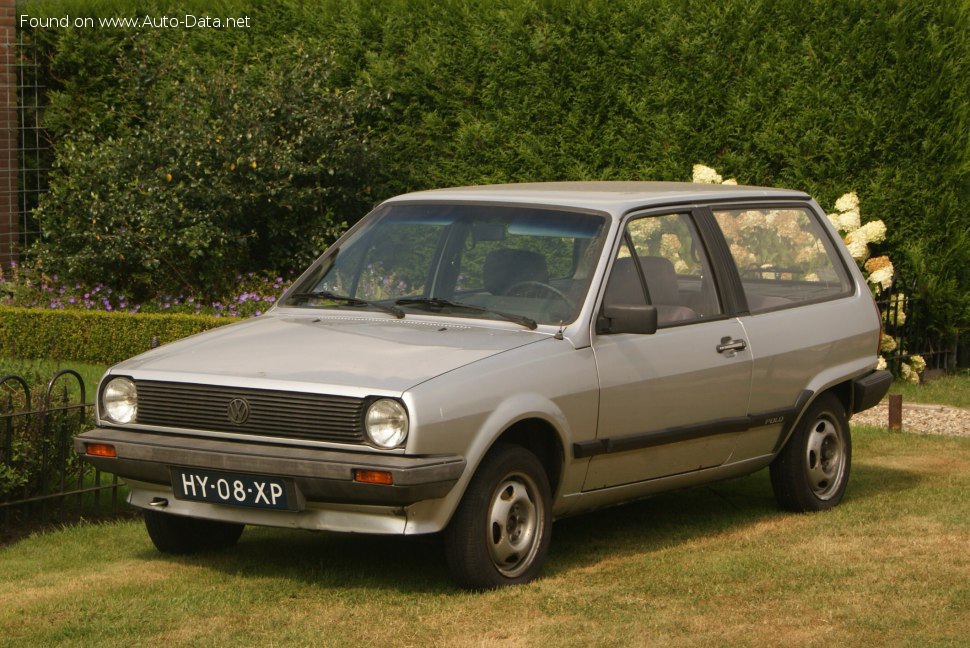
The Volkswagen Polo II (86C) 1.4 D (48 Hp) represents a significant chapter in Volkswagen’s history of producing efficient and reliable compact cars for the European market. Introduced in 1981, the 86C generation Polo continued the legacy of its predecessor, offering a practical and affordable transportation solution. This article focuses on the later iterations of this generation, specifically the 1.4 D model produced between 1990 and 1994. While never officially offered for sale in the United States, the Polo II, and particularly the 1.4 D variant, was a mainstay in Europe, providing economical motoring for a wide range of drivers. It served as Volkswagen’s entry-level model, positioned below the larger Golf, and exemplified a commitment to straightforward engineering and fuel efficiency.
The Volkswagen Polo II (86C) 1.4 D (48 Hp): A Detailed Overview
The Polo II, designated internally as the 86C, marked a substantial evolution from the original Polo (Type A53). It featured a more modern design, improved interior space, and a wider range of engine options. The 1.4 D model, with its diesel engine, catered to drivers prioritizing fuel economy and durability. This variant was particularly popular in countries with high fuel costs and a preference for diesel power. The Polo II’s success stemmed from its ability to blend practicality, affordability, and Volkswagen’s reputation for build quality. It was a car designed for everyday use, perfectly suited to navigating crowded city streets and providing reliable transportation for families and individuals alike.
A European Market Staple
Unlike many vehicles that eventually found their way to the US market through grey imports, the Polo II remained largely a European phenomenon. Its compact size and focus on fuel efficiency didn’t align with the American preference for larger, more powerful vehicles at the time. However, within Europe, it competed with rivals such as the Ford Fiesta, Opel Corsa (Vauxhall Corsa in the UK), and Peugeot 205. The Polo distinguished itself through its solid build quality, comfortable ride, and relatively spacious interior for its class. The 1.4 D model specifically appealed to those seeking the lowest possible running costs, making it a popular choice for fleet operators and budget-conscious buyers.
Engine & Performance
The heart of the 1990-1994 Volkswagen Polo II (86C) 1.4 D (48 Hp) is a naturally aspirated 1.4-liter (1391 cm3 or 84.88 cubic inches) inline-four diesel engine, identified by the engine code “1W.” This engine was not designed for high performance; instead, it prioritized longevity and exceptional fuel economy. It produced a modest 48 horsepower at 4500 rpm and 62.69 lb.-ft. (85 Nm) of torque at a relatively low 2700 rpm. The engine’s power-to-liter ratio was 34.5 Hp/l, a typical figure for a non-turbocharged diesel engine of that era.
The engine’s layout was front-transverse, driving the front wheels through a standard 5-speed manual transmission. This configuration was common in compact European cars, optimizing packaging and providing efficient power delivery. A high compression ratio of 22.3:1, characteristic of diesel engines, facilitated combustion without the need for spark plugs. Fuel was delivered via a precombustion chamber injection system, a technology prevalent before the widespread adoption of direct injection. This system offered smoother operation and reduced noise compared to earlier direct injection systems, although it was less efficient. The valvetrain employed a simple SOHC (Single Overhead Camshaft) design with two valves per cylinder, emphasizing reliability and ease of maintenance.
Performance figures reflected the engine’s focus on economy. Acceleration from 0 to 60 mph took approximately 18.5 seconds (0-100 km/h in 19.5 seconds), and the top speed was around 88.23 mph (142 km/h). These numbers clearly position the Polo 1.4 D as a practical commuter vehicle, not a performance-oriented machine. However, its fuel economy was impressive, often exceeding 50 miles per gallon in real-world driving conditions. This made it an ideal choice for drivers covering long distances or those seeking to minimize their fuel expenses.
Design & Features
The Volkswagen Polo II (86C) 1.4 D (48 Hp) was typically offered as a three-door hatchback, although a five-door version was also available. The body style was characterized by its clean lines and functional design. While not overtly stylish, the Polo II presented a modern and understated appearance. The interior was simple and practical, with a focus on durability and ease of use. The dashboard layout was straightforward, with clearly labeled controls and a functional instrument cluster.
Safety features were relatively basic by modern standards, reflecting the era in which the car was produced. Standard equipment typically included seatbelts, although airbags were not yet commonplace. The Polo II’s structure provided a reasonable level of crash protection, but it lacked the advanced safety technologies found in contemporary vehicles. The emphasis was on preventative safety, with good visibility and predictable handling characteristics.
Other features included manual windows and door locks, a basic audio system (often an optional extra), and a relatively small trunk capacity. The Polo II was not designed to be a luxury vehicle; it was a no-frills, dependable mode of transportation. Its appeal lay in its simplicity, reliability, and affordability. The 1.4 D model, in particular, was often specified with steel wheels and basic trim levels, further emphasizing its utilitarian nature.
Technical Specifications
| Engine Type | Inline-4 Diesel |
| Engine Displacement | 1.4 L (1391 cm3 / 84.88 cu in) |
| Engine Code | 1W |
| Horsepower | 48 hp @ 4500 rpm |
| Torque | 62.69 lb-ft (85 Nm) @ 2700 rpm |
| Compression Ratio | 22.3:1 |
| Fuel System | Precombustion Chamber Injection |
| Valvetrain | SOHC, 2 valves/cylinder |
| Transmission | 5-speed Manual |
| Drivetrain | Front-Wheel Drive |
| 0-60 mph | 18.5 seconds |
| Top Speed | 88.23 mph (142 km/h) |
| Body Type | 3-door Hatchback (5-door available) |