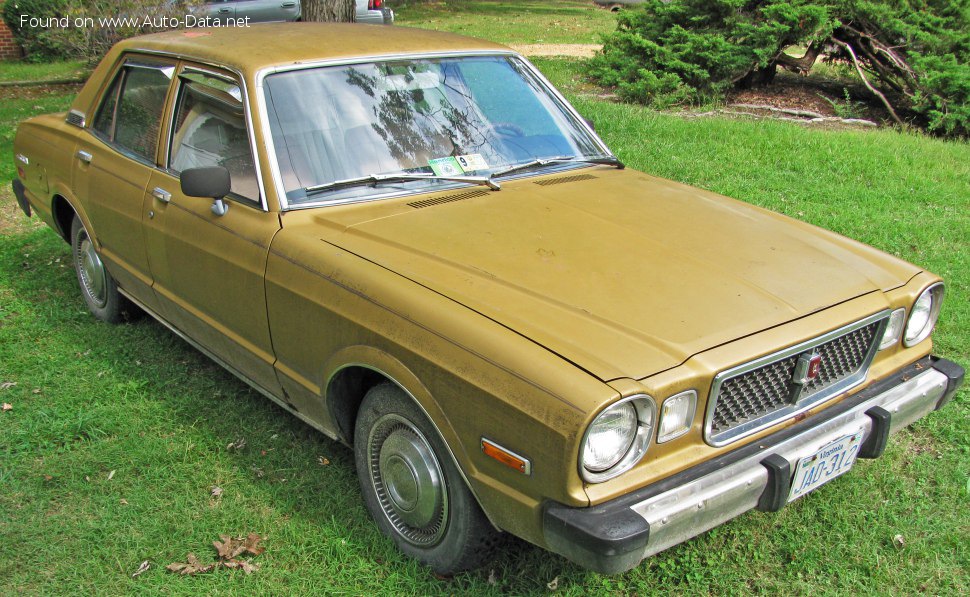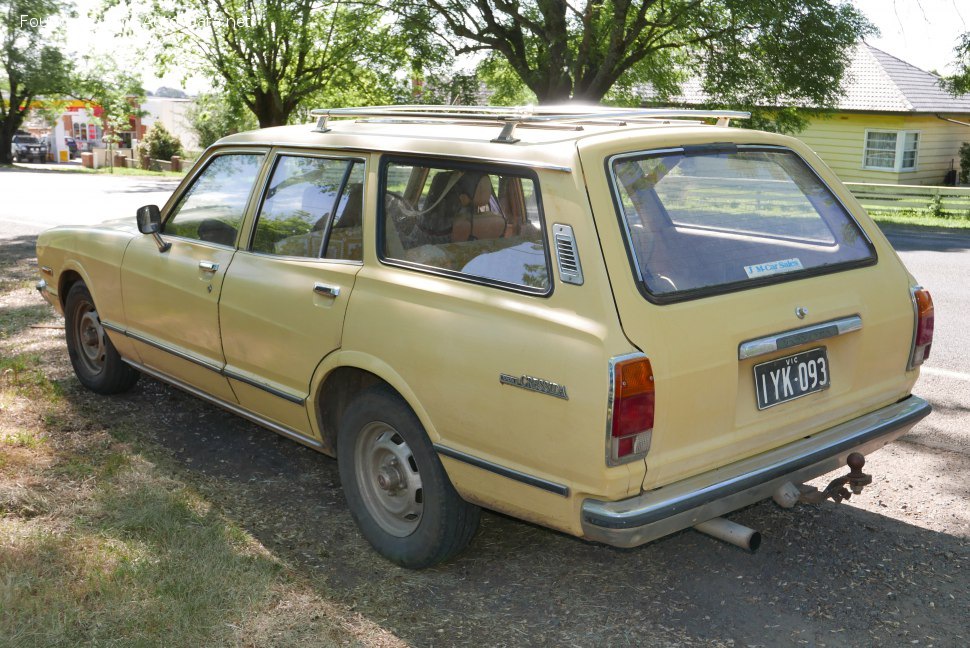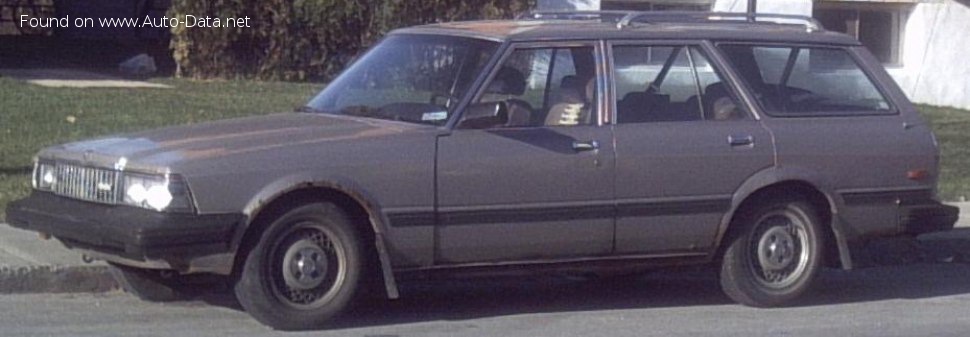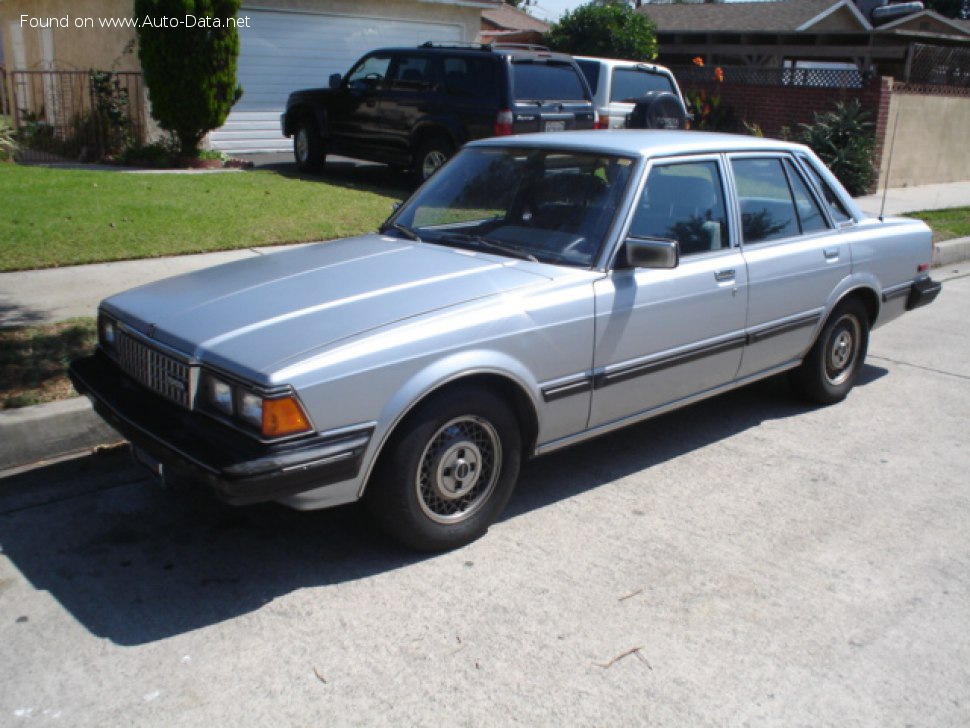
The Toyota Cressida (X6) represents the third generation of Toyota’s executive sedan, a model that played a pivotal role in establishing the automaker’s reputation for reliability, quality, and comfort in a more upscale segment. Produced from 1980 to 1984, the X6 generation built upon the success of its predecessors, offering a blend of traditional Japanese engineering excellence with contemporary styling and features. Positioned above the ubiquitous Corona and Camry, the Cressida was Toyota’s flagship sedan in many markets, including North America, Europe, and Asia, before the advent of the dedicated Lexus luxury brand. It aimed to provide a sophisticated driving experience and a high level of standard equipment, appealing to discerning buyers who sought refinement without the premium price tag of European luxury marques.
This particular variant, the Toyota Cressida (X6) 2.0 (RX60) (105 Hp), was a key offering in several international markets, providing a balance of fuel efficiency and adequate performance for daily driving. While larger engine options were available, especially in North America, the 2.0-liter model underscored Toyota’s commitment to offering diverse powertrains to meet varying market demands and fuel economy standards of the early 1980s. The X6 generation is fondly remembered by enthusiasts and collectors as a testament to Toyota’s robust build quality and understated elegance, paving the way for future advancements in automotive comfort and technology.
Toyota Cressida (X6) 2.0 (RX60): Engine & Performance
At the heart of the Toyota Cressida (X6) 2.0 (RX60) lies the 21R engine, a 2.0-liter (1968 cc) naturally aspirated inline-four gasoline unit. This powertrain architecture, an Internal Combustion Engine, was renowned for its durability and smooth operation, hallmarks of Toyota engineering during this era. Producing a respectable 105 horsepower (Hp), the 21R engine was designed not for outright speed, but for reliable and comfortable daily commuting. Its power delivery was linear and predictable, making the Cressida an easy car to drive in both urban and highway environments.
The engine’s naturally aspirated design contributed to its longevity and straightforward maintenance, a significant appeal for buyers prioritizing dependability. With an engine oil capacity of 4.3 liters (4.54 US quarts) and a coolant capacity of 8 liters (8.45 US quarts), the 21R was designed for efficient thermal management and lubrication, further enhancing its reliability. While 105 Hp might seem modest by today’s standards, it was competitive for a mid-size sedan in the early 1980s, especially considering its focus on fuel economy and smooth operation rather than aggressive performance. The Cressida with the 2.0-liter engine provided sufficient power for comfortable cruising and effortless acceleration in typical driving scenarios, upholding its reputation as a refined and dependable family sedan.
Design & Features of the Toyota Cressida (X6)
The Toyota Cressida (X6) adopted a more contemporary and angular design aesthetic compared to its rounder X5 predecessor, aligning with the prevailing automotive design trends of the early 1980s. As a traditional four-door sedan with seating for five occupants, it offered a spacious and comfortable cabin, emphasizing practicality and passenger comfort. The exterior styling featured crisp lines, a more upright grille, and larger glass areas, which not only contributed to a sense of airiness inside but also improved outward visibility—a crucial safety feature of the era.
Inside, the Cressida (X6) was a testament to Toyota’s commitment to quality and ergonomics. The interior was well-appointed for its class, often featuring plush velour or optional leather upholstery, woodgrain trim accents, and a logical dashboard layout. Features that were considered advanced for the time, such as power windows, power locks, air conditioning, and a high-quality stereo system, were commonly available or standard on higher trims. Safety features, while rudimentary by modern standards, included three-point seatbelts for front occupants, impact-absorbing bumpers, and a sturdy unibody construction. The Cressida’s design ethos was one of understated elegance and functional luxury, aiming to provide a refined driving and riding experience that stood the test of time both mechanically and aesthetically.
Market Positioning
The Cressida occupied a unique position in Toyota’s lineup. It was intended to bridge the gap between the more affordable Corona and Camry models and the emerging luxury segment. In markets like North America, it provided a compelling alternative to European sedans, offering a similar level of comfort and features at a more accessible price point. Its success helped pave the way for Toyota’s eventual foray into the luxury car market with the Lexus brand.
Technical Specifications: Toyota Cressida (X6) 2.0 (RX60) (105 Hp)
| Category | Specification |
| Brand | Toyota |
| Model | Cressida |
| Generation | Cressida (X6) |
| Type (Engine) | 2.0 (RX60) (105 Hp) |
| Start of Production | 1980 year |
| End of Production | 1984 year |
| Powertrain Architecture | Internal Combustion engine |
| Body Type | Sedan |
| Seats | 5 |
| Doors | 4 |
| Fuel Type | Petrol (Gasoline) |
| Power | 105 Hp |
| Engine Model/Code | 21R |
| Engine Aspiration | Naturally aspirated engine |
| Engine Oil Capacity | 4.3 liters (4.54 US quarts) |
| Coolant Capacity | 8 liters (8.45 US quarts) |
| Fuel Tank Capacity | 65 liters (17.17 US gallons) |
Legacy and Market Impact of the Toyota Cressida (X6)
The Toyota Cressida (X6) left an indelible mark on the automotive landscape, solidifying Toyota’s reputation not just as a maker of economical and reliable cars, but also as a serious contender in the more premium segments. Its legacy is deeply intertwined with Toyota’s strategic move towards offering more refined and luxurious vehicles. In its primary markets, including North America, Europe, and parts of Asia, the Cressida was often seen as a smart alternative to more expensive European luxury sedans, offering comparable comfort and features with the added benefit of Toyota’s legendary reliability and lower running costs.
Competitors during its production run included a diverse range of vehicles. In the North American market, it went head-to-head with models like the Nissan Maxima, Mazda 626, and even entry-level offerings from European brands such as the BMW 3 Series or Mercedes-Benz 190E, albeit at a significantly lower price point. Globally, it also competed with vehicles like the Ford Granada, Opel Rekord, and various Japanese domestic market (JDM) equivalents. The Cressida consistently earned accolades for its smooth ride, quiet cabin, and “bulletproof” mechanicals, making it a favorite among those who valued long-term ownership and minimal hassle.
The X6 generation, in particular, helped bridge the gap between Toyota’s mainstream offerings and the nascent luxury aspirations that would eventually culminate in the launch of the Lexus brand. Many of the design philosophies, engineering principles, and focus on customer satisfaction honed with the Cressida directly influenced the development of early Lexus models like the ES. While the Cressida nameplate was eventually retired in the early 1990s, with its role being absorbed by the growing Camry lineup in some markets and the Lexus ES in others, its impact on Toyota’s evolution into a global automotive powerhouse, capable of competing in all segments, cannot be overstated. Today, the Toyota Cressida (X6) is remembered as a classic example of 1980s Japanese engineering, a dependable and comfortable sedan that offered a touch of understated luxury to the masses.