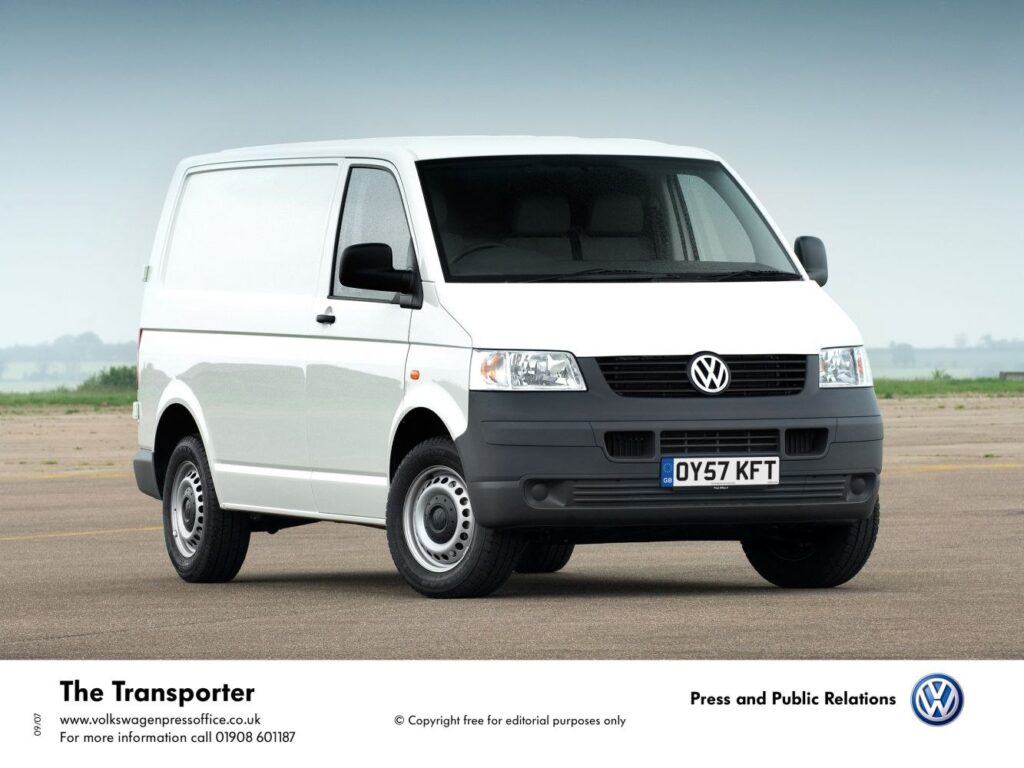
The Volkswagen Transporter (T5), specifically the panel van variant with the 2.0-liter engine producing 116 horsepower, represents the fifth generation of Volkswagen’s iconic commercial vehicle. Introduced in 2003 and continuing through 2015, the T5 was a significant evolution of the Transporter lineage, building upon the success of its predecessors while incorporating modern engineering and safety features. This generation moved the Transporter towards a more car-like driving experience, offering improved comfort and refinement alongside its inherent practicality. The T5 was sold extensively throughout Europe and other global markets, serving as a workhorse for businesses, tradespeople, and recreational users alike. While not officially sold in the United States as a new vehicle due to import regulations and the popularity of American-made vans, the T5 has gained a following among enthusiasts and has been imported through grey market channels. The L1H1 designation refers to the vehicle’s wheelbase and roof height – a short wheelbase and low roof, making it a particularly maneuverable and fuel-efficient option within the T5 range.
Volkswagen Transporter T5: A Detailed Overview
The T5 Transporter marked a departure from the rear-engine, rear-wheel-drive layout of earlier generations, adopting a front-engine, front-wheel-drive configuration as standard, with optional all-wheel drive (4Motion) available. This change significantly improved handling and packaging efficiency. The T5’s design also represented a move towards a more contemporary aesthetic, blending functionality with a more streamlined appearance. It was available in a wide variety of configurations, including panel vans, Kombi (passenger/cargo), and Caravelle (passenger) versions, catering to diverse needs. The 2.0-liter engine option, while not the most powerful in the T5 lineup, provided a good balance of fuel economy and usability for everyday commercial applications.
Engine & Performance
The 2.0-liter four-cylinder diesel engine powering this T5 variant is a member of Volkswagen’s widely used engine family. Producing 116 horsepower (HP) and approximately 221 lb-ft of torque, it delivers adequate performance for typical commercial duties. The engine utilizes direct injection technology and a turbocharger to optimize power output and fuel efficiency. While specific power figures varied slightly depending on the year and market, the 116 HP version was a common offering, particularly in Europe. The engine is typically paired with a five-speed manual transmission, although a six-speed automatic transmission was also available as an option. Acceleration is modest, prioritizing usability and load-carrying capacity over outright speed. The front-wheel-drive configuration contributes to relatively good fuel economy, making it a cost-effective choice for businesses. The 4Motion all-wheel-drive system, when equipped, enhances traction and stability, particularly in challenging weather conditions or on slippery surfaces. The engine’s durability and relatively straightforward maintenance requirements contribute to the T5’s reputation as a reliable work vehicle. The engine meets Euro 4 and Euro 5 emissions standards, depending on the production year, reflecting Volkswagen’s commitment to reducing environmental impact.
Design & Features
The T5 Transporter L1H1 panel van features a practical and functional design. The short wheelbase and low roof height make it relatively easy to maneuver in urban environments and park in tight spaces. The panel van configuration provides a large, unobstructed cargo area, ideal for transporting goods and equipment. The rear doors typically feature a 180-degree opening for easy loading and unloading, and a sliding side door on at least one side is standard. The interior is designed with practicality in mind, featuring durable materials and a functional layout. Driver and passenger seats are typically supportive and adjustable, providing a comfortable driving experience even on long journeys. Standard features often include power windows, central locking, and an adjustable steering wheel. Safety features, particularly in later models, were enhanced to meet evolving safety standards. These included anti-lock brakes (ABS), electronic stability control (ESC), and airbags for the driver and front passenger. The T5’s design also incorporates a relatively aerodynamic shape, contributing to improved fuel efficiency. The vehicle’s robust construction and durable components ensure its longevity and ability to withstand the rigors of commercial use. The L1H1 configuration is particularly popular with businesses requiring a compact and versatile van for deliveries, maintenance work, or mobile workshops.
Technical Specifications
| Model | Volkswagen Transporter T5 Panel Van 2.0 |
| Engine Type | Inline-4 Cylinder Diesel |
| Engine Displacement | 1,968 cc (2.0 Liters) |
| Maximum Power | 116 HP (85 kW) @ 4,000 rpm |
| Maximum Torque | 221 lb-ft (300 Nm) @ 1,900 rpm |
| Transmission | 5-Speed Manual (standard), 6-Speed Automatic (optional) |
| Drivetrain | Front-Wheel Drive (standard), 4Motion All-Wheel Drive (optional) |
| Wheelbase | 2,469 mm (97.2 inches) – L1 |
| Roof Height | 1,940 mm (76.4 inches) – H1 |
| Cargo Capacity (approx.) | 5.8 m³ (205 ft³) |
| Gross Vehicle Weight (GVW) | 2,800 kg (6,173 lbs) |
| Fuel Tank Capacity | 70 Liters (18.5 gallons) |
| Fuel Consumption (Combined) | 7.5 – 8.5 L/100km (31 – 33 mpg) – varies by transmission and driving conditions |
| Brakes | Disc brakes front and rear, ABS |
| Suspension | Independent suspension front and rear |
The Volkswagen Transporter T5, particularly the 2.0-liter panel van variant, remains a popular choice for businesses and individuals seeking a reliable, practical, and versatile commercial vehicle. Its robust construction, efficient engine, and adaptable design have cemented its place as a modern classic in the van segment. Despite not being widely available through official channels in the US market, its enduring appeal and reputation for quality have led to a growing enthusiast base and a steady stream of imports, ensuring its continued presence on American roads.