
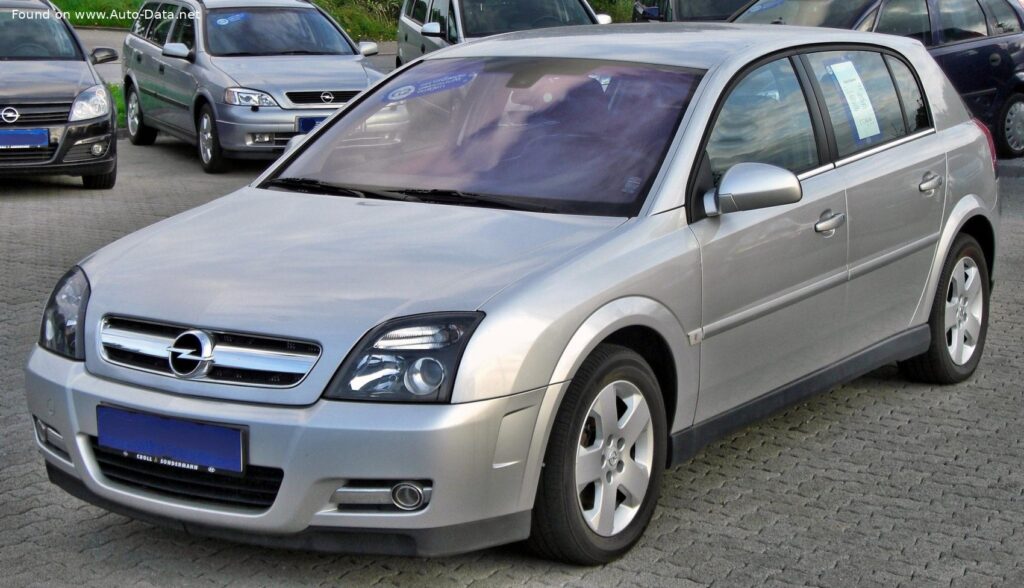
The Opel Signum 2.0 DTI ECOTEC (100 Hp) represents a distinctive and ambitious offering from General Motors’ European arm, Opel. Introduced in May 2003, the Signum was designed specifically for the European market and was not sold in the United States. It aimed to bridge the gap between traditional sedans and station wagons, presenting a versatile “extended hatchback” body style within the premium large family car segment. The 2.0 DTI ECOTEC variant emphasized Opel’s commitment to diesel technology and fuel efficiency, key considerations for European consumers at the time, offering a blend of practicality and a refined driving experience.
Opel Signum 2.0 DTI ECOTEC: A European Executive Hatchback
The Opel Signum was conceived as a more progressive alternative to conventional D-segment vehicles. It sought to appeal to drivers who desired generous interior space, comfortable long-distance travel, and the efficiency of a diesel engine. While not a mainstream success, the Signum demonstrated Opel’s willingness to experiment with form and function, offering a unique proposition in a competitive market.
Engine & Performance
The Opel Signum 2.0 DTI ECOTEC is powered by a 2.0-liter inline four-cylinder diesel engine, designated Y20DTH, with a displacement of 1,994 cubic centimeters (121.68 cubic inches). This engine produces 100 horsepower at 4,000 rpm and a substantial 169.64 lb.-ft. of torque at 1,500 rpm. The engine’s low-end torque delivery is a characteristic benefit of diesel engines, providing responsive acceleration and relaxed cruising, particularly well-suited for highway driving and urban commutes.
The Y20DTH engine incorporates a common rail direct fuel injection system, enabling precise fuel delivery and optimized combustion for improved power and fuel economy. A turbocharger with an intercooler further enhances performance by increasing air density, leading to more efficient combustion. The engine features a Double Overhead Camshaft (DOHC) valvetrain with four valves per cylinder, maximizing airflow and engine breathing. A compression ratio of 18.5:1, typical for diesel engines of this era, contributes to robust and reliable operation. Power is transferred to the front wheels through a 5-speed manual transmission, a common and efficient configuration for vehicles in this class. This powertrain combination allows the Signum to accelerate from 0 to 60 mph in 13.3 seconds, reaching a top speed of 114.95 mph. Fuel efficiency is a notable strength, with a combined cycle rating of approximately 39.9 US mpg (5.9 liters per 100 km), reflecting Opel’s ECOTEC philosophy.
Design & Features
The Opel Signum features a distinctive 5-door hatchback body style, often described as an “executive hatchback” or “luxury wagon” due to its elongated proportions. Measuring 182.52 inches in length, 70.79 inches in width, and 57.72 inches in height, the Signum is a sizable vehicle. Its unusually long wheelbase of 111.42 inches contributes significantly to its spacious interior, particularly benefiting rear passenger legroom. This emphasis on rear passenger comfort was a deliberate design choice, catering to business travelers and families needing ample space.
The interior is designed to accommodate five occupants and offers a focus on versatility. While specific trim details vary, Opel typically equipped Signum models with features such as climate control, power windows, and an infotainment system. The trunk provides 12.89 cubic feet (365 liters) of space with the rear seats up, expanding to a generous 49.79 cubic feet (1410 liters) with the seats folded down. Safety features include an anti-lock braking system (ABS) and ventilated front disc brakes, alongside disc brakes at the rear. The suspension utilizes coil springs at both the front and rear, aiming for a comfortable and stable ride. Hydraulic rack and pinion steering provides responsive handling. The vehicle rides on 215/55 R16 tires mounted on 6.5J x 16-inch alloy wheels, balancing grip and ride quality. The aerodynamic drag coefficient of 0.33 is commendable for a vehicle of its shape and size, contributing to fuel efficiency and reduced wind noise.
Technical Specifications
| Category | Specification |
| Brand | Opel |
| Model | Signum |
| Generation | Signum |
| Engine Type | 2.0 DTI ECOTEC (100 Hp) |
| Start of Production | May, 2003 |
| End of Production | November, 2004 |
| Powertrain Architecture | Internal Combustion engine, Front Wheel Drive |
| Body Type | Hatchback |
| Seats | 5 |
| Doors | 5 |
| Fuel Consumption (Urban) | 7.9 l/100 km (29.8 US mpg) |
| Fuel Consumption (Extra Urban) | 4.8 l/100 km (49 US mpg) |
| Fuel Consumption (Combined) | 5.9 l/100 km (39.9 US mpg) |
| Fuel Type | Diesel |
| Acceleration 0-60 mph | 13.3 sec |
| Maximum Speed | 185 km/h (114.95 mph) |
| Weight-to-power ratio | 16 kg/Hp, 62.7 Hp/tonne |
| Weight-to-torque ratio | 6.9 kg/Nm, 144.2 Nm/tonne |
| Power | 100 Hp @ 4000 rpm |
| Power per liter | 50.2 Hp/l |
| Torque | 230 Nm (169.64 lb.-ft.) @ 1500 rpm |
| Engine Layout | Front, Transverse |
| Engine Model/Code | Y20DTH |
| Engine Displacement | 1994 cm3 (121.68 cu. in.) |
| Number of Cylinders | 4 |
| Engine Configuration | Inline |
| Cylinder Bore | 84 mm (3.31 in.) |
| Piston Stroke | 90 mm (3.54 in.) |
| Compression Ratio | 18.5:1 |
| Number of Valves per Cylinder | 4 |
| Fuel Injection System | Diesel Commonrail |
| Engine Aspiration | Turbocharger, Intercooler |
| Valvetrain | DOHC |
| Kerb Weight | 1595 kg (3516.37 lbs) |
| Trunk Space (Minimum) | 365 l (12.89 cu. ft.) |
| Trunk Space (Maximum) | 1410 l (49.79 cu. ft.) |
| Length | 4636 mm (182.52 in.) |
| Width | 1798 mm (70.79 in.) |
| Height | 1466 mm (57.72 in.) |
| Wheelbase | 2830 mm (111.42 in.) |
| Drag Coefficient (Cd) | 0.33 |
Legacy and Market Impact
The Opel Signum occupied a unique position in the European automotive market. While it didn’t achieve the sales success of more conventional rivals like the Volkswagen Passat or Ford Mondeo, it demonstrated Opel’s willingness to innovate and explore new segment definitions. Its spacious interior, comfortable ride, and fuel-efficient diesel engine appealed to a specific segment of buyers. Despite its polarizing styling, the Signum remains a noteworthy example of European automotive design and engineering from the early 2000s, representing an attempt to redefine the executive car for a changing market.
