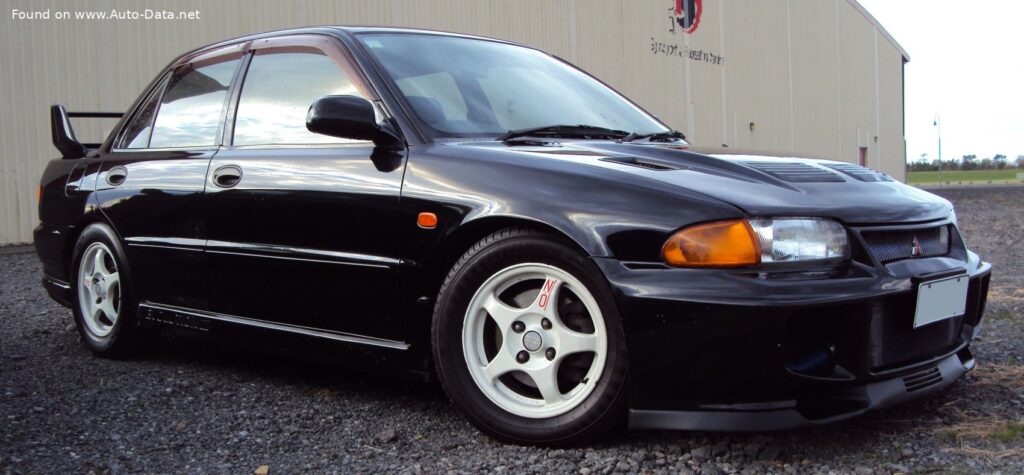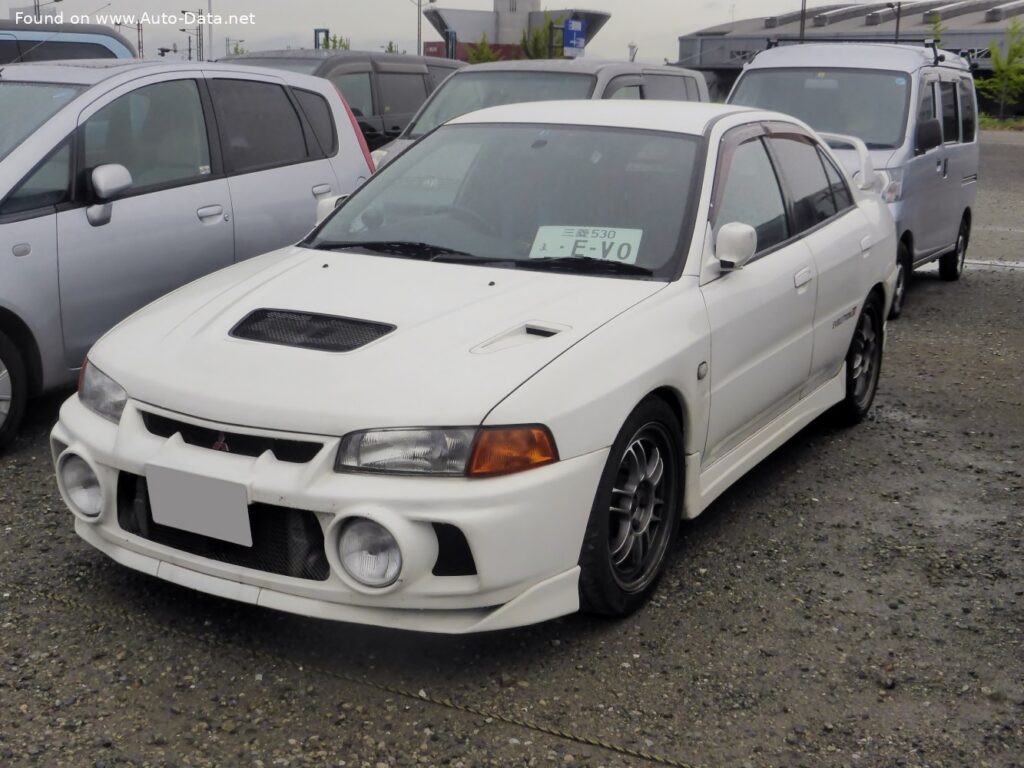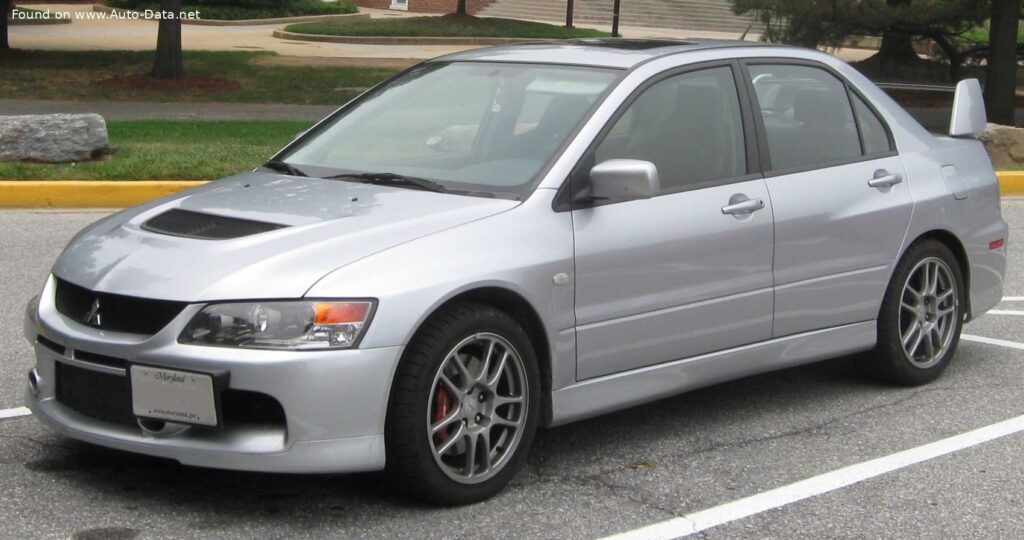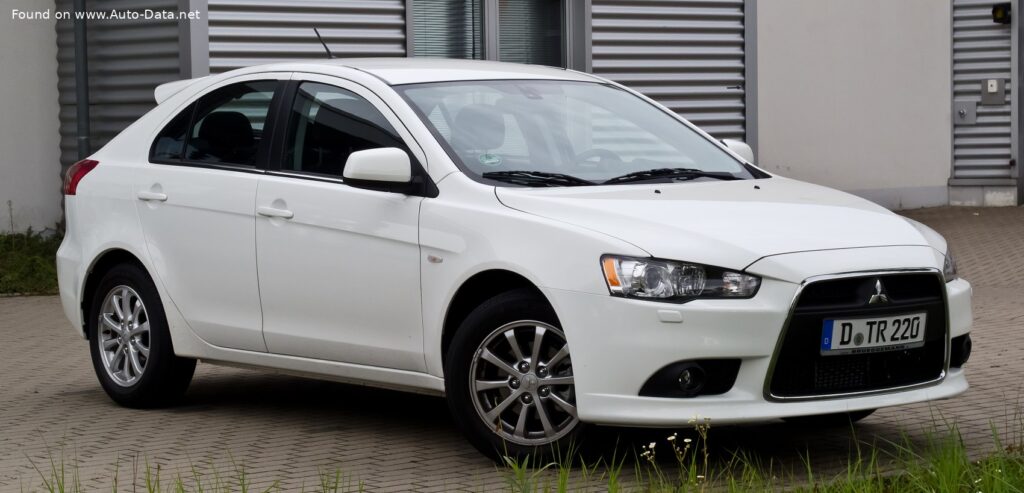
The Mitsubishi Lancer Sportback IX (GS44S) 1.8 MPI (143 Hp) CVT represents a significant iteration of Mitsubishi’s venerable compact car, the Lancer. Produced from September 2007 to May 2010, this generation specifically introduced the “Sportback” designation, marking the return of a five-door hatchback body style to the Lancer lineup in many international markets. While the Lancer sedan, particularly its high-performance Evolution variants, gained considerable traction and recognition in North America, the Sportback variant primarily targeted European, Australian, and Asian markets where the versatility and practicality of a hatchback are highly valued. This particular model, equipped with a 1.8-liter Multi-Port Injection (MPI) engine and a Continuously Variable Transmission (CVT), aimed to offer a balanced package of efficiency, everyday usability, and a dynamic driving experience within the competitive C-segment.
The Mitsubishi Lancer Sportback IX (GS44S): A Global Perspective
The Lancer Sportback IX (GS44S) was built on Mitsubishi’s global C-platform, shared with other models like the Outlander crossover, which provided a robust foundation for both its sedan and hatchback iterations. Its introduction underscored Mitsubishi’s strategy to broaden the Lancer’s appeal, moving beyond its rally-bred sedan image to encompass a more family-friendly and urban-oriented segment. With its distinct styling and enhanced cargo capacity, the Sportback carved out its niche, presenting a compelling alternative for consumers seeking a blend of Japanese reliability and functional design.
Engine & Performance
At the heart of the Mitsubishi Lancer Sportback IX (GS44S) 1.8 MPI (143 Hp) CVT lies a capable 1.8-liter (1798 cc) 4B10 inline-four engine. This naturally aspirated gasoline powerplant was designed for a blend of smooth power delivery and reasonable fuel economy. Featuring a Double Overhead Camshaft (DOHC) valvetrain with 4 valves per cylinder and a multi-port manifold injection system, the engine produced a respectable 143 horsepower at 6000 rpm. Torque output was rated at 131.29 lb.-ft. (178 Nm) delivered at 4250 rpm, providing adequate pulling power for daily driving scenarios.
The engine’s power was channeled to the front wheels via a Continuously Variable Transmission (CVT). This transmission, a staple in many compact vehicles for its efficiency benefits, allowed the engine to operate at its most efficient rpm range by seamlessly adjusting gear ratios. While some enthusiasts might prefer the direct engagement of a traditional automatic or manual transmission, the CVT in the Lancer Sportback was tuned to offer smooth acceleration and contribute significantly to the vehicle’s overall fuel economy figures. The powertrain architecture featured a front, transverse engine layout, typical for front-wheel-drive compact cars, optimizing space and weight distribution.
In terms of performance, the Lancer Sportback 1.8 MPI CVT achieved a maximum speed of 113.71 mph (183 km/h). While not a performance leader, this top speed was more than sufficient for highway cruising and typical driving demands. Fuel efficiency was a strong selling point for this configuration, with combined fuel consumption rated at 28.3 US mpg (8.3 l/100 km). Urban driving yielded 20.6 US mpg (11.4 l/100 km), while extra-urban cycles saw an improved 36.8 US mpg (6.4 l/100 km). These figures, coupled with its Euro 4 emission standard compliance, positioned the Lancer Sportback as an environmentally conscious choice for its era. The vehicle’s weight-to-power ratio of 10 kg/Hp (100 Hp/tonne) and weight-to-torque ratio of 8 kg/Nm (124.5 Nm/tonne) further illustrate its balanced, rather than performance-oriented, design philosophy.
Design & Features
The Mitsubishi Lancer Sportback IX (GS44S) distinguished itself from its sedan counterpart primarily through its hatchback body style, offering enhanced practicality and a more contemporary aesthetic for many markets. Measuring 180.51 inches (4585 mm) in length, 69.29 inches (1760 mm) in width, and 59.65 inches (1515 mm) in height, the Sportback presented a compact yet spacious five-door, five-seat configuration. Its exterior design shared the aggressive “jet fighter” grille and sharp lines introduced with the ninth-generation Lancer sedan, giving it a sporty and assertive stance. The rear, however, was uniquely sculpted with a sloping roofline that culminated in a practical tailgate, blending aerodynamic styling with cargo accessibility.
Inside, the Lancer Sportback focused on functionality and comfort. The five-seat layout provided ample room for occupants, while the true strength of the Sportback lay in its cargo versatility. With the rear seats in place, the trunk offered a respectable 12.15 cubic feet (344 liters) of space. Folding down the rear seats significantly expanded this capacity to an impressive 47.64 cubic feet (1349 liters), making it highly adaptable for carrying larger items, luggage, or sporting equipment. This flexibility was a key differentiator from the Lancer sedan and a major draw for buyers prioritizing utility.
Underneath its skin, the Lancer Sportback was engineered for a confident and stable ride. It featured an independent McPherson strut suspension at the front and a sophisticated independent multi-link suspension at the rear, a setup that contributed to both ride comfort and handling dynamics. Braking duties were handled by ventilated discs at the front and solid discs at the rear, complemented by an Anti-lock Braking System (ABS) for enhanced safety during emergency stops. The hydraulic rack and pinion steering system provided direct feedback to the driver, offering a connected feel to the road. Standard tire sizes included 205/60 R16 on 6.5JJ x 16 wheels, with an optional upgrade to 215/45 R18W tires on 7JJ x 18 rims for a sportier look and potentially sharper handling. These features, combined with a robust unibody construction, aimed to deliver a secure and engaging driving experience typical of modern compact vehicles.
Technical Specifications
| Category | Specification |
| General Information | |
| Brand | Mitsubishi |
| Model | Lancer |
| Generation | Lancer Sportback IX (GS44S) |
| Engine Type | 1.8 MPI (143 Hp) CVT |
| Production Start | September, 2007 |
| Production End | May, 2010 |
| Powertrain Architecture | Internal Combustion Engine |
| Body Type | Hatchback |
| Seats | 5 |
| Doors | 5 |
| Performance Specs | |
| Fuel Consumption (Urban) | 11.4 l/100 km (20.6 US mpg) |
| Fuel Consumption (Extra Urban) | 6.4 l/100 km (36.8 US mpg) |
| Fuel Consumption (Combined) | 8.3 l/100 km (28.3 US mpg) |
| Fuel Type | Petrol (Gasoline) |
| Maximum Speed | 183 km/h (113.71 mph) |
| Emission Standard | Euro 4 |
| Weight-to-Power Ratio | 10 kg/Hp (100 Hp/tonne) |
| Weight-to-Torque Ratio | 8 kg/Nm (124.5 Nm/tonne) |
| Engine Specs | |
| Power | 143 Hp @ 6000 rpm |
| Torque | 178 Nm @ 4250 rpm (131.29 lb.-ft. @ 4250 rpm) |
| Engine Layout | Front, Transverse |
| Engine Model/Code | 4B10 |
| Number of Cylinders | 4 |
| Engine Configuration | Inline |
| Number of Valves per Cylinder | 4 |
| Fuel Injection System | Multi-port manifold injection |
| Engine Aspiration | Naturally aspirated engine |
| Valvetrain | DOHC |
| Engine Oil Capacity | 4.3 l (4.54 US qt) |
| Coolant Capacity | 7 l (7.4 US qt) |
| Space, Volume and Weights | |
| Kerb Weight | 1430 kg (3152.61 lbs) |
| Max. Weight | 1900 kg (4188.78 lbs) |
| Max Load | 470 kg (1036.17 lbs) |
| Trunk (Boot) Space – Minimum | 344 l (12.15 cu. ft.) |
| Trunk (Boot) Space – Maximum | 1349 l (47.64 cu. ft.) |
| Fuel Tank Capacity | 59 l (15.59 US gal) |
| Dimensions | |
| Length | 4585 mm (180.51 in) |
| Width | 1760 mm (69.29 in) |
| Height | 1515 mm (59.65 in) |
| Wheelbase | 2635 mm (103.74 in) |
| Front Track | 1530 mm (60.24 in) |
| Rear (Back) Track | 1530 mm (60.24 in) |
| Minimum Turning Circle | 10 m (32.81 ft) |
| Drivetrain, Brakes and Suspension Specs | |
| Drivetrain Architecture | The Internal combustion engine (ICE) drives the front wheels of the vehicle. |
| Drive Wheel | Front wheel drive |
| Front Suspension | Independent type McPherson |
| Rear Suspension | Independent multi-link suspension |
| Front Brakes | Ventilated discs |
| Rear Brakes | Disc |
| Assisting Systems | ABS (Anti-lock braking system) |
| Steering Type | Steering rack and pinion |
| Power Steering | Hydraulic Steering |
| Tires Size | 205/60 R16; 215/45 R18W |
| Wheel Rims Size | 6.5JJ x 16; 7JJ x 18 |
Legacy and Market Impact
The Mitsubishi Lancer Sportback IX (GS44S) played a crucial role in Mitsubishi’s global strategy during its production run, particularly in markets outside of North America where compact hatchbacks are exceptionally popular. In Europe, Australia, and parts of Asia, the Sportback directly competed with established players like the Volkswagen Golf, Ford Focus hatchback, Mazda 3, and Honda Civic hatchback. Its appeal stemmed from a combination of factors: Mitsubishi’s reputation for reliability, a practical and spacious interior, and a design language that borrowed cues from the more aggressive Lancer Evolution, giving it a subtle sporty edge.
While the Lancer nameplate in the U.S. was synonymous with either an affordable sedan or the legendary Evolution, the Sportback offered a different value proposition in its primary markets. It catered to families and individuals who needed more cargo flexibility than a sedan could offer but still desired a car with a relatively compact footprint for urban maneuverability. The 1.8 MPI engine with the CVT, while not a powerhouse, provided a dependable and economical driving experience, which was a significant selling point for cost-conscious consumers. Its Euro 4 emissions compliance also made it a suitable choice for stricter European environmental regulations.
The Lancer Sportback’s legacy is one of quiet competence rather than groundbreaking innovation. It solidified Mitsubishi’s presence in the highly competitive compact hatchback segment, demonstrating the brand’s ability to adapt its core models to diverse market demands. It was often praised for its robust build quality, comfortable ride, and the versatility offered by its expansive cargo area when the rear seats were folded. Although it didn’t achieve the cult status of its performance-oriented Lancer siblings, the Sportback was a dependable workhorse that upheld Mitsubishi’s image for durable and practical vehicles. Its contribution to the Lancer family was to broaden its demographic appeal, ensuring the model remained relevant to a wider spectrum of buyers looking for a reliable, fuel-efficient, and versatile compact car solution in the late 2000s.