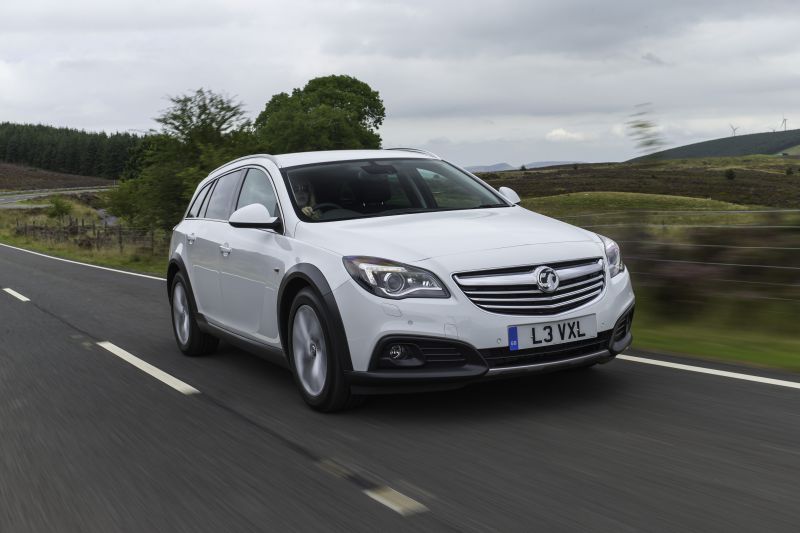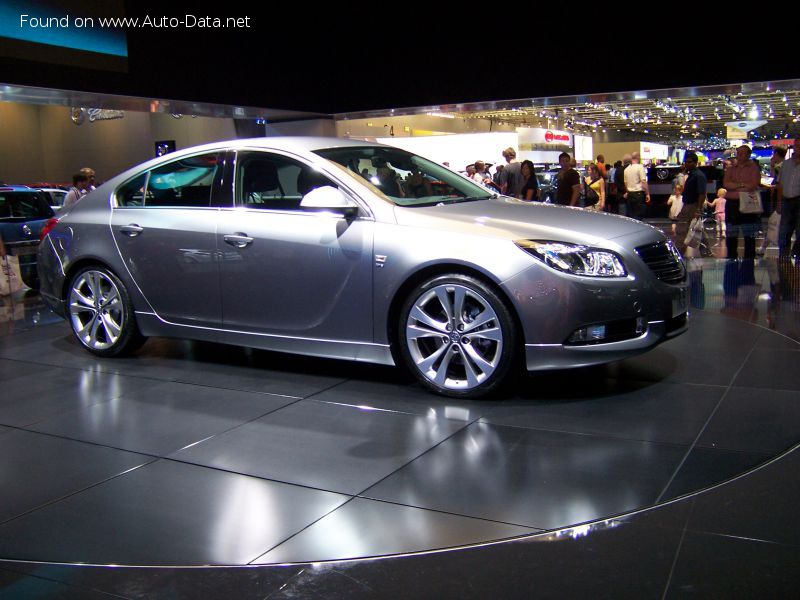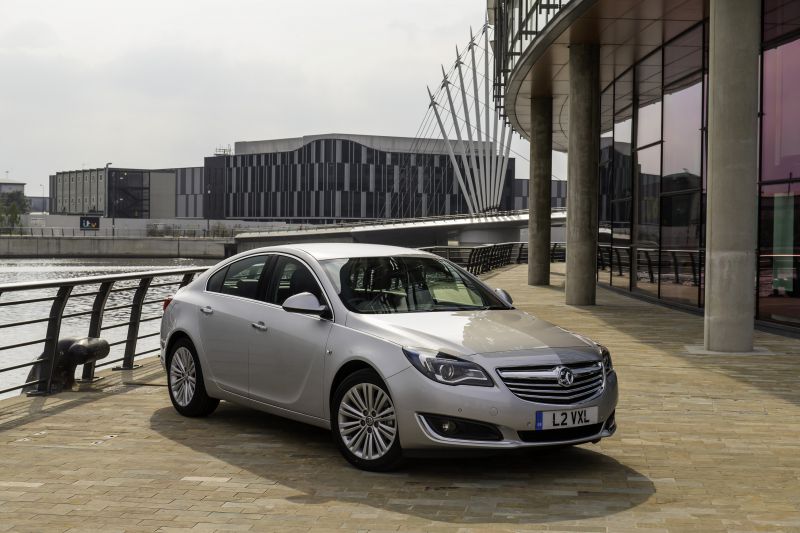
The Vauxhall Insignia I Hatchback (facelift 2013) 1.6i Turbo ecoTEC (170 Hp) Start/Stop represents a significant offering in the European D-segment. As the flagship mid-size vehicle from Vauxhall, the British arm of General Motors’ Opel brand, the Insignia provided a versatile alternative to traditional sedans and wagons with its practical hatchback body style. Introduced in 2008, the Insignia I received a comprehensive update in 2013, refining its aesthetics, interior, and powertrain options. This specific variant, equipped with the 1.6i Turbo ecoTEC engine producing 170 horsepower and featuring a Start/Stop system, aimed to balance performance with fuel efficiency, appealing to a market increasingly focused on ecological considerations. Although not officially sold in the United States under the Vauxhall or Opel name, the Insignia’s platform and technologies were shared with vehicles like the Buick Regal, showcasing GM’s global engineering initiatives.
Evolution and Market Positioning of the Vauxhall Insignia I Hatchback (facelift 2013)
The Insignia replaced the long-running Vectra in Vauxhall’s lineup, signaling a shift towards a more design-focused and premium approach for the brand. The original Insignia was critically acclaimed, even earning the European Car of the Year award in 2009. The 2013 facelift was designed to revitalize its appeal and maintain competitiveness against rivals such as the Ford Mondeo, Volkswagen Passat, and Skoda Superb in the highly contested European mid-size segment. Updates included revised front and rear styling, a more refined interior with improved infotainment and materials, and a range of updated engines, with the 1.6i Turbo ecoTEC standing out for its balance of power and efficiency. This engine, combined with the five-door hatchback configuration, made the Vauxhall Insignia I Hatchback (facelift 2013) an attractive option for families and business users, offering ample space, comfort, and modern features.
Engine & Performance: The 1.6i Turbo ecoTEC Powertrain
This Insignia variant is powered by a modern and efficient 1.6-liter (1598 cm³) turbocharged inline-four engine, part of Vauxhall’s ecoTEC family. This unit generates 170 horsepower at 4250 rpm, providing sufficient power for both city driving and highway cruising. Torque output is equally impressive, peaking at 260 Newton-meters (approximately 191.77 lb.-ft.) across a broad rev range from 1650 to 4250 rpm. This wide torque band ensures strong acceleration and flexible driving characteristics, reducing the need for frequent gear changes. The engine utilizes direct fuel injection and an intercooled turbocharger, technologies that contribute to both its power density and fuel efficiency. Equipped with four valves per cylinder and a DOHC (Double Overhead Camshaft) valvetrain, the engine is optimized for performance and efficient breathing.
Paired with a six-speed manual transmission, the 1.6i Turbo ecoTEC propels the Insignia from 0 to 60 mph in 8.7 seconds (0-100 km/h in 9.2 seconds), with a top speed of 136.08 mph (219 km/h). These figures demonstrate that despite its focus on efficiency, the Insignia delivers an engaging driving experience. The inclusion of a Start/Stop system further enhances fuel economy, especially in stop-and-go traffic, by automatically shutting off the engine when stationary and restarting it seamlessly when the driver is ready to move. This system, along with the engine’s inherent efficiency, results in a combined fuel consumption rating of 39.9 US mpg (5.9 liters per 100 km) and CO2 emissions of 139 g/km, meeting Euro 5 emission standards.
Design and Features: Practicality Meets Refinement
The 2013 facelift brought a refreshed exterior design to the Vauxhall Insignia I Hatchback, giving it a more contemporary and assertive appearance. Key changes included a wider, lower grille, revised headlights with integrated LED daytime running lights, and a restyled rear end with new taillight clusters that visually widened the car. The hatchback body style offers a compelling combination of sedan-like aesthetics and wagon-like practicality. With five doors and seating for five, it provides easy access to a spacious interior. The trunk (boot) space is generous, offering a minimum of 18.72 cubic feet (530 liters) with the rear seats up, expanding to an impressive 51.91 cubic feet (1470 liters) with the rear seats folded down. This flexibility makes it suitable for transporting luggage, groceries, or larger items, catering to the needs of European families and individuals.
Inside, the facelifted Insignia received significant upgrades to improve ergonomics and perceived quality. The center console was redesigned with fewer buttons and a more intuitive layout, often incorporating a new infotainment system with a larger touchscreen display and improved connectivity options. Standard features typically included air conditioning, power windows, and a comprehensive suite of safety systems, including ABS (Anti-lock Braking System). The chassis featured an independent McPherson strut front suspension and an independent multi-link rear suspension, tuned for a comfortable ride and composed handling. Stopping power was provided by ventilated disc brakes at the front and disc brakes at the rear. The vehicle rode on 225/55 R17 tires, mounted on 17-inch wheel rims, contributing to both grip and ride comfort.
Technical Specifications
| Category | Specification |
| General Information | |
| Brand | Vauxhall |
| Model | Insignia |
| Generation | Insignia I Hatchback (facelift 2013) |
| Type (Engine) | 1.6i Turbo ecoTEC (170 Hp) Start/Stop |
| Start of Production | 2013 |
| End of Production | 2017 |
| Powertrain Architecture | Internal Combustion engine |
| Body Type | Hatchback |
| Seats | 5 |
| Doors | 5 |
| Performance Specs | |
| Fuel Consumption (Urban) | 7.5 l/100 km (31.4 US mpg) |
| Fuel Consumption (Extra Urban) | 5 l/100 km (47 US mpg) |
| Fuel Consumption (Combined) | 5.9 l/100 km (39.9 US mpg) |
| CO2 Emissions | 139 g/km |
| Fuel Type | Petrol (Gasoline) |
| Acceleration 0 – 60 mph | 8.7 sec |
| Acceleration 0 – 100 km/h | 9.2 sec |
| Maximum Speed | 219 km/h (136.08 mph) |
| Emission Standard | Euro 5 |
| Weight-to-Power Ratio | 9.5 kg/Hp (105.4 Hp/tonne) |
| Weight-to-Torque Ratio | 6.2 kg/Nm (161.2 Nm/tonne) |
| Engine Specs | |
| Power | 170 Hp @ 4250 rpm |
| Power per Liter | 106.4 Hp/l |
| Torque | 260 Nm @ 1650-4250 rpm (191.77 lb.-ft. @ 1650-4250 rpm) |
| Engine Layout | Front, Transverse |
| Engine Model/Code | A16XHT, B16SHL |
| Engine Displacement | 1598 cm³ (1.6 Liters / 97.52 cu. in.) |
| Number of Cylinders | 4 Inline |
| Cylinder Bore | 79 mm (3.11 in.) |
| Piston Stroke | 81.5 mm (3.21 in.) |
| Number of Valves per Cylinder | 4 |
| Fuel Injection System | Direct injection |
| Engine Aspiration | Turbocharger, Intercooler |
| Valvetrain | DOHC |
| Engine Oil Capacity | 5.5 l (5.81 US qt) |
| Coolant Capacity | 5.8 l (6.13 US qt) |
| Engine Systems | Start & Stop System |
| Space, Volume and Weights | |
| Kerb Weight | 1613 kg (3556.06 lbs.) |
| Max. Weight | 2120 kg (4673.8 lbs.) |
| Max Load | 507 kg (1117.74 lbs.) |
| Trunk (boot) Space – Minimum | 530 l (18.72 cu. ft.) |
| Trunk (boot) Space – Maximum | 1470 l (51.91 cu. ft.) |
| Fuel Tank Capacity | 70 l (18.49 US gal) |
| Permitted Trailer Load with Brakes (12%) | 1700 kg (3747.86 lbs.) |
| Permitted Trailer Load without Brakes | 750 kg (1653.47 lbs.) |
| Dimensions | |
| Length | 4842 mm (190.63 in.) |
| Width | 1856 mm (73.07 in.) |
| Width including Mirrors | 2084 mm (82.05 in.) |
| Height | 1498 mm (58.98 in.) |
| Wheelbase | 2737 mm (107.76 in.) |
| Front Overhang | 1027 mm (40.43 in.) |
| Rear Overhang | 1078 mm (42.44 in.) |
| Minimum Turning Circle (Turning Diameter) | 11.4 m (37.4 ft.) |
Legacy and Market Impact
The Vauxhall Insignia I, particularly after its 2013 facelift, established itself as a competitive and well-regarded vehicle in the European D-segment. Its success was largely attributed to its attractive styling, generous interior space, comfortable ride, and a range of efficient yet powerful engines, exemplified by the 1.6i Turbo ecoTEC. It successfully bridged the gap between mainstream family cars and more premium offerings, providing an appealing package for buyers seeking value without compromising on quality or features. In its primary markets, the Insignia competed directly with established rivals like the Ford Mondeo (Fusion in the US), Volkswagen Passat, and Skoda Superb, and even challenged entry-level executive sedans from brands like BMW and Audi. Its hatchback versatility gave it an advantage over traditional sedans in terms of practicality, while its refined driving dynamics and updated interior kept it competitive. The focus on ecoTEC engines, incorporating features like turbocharging and Start/Stop technology, underscored the industry’s shift towards environmental consciousness and efficient performance, a trend the Insignia adeptly embraced.
While the Insignia was replaced by the second-generation model (Insignia B) in 2017, the facelifted Insignia I Hatchback (2013-2017) remains a notable example of Vauxhall’s engineering capabilities and its ability to deliver a strong contender in a highly competitive segment. Its legacy is one of a practical, stylish, and technologically relevant vehicle that offered a compelling blend of attributes for the European consumer, demonstrating GM’s global platform strategy and its adaptation to regional market demands.