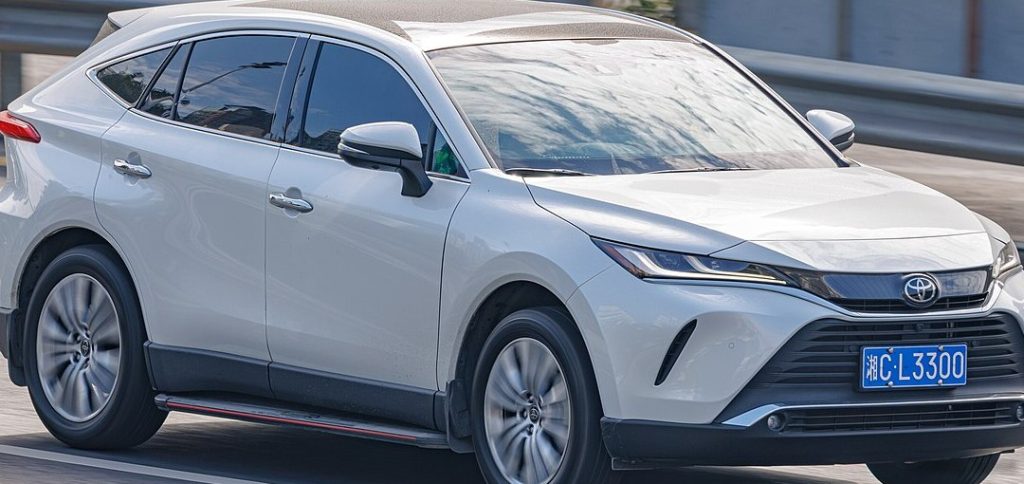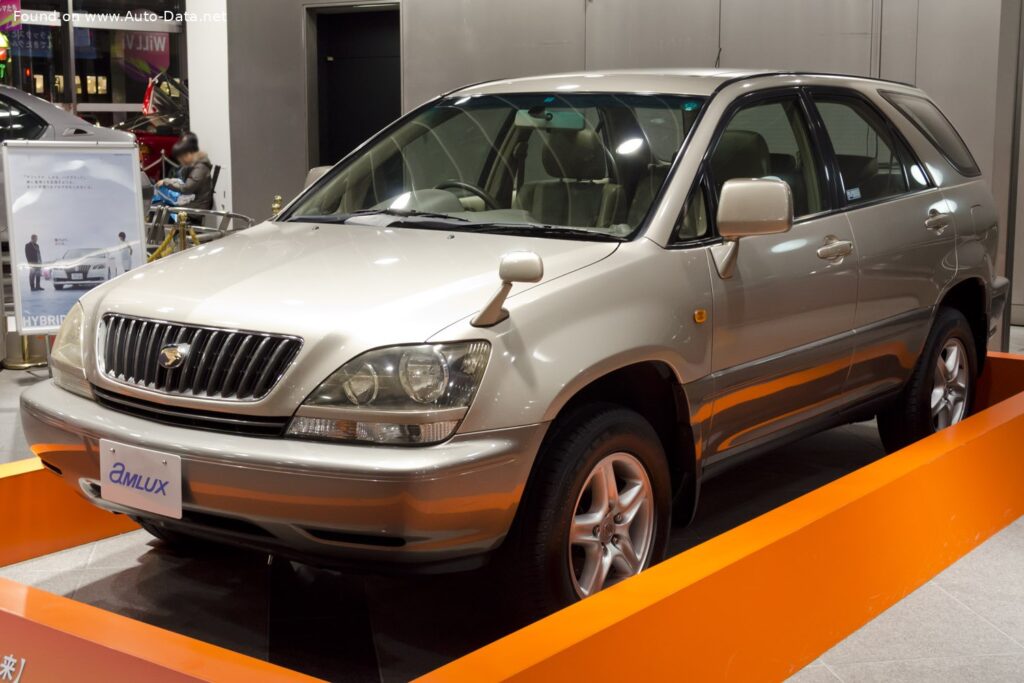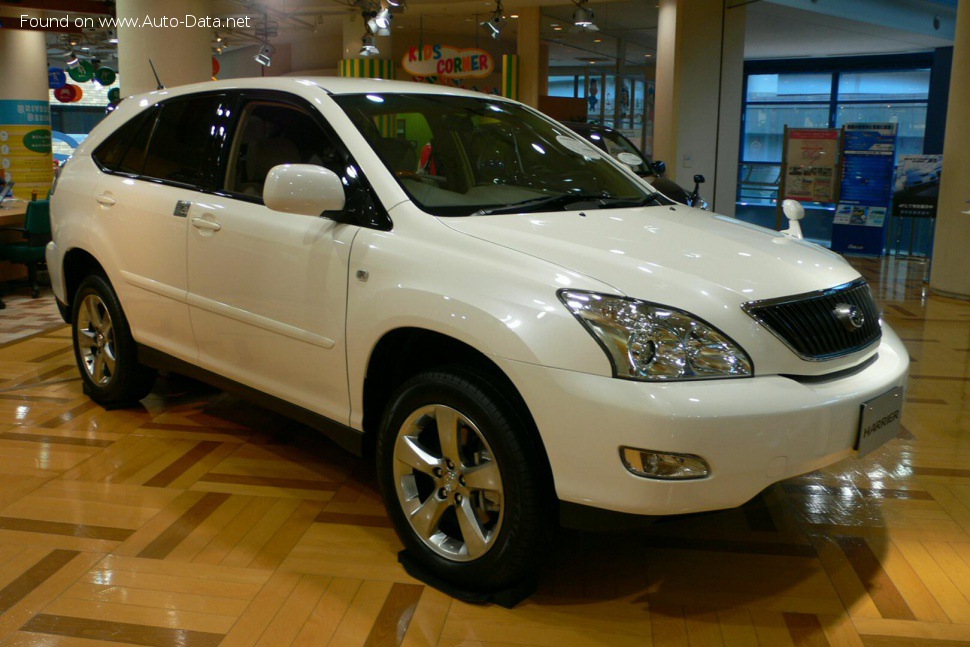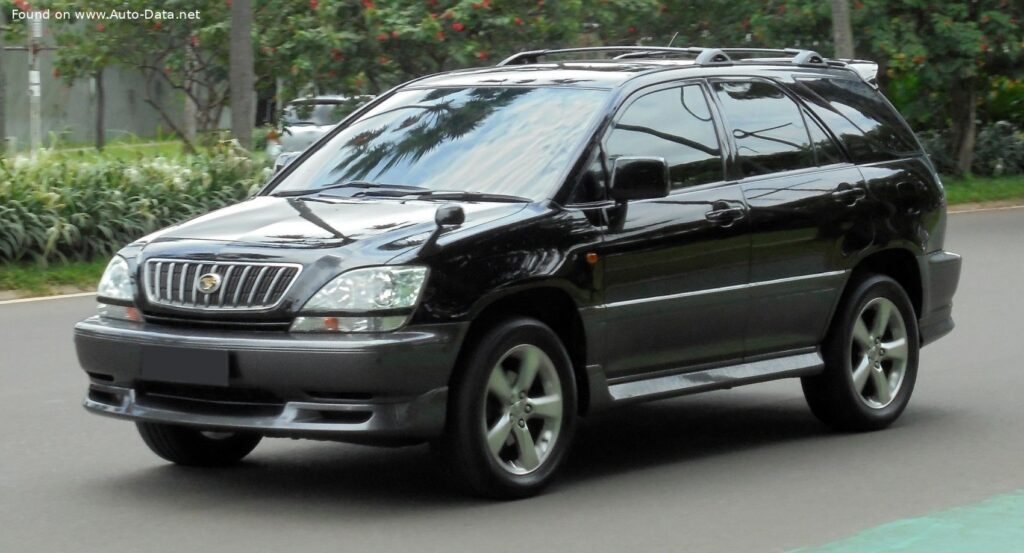
The Toyota Harrier I, designated XU10, holds a seminal place in automotive history as one of the earliest and most successful pioneers of the luxury crossover SUV segment. Launched in Japan in December 1997, it effectively blended the practicality and elevated driving position of a sport utility vehicle with the comfort, refinement, and on-road dynamics typically associated with premium sedans. This innovative approach resonated strongly with consumers, creating a new niche that would profoundly influence the global automotive landscape. The specific variant, the Toyota Harrier I (XU10 facelift) 2.4 16V (160 Hp) Automatic, introduced as part of the significant mid-cycle refresh in 2000, was particularly noteworthy. It offered a more accessible and fuel-efficient entry point into the Harrier lineup, powered by a modern and reliable four-cylinder engine, all while retaining the core attributes of luxury and versatility that defined the nameplate.
Development and Market Context of the Toyota Harrier I (XU10)
The first-generation Toyota Harrier, known internally as XU10, was a groundbreaking vehicle from its inception. Unlike the truck-based SUVs prevalent at the time, the Harrier was developed on a modified Toyota Camry platform, ensuring a car-like unibody construction. This engineering decision was fundamental to its appeal, delivering a significantly smoother, quieter, and more comfortable ride compared to its more rugged, body-on-frame contemporaries. Its immediate success in the Japanese domestic market underscored a clear demand for a vehicle that offered SUV utility without the traditional compromises in ride quality and handling.
For international markets, particularly North America, this visionary vehicle was rebadged and launched as the original Lexus RX 300. The RX 300 quickly became a cornerstone for the fledgling Lexus brand, establishing its reputation for luxury, reliability, and innovation in the burgeoning premium SUV segment. Its success paved the way for Lexus to become a formidable competitor in the luxury market.
By the year 2000, Toyota introduced a significant facelift for the Harrier to maintain its competitive edge and address evolving market demands. This refresh brought subtle yet effective exterior styling updates, including revised headlamps, a new grille design, and clear-lens taillights, which collectively gave the vehicle a more contemporary appearance. However, the most crucial changes occurred under the hood. The original 2.2-liter 5S-FE inline-four engine was superseded by the more advanced and powerful 2.4-liter 2AZ-FE engine. This update marked the debut of the Toyota Harrier I (XU10 facelift) 2.4 16V (160 Hp) Automatic, a model that remained in production from early 2000 until the end of the first generation’s run in 2003. This new powertrain offered a superior balance of performance and fuel economy, broadening the Harrier’s appeal to a wider demographic of buyers who desired luxury and utility without the higher fuel consumption associated with the available 3.0-liter V6 option.
Engine & Performance: The Toyota Harrier I (XU10 facelift)
The heart of this specific Harrier model is the 2AZ-FE engine, a distinguished member of Toyota’s highly regarded AZ engine family. This powertrain represented a significant advancement over its predecessor, meticulously engineered for smoothness, exceptional reliability, and improved efficiency. Its introduction was a strategic move to provide a compelling four-cylinder option that didn’t compromise the Harrier’s premium character.
Powertrain Details and Characteristics
The 2AZ-FE is a naturally aspirated internal combustion engine with a displacement of 2,362 cubic centimeters (2.4 liters). It features an inline-four cylinder configuration with a dual overhead camshaft (DOHC) valvetrain and four valves per cylinder, totaling 16 valves. This modern architecture facilitated efficient airflow, contributing to both robust power output and commendable fuel economy. The engine delivers a respectable peak power of 160 horsepower at 5,600 rpm and generates a maximum torque of 163 pound-feet (221 Nm) at a relatively accessible 4,000 rpm. This torque profile ensures the vehicle feels responsive and capable in various driving situations, from urban commutes to highway merging.
With a bore of 88.5 mm and a stroke of 96.0 mm, the engine exhibits an undersquare, or long-stroke, design. This characteristic typically favors the development of strong low-to-mid-range torque, which translates into excellent drivability and a feeling of effortless acceleration in everyday scenarios. The compression ratio is set at a modest 9.6:1, allowing it to operate efficiently on standard unleaded gasoline. The engine’s power-per-liter figure of 67.7 Hp/l underscores its focus on balanced, reliable performance rather than a high-strung, peaky power delivery, aligning perfectly with the Harrier’s luxury-oriented mission.
Transmission and Drivetrain Configuration
The 160 Hp 2AZ-FE engine is exclusively paired with a 4-speed automatic transmission. This gearbox was meticulously engineered to deliver smooth, unobtrusive shifts that perfectly complement the Harrier’s luxury-oriented character. While more advanced transmissions with additional gears would later become commonplace, the 4-speed unit was well-matched to the engine’s torque curve, providing adequate acceleration and relaxed highway cruising. This specific variant directs power solely to the front wheels (FWD). The front-wheel-drive architecture contributes to a lower curb weight and reduced drivetrain friction compared to its all-wheel-drive (AWD) V6 counterpart, resulting in superior fuel economy. The official combined fuel consumption is rated at 9.4 liters per 100 kilometers, a highly competitive figure for a mid-size crossover of its era, especially considering its generous interior space and comfort.
Design & Features
The 2000 facelift for the Toyota Harrier I (XU10) retained the vehicle’s sleek, aerodynamic silhouette that distinctly set it apart from the more utilitarian, boxy SUVs of the 1990s. Its sophisticated styling, characterized by smooth lines and a refined stance, contributed significantly to its luxury appeal. The exterior dimensions position it firmly within the mid-size crossover category, offering a substantial road presence without being overly cumbersome for urban environments.
The Harrier measures 180.12 inches (4,575 mm) in length, 71.46 inches (1,815 mm) in width, and 65.55 inches (1,665 mm) in height. Its 102.95-inch (2,615 mm) wheelbase is a key factor in both its stable ride quality and its surprisingly generous interior space, providing ample room for occupants and cargo. Inside, the Harrier offered a level of fit, finish, and material quality typically associated with high-end luxury sedans. The five-seat cabin is spacious and ergonomically designed, with a clear focus on occupant comfort and convenience. High-quality soft-touch materials, well-bolstered seats, and thoughtful storage solutions created an inviting and premium atmosphere.
One of the Harrier’s most impressive features is its exceptional cargo capacity. With the rear seats in their upright position, the trunk provides an enormous 860 liters of space, easily accommodating luggage, groceries, or sports equipment. For hauling larger items, the rear seats can be effortlessly folded down to expand this volume to a cavernous 2,130 liters. This makes the Toyota Harrier I (XU10 facelift) 2.4 16V (160 Hp) Automatic an exceptionally practical vehicle for families and individuals with active lifestyles, blending luxury with genuine utility. The vehicle’s curb weight of 3,439.21 pounds (1,560 kg) results in a weight-to-power ratio of 9.8 kg/Hp, ensuring that the 160 Hp engine provides adequate, confident, and smooth performance for a vehicle of its class.
Chassis, Suspension, and Handling
The XU10 Harrier’s defining characteristic was its car-based platform, which endowed it with ride and handling characteristics far superior to the truck-based SUVs that dominated the market. The fully independent suspension system consists of MacPherson struts at the front and a trailing arm setup for the rear wheels. This sophisticated arrangement allows each wheel to react independently to road imperfections, resulting in a remarkably stable and comfortable ride that effectively isolates occupants from bumps and vibrations. The Harrier glided over road surfaces, a stark contrast to the often jarring experience of traditional SUVs.
The braking system is robust and confidence-inspiring, featuring ventilated discs at the front for enhanced heat dissipation during repeated stops and solid discs at the rear. An Anti-lock Braking System (ABS) was standard equipment, providing an essential layer of safety by preventing wheel lock-up during emergency braking maneuvers. Steering is handled by a rack-and-pinion setup with hydraulic power assistance, offering a light, precise, and predictable feel. This made the Harrier remarkably easy to maneuver in tight urban environments and parking lots, despite its considerable dimensions. With a ground clearance of 7.28 inches (185 mm), the vehicle provided a commanding view of the road and the ability to handle light, unpaved surfaces, though its FWD layout and comfort-tuned suspension clearly oriented it toward refined on-road use rather than serious off-roading.
Legacy and Market Impact
The Toyota Harrier I (XU10 facelift) 2.4 16V (160 Hp) Automatic represents a pivotal moment in the evolution of the modern SUV. It successfully democratized the luxury crossover concept, offering a package that was more fuel-efficient and affordable than the V6 models while retaining the premium feel, exceptional comfort, and outstanding practicality that made the Harrier a legend. Its reliable 2AZ-FE engine, smooth 4-speed automatic transmission, and car-like handling provided a refined driving experience that set a new benchmark for the segment.
In its primary market, Japan, the Harrier faced competition from domestic rivals like the Honda CR-V and Nissan X-Trail, but it largely operated in a class of its own due to its explicit luxury positioning. Globally, its rebadged Lexus RX counterpart went on to define the luxury crossover segment, inspiring virtually every major luxury automaker to develop similar vehicles. The Harrier’s influence is evident in the proliferation of car-based SUVs that prioritize comfort, efficiency, and on-road manners over rugged off-road capability.
By blending sedan-like comfort with SUV utility and offering it in a more efficient four-cylinder package, this specific model proved that practicality and luxury were not mutually exclusive. It solidified the Harrier’s legacy as a smart, stylish, and highly capable vehicle that continues to be respected by owners and enthusiasts around the world for its foresight, engineering excellence, and enduring appeal. Its success laid the groundwork for the modern crossover market, a testament to Toyota’s vision and ability to anticipate consumer desires.
Technical Specifications
| Feature Category | Specification |
| Model | Toyota Harrier I (XU10 facelift) 2.4 16V (160 Hp) Automatic |
| Production Years (2.4L) | 2000 – 2003 |
| Engine Code | 2AZ-FE |
| Engine Type | Inline-four, DOHC, 16 Valves, Naturally Aspirated |
| Displacement | 2362 cm³ (2.4 Liters) |
| Horsepower | 160 HP at 5600 rpm |
| Torque | 163 lb.-ft. (221 Nm) at 4000 rpm |
| Bore | 88.5 mm |
| Stroke | 96.0 mm |
| Compression Ratio | 9.6:1 |
| Fuel Type | Petrol (Gasoline) |
| Transmission | 4-speed Automatic |
| Drivetrain | Front-Wheel-Drive (FWD) |
| Fuel Consumption (Combined) | 9.4 liters/100 km |
| Front Suspension | Independent MacPherson Struts |
| Rear Suspension | Trailing Arm Setup |
| Front Brakes | Ventilated Discs |
| Rear Brakes | Solid Discs |
| Safety Features | Anti-lock Braking System (ABS) |
| Steering Type | Rack-and-Pinion with Hydraulic Power Assistance |
| Ground Clearance | 7.28 inches (185 mm) |
| Length | 180.12 inches (4575 mm) |
| Width | 71.46 inches (1815 mm) |
| Height | 65.55 inches (1665 mm) |
| Wheelbase | 102.95 inches (2615 mm) |
| Seating Capacity | 5 |
| Cargo Capacity (Rear Seats Up) | 860 Liters |
| Cargo Capacity (Rear Seats Folded) | 2130 Liters |
| Kerb Weight | 3439.21 lbs. (1560 kg) |
| Weight-to-Power Ratio | 9.8 kg/Hp |