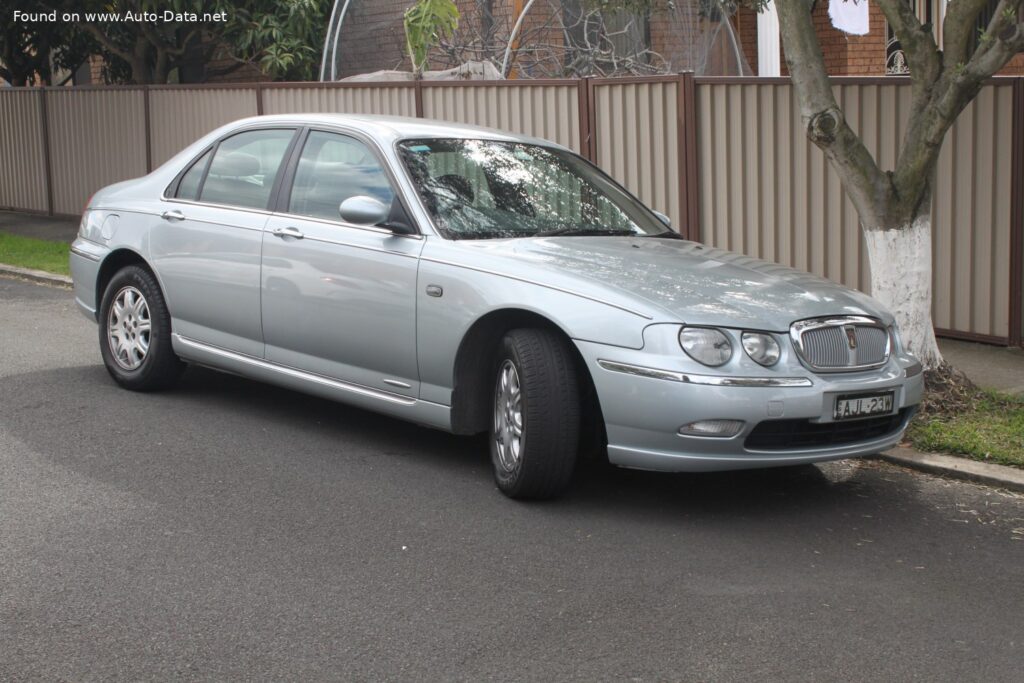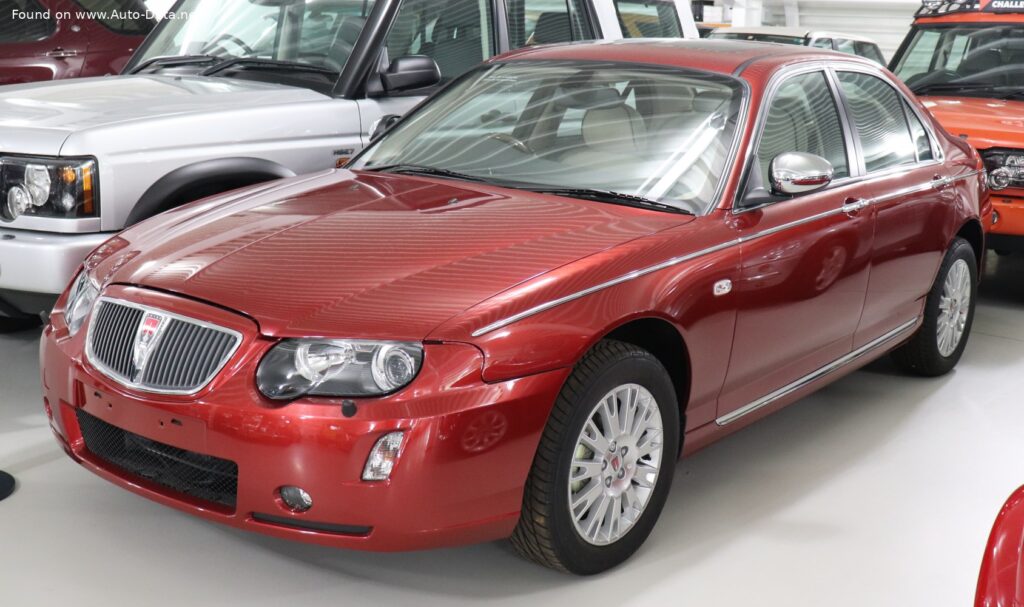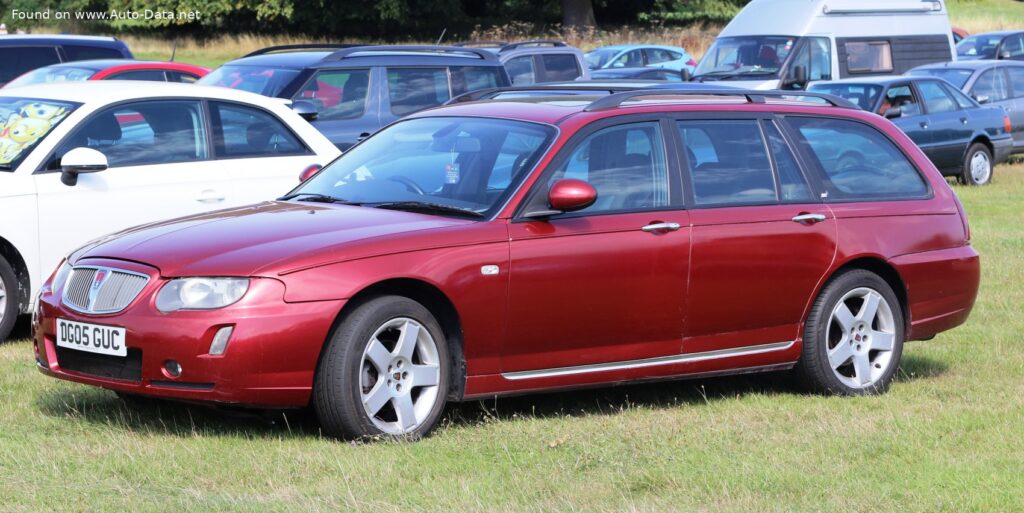
The Rover 75, first introduced in 1998, represented a significant departure for the British marque, aiming to recapture its heritage of building premium, comfortable, and distinctly British automobiles. The model under scrutiny here is the Rover 75 Tourer (facelift 2004) 1.8 T (150 Hp), a station wagon variant that received a styling update in 2004. Positioned in the highly competitive European D-segment, it sought to blend traditional British luxury with modern engineering. While never officially sold in the United States, the Rover 75 Tourer played a crucial role in its primary European market, offering an alternative to German and French rivals with its unique blend of classic design and a focus on ride comfort and refinement. This particular iteration, produced between 2004 and 2005, featured a turbocharged 1.8-liter gasoline engine, marking it as a more performance-oriented and efficient option within the lineup.
The Rover 75 Tourer: A Detailed Overview
The Rover 75 was a pivotal model for the British Motor Corporation (BMC), later Rover Group, and ultimately MG Rover. It was conceived as a return to Rover’s roots, emphasizing quality, comfort, and a sophisticated driving experience. The Tourer variant, essentially the station wagon version, expanded the 75’s appeal by adding practicality and increased cargo space. The 2004 facelift was a crucial update, designed to keep the model competitive and address some criticisms of the original design. It was a last-ditch effort to revitalize the brand before its eventual collapse in 2005.
Engine & Performance: The 1.8 T Powerplant
The heart of the Rover 75 Tourer (facelift 2004) 1.8 T (150 Hp) is Rover’s 18K4G engine, a 1.8-liter (1796 cc) inline-four cylinder unit. This engine’s key feature is its turbocharger and intercooler, which significantly boosted its power output compared to naturally aspirated versions. The turbocharger forces more air into the cylinders, allowing for greater combustion and increased horsepower. This resulted in a respectable 150 horsepower at 5500 rpm. Torque, the measure of rotational force, peaked at 158.58 lb.-ft. (215 Nm) at a relatively low 2100 rpm. This low-end torque characteristic provided a responsive and flexible driving experience, particularly beneficial for a family-oriented station wagon.
Power was transmitted to the front wheels via a 5-speed manual transmission, offering drivers a direct connection to the engine. An automatic transmission was also available as an option. Performance figures were competitive for its class: the Rover 75 Tourer (facelift 2004) 1.8 T (150 Hp) could accelerate from 0 to 60 mph in approximately 9.5 seconds, and achieve a top speed of 126.14 mph (203 km/h). Fuel economy, measured under the European cycle, was rated at 29.4 US mpg combined (8 liters per 100 km), with urban consumption at 20.8 US mpg and extra-urban at 38.6 US mpg. These figures, combined with its Euro 3 emission standard compliance, demonstrated Rover’s commitment to balancing performance with efficiency.
Design & Features: Blending Style and Practicality
The 2004 facelift brought subtle but effective changes to the Rover 75’s exterior. The revised front and rear bumpers, a new grille design, and updated headlamps gave the car a more contemporary appearance. The Tourer body style, with its five doors and spacious interior, offered enhanced practicality. The overall design retained the classic, somewhat retro aesthetic that characterized the original 75, appealing to buyers who appreciated a more understated and elegant style. The car’s substantial road presence and well-proportioned dimensions contributed to its sophisticated image.
Inside, the Rover 75 was known for its high-quality cabin. The interior featured a blend of traditional materials like wood trim and chrome accents, creating an ambiance of understated luxury. Comfort was a primary focus, with plush seating and effective sound insulation contributing to a serene driving experience. As a station wagon, the Tourer excelled in practicality. It offered a minimum trunk space of 14.13 cubic feet (400 liters), which expanded to a generous 43.15 cubic feet (1222 liters) with the rear seats folded down. Standard features included power steering, a multi-port fuel injection system, and an anti-lock braking system (ABS) for enhanced safety. The suspension, with an independent McPherson strut system at the front and an independent multi-link design at the rear, was tuned for comfort, effectively absorbing road imperfections.
Technical Specifications: Rover 75 Tourer (facelift 2004) 1.8 T (150 Hp)
| Brand | Rover |
| Model | 75 |
| Generation | 75 Tourer (facelift 2004) |
| Type (Engine) | 1.8 T (150 Hp) |
| Start of Production | 2004 |
| End of Production | 2005 |
| Powertrain Architecture | Internal Combustion engine |
| Body Type | Station wagon |
| Seats | 5 |
| Doors | 5 |
| Fuel Consumption (Urban) | 20.8 US mpg (11.3 l/100 km) |
| Fuel Consumption (Extra Urban) | 38.6 US mpg (6.1 l/100 km) |
| Fuel Consumption (Combined) | 29.4 US mpg (8 l/100 km) |
| CO2 Emissions | 193 g/km |
| Fuel Type | Petrol (Gasoline) |
| Acceleration 0 – 60 mph | 9.5 sec |
| Maximum Speed | 126.14 mph (203 km/h) |
| Emission Standard | Euro 3 |
| Weight-to-Power Ratio | 9.8 kg/Hp, 101.7 Hp/tonne |
| Weight-to-Torque Ratio | 6.9 kg/Nm, 145.8 Nm/tonne |
| Power | 150 Hp @ 5500 rpm |
| Power per Liter | 83.5 Hp/l |
| Torque | 158.58 lb.-ft. (215 Nm) @ 2100 rpm |
| Engine Layout | Front, Transverse |
| Engine Model/Code | 18K4G |
| Engine Displacement | 109.6 cu. in. (1796 cm³) |
| Number of Cylinders | 4 |
| Engine Configuration | Inline |
| Cylinder Bore | 3.15 in. (80 mm) |
| Piston Stroke | 3.52 in. (89.3 mm) |
| Compression Ratio | 9.2:1 |
| Number of Valves per Cylinder | 4 |
| Fuel Injection System | Multi-port manifold injection |
| Engine Aspiration | Turbocharger, Intercooler |
| Valvetrain | DOHC |
| Engine Oil Capacity | 4.76 US qt (4.5 l) |
| Coolant Capacity | 6.55 US qt (6.2 l) |
| Curb Weight | 3251.82 – 3483.3 lbs. (1475-1580 kg) |
| Max. Weight | 4365.15 lbs. (1980 kg) |
| Max Load | 881.85 – 1113.33 lbs. (400-505 kg) |
| Trunk Space (Minimum) | 14.13 cu. ft. (400 l) |
| Trunk Space (Maximum) | 43.15 cu. ft. (1222 l) |
| Fuel Tank Capacity | 17.17 US gal (65 l) |
| Max. Roof Load | 220.46 lbs. (100 kg) |
| Permitted Trailer Load with Brakes (12%) | 3196.7 lbs. (1450 kg) |
| Permitted Trailer Load without Brakes | 1653.47 lbs. (750 kg) |
| Permitted Towbar Download | 220.46 lbs. (100 kg) |
| Length | 188.58 in. (4790 mm) |
| Width | 70 in. (1778 mm) |
| Width Including Mirrors | 77.56 in. (1970 mm) |
| Wheelbase | 108.11 in. (2746 mm) |
| Front Track | 59.49 in. (1511 mm) |
| Rear (Back) Track | 59.21 in. (1504 mm) |
| Minimum Turning Circle | 37.17 ft. (11.33 m) |
Despite its merits, the Rover 75 Tourer ultimately couldn’t survive the financial difficulties of MG Rover. Production ceased in 2005, marking the end of an era for British automotive manufacturing. However, the Rover 75 Tourer remains a fondly remembered vehicle, appreciated for its comfort, style, and the unique character it brought to the European D-segment.