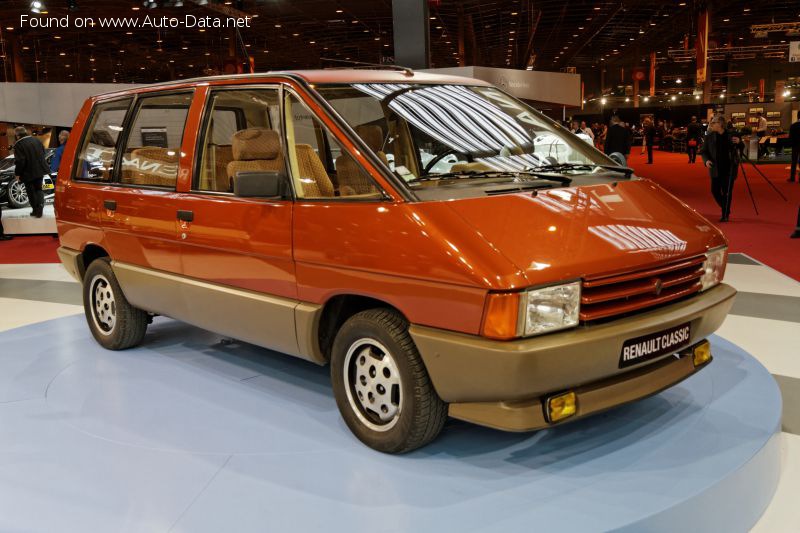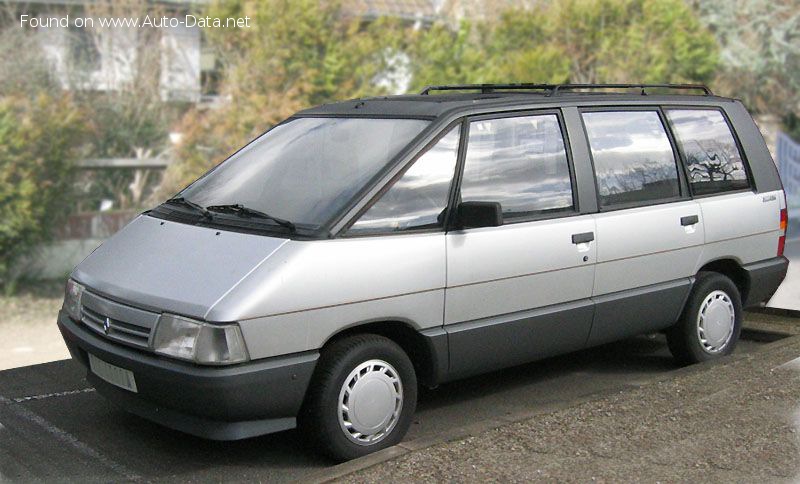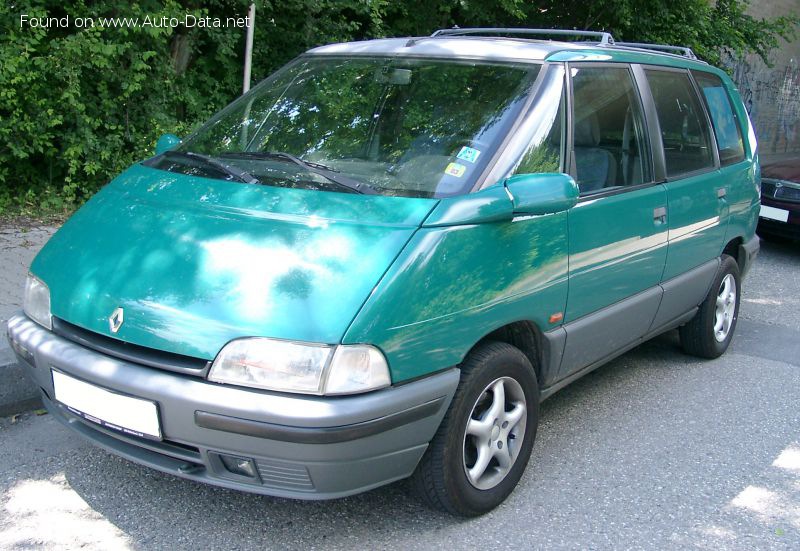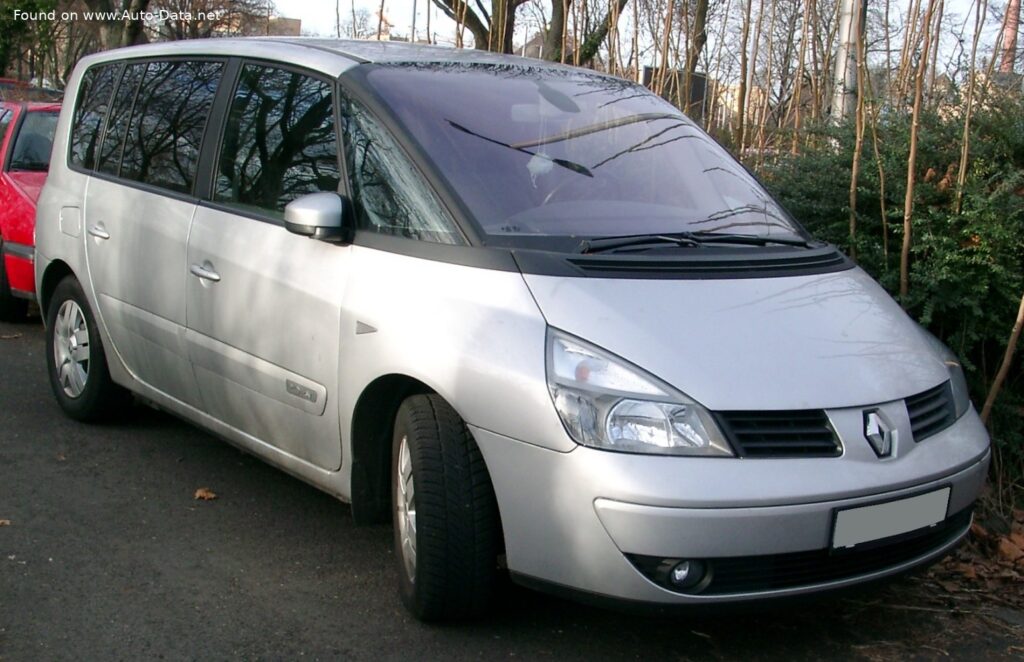
The Renault Espace IV 2.0i Turbo 16V (163 Hp) Automatic represents a pivotal generation of Renault’s groundbreaking Espace line, a vehicle that fundamentally reshaped the European family car market. Launched in 2002, this iteration continued the Espace’s legacy as a versatile and comfortable minivan, offering seven seats and a flexible interior layout designed to cater to the diverse needs of European families. Unlike earlier models manufactured by Matra, the Espace IV was entirely developed and produced by Renault, demonstrating a more integrated and sophisticated design approach. This specific variant, powered by a turbocharged 2.0-liter gasoline engine paired with an automatic transmission, aimed to deliver a compelling blend of performance, refinement, and practicality, establishing itself as a premium offering in its segment until production of this configuration concluded in 2005.
The Renault Espace IV: A Pillar of European Family Transport
The Espace, originating in 1984, quickly became synonymous with the Multi-Purpose Vehicle (MPV) segment in Europe. The fourth generation, the Espace IV, built upon this foundation, offering a more refined and modern experience. While never officially sold in the United States, the Espace IV was a significant player in the European market, competing with vehicles like the Ford Galaxy, Volkswagen Sharan, and Citroën C8. Its appeal lay in its spaciousness, modularity, and relatively car-like driving dynamics compared to more utilitarian vans.
Engine & Performance: Powering the Family Journey
At the heart of the Renault Espace IV 2.0i Turbo 16V (163 Hp) Automatic lies the F4R engine, a 16-valve, 2.0-liter (1998 cm3 or 121.93 cu. in.) inline-four gasoline unit. This powertrain, with a front, transverse layout and front-wheel drive, was engineered to deliver smooth and efficient power for a vehicle of its size. The engine benefits from a turbocharger and intercooler, boosting output to 163 horsepower at 5000 rpm. This translates to a power-per-liter ratio of 81.6 HP/l, a respectable figure for a family MPV. The engine develops 270 Newton-meters (199.14 lb.-ft.) of torque, peaking at 3250 rpm. This low-end torque is crucial for confident acceleration, especially when fully loaded, and contributes to a relaxed driving experience.
Power is managed by a 5-speed automatic transmission, offering convenience and ease of driving. Performance figures are competitive: the Espace IV 2.0i Turbo can accelerate from 0 to 60 mph in approximately 10.3 seconds and reach a top speed of 124.27 mph (200 km/h). Fuel economy for the combined cycle is rated at 22 US mpg (10.7 l/100 km), with urban consumption at 15.4 US mpg (15.3 l/100 km) and extra-urban at 29 US mpg (8.1 l/100 km). The engine meets the Euro 3 emission standard, with CO2 emissions of 255 g/km, reflecting the environmental considerations of the early 2000s.
Design & Features: A Sanctuary on Wheels
The Renault Espace IV maintained its iconic minivan (MPV) body type, characterized by its “one-box” design maximizing interior space. This generation adopted a more contemporary and sophisticated aesthetic. With a length of 183.5 inches, a width of 73.23 inches (82.83 inches including mirrors), and a height ranging from 68.03 to 70.16 inches, the Espace IV commanded a significant road presence. Its 110.35-inch wheelbase provided exceptional interior room and a stable ride.
Inside, the Espace IV was a masterclass in modularity and comfort. Designed to accommodate seven passengers across five doors, its seating arrangement was highly flexible, allowing seats to be folded, slid, or removed to reconfigure the cabin. Minimum trunk space started at 10.28 cu. ft. (291 liters), expanding to a cavernous 101 cu. ft. (2860 liters) with the rear seats removed or folded. This adaptability was a cornerstone of the Espace’s appeal.
Key features included a focus on safety and convenience. It was equipped with an Anti-lock Braking System (ABS) as standard, with ventilated discs at the front and disc brakes at the rear. The steering system utilized a hydraulic rack and pinion setup, offering a responsive driving experience. The suspension featured an independent McPherson type at the front and a trailing arm design at the rear, tuned for a compliant ride. The vehicle rode on 225/65 R15 tires, providing a balance of grip and ride quality. With a curb weight of 3924.23 lbs. (1780 kg) and a maximum permissible weight of 5489.51 lbs. (2490 kg), the Espace IV was a substantial vehicle built for family life.
Technical Specifications
| Category | Specification |
| Brand | Renault |
| Model | Espace IV |
| Type (Engine) | 2.0i Turbo 16V (163 Hp) Automatic |
| Production Start | 2002 |
| Production End | 2005 |
| Body Type | Minivan, MPV |
| Seats | 7 |
| Doors | 5 |
| Fuel Type | Petrol (Gasoline) |
| Engine Layout | Front, Transverse |
| Engine Model/Code | F4R |
| Engine Displacement | 1998 cm3 |
| Number of Cylinders | 4 |
| Engine Configuration | Inline |
| Cylinder Bore | 82.7 mm |
| Piston Stroke | 93 mm |
| Compression Ratio | 10:1 |
| Valves per Cylinder | 4 |
| Fuel Injection System | Multi-port manifold injection |
| Engine Aspiration | Turbocharger, Intercooler |
| Valvetrain | DOHC |
| Power | 163 Hp @ 5000 rpm |
| Torque | 270 Nm @ 3250 rpm |
| Acceleration 0-60 mph | 10.3 sec |
| Maximum Speed | 200 km/h |
| Fuel Economy (Combined) | 10.7 l/100 km |
| CO2 Emissions | 255 g/km |
| Emission Standard | Euro 3 |
| Transmission | 5 gears, automatic |
| Drive Wheel | Front wheel drive |
| Front Suspension | Independent type McPherson |
| Rear Suspension | Trailing arm |
| Front Brakes | Ventilated discs |
| Rear Brakes | Disc |
| Assisting Systems | ABS (Anti-lock braking system) |
| Steering Type | Steering rack and pinion |
| Power Steering | Hydraulic Steering |
| Tires Size | 225/65 R15 |
| Wheel Rims Size | 15 inches |
| Length | 4661 mm |
| Width | 1860 mm |
| Width including mirrors | 2104 mm |
| Height | 1728-1782 mm |
| Wheelbase | 2803 mm |
| Kerb Weight | 1780 kg |
| Max. Weight | 2490 kg |
| Trunk Space (Min) | 291 l |
| Trunk Space (Max) | 2860 l |
The Renault Espace IV, and specifically the 2.0i Turbo 16V Automatic variant, played a crucial role in cementing the Espace’s reputation as a benchmark for family-oriented MPVs in Europe. Renault, having pioneered the segment with the original Espace in 1984, continued to innovate with this fourth generation, responding to evolving consumer demands for more car-like driving dynamics, enhanced safety features, and a more refined interior experience. While the MPV market in Europe eventually faced challenges from the rise of SUVs, the Espace IV remains a testament to Renault’s vision for family mobility. Its mechanical impact was significant, showcasing how a turbocharged gasoline engine could provide both performance and relative efficiency in a large family vehicle, setting a standard for future MPV powertrains. For the American market, the Espace IV, like its predecessors, was never officially imported due to differing market preferences.