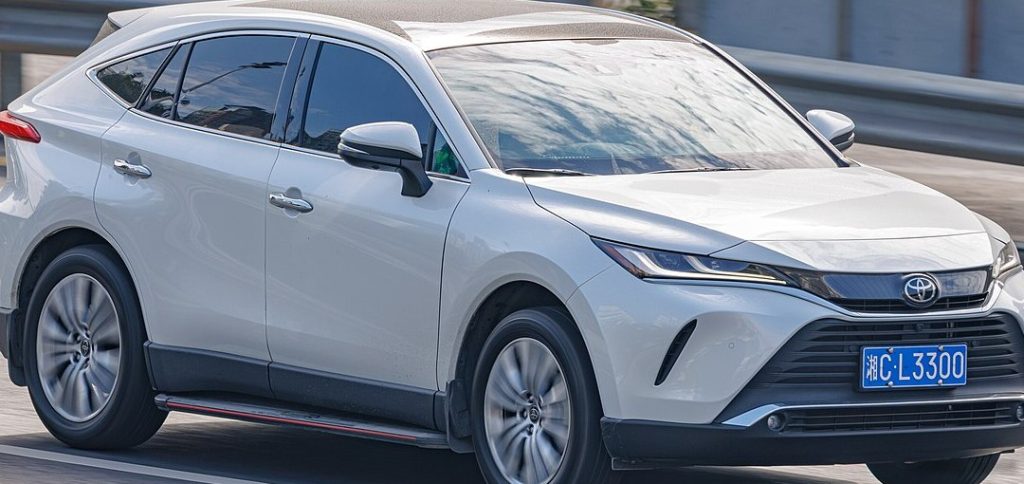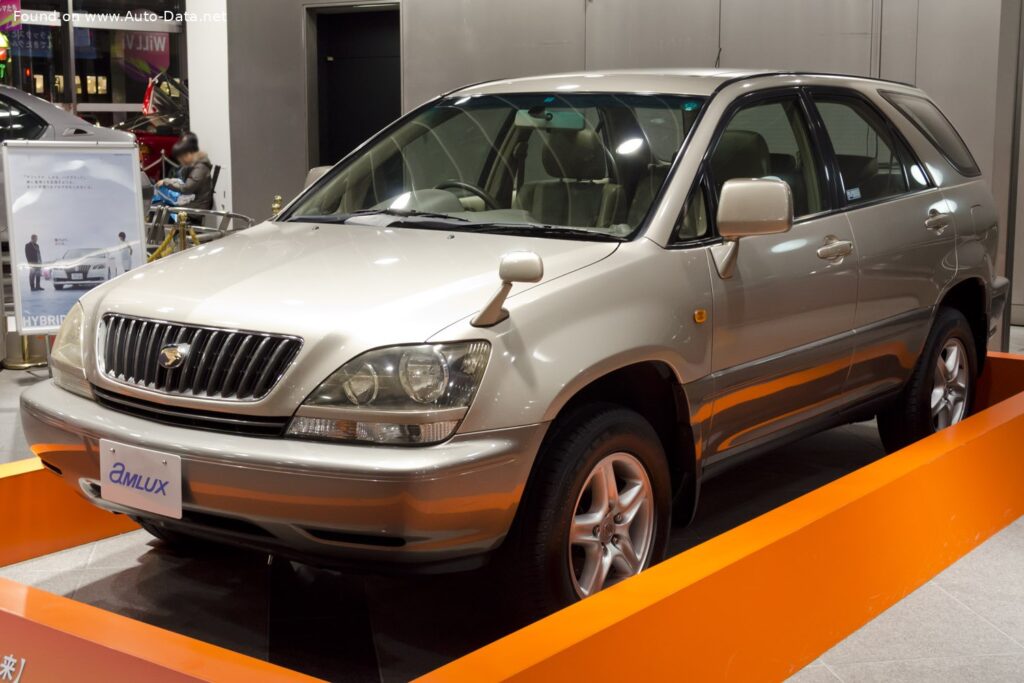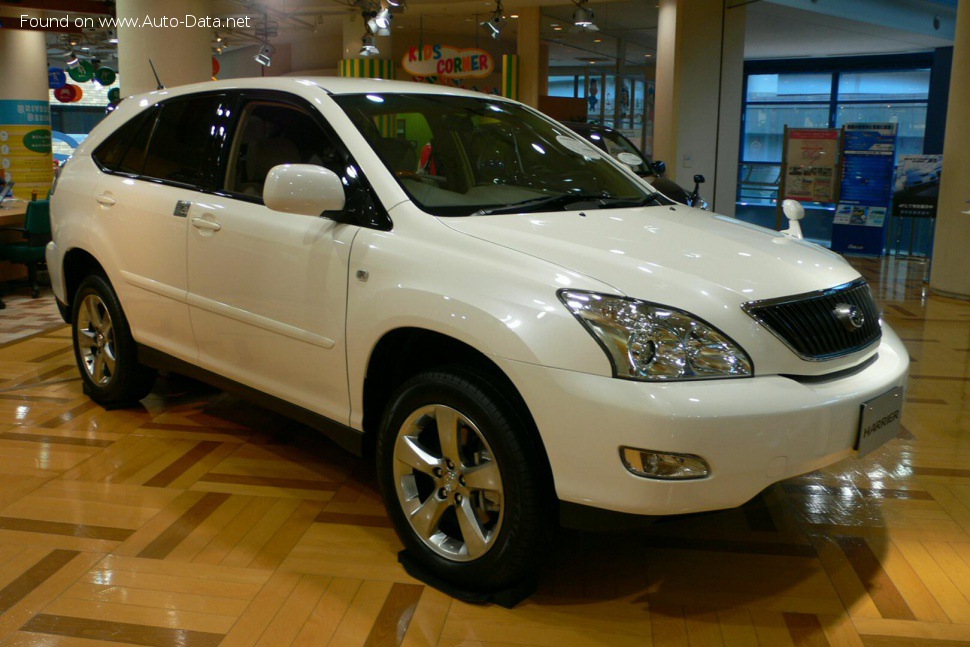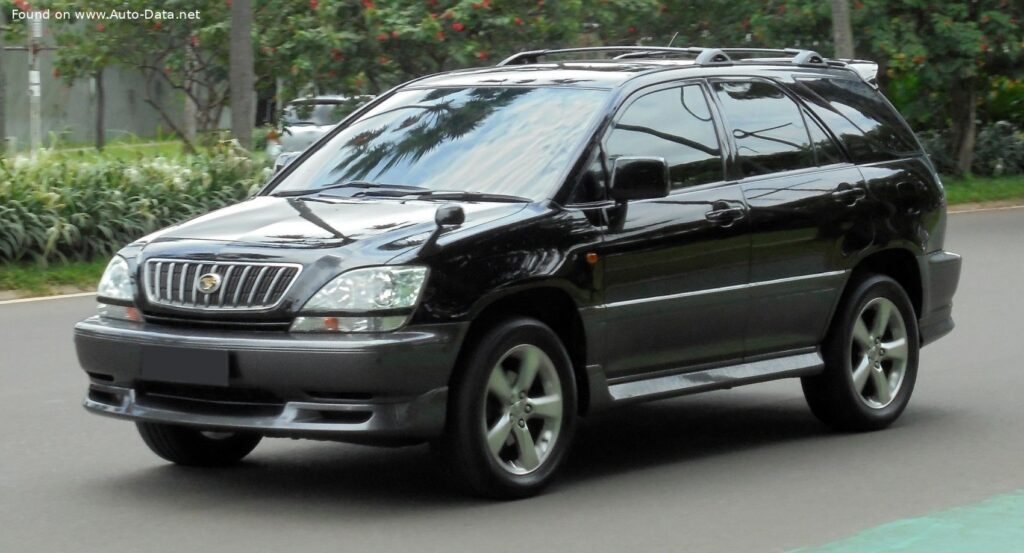
The Toyota Harrier I (XU10), specifically the facelifted model produced from 2000 to 2002, represents a significant milestone in the evolution of the modern sport utility vehicle (SUV) and crossover segment. Marketed primarily in Japan and other Asian regions, the Toyota Harrier I (XU10, facelift 2000) was a pioneering vehicle that blurred the lines between traditional rugged SUVs and comfortable, car-like sedans. It offered the elevated driving position and versatility of an SUV with the refined ride quality, sophisticated interior, and luxurious features typically found in premium passenger cars. For the North American market, this very vehicle was rebadged and sold as the first-generation Lexus RX 300, a move that would cement Lexus’s presence in the burgeoning luxury SUV market and profoundly influence automotive design globally.
This particular variant, equipped with a potent 3.0-liter V6 24V engine delivering 220 horsepower, coupled with a four-wheel-drive system and an automatic transmission, epitomized the Harrier’s blend of performance, practicality, and premium appeal. It established a new benchmark for what consumers could expect from a crossover, emphasizing comfort, safety, and efficiency over pure off-road capability, a philosophy that continues to dominate the segment today.
Engine & Performance of the Toyota Harrier I (XU10, Facelift 2000)
At the heart of the 2000-2002 Toyota Harrier I (XU10, facelift 2000) was the venerable 1MZ-FE engine, a 3.0-liter (2994 cm3 or 182.71 cu. in.) V6 powerplant renowned for its smoothness, reliability, and efficient power delivery. This naturally aspirated, longitudinally mounted engine featured a Double Overhead Camshaft (DOHC) valvetrain with four valves per cylinder, totaling 24 valves, ensuring optimal airflow and combustion efficiency. With a compression ratio of 10.5:1 and a multi-port manifold injection system, the engine produced a robust 220 horsepower at 5800 rpm.
Torque output was equally impressive for its class, peaking at 304 Nm (224.22 lb.-ft.) at 4400 rpm, providing ample pulling power and responsive acceleration. This engine delivered a power-to-liter ratio of 73.5 Hp/l, showcasing its well-engineered design. The power was channeled through a smooth-shifting 4-speed automatic transmission, which was perfectly suited for both city driving and highway cruising, prioritizing comfort and ease of operation. The vehicle’s all-wheel-drive (4×4) powertrain architecture ensured confident traction and stability across various road conditions, enhancing its versatility and safety.
Despite its powerful V6 engine and all-wheel-drive system, the Harrier I facelift aimed for a respectable balance of performance and efficiency for its time. It achieved a combined fuel economy of approximately 11.1 liters per 100 kilometers, translating to about 21.2 US miles per gallon. With a curb weight of 3814 lbs. (1730 kg), the Harrier boasted a favorable weight-to-power ratio of 7.9 kg/Hp (127.2 Hp/tonne) and a weight-to-torque ratio of 5.7 kg/Nm (175.7 Nm/tonne), contributing to its agile and responsive driving dynamics.
Design and Features: A Pioneer in Luxury Crossover Aesthetics
The Toyota Harrier I (XU10, facelift 2000) established a design language that was both elegant and functional, defining the emerging luxury crossover segment. Its body style, a five-door, five-seat SUV/Crossover, presented a sleek, aerodynamic profile that departed from the boxy, utilitarian look of traditional SUVs. The facelift introduced subtle enhancements to the exterior, refining its already sophisticated appearance with updated lighting and grille elements.
Dimensionally, the Harrier measured 180.12 inches (4575 mm) in length, 71.46 inches (1815 mm) in width, and 65.55 inches (1665 mm) in height, with a generous wheelbase of 102.95 inches (2615 mm). These dimensions provided a spacious and comfortable cabin, while a ground clearance of 7.28 inches (185 mm) offered sufficient capability for light off-road excursions or navigating challenging urban landscapes. The interior was designed with a focus on luxury and ergonomics, featuring high-quality materials and thoughtful amenities. The minimum trunk space of 30.37 cu. ft. (860 liters) was substantial, expanding to an impressive 75.22 cu. ft. (2130 liters) with the rear seats folded, offering excellent cargo versatility.
Safety and driving comfort were paramount. The Harrier came standard with an Anti-lock Braking System (ABS), a crucial safety feature for preventing wheel lock-up during hard braking. The steering system was a responsive rack and pinion setup, complemented by hydraulic power steering, providing precise control and a comfortable driving experience. The suspension system featured a Spring Strut design at the front and a Wishbone setup at the rear, a configuration chosen to deliver a smooth, car-like ride while maintaining SUV-like ground clearance. Braking power was supplied by ventilated discs at the front and solid discs at the rear. The vehicle rode on 215/70 R16 99S tires mounted on 6.5J x 16 ET35 wheel rims, offering a balanced combination of grip and ride comfort.
Technical Specifications
| General Information | |
|---|---|
| Brand | Toyota |
| Model | Harrier |
| Generation | Harrier I (XU10, facelift 2000) |
| Type (Engine) | 3.0 V6 24V (220 Hp) 4×4 Automatic |
| Production Start | 2000 |
| Production End | 2002 |
| Powertrain Architecture | Internal Combustion Engine |
| Body Type | SUV, Crossover |
| Seats | 5 |
| Doors | 5 |
| Performance Specifications | |
| Fuel Consumption (Combined) | 11.1 l/100 km (21.2 US mpg) |
| Fuel Type | Petrol (Gasoline) |
| Weight-to-Power Ratio | 7.9 kg/Hp (127.2 Hp/tonne) |
| Weight-to-Torque Ratio | 5.7 kg/Nm (175.7 Nm/tonne) |
| Engine Specifications | |
| Power | 220 Hp @ 5800 rpm |
| Power per Liter | 73.5 Hp/l |
| Torque | 304 Nm (224.22 lb.-ft.) @ 4400 rpm |
| Engine Layout | Front, Longitudinal |
| Engine Model/Code | 1MZ-FE |
| Engine Displacement | 2994 cm3 (182.71 cu. in.) |
| Number of Cylinders | 6 |
| Engine Configuration | V-engine |
| Cylinder Bore | 87.5 mm (3.44 in.) |
| Piston Stroke | 83 mm (3.27 in.) |
| Compression Ratio | 10.5:1 |
| Valves per Cylinder | 4 |
| Fuel Injection System | Multi-port manifold injection |
| Engine Aspiration | Naturally aspirated engine |
| Valvetrain | DOHC |
| Engine Oil Capacity | 4.7 l (4.97 US qt) |
| Coolant Capacity | 9 l (9.51 US qt) |
| Space, Volume, and Weights | |
| Kerb Weight | 1730 kg (3814 lbs.) |
| Trunk (Boot) Space – Minimum | 860 l (30.37 cu. ft.) |
| Trunk (Boot) Space – Maximum | 2130 l (75.22 cu. ft.) |