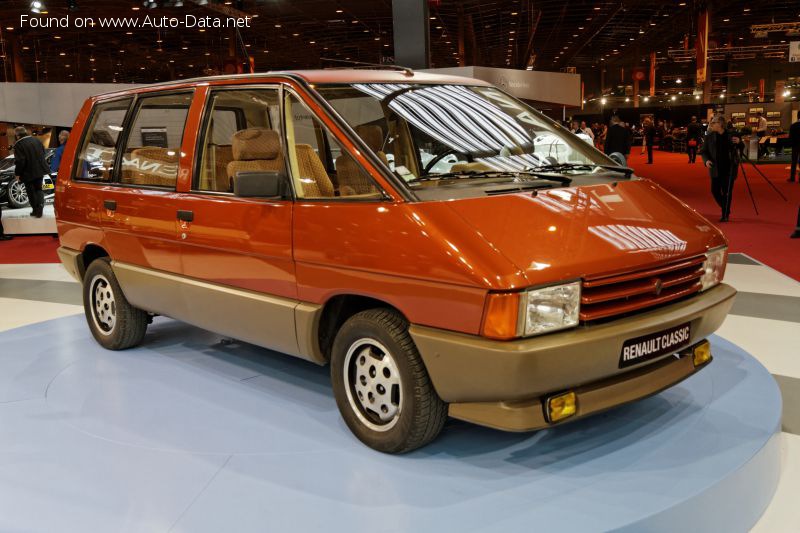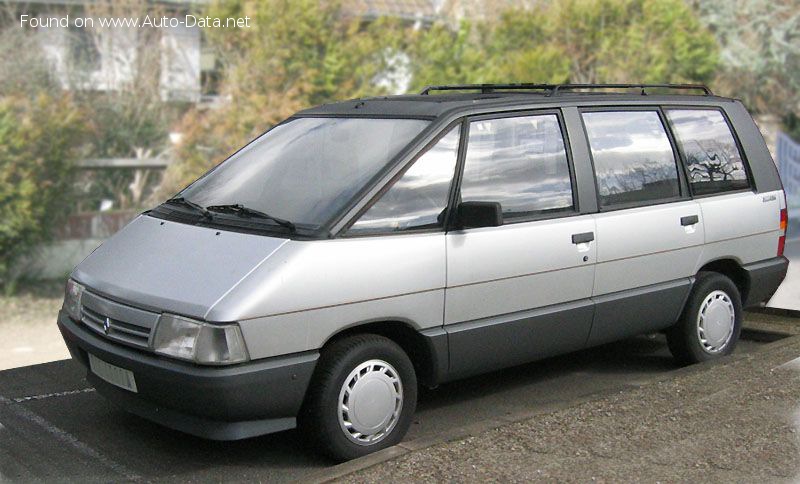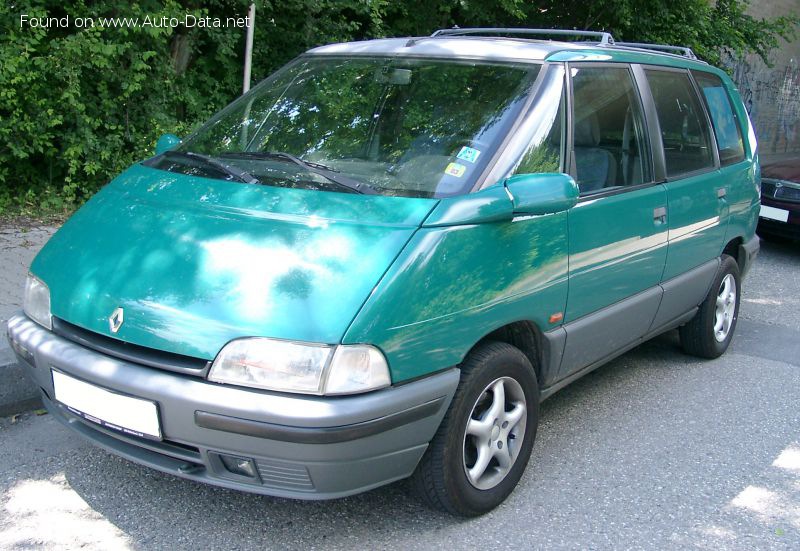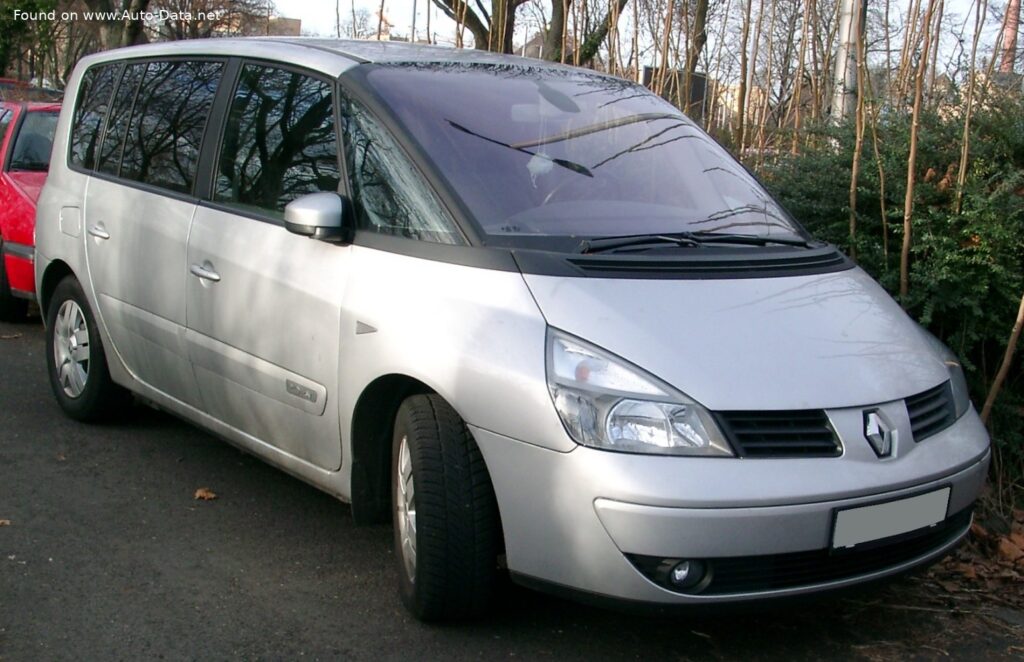
The Renault Espace IV 2.0i Turbo 16V (170 Hp) represents a significant evolution in the lineage of the Renault Espace, a vehicle that pioneered the modern European multi-purpose vehicle (MPV) segment. First introduced in 1984, the Espace effectively created a new class of family transportation. The fourth generation, launched in 2002, refined this concept with a more contemporary design, advanced technology, and improved refinement. This particular variant, produced between 2005 and 2006, offered a compelling combination of turbocharged performance and practical family-hauling capabilities. While the Espace nameplate remains largely unknown in the United States market, where full-size minivans like the Chrysler Pacifica or Honda Odyssey dominate, it was a household name across Europe, synonymous with versatile family travel and innovative design.
Engine & Performance of the Renault Espace IV 2.0i Turbo 16V (170 Hp)
The Renault Espace IV 2.0i Turbo 16V is powered by Renault’s acclaimed F4R engine, a 2.0-liter (1998 cm3 or 121.93 cu. in.) inline-four gasoline unit. This engine is distinguished by its turbocharger and intercooler, which enhance both power delivery and efficiency. The engine features a DOHC (Dual Overhead Camshaft) valvetrain with 16 valves (four per cylinder), optimizing airflow for improved combustion. A multi-port fuel injection system ensures precise fuel delivery, contributing to the engine’s responsiveness.
The F4R engine in this Espace IV variant generates 170 horsepower at 5000 revolutions per minute (rpm). Notably for a vehicle of its size and purpose, it delivers 184.39 pound-feet (250 Nm) of torque at a relatively low 2000 rpm. This broad torque band is crucial for an MPV, providing ample pulling power for quick acceleration from a standstill, effortless highway cruising, and confident overtaking, even when fully loaded with passengers and luggage.
Power is delivered to the front wheels via a smooth-shifting 6-speed manual transmission, a common and efficient layout for this class of vehicle. This powertrain allows the Espace IV to accelerate from 0 to 60 miles per hour in 9.4 seconds (0-100 km/h in 9.9 seconds), a respectable time for a minivan. Its top speed is rated at 127.38 mph (205 km/h), more than adequate for European autobahns and highways.
Despite its size and turbocharged engine, the Espace IV 2.0i Turbo aimed for reasonable fuel economy for its time. It achieved an estimated combined fuel consumption of 24.2 US miles per gallon (9.7 liters per 100 km). Urban driving yielded around 18.2 US mpg (12.9 l/100 km), while extra-urban conditions saw it reach approximately 29.8 US mpg (7.9 l/100 km). The vehicle complied with the Euro 3 emission standard, emitting 232 grams of CO2 per kilometer.
Design & Features
The Renault Espace IV marked a significant departure from its predecessors in terms of design, adopting a more contemporary and robust aesthetic. Classified as a Minivan or Multi-Purpose Vehicle (MPV), its single-box, cab-forward design maximizes interior space. This model offered seating for seven passengers across three rows, making it an ideal choice for larger families or those needing flexible seating arrangements.
Measuring 183.5 inches (4661 mm) in length, 73.23 inches (1860 mm) in width (82.83 inches or 2104 mm including mirrors), and standing between 68.03 and 70.16 inches (1728-1782 mm) tall, the Espace IV presented a substantial road presence. Its generous 110.35-inch (2803 mm) wheelbase contributed significantly to interior volume and ride comfort. The design was also aerodynamically efficient for its class, boasting a drag coefficient (Cd) of 0.35.
A key appeal of the Espace was its highly adaptable interior. With a minimum trunk (boot) space of 10.28 cubic feet (291 liters) with all seats in place, it could expand to a cavernous 101 cubic feet (2860 liters) by removing or folding down the rear seats. This modularity was a hallmark of the Espace lineage, allowing owners to configure the interior for various combinations of passengers and cargo. The large fuel tank capacity of 21.93 US gallons (83 liters) provided an impressive cruising range, essential for long European road trips.
In terms of chassis and safety, the Espace IV was well-equipped for its time. It featured an independent McPherson strut front suspension and a trailing arm rear suspension, providing a comfortable and stable ride. Braking was handled by ventilated discs at the front and solid discs at the rear, complemented by an Anti-lock Braking System (ABS) for enhanced stopping power and control. Steering was a hydraulic rack and pinion system, offering a direct and communicative feel. The vehicle rode on 16-inch wheels fitted with 225/60 R16 tires, balancing ride comfort with adequate grip. Its robust construction resulted in a curb weight of 3880.14 pounds (1760 kg) and a maximum permissible weight of 5456.44 pounds (2475 kg), with a significant maximum load capacity of 1576.31 pounds (715 kg). It also boasted a substantial towing capacity of 4409.25 pounds (2000 kg) with brakes.
Technical Specifications
| Category | Specification |
| General Information | |
| Brand | Renault |
| Model | Espace |
| Generation | Espace IV |
| Type (Engine) | 2.0i Turbo 16V (170 Hp) |
| Start of Production | 2005 |
| End of Production | 2006 |
| Powertrain Architecture | Internal Combustion engine |
| Body type | Minivan, MPV |
| Seats | 7 |
| Doors | 5 |
| Performance Specs | |
| Fuel Consumption (Urban) | 12.9 l/100 km (18.2 US mpg) |
| Fuel Consumption (Extra Urban) | 7.9 l/100 km (29.8 US mpg) |
| Fuel Consumption (Combined) | 9.7 l/100 km (24.2 US mpg) |
| CO2 Emissions | 232 g/km |
| Fuel Type | Petrol (Gasoline) |
| Acceleration 0-60 mph | 9.4 sec |
| Acceleration 0-100 km/h | 9.9 sec |
| Maximum Speed | 205 km/h (127.38 mph) |
| Emission Standard | Euro 3 |
| Weight-to-power ratio | 10.4 kg/Hp, 96.6 Hp/tonne |
| Weight-to-torque ratio | 7 kg/Nm, 142 Nm/tonne |
| Engine Specs | |
| Power | 170 Hp @ 5000 rpm |
| Power per liter | 85.1 Hp/l |
| Torque | 250 Nm (184.39 lb.-ft.) @ 2000 rpm |
| Engine Layout | Front, Transverse |
| Engine Model/Code | F4R |
| Engine Displacement | 1998 cm3 (2.0 L, 121.93 cu. in.) |
| Number of Cylinders | 4 |
| Engine Configuration | Inline |
| Cylinder Bore | 82.7 mm (3.26 in.) |
| Piston Stroke | 93 mm (3.66 in.) |
| Compression Ratio | 10:1 |
| Number of Valves per Cylinder | 4 |
| Fuel Injection System | Multi-port manifold injection |
| Engine Aspiration | Turbocharger, Intercooler |
| Valvetrain | DOHC |
| Engine Oil Capacity | 5.4 l (5.71 US qt) |
| Coolant Capacity | 9.3 l (9.83 US qt) |
| Space, Volume and Weights | |
| Kerb Weight | 1760 kg (3880.14 lbs.) |
| Max. Weight | 2475 kg (5456.44 lbs.) |
| Max Load | 715 kg (1576.31 lbs.) |
| Trunk (boot) space – minimum | 291 l (10.28 cu. ft.) |
| Trunk (boot) space – maximum | 2860 l (101 cu. ft.) |
| Fuel Tank Capacity | 83 l (21.93 US gal) |
| Max. Roof Load | 80 kg (176.37 lbs.) |
| Permitted Trailer Load with Brakes (12%) | 2000 kg (4409.25 lbs.) |
| Permitted Trailer Load without Brakes | 750 kg (1653.47 lbs.) |
| Permitted Towbar Download | 85 kg (187.39 lbs.) |
| Dimensions | |
| Length | 4661 mm (183.5 in.) |
| Width | 1860 mm (73.23 in.) |
| Width including mirrors | 2104 mm (82.83 in.) |
| Height | 1728-1782 mm (68.03 – 70.16 in.) |
| Wheelbase | 2803 mm (110.35 in.) |
| Front Track | 1574 mm (61.97 in.) |
| Rear Track | 1556 mm (61.26 in.) |
| Front Overhang | 1026 mm (40.39 in.) |
| Rear Overhang | 832 mm (32.76 in.) |
| Ride Height (Ground Clearance) | 175 mm (6.89 in.) |
| Drag Coefficient (Cd) | 0.35 |
| Minimum Turning Circle (diameter) | 11.3 m (37.07 ft.) |
| Drivetrain, Brakes and Suspension Specs | |
| Drivetrain Architecture | Front-wheel drive, Internal Combustion engine |
| Drive Wheel | Front wheel drive |
| Number of Gears and Type of Gearbox | 6 gears, manual transmission |
| Front Suspension | Independent type McPherson |
| Rear Suspension | Trailing arm |
| Front Brakes | Ventilated discs |
| Rear Brakes | Disc |
| Assisting Systems | ABS (Anti-lock braking system) |
| Steering Type | Steering rack and pinion |
| Power Steering | Hydraulic Steering |
| Tires Size | 225/60 R16 |
| Wheel Rims Size | 16 inches |
Legacy and Market Impact
The Renault Espace has a storied history in Europe, often credited with being the progenitor of the modern MPV segment. Its innovative design, offering immense interior flexibility and a car-like driving experience in a van-like body, revolutionized family transportation when it first appeared. The Espace IV, launched in 2002, continued this tradition, evolving the concept with a more sophisticated platform shared with the Laguna and Vel Satis, enhancing its ride quality and handling dynamics.
The Renault Espace IV 2.0i Turbo 16V (170 Hp), specifically, played a vital role in the Espace lineup during its production years (2005-2006). It positioned itself as a strong mid-range option, offering a compelling balance between performance and fuel efficiency. For European families, it provided enough power to comfortably navigate highways, even when fully laden, without incurring the higher fuel costs or emissions associated with larger diesel or V6 petrol engines. Its turbocharged 2.0-liter engine was a well-regarded unit, known for its reliability and smooth power delivery, making it a popular choice for those seeking a more engaging driving experience than typically found in an MPV.
In the highly competitive European MPV market, the Espace IV faced rivals such as the Ford Galaxy, Volkswagen Sharan, Citroën C8, and Peugeot 807. Despite the strong competition, the Espace maintained its reputation for distinctive French design, exceptional interior modularity, and a comfortable, refined ride. Its unique central digital instrument cluster and high-quality interior materials were often praised, setting it apart from some of its more conventional competitors.
While never officially imported into the United States, where the term “minivan” often conjures images of less stylish, more utilitarian vehicles, the Espace’s influence on global automotive design is undeniable. It demonstrated that a family vehicle could be both practical and stylish, pushing boundaries in packaging and interior versatility. The Espace IV continued to embody these principles, securing its place as a significant chapter in the history of European family cars and a testament to Renault’s innovative spirit. Its legacy endures through subsequent generations, even as the market shifts towards SUVs, reminding us of a time when the MPV reigned supreme as the ultimate family transporter.