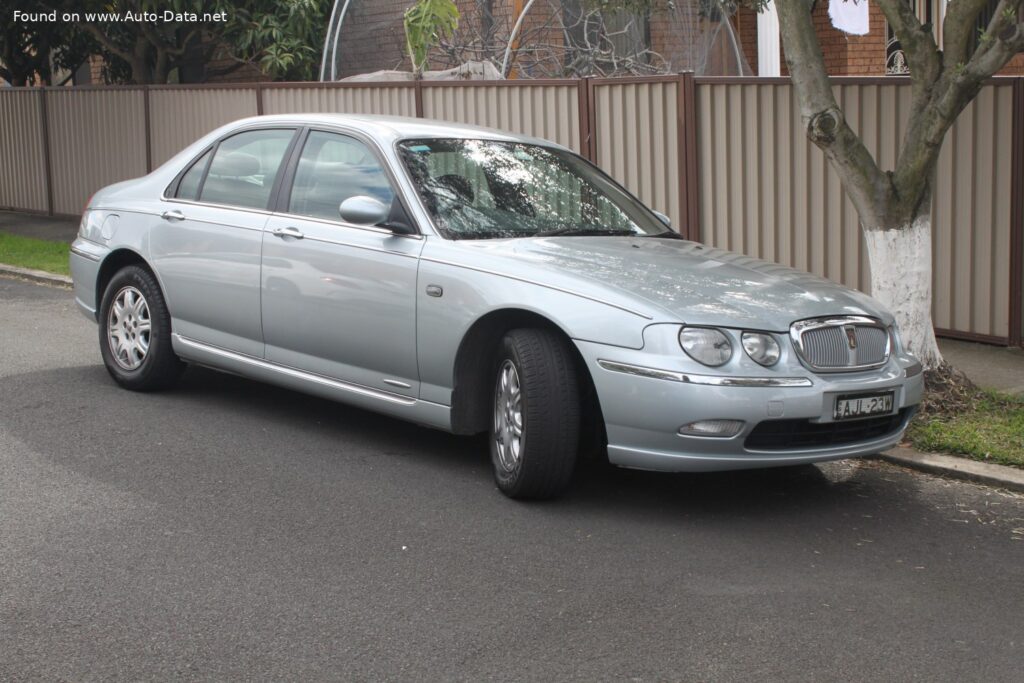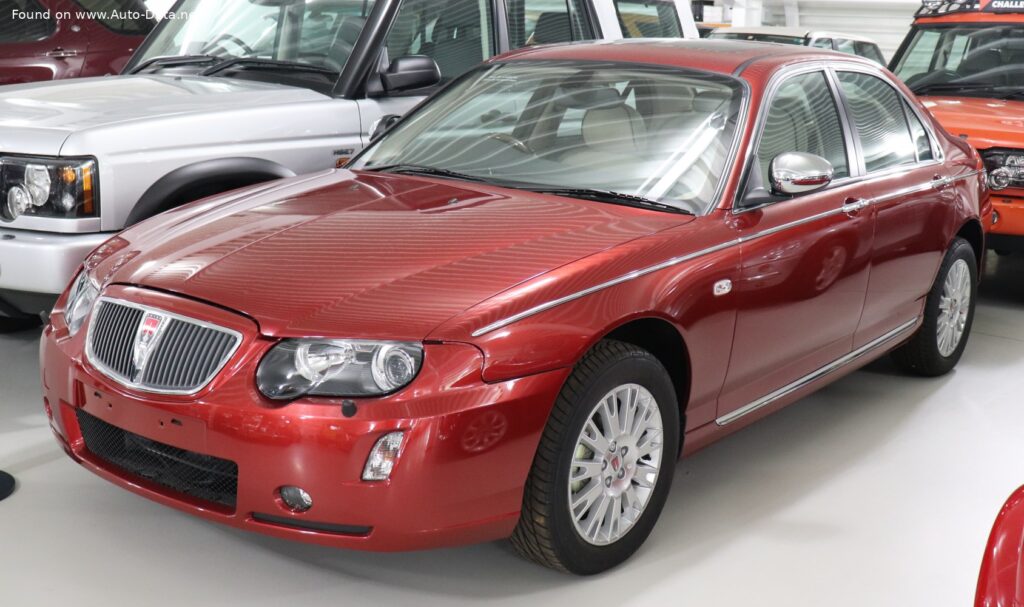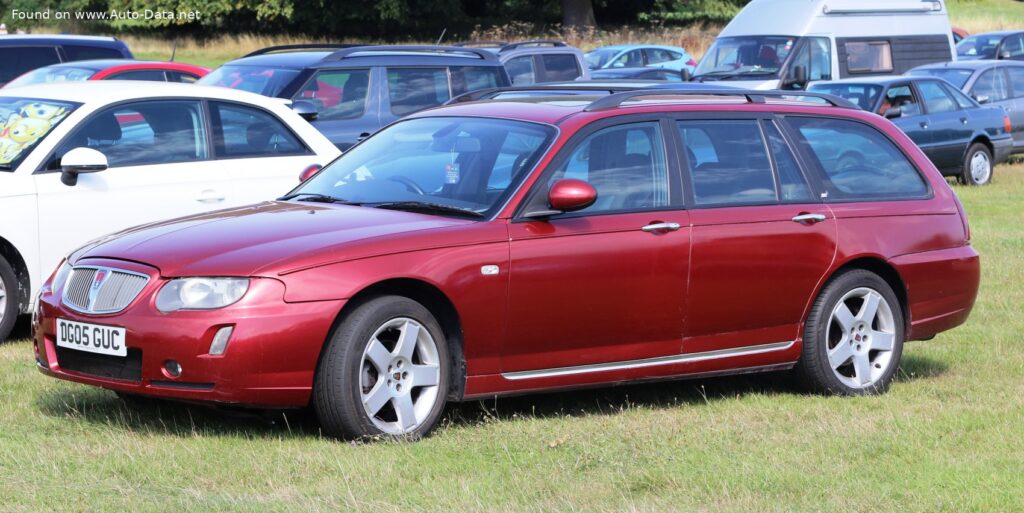
The Rover 75 Tourer (facelift 2004) represents a significant chapter in the history of the British automotive industry, embodying a blend of traditional elegance and modern engineering. Launched in 2004, this particular iteration was the updated version of Rover’s executive mid-size car, the 75, which had originally debuted in 1998. The “Tourer” designation refers to the station wagon (or estate, as it’s known in Europe) body style, offering enhanced practicality alongside the sedan’s renowned comfort and refinement.
Primarily aimed at the European market, where station wagons are highly popular for their versatility, the Rover 75 Tourer was never officially sold in the United States. It carved out a niche for itself by offering a distinctly British luxury experience, characterized by a plush interior, a smooth ride, and a classic aesthetic that harked back to an earlier era of motoring. This facelifted model, produced from 2004 until the brand’s unfortunate demise in 2005, incorporated subtle styling revisions to keep it competitive in a rapidly evolving segment. The 2.0 CDT variant, equipped with a 116 HP diesel engine and an automatic transmission, was a particularly popular choice in markets where fuel efficiency and torque were highly valued, such as the UK and continental Europe.
Rover 75 Tourer (facelift 2004) Engine & Performance
Under the hood, the Rover 75 Tourer (facelift 2004) 2.0 CDT featured a robust and efficient diesel engine, a critical component that underscored its appeal in European markets. This powerplant, designated M47R (a derivative of BMW’s M47 engine), was a 1951 cm³ (approximately 2.0-liter or 119.06 cu. in.) inline four-cylinder unit. It was engineered with a DOHC (Dual Overhead Camshaft) valvetrain and boasted a common rail diesel fuel injection system, paired with a turbocharger and intercooler. This sophisticated setup for its time ensured a balance of power, torque, and fuel economy.
The engine delivered 116 horsepower at a relatively low 4000 rpm, which, while not class-leading, was perfectly adequate for the car’s intended purpose of comfortable touring. More importantly for a diesel, it produced a healthy 260 Nm (191.77 lb.-ft.) of torque at just 2000 rpm. This strong low-end torque made for effortless cruising and confident overtaking, especially when paired with the smooth-shifting 5-speed automatic transmission. The engine’s transverse front-wheel-drive layout contributed to efficient packaging and predictable handling.
In terms of acceleration, the 75 Tourer 2.0 CDT could reach 60 mph from a standstill in 12.7 seconds, with a top speed of 111.85 mph (180 km/h). While not a performance car, these figures were respectable for a family-oriented station wagon of its size and power. Fuel efficiency was a strong suit, with a combined consumption rating of 34.1 US mpg (6.9 liters per 100 km), making it an economical choice for long-distance travel. Its CO2 emissions stood at 190 g/km, adhering to the Euro 3 emission standard prevalent at the time. The weight-to-power ratio of 13.7 kg/Hp (73 Hp/tonne) and a weight-to-torque ratio of 6.1 kg/Nm (163.5 Nm/tonne) further illustrate its balanced performance characteristics.
Rover 75 Tourer (facelift 2004) Design & Features
The design of the Rover 75 Tourer (facelift 2004) was a careful evolution of the original, maintaining its distinctive “retro-modern” aesthetic that fused classic British styling cues with contemporary lines. The facelift introduced subtle changes, primarily to the front fascia, including redesigned headlights, a revised grille, and a slightly altered bumper, giving it a more assertive yet still elegant appearance. The body type, a station wagon (known as an estate car in its primary markets), offered a practical five-door configuration with seating for five occupants.
Dimensionally, the Tourer was a substantial vehicle, measuring 188.58 inches (4790 mm) in length and 70 inches (1778 mm) in width, with a wheelbase of 108.11 inches (2746 mm). These dimensions contributed to a spacious and comfortable interior, a hallmark of the 75 series. The station wagon body truly excelled in cargo capacity, offering a minimum trunk space of 14.13 cubic feet (400 liters), which could expand to an impressive 43.15 cubic feet (1222 liters) with the rear seats folded down, making it highly versatile for families and individuals needing ample storage. The car’s kerb weight ranged from 3505.35 to 3747.86 lbs. (1590-1700 kg), reflecting its solid build quality.
The chassis and suspension were tuned for comfort, providing a smooth and composed ride. It featured an independent McPherson strut setup with coil springs and an anti-roll bar at the front, complemented by an independent multi-link spring suspension with a stabilizer at the rear. This sophisticated suspension system, combined with hydraulic power steering, offered a refined driving experience. Braking was handled by ventilated discs at the front and solid discs at the rear, augmented by an Anti-lock Braking System (ABS) for enhanced safety. The car typically rode on 15-inch or 16-inch wheels, offering a choice of tire sizes (195/65 R15; 205/60 R15; 215/55 R16) to suit different preferences for ride comfort or handling. Inside, the 75 Tourer maintained its reputation for high-quality materials, wood trim, and a generally luxurious ambiance, providing a comfortable and well-appointed cabin experience for its passengers.
Technical Specifications
| Category | Specification |
| General Information | |
| Brand | Rover |
| Model | 75 |
| Generation | 75 Tourer (facelift 2004) |
| Engine Type | 2.0 CDT (116 Hp) Automatic |
| Production Start | 2004 |
| Production End | 2005 |
| Powertrain Architecture | Internal Combustion engine |
| Body Type | Station wagon (estate) |
| Seats | 5 |
| Doors | 5 |
| Performance Specs | |
| Fuel Consumption (Urban) | 10 l/100 km (23.5 US mpg) |
| Fuel Consumption (Extra Urban) | 5.2 l/100 km (45.2 US mpg) |
| Fuel Consumption (Combined) | 6.9 l/100 km (34.1 US mpg) |
| CO2 Emissions | 190 g/km |
| Fuel Type | Diesel |
| Acceleration 0 – 60 mph | 12.7 sec |
| Maximum Speed | 111.85 mph (180 km/h) |
| Emission Standard | Euro 3 |
| Weight-to-Power Ratio | 13.7 kg/Hp (73 Hp/tonne) |
| Weight-to-Torque Ratio | 6.1 kg/Nm (163.5 Nm/tonne) |
| Engine Specs | |
| Power | 116 Hp @ 4000 rpm |
| Power per liter | 59.5 Hp/l |
| Torque | 260 Nm (191.77 lb.-ft.) @ 2000 rpm |
| Engine Layout | Front, Transverse |
| Engine Model/Code | M47R / 204D2 |
| Engine Displacement | 1951 cm³ (119.06 cu. in.) |
| Number of Cylinders | 4 |
| Engine Configuration | Inline |
| Cylinder Bore | 84 mm (3.31 in.) |
| Piston Stroke | 88 mm (3.46 in.) |
| Compression Ratio | 18:1 |
| Valves per Cylinder | 4 |
| Fuel Injection System | Diesel Commonrail |
| Engine Aspiration | Turbocharger, Intercooler |
| Valvetrain | DOHC |
| Engine Oil Capacity | 6.8 l (7.19 US qt) |
| Coolant Capacity | 8.2 l (8.66 US qt) |
| Space, Volume and Weights | |
| Kerb Weight | 1590-1700 kg (3505.35 – 3747.86 lbs.) |
| Maximum Weight | 2120 kg (4673.8 lbs.) |
| Maximum Load | 420-530 kg (925.94 – 1168.45 lbs.) |
| Trunk (Boot) Space – Minimum | 400 l (14.13 cu. ft.) |
| Trunk (Boot) Space – Maximum | 1222 l (43.15 cu. ft.) |
| Fuel Tank Capacity | 65 l (17.17 US gal) |
| Max. Roof Load | 100 kg (220.46 lbs.) |
| Permitted Trailer Load (with brakes) | 1600 kg (3527.4 lbs.) |
| Permitted Trailer Load (without brakes) | 750 kg (1653.47 lbs.) |
| Permitted Towbar Download | 100 kg (220.46 lbs.) |
| Dimensions | |
| Length | 4790 mm (188.58 in.) |
| Width | 1778 mm (70 in.) |
| Width (including mirrors) | 1970 mm (77.56 in.) |
| Wheelbase | 2746 mm (108.11 in.) |
| Front Track | 1511 mm (59.49 in.) |
| Rear Track | 1504 mm (59.21 in.) |
| Minimum Turning Circle | 11.33 m (37.17 ft.) |
| Drivetrain, Brakes and Suspension Specs | |
| Drivetrain Architecture | Front-wheel drive (ICE drives front wheels) |
| Drive Wheel | Front wheel drive |
| Number of Gears & Gearbox Type | 5 gears, automatic transmission |
| Front Suspension | Independent, McPherson with coil spring and anti-roll bar |
| Rear Suspension | Independent multi-link spring suspension with stabilizer |
| Front Brakes | Ventilated discs |
| Rear Brakes | Disc |
| Assisting Systems | ABS (Anti-lock braking system) |
| Steering Type | Steering rack and pinion |
| Power Steering | Hydraulic Steering |
| Tire Sizes | 195/65 R15; 205/60 R15; 215/55 R16 |
| Wheel Rims Size | 6J x 15; 6.5J x 16 |
Legacy and Market Impact
The Rover 75 Tourer, particularly the facelifted 2004 model, holds a unique place in automotive history as one of the final expressions of the classic British Rover brand. It was launched during a period of intense competition in the European mid-size executive segment, where it faced formidable rivals such as the Ford Mondeo Estate, Vauxhall/Opel Vectra Estate, Volkswagen Passat Variant, and premium offerings like the BMW 3 Series Touring and Audi A4 Avant. The 75 Tourer differentiated itself with its distinctive styling, which leaned heavily on a nostalgic British aesthetic, contrasting sharply with the more contemporary and often Germanic designs of its competitors.
Its reputation was built on providing exceptional ride comfort, a refined driving experience, and an interior that exuded a sense of “old-world” luxury with its warm wood and chrome accents. The 2.0 CDT engine, a reliable and efficient unit derived from BMW’s engineering, was a key selling point in Europe, offering a strong blend of performance and economy that appealed to both private buyers and fleet operators. Despite its many virtues, the car’s legacy is inextricably linked to the broader struggles of the Rover Group. The 75 was developed under BMW ownership and was widely praised upon its initial launch as a return to form for the brand. However, subsequent ownership changes and financial difficulties plagued Rover, ultimately leading to its collapse in 2005.
The Rover 75 Tourer (facelift 2004) thus stands as a poignant symbol of a brand that, despite producing a highly competitive and well-regarded product, could not overcome its corporate challenges. It is remembered for its distinctive character, comfortable ride, and practical station wagon utility, offering a compelling alternative to its more mainstream rivals. For enthusiasts and collectors, it represents the swan song of a storied British marque, a testament to engineering prowess and design ambition that, regrettably, couldn’t prevent the end of an era. Today, these vehicles are appreciated for their unique charm and the significant historical context they embody, marking the conclusion of a long and proud lineage of British car manufacturing.