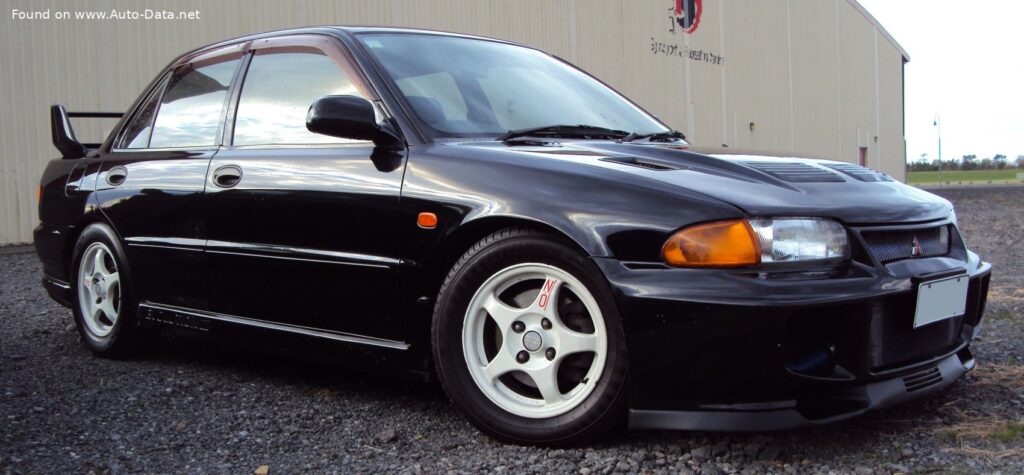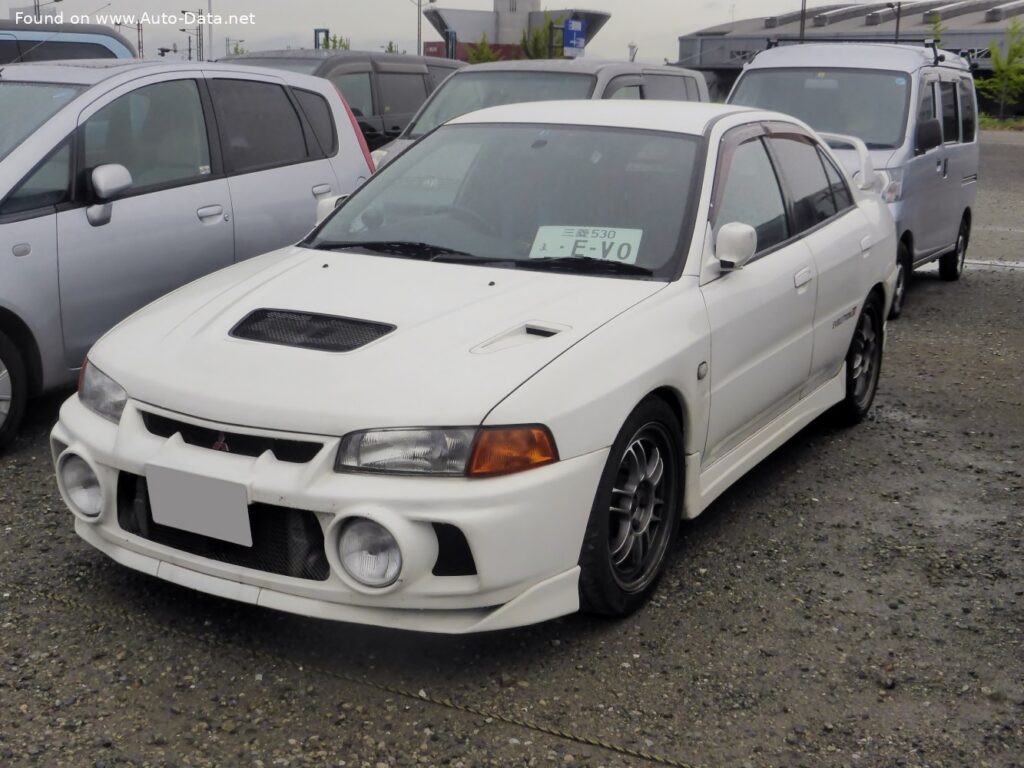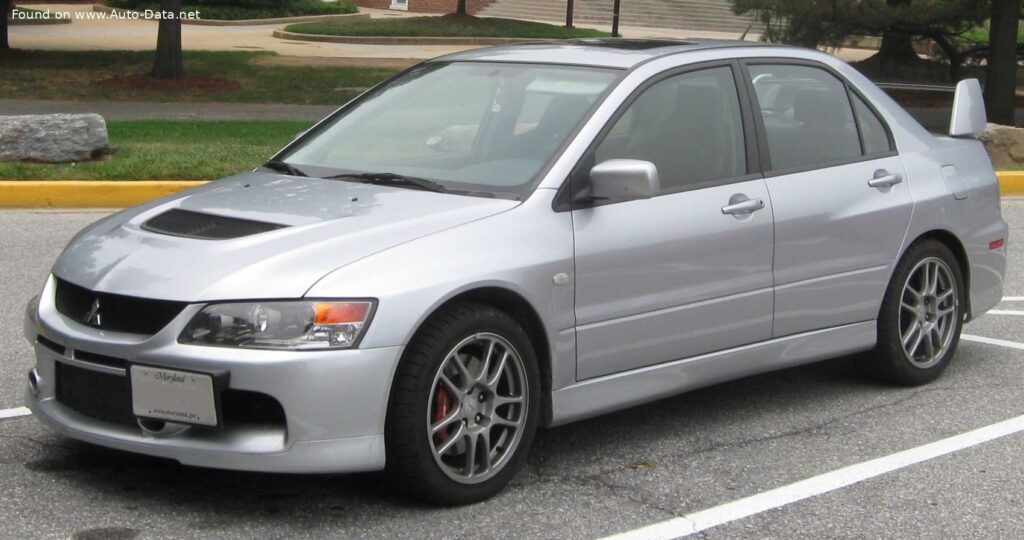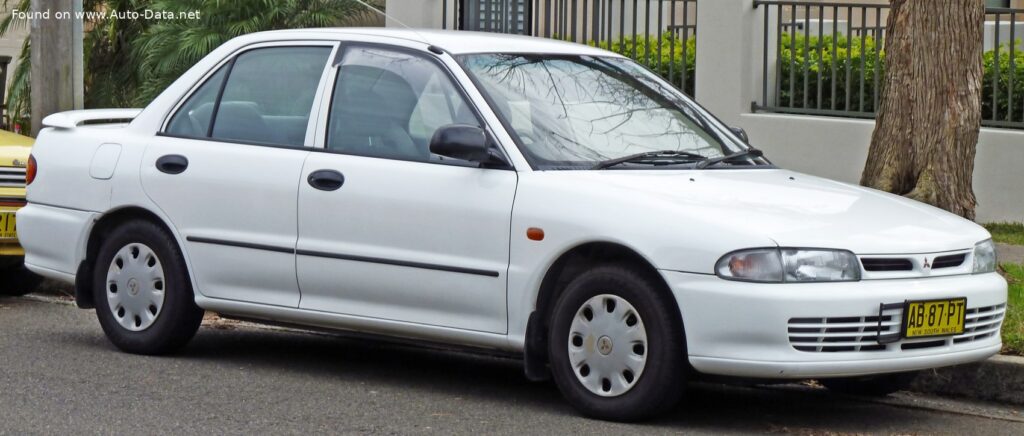
The Mitsubishi Lancer, a nameplate synonymous with accessible, reliable, and sometimes performance-oriented motoring, saw its fifth generation (often referred to as the Lancer V) introduced in 1992. This iteration, produced until 1996, represented a significant step forward for Mitsubishi in the fiercely competitive global compact car segment. While the Lancer name would later gain widespread fame through its high-performance Evolution variants, the core of its global success lay in practical, everyday models like the Mitsubishi Lancer V 1.6 16V (CB4A) (113 Hp) Automatic. This particular variant, a four-door sedan, was a staple in markets across Asia, Europe, and other regions, offering a blend of efficiency, comfort, and Mitsubishi’s renowned durability to a broad customer base.
Mitsubishi Lancer V 1.6 16V (CB4A): A Global Compact Sedan
The Lancer V, known internally by its chassis codes (e.g., CB/CD/CE series), was designed to be a versatile platform, sharing its underpinnings with the contemporary Mitsubishi Mirage. Its primary role was to provide dependable transportation for families and commuters, emphasizing fuel economy and ease of use. The 1.6-liter engine paired with an automatic transmission made it an appealing choice for urban environments and those seeking a straightforward driving experience, cementing its position as a workhorse in Mitsubishi’s international lineup during the early to mid-1990s.
Engine & Performance
At the heart of this particular Lancer V model was a naturally aspirated 1.6-liter (1597 cm3 or 97.45 cu. in.) inline four-cylinder engine. This powerplant, designated with 16 valves and featuring an OHC (Overhead Cam) valvetrain, was designed for a balance of power output and fuel efficiency, a common characteristic of Japanese engines from this era. It delivered a respectable 113 horsepower at 6000 rpm, which was competitive for a non-performance-oriented compact sedan of its time. Torque figures stood at 137 Nm (101.05 lb.-ft.) at 5000 rpm, providing adequate pulling power for daily driving.
Power was sent to the front wheels via a conventional 4-speed automatic transmission. While a 4-speed automatic might seem basic by modern standards, it was a common and reliable choice for economy cars in the 1990s, prioritizing smooth shifts and ease of operation over intricate gear ratios. This powertrain configuration allowed the Lancer V 1.6 16V Automatic to accelerate from 0 to 60 mph in a computed 9.3 seconds (0-100 km/h in 9.8 seconds) and reach a maximum speed of 118 mph (190 km/h). These figures positioned it as a sprightly performer within its segment, capable of handling highway speeds comfortably while remaining economical.
Fuel economy was a key selling point for the Lancer V. The combined fuel consumption was rated at 7.2 liters per 100 kilometers, translating to an impressive 32.7 US miles per gallon. This efficiency, combined with a 13.21 US gallon fuel tank, provided a practical cruising range, making it an attractive option for budget-conscious buyers and those facing rising fuel costs.
Design & Features
The Mitsubishi Lancer V adopted a clean, aerodynamic, and somewhat understated design, characteristic of early 1990s Japanese compact sedans. Its four-door sedan body style offered practical accessibility for passengers and cargo. With a length of 168.31 inches (4275 mm), a width of 66.54 inches (1690 mm), and a height of 54.53 inches (1385 mm), the Lancer V was dimensionally similar to its contemporaries like the Honda Civic sedan or Toyota Corolla. The 98.43-inch (2500 mm) wheelbase contributed to a stable ride and allowed for a reasonably spacious interior for five occupants.
Inside, the Lancer V featured a straightforward and ergonomic cabin layout. While not luxurious, the interior was designed for functionality and durability, utilizing materials common for its class. The 320-liter (11.3 cu. ft.) trunk offered sufficient cargo space for groceries or luggage, aligning with the needs of small families. Safety features, typical for the era, would have included basic seatbelts and potentially optional airbags in some markets, though advanced safety systems were not yet standard for this segment.
Underneath, the Lancer V utilized a front-wheel-drive architecture, with a Wishbone front suspension and a Spring Strut rear suspension, providing a comfortable and predictable ride. The steering system was a hydraulic rack and pinion setup, offering direct feedback. Braking was handled by ventilated discs at the front and drum brakes at the rear, a cost-effective and adequate solution for a vehicle of this weight and performance. The car rode on 13-inch wheels fitted with 175/70 R13 tires, prioritizing ride comfort and economy.
Technical Specifications
| Category | Specification |
| General Information | |
| Brand | Mitsubishi |
| Model | Lancer |
| Generation | Lancer V |
| Type (Engine) | 1.6 16V (CB4A) (113 Hp) Automatic |
| Production Start | 1992 |
| Production End | 1996 |
| Powertrain Architecture | Internal Combustion Engine (ICE) |
| Body Type | Sedan |
| Seats | 5 |
| Doors | 4 |
| Performance Specs | |
| Fuel Consumption (Combined) | 7.2 l/100 km (32.7 US mpg) |
| Fuel Type | Petrol (Gasoline) |
| Acceleration 0-60 mph (Calculated) | 9.3 seconds |
| Acceleration 0-100 km/h | 9.8 seconds |
| Maximum Speed | 190 km/h (118.06 mph) |
| Weight-to-Power Ratio | 9 kg/Hp (110.8 Hp/tonne) |
| Weight-to-Torque Ratio | 7.4 kg/Nm (134.3 Nm/tonne) |
| Engine Specs | |
| Power | 113 Hp @ 6000 rpm |
| Power per Liter | 70.8 Hp/l |
| Torque | 137 Nm @ 5000 rpm (101.05 lb.-ft. @ 5000 rpm) |
| Engine Layout | Front, Transverse |
| Engine Displacement | 1597 cm3 (97.45 cu. in.) |
| Number of Cylinders | 4 |
| Engine Configuration | Inline |
| Cylinder Bore | 81 mm (3.19 in.) |
| Piston Stroke | 77.5 mm (3.05 in.) |
| Compression Ratio | 10:1 |
| Valves per Cylinder | 4 |
| Fuel Injection System | Multi-port manifold injection |
| Engine Aspiration | Naturally aspirated |
| Valvetrain | OHC |
| Space, Volume, and Weights | |
| Kerb Weight | 1020 kg (2248.72 lbs) |
| Max. Weight (Gross Vehicle Weight) | 1550 kg (3417.17 lbs) |
| Max Load | 530 kg (1168.45 lbs) |
| Trunk (Boot) Space – Minimum | 320 l (11.3 cu. ft.) |
| Fuel Tank Capacity | 50 l (13.21 US gal) |
| Dimensions | |
| Length | 4275 mm (168.31 in.) |
| Width | 1690 mm (66.54 in.) |
| Height | 1385 mm (54.53 in.) |
| Wheelbase | 2500 mm (98.43 in.) |
| Front Track | 1540 mm (60.63 in.) |
| Rear (Back) Track | 1460 mm (57.48 in.) |
| Drivetrain, Brakes, and Suspension Specs | |
| Drivetrain Architecture | Internal combustion engine drives the front wheels |
| Drive Wheel | Front-wheel drive |
| Number of Gears and Type of Gearbox | 4 gears, automatic transmission |
| Front Suspension | Wishbone |
| Rear Suspension | Spring Strut |
| Front Brakes | Ventilated discs |
| Rear Brakes | Drum |
| Steering Type | Steering rack and pinion |
| Power Steering | Hydraulic Steering |
| Tires Size | 175/70 R13 |
| Wheel Rims Size | 13 inches |
Legacy and Market Impact
The Mitsubishi Lancer V, particularly models like the 1.6 16V Automatic, played a crucial role in Mitsubishi’s global strategy during the 1990s. While not widely sold in the United States in this specific configuration (where the Mirage often filled the compact role, or larger Lancer variants were marketed), it was a highly successful model in other international markets, particularly in Japan, Southeast Asia, and parts of Europe. In these regions, the Lancer V competed fiercely with established rivals such as the Toyota Corolla, Honda Civic, Nissan Sunny (Sentra), and Mazda 323.
Its reputation was built on Mitsubishi’s consistent commitment to reliability, affordability, and practical design. The Lancer V was largely seen as a dependable, no-frills family car or a sensible choice for first-time buyers and fleets. Its straightforward mechanicals, including the robust 1.6-liter engine and conventional automatic transmission, contributed to its reputation for longevity and ease of maintenance, which were highly valued by consumers in emerging and developed markets alike.
The Lancer V generation also served as the foundation for the burgeoning Lancer Evolution series, starting with the iconic Lancer Evolution I in 1992. While the 1.6 16V Automatic sedan was a far cry from its rally-bred sibling in terms of performance and features, it shared the underlying platform, benefiting from the engineering and manufacturing efficiencies that a global volume model provided. This duality allowed Mitsubishi to cater to both the mainstream commuter market and the niche performance enthusiast simultaneously, leveraging the Lancer nameplate effectively.
Today, the Mitsubishi Lancer V is remembered as a testament to early 1990s Japanese automotive engineering: efficient, reliable, and functional. Although overshadowed by the later, more aggressive Lancer models and the Evolution series, the humble Mitsubishi Lancer V 1.6 16V (CB4A) (113 Hp) Automatic was a vital cog in Mitsubishi’s global machine, providing millions of drivers with dependable and economical transportation for years, and quietly contributing to the brand’s enduring legacy.