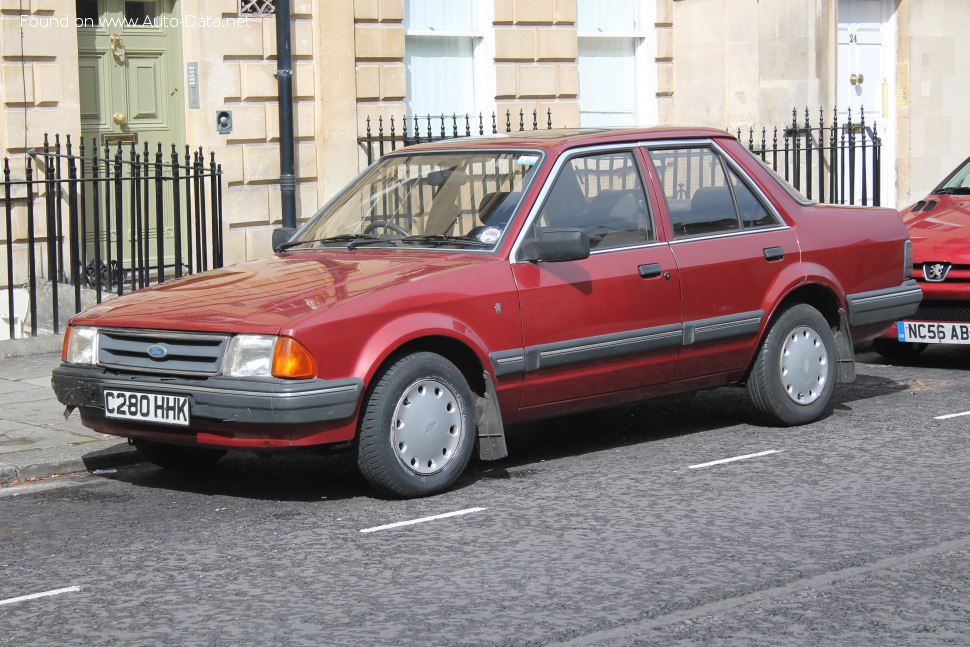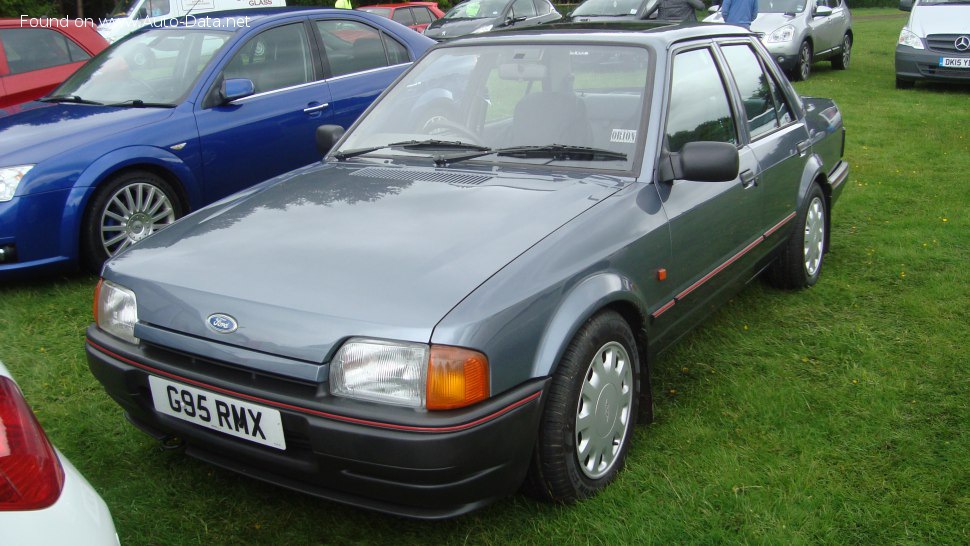
The Ford Orion, often viewed as the sedan derivative of the popular Ford Escort hatchback, established a notable presence in the European compact car market during the 1980s. The second generation, internally designated the Orion II (AFF), refined the original model, offering a more practical and sophisticated option for families and fleet operators. Manufactured from 1985 to 1990, the Orion II (AFF) 1.6 (90 Hp) provided a compelling combination of affordability, efficiency, and adequate performance for its class, becoming a common sight on European roads. Although never officially sold in the United States, the Orion’s engineering and design principles aligned with Ford’s global strategy, adapting existing platforms to suit regional preferences. It was a crucial component of Ford Europe’s product range, providing a traditional four-door sedan in a market increasingly dominated by hatchbacks.
The Ford Orion II (AFF): A European Sedan
The Orion II (AFF) occupied a unique position in the European automotive landscape. While the Escort hatchback catered to a broader, more youthful demographic, the Orion appealed to buyers who preferred the formality and perceived security of a traditional three-box sedan. This distinction was particularly important in markets where sedans held a stronger cultural preference. The Orion wasn’t intended to compete with larger, more luxurious sedans; instead, it aimed to provide a practical and affordable option for families and individuals seeking a reliable and comfortable vehicle for everyday use. Its success stemmed from its ability to deliver a well-rounded package without compromising on essential features or driving experience.
Engine & Performance
The Ford Orion II (AFF) 1.6 (90 Hp) was powered by a naturally aspirated 1.6-liter gasoline engine, producing 90 horsepower. This engine, approximately 98 cubic inches in displacement, was a mainstay in Ford’s European C-segment vehicles, known for its durability and ease of maintenance. While not exceptionally powerful, the 90 Hp output was sufficient for typical driving conditions, including commuting, family trips, and highway cruising. The engine’s naturally aspirated configuration ensured a predictable power delivery, avoiding the complexities and added cost associated with turbocharging, which was less prevalent in this segment during the mid-to-late 1980s.
Power was generally transmitted to the front wheels through a five-speed manual transmission, optimizing both acceleration and fuel economy. The relatively lightweight construction of the Orion II (AFF), combined with the responsive 1.6-liter engine, allowed it to maintain pace with traffic, offer reasonable passing power on two-lane roads, and cruise comfortably on motorways. The vehicle’s performance characteristics were carefully balanced to provide a compromise between spirited driving and economical operation, making it an attractive option for buyers prioritizing practicality and running costs.
Design & Features
The Ford Orion II (AFF) retained the classic three-box sedan profile, a design that resonated with European consumers who favored the traditional aesthetics and perceived security of a separate trunk. Its styling was clean and understated, reflecting the automotive design trends of the mid-1980s. The second generation incorporated subtle revisions over its predecessor, including updated front and rear fascias, resulting in a slightly more modern and aerodynamic appearance.
As a sedan, the Orion II (AFF) offered a practical and spacious interior for its class. The separate trunk provided a secure and generous cargo capacity, a significant advantage for families. The cabin was functional and ergonomically designed, featuring durable materials intended to withstand daily wear and tear. While base models offered limited luxury features, higher trim levels could include amenities such as power windows, central locking, and upgraded audio systems, although these were considered advanced features for a compact car of that era. Safety features, by contemporary standards, were basic, typically consisting of seatbelts and a robust body structure, reflecting the prevailing safety regulations and expectations of the 1980s. The emphasis was on straightforward functionality, ease of use, and a comfortable ride, making it a dependable and unpretentious family vehicle.
Technical Specifications
| Category | Specification |
| Brand | Ford |
| Model | Orion |
| Generation | Orion II (AFF) |
| Engine Type | 1.6 (90 Hp) |
| Start of Production | 1985 |
| End of Production | 1990 |
| Powertrain Architecture | Internal Combustion Engine |
| Body Type | Sedan |
| Fuel Type | Petrol (Gasoline) |
| Power | 90 Hp |
| Engine Aspiration | Naturally aspirated |
| Engine Displacement | 1.6 Liters (approx. 1597 cc) |
| Drivetrain | Front-Wheel Drive |
| Transmission | 5-Speed Manual |
| 0-60 mph Acceleration | Approx. 10.5 – 11.5 seconds |
| Top Speed | Approx. 110 – 115 mph (177 – 185 km/h) |
The Ford Orion II (AFF) 1.6 (90 Hp) played a vital role in Ford’s European strategy, serving as a reliable and practical family sedan. Its main competitors included other European compact sedans such as the Opel Kadett E (Vauxhall Astra Mk2 in the UK), the Volkswagen Jetta Mk2, and models from Peugeot (like the 309) and Renault (such as the 19 Chamade). The Orion distinguished itself through its close relationship with the Escort, benefiting from shared components and a widespread service network, which contributed to its reputation for affordability and low operating costs.
The Orion’s legacy is that of a dependable workhorse, a vehicle that met the needs of millions of drivers across Europe. It wasn’t a car that pioneered new styling or technological advancements, but its strength lay in its robust engineering, practical design, and broad appeal. It represented a sensible choice for those seeking a conventional sedan with a separate trunk, offering a degree of perceived prestige and security compared to its hatchback counterpart. Although production ceased in 1990, making way for the Orion III and eventually the unified Ford Escort/Focus lineup, the Orion II (AFF) remains a nostalgic symbol of 1980s European motoring, remembered for its no-frills approach and enduring reliability. Today, well-maintained examples are valued by enthusiasts who appreciate its classic Ford design and its historical significance as a common fixture of the European automotive scene.