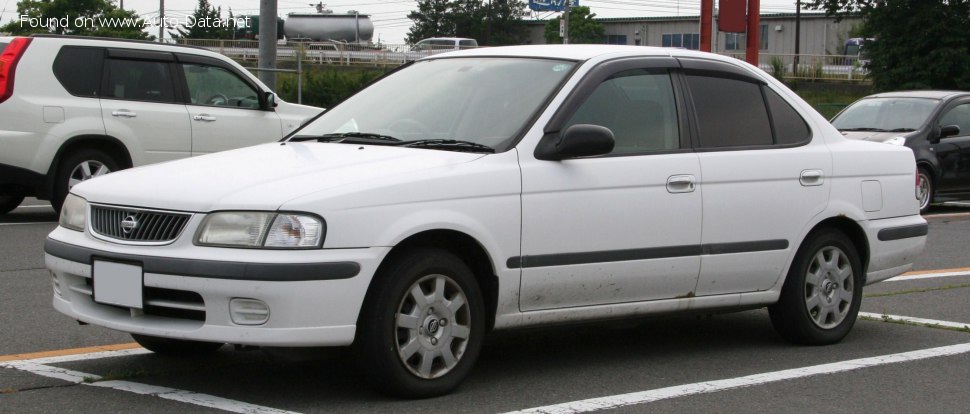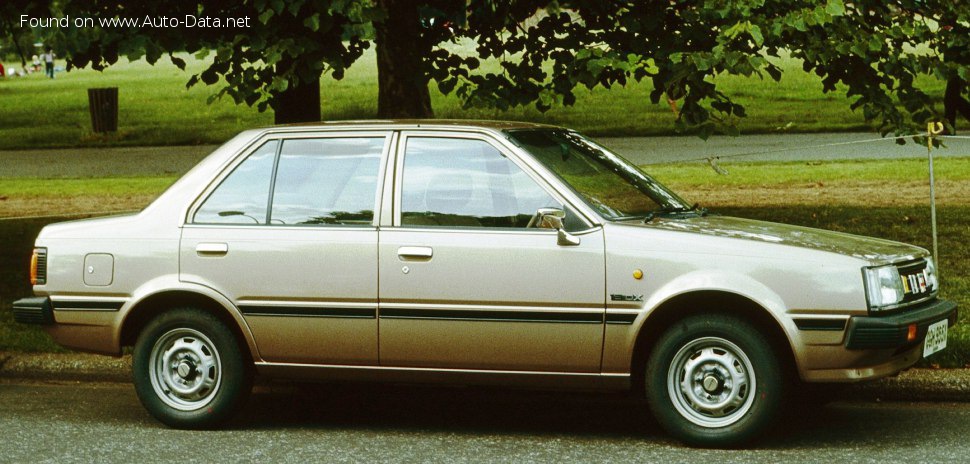
The Nissan Sunny, a nameplate recognized globally for providing accessible and dependable compact transportation, reached its second generation with the N13 series in 1986. Commonly known as the Nissan Sentra in North America, and the Nissan Pulsar in Australia and New Zealand, the N13 built upon the first generation’s reputation for practicality, economy, and durability. This iteration of the Sunny was a pivotal model for Nissan, designed to compete in the growing compact car segment, demanding a balance of fuel efficiency, interior space, and driving comfort.
Nissan Sunny II (N13): A Detailed Overview
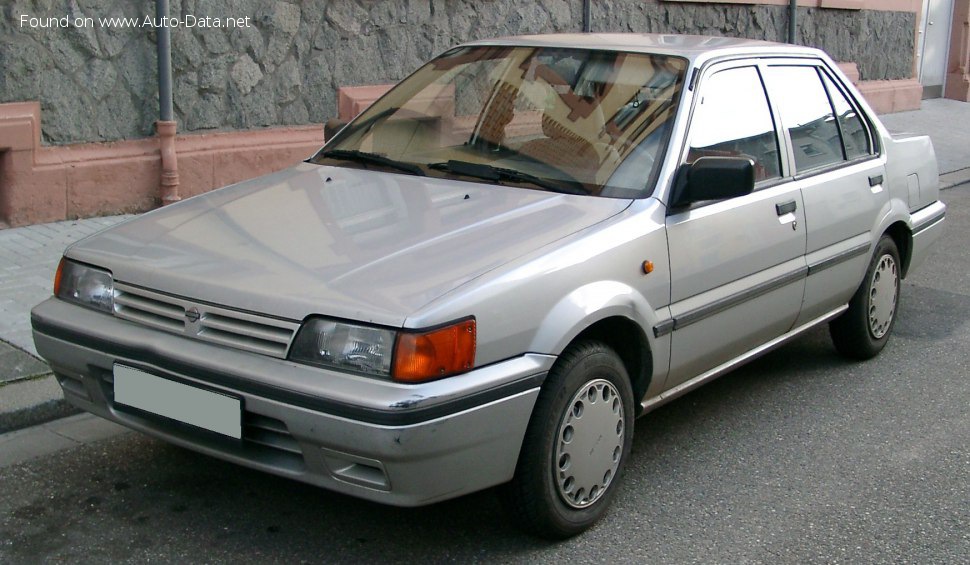
The N13 series presented a more modern design compared to the preceding N12, featuring smoother lines and improved aerodynamics reflective of the late 1980s automotive aesthetic. It was available in a variety of body styles – sedans, hatchbacks, coupes, and wagons – to appeal to a diverse international audience. A notable variant was the Nissan Sunny II (N13) 1.6 i 4×4 (A) (73 Hp) sedan, produced from 1986 to 1990. This configuration was unique due to its combination of a compact sedan body with an all-wheel-drive (4×4) system and an automatic transmission, targeting markets where enhanced traction was advantageous. While not focused on high performance, this variant emphasized utility and year-round usability, establishing a niche in the compact sedan market.
Engine & Performance
The Nissan Sunny II (N13) 1.6 i 4×4 (A) (73 Hp) was powered by a naturally aspirated 1.6-liter inline-four gasoline engine. This engine, typical of Nissan’s compact car offerings in the late 1980s, was engineered for reliability and fuel economy rather than outright speed. It produced 73 horsepower, sufficient for daily commuting and general transportation needs of the time. The “i” designation indicates a fuel-injection system, a technological advancement offering improved fuel efficiency and smoother operation compared to carbureted engines.
Power was delivered through an automatic transmission, indicated by the “(A)” in the model name, providing a convenient and comfortable driving experience, particularly in urban environments. This transmission choice reinforced the car’s focus on practicality and ease of use. The most distinctive feature of this Sunny variant was its 4×4 drivetrain. In an era when all-wheel-drive was primarily found in SUVs, trucks, or performance vehicles, its inclusion in a compact family sedan like the Sunny N13 was progressive. This system provided enhanced traction and stability, making the vehicle well-suited for driving in adverse weather conditions like snow, ice, or heavy rain, or on unpaved roads. While not an off-roader, the 4×4 capability broadened the Sunny’s utility, offering a sense of security and capability that many front-wheel-drive competitors lacked. The combination of a 73 HP engine, automatic transmission, and 4×4 system resulted in leisurely acceleration, but the car excelled in its role as a reliable, all-weather compact sedan.
Design & Features
The Nissan Sunny II (N13) featured a conventional sedan body style, characterized by the clean, functional design language of the late 1980s. Its styling was practical and understated, prioritizing a universally appealing and aerodynamically efficient shape over flashy aesthetics. The N13 sedan offered a relatively spacious cabin for its class, designed with ergonomics and passenger comfort in mind. Large windows provided good visibility, and the exterior dimensions made it maneuverable in city traffic and easy to park.
The interior of the N13 Sunny was typical of Japanese compacts of the time: durable, well-assembled, and focused on straightforward functionality. The dashboard layout was logical, with easily accessible controls for the driver. Features were basic by modern standards, likely including manual window winders, a simple heating and ventilation system, and a factory-installed AM/FM radio with a cassette player. Power steering might have been standard or optional, depending on the market and trim level. Seating was upholstered in hard-wearing cloth, designed for years of use. While luxury amenities were minimal, the emphasis was on reliability and ease of maintenance, contributing to the Sunny’s global appeal.
Safety features were rudimentary compared to today’s standards. The N13 Sunny would have included standard three-point seatbelts for front occupants and lap belts for rear passengers. Advanced features like anti-lock braking systems (ABS) or airbags were either unavailable or rare options. However, the car’s robust construction and predictable handling provided a foundational level of passive safety. The inclusion of the 4×4 system, primarily a traction aid, also contributed to active safety by improving vehicle stability and control in challenging driving conditions, making it a more secure vehicle to operate year-round.
Technical Specifications
| Attribute | Specification |
| Brand | Nissan |
| Model | Sunny |
| Generation | Sunny II (N13) |
| Type (Engine) | 1.6 i 4×4 (A) (73 Hp) |
| Start of Production | 1986 |
| End of Production | 1990 |
| Powertrain Architecture | Internal Combustion engine |
| Body type | Sedan |
| Fuel Type | Petrol (Gasoline) |
| Power | 73 Hp |
| Engine Aspiration | Naturally aspirated engine |
| Drivetrain | 4×4 (All-Wheel Drive) |
| Transmission | Automatic |
The Nissan Sunny II (N13) generation, including the Nissan Sunny II (N13) 1.6 i 4×4 (A) (73 Hp) variant, was crucial to Nissan’s global strategy in the late 1980s. It solidified the Sunny/Sentra’s reputation as a dependable, economical, and practical compact car. In markets where it was sold, particularly in Europe and parts of Asia, the N13 competed with rivals like the Toyota Corolla, Honda Civic, Mazda 323, Ford Escort, and Volkswagen Jetta. Its strengths lay in its renowned Nissan reliability, low running costs, and straightforward mechanics, appealing to a broad demographic.
The 1.6 i 4×4 (A) (73 Hp) model, with its all-wheel-drive system, occupied a unique niche. While most compact sedans in the late 1980s were front-wheel drive, Nissan’s 4×4 option provided a competitive advantage in regions with challenging climates or road conditions. This feature, combined with the convenience of an automatic transmission, made it attractive to those needing extra traction without a larger, less fuel-efficient SUV or a more complex, expensive performance car. It demonstrated Nissan’s engineering capability and willingness to innovate within the mainstream compact segment.
The N13 generation is remembered for its robust build quality and longevity. Many examples continued to operate reliably for decades, a testament to Nissan’s engineering and manufacturing standards. While not a collector’s item, the 4×4 variant holds historical significance as an early example of a mainstream compact sedan offering all-wheel drive, foreshadowing the widespread adoption of AWD in various vehicle segments. Its legacy is one of quiet competence, proving a compact car could offer more than basic transportation, providing enhanced capability and peace of mind. The Sunny N13, and particularly this capable 4×4 sedan, remains a significant chapter in Nissan’s history of global automotive production.