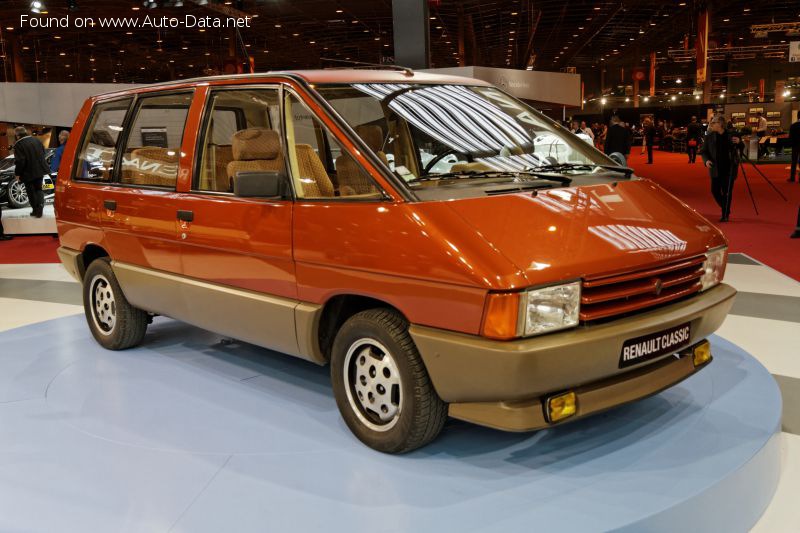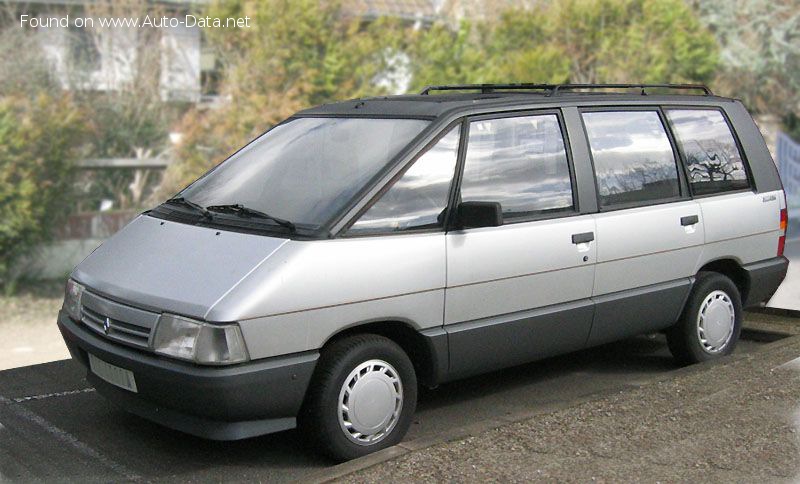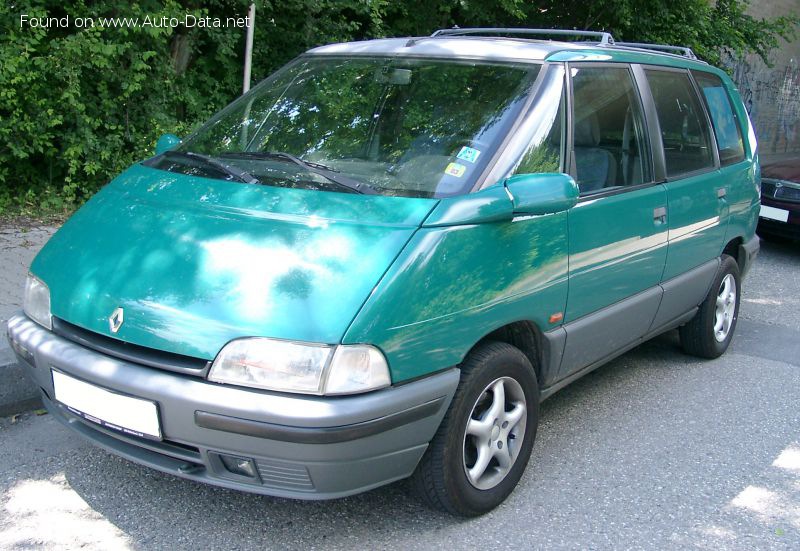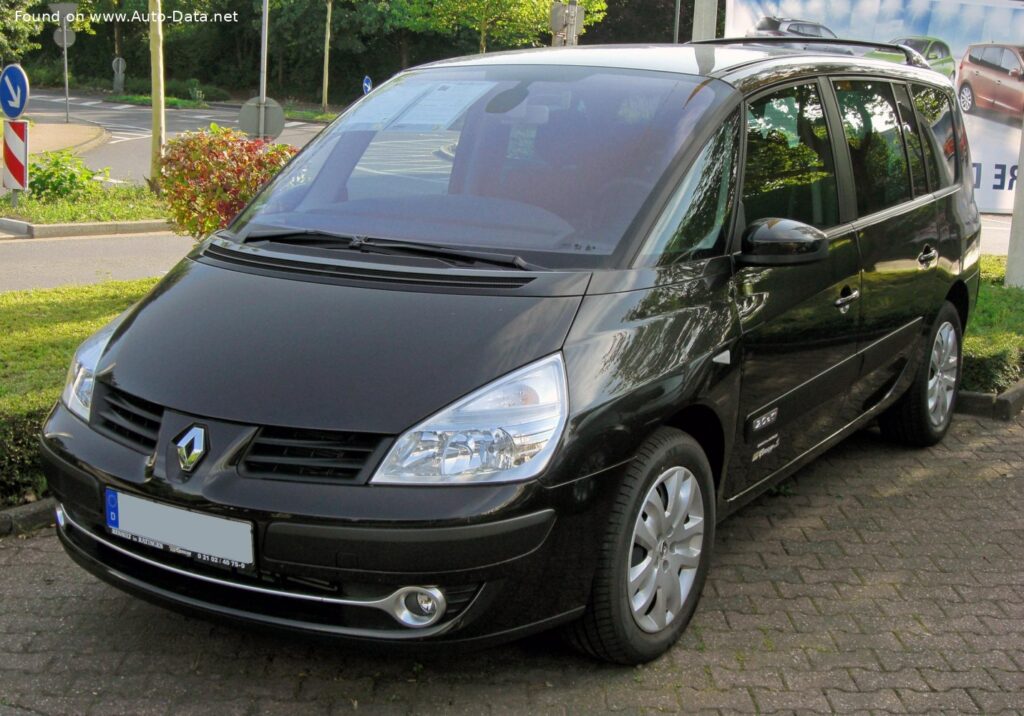
The Renault Espace IV (Phase II, 2006) 2.0 dCi (130 Hp) represents a significant iteration of one of Europe’s most iconic and pioneering multi-purpose vehicles (MPVs). Introduced in 2002, the fourth-generation Espace continued Renault’s legacy of innovative family transport, evolving the concept of the spacious, versatile people mover. This particular variant, produced between 2007 and 2008, belongs to the “Phase II” update, which brought subtle refinements and updated powertrains to maintain its competitive edge in the bustling European market. While never officially sold in the United States, the Espace carved out a formidable reputation across the Atlantic as a benchmark for family functionality, comfort, and safety, proving that practical vehicles could also offer a sophisticated driving experience.
The Espace IV, often simply referred to as the Espace 4, was a testament to Renault’s commitment to innovation. Unlike its predecessors, which were built by Matra, the fourth generation was entirely developed and manufactured by Renault, leveraging the company’s extensive expertise in platform sharing and advanced technologies. Its role in the European automotive landscape was crucial, providing a compelling alternative to traditional sedans and station wagons for families requiring flexible seating, ample cargo space, and a commanding driving position. This 2.0 dCi diesel variant, with its focus on efficiency and tractable torque, was particularly well-suited to the demands of European motorists who often prioritize fuel economy and long-distance comfort.
Engine & Performance of the Renault Espace IV (Phase II, 2006)
Under the hood of the Renault Espace IV (Phase II, 2006) 2.0 dCi (130 Hp) lies a robust and efficient 2.0-liter (1995 cm3) inline-four diesel engine, internally designated M9R. This powertrain was a cornerstone of Renault’s diesel lineup during the mid-2000s, renowned for its balance of power, refinement, and fuel efficiency. Utilizing a modern common rail direct fuel injection system, coupled with a turbocharger and intercooler, the engine delivered a respectable 130 horsepower at 4000 rpm. Its strength, however, lay in its torque output, producing a substantial 236.02 lb.-ft. (320 Nm) at a low 2000 rpm, making it particularly capable for hauling families and luggage.
Power was transmitted to the front wheels via a smooth-shifting 6-speed manual transmission, a common and preferred choice in Europe for its engagement and efficiency. Despite its considerable curb weight of 4138.08 pounds (1877 kg), the Espace 2.0 dCi managed a 0 to 60 mph acceleration time of 12.8 seconds (0-100 km/h in 13.5 seconds), which was competitive for a vehicle of its size and segment. The maximum speed was rated at 114.33 mph (184 km/h), more than sufficient for highway cruising.
Fuel economy was a key selling point for this diesel-powered MPV. The combined fuel consumption was an impressive 31.8 US mpg (7.4 l/100 km), with urban figures at 25.6 US mpg (9.2 l/100 km) and extra-urban figures reaching 36.8 US mpg (6.4 l/100 km). These figures, combined with a generous 21.93 US gallon (83 liter) fuel tank, provided an excellent cruising range, a crucial attribute for European family road trips. Emissions were rated at 196 g/km of CO2, meeting the Euro 4 emission standard of its time, reflecting a conscious effort towards environmental responsibility.
Design & Features of the Renault Espace IV (Phase II, 2006)
The Renault Espace IV (Phase II, 2006) maintained the distinctive, futuristic design language that characterized the fourth generation from its inception. As a Minivan or Multi-Purpose Vehicle (MPV), its primary design objective was to maximize interior space and versatility. It featured a sleek, aerodynamic silhouette with a steeply raked windshield that blended seamlessly into the hood, creating a single, flowing line. The Phase II update brought minor cosmetic tweaks, including revised front fascias and lighting elements, to keep its appearance fresh.
Measuring 183.31 inches (4656 mm) in length, 73.23 inches (1860 mm) in width (74.57 inches or 1894 mm including mirrors), and 68.03 inches (1728 mm) in height, the Espace commanded a significant road presence. Its long wheelbase of 110.35 inches (2803 mm) was instrumental in providing exceptional interior room and a stable ride. The interior was a masterclass in modularity, offering seating for up to seven occupants across three rows. The individual rear seats could be slid, folded, or even completely removed, allowing for an astonishing maximum cargo volume of 101 cubic feet (2860 liters). Even with all seven seats in place, a respectable 10.28 cubic feet (291 liters) of trunk space was available.
Key features for the era included power steering with a rack and pinion system, standard Anti-lock Braking System (ABS) for enhanced safety, and a sophisticated suspension setup. The front utilized an independent McPherson type, while the rear featured a semi-independent, coil spring arrangement, designed to deliver a comfortable and composed ride characteristic of French vehicles. Braking was handled by ventilated discs at the front and solid discs at the rear, providing confident stopping power. The vehicle rode on 17-inch wheels shod with 225/55 R17 tires, balancing ride comfort with adequate grip. Practical considerations extended to a maximum roof load of 176.37 lbs (80 kg) and impressive towing capabilities, rated at 4409.25 lbs (2000 kg) with brakes, underscoring its utility as a true workhorse for families.
Technical Specifications
| General Information | |
| Brand | Renault |
| Model | Espace IV (Phase II, 2006) |
| Type (Engine) | 2.0 dCi (130 Hp) |
| Start of Production | 2007 |
| End of Production | 2008 |
| Powertrain Architecture | Internal Combustion Engine |
| Body Type | Minivan, MPV |
| Seats | 7 |
| Doors | 5 |
| Engine Specifications | |
| Power | 130 Hp @ 4000 rpm |
| Power per Liter | 65.2 Hp/l |
| Torque | 320 Nm @ 2000 rpm (236.02 lb.-ft. @ 2000 rpm) |
| Engine Layout | Front, Transverse |
| Engine Model/Code | M9R |
| Engine Displacement | 1995 cm3 (121.74 cu. in.) |
| Number of Cylinders | 4 |
| Engine Configuration | Inline |
| Cylinder Bore | 84 mm (3.31 in.) |
| Piston Stroke | 90 mm (3.54 in.) |
| Compression Ratio | 16:1 |
| Number of Valves per Cylinder | 4 |
| Fuel Injection System | Diesel Commonrail |
| Engine Aspiration | Turbocharger, Intercooler |
| Valvetrain | DOHC |
| Engine Oil Capacity | 6.6 l (6.97 US qt) |
| Performance Specifications | |
| Fuel Type | Diesel |
| Acceleration 0 – 60 mph | 12.8 sec |
| Acceleration 0 – 100 km/h | 13.5 sec |
| Maximum Speed | 184 km/h (114.33 mph) |
| Emission Standard | Euro 4 |
| Weight-to-Power Ratio | 14.4 kg/Hp, 69.3 Hp/tonne |
| Weight-to-Torque Ratio | 5.9 kg/Nm, 170.5 Nm/tonne |
| Fuel Economy & Emissions | |
| Fuel Consumption (Urban) | 9.2 l/100 km (25.6 US mpg) |
| Fuel Consumption (Extra Urban) | 6.4 l/100 km (36.8 US mpg) |
| Fuel Consumption (Combined) | 7.4 l/100 km (31.8 US mpg) |
| CO2 Emissions | 196 g/km |
| Dimensions | |
| Length | 4656 mm (183.31 in.) |
| Width | 1860 mm (73.23 in.) |
| Width Including Mirrors | 1894 mm (74.57 in.) |
| Height | 1728 mm (68.03 in.) |
| Wheelbase | 2803 mm (110.35 in.) |
| Front Track | 1574 mm (61.97 in.) |
| Rear Track | 1556 mm (61.26 in.) |
| Ride Height (Ground Clearance) | 120 mm (4.72 in.) |
| Minimum Turning Circle | 11.3 m (37.07 ft.) |
| Weights and Capacities | |
| Kerb Weight | 1877 kg (4138.08 lbs.) |
| Max. Weight | 2582 kg (5692.34 lbs.) |
| Max Load | 705 kg (1554.26 lbs.) |
| Trunk (boot) Space – Minimum | 291 l (10.28 cu. ft.) |
| Trunk (boot) Space – Maximum | 2860 l (101 cu. ft.) |
| Fuel Tank Capacity | 83 l (21.93 US gal) |
| Max. Roof Load | 80 kg (176.37 lbs.) |
| Permitted Trailer Load (with brakes) | 2000 kg (4409.25 lbs.) |
| Permitted Trailer Load (without brakes) | 750 kg (1653.47 lbs.) |
| Permitted Towbar Download | 80 kg (176.37 lbs.) |
| Drivetrain, Brakes and Suspension | |
| Drivetrain Architecture | Front-wheel drive, Internal Combustion Engine |
| Drive Wheel | Front wheel drive |
| Number of Gears and Type of Gearbox | 6 gears, manual transmission |
| Front Suspension | Independent type McPherson |
| Rear Suspension | Semi-independent, coil spring |
| Front Brakes | Ventilated discs |
| Rear Brakes | Disc |
| Assisting Systems | ABS (Anti-lock Braking System) |
| Steering Type | Steering rack and pinion |
| Tires Size | 225/55 R17 |
| Wheel Rims Size | 17 |
The Renault Espace, particularly its fourth generation, holds a significant place in European automotive history as a pioneer and consistent leader in the MPV segment. Since its initial launch in 1984, the Espace redefined family transport, offering unparalleled versatility and space. The Espace IV (Phase II, 2006) 2.0 dCi (130 Hp) continued this tradition, cementing its reputation as a highly practical, comfortable, and reliable choice for large families across the continent.
In its primary European market, the Espace IV faced stiff competition from rivals such as the Volkswagen Sharan, Ford Galaxy, Citroën C8, Peugeot 807, and even the Chrysler Voyager which was sold in Europe. However, the Espace consistently stood out with its distinctive styling, innovative interior modularity, and a strong emphasis on passenger comfort and safety. Its high driving position, panoramic visibility, and numerous storage solutions made it an ideal vehicle for both daily commutes and long-distance travel. The diesel engine, like the 2.0 dCi, was particularly popular due to its excellent fuel economy and robust torque, perfectly suiting the needs of European drivers who often cover significant mileage.
The Espace IV was praised for its refined road manners, offering a smooth and quiet ride that often felt more akin to a luxury sedan than a large family van. Its advanced safety features for the time, including comprehensive airbag systems and the standard ABS, contributed to its strong safety ratings and peace of mind for families. While the MPV segment has seen a decline in recent years with the rise of SUVs, the Espace’s influence is undeniable. It helped establish the blueprint for what a modern people mover should be: spacious, adaptable, comfortable, and safe.
The 2007-2008 2.0 dCi (130 Hp) variant represents a mature and highly refined version of the Espace IV, showcasing Renault’s commitment to continuous improvement. It was a testament to the brand’s engineering prowess and understanding of the European family car market. Although the Espace nameplate has since evolved into a crossover-SUV in its latest generation, the Espace IV remains a classic example of a purpose-built MPV that successfully blended practicality with a touch of French flair, leaving a lasting legacy as a beloved family vehicle in its respective markets.