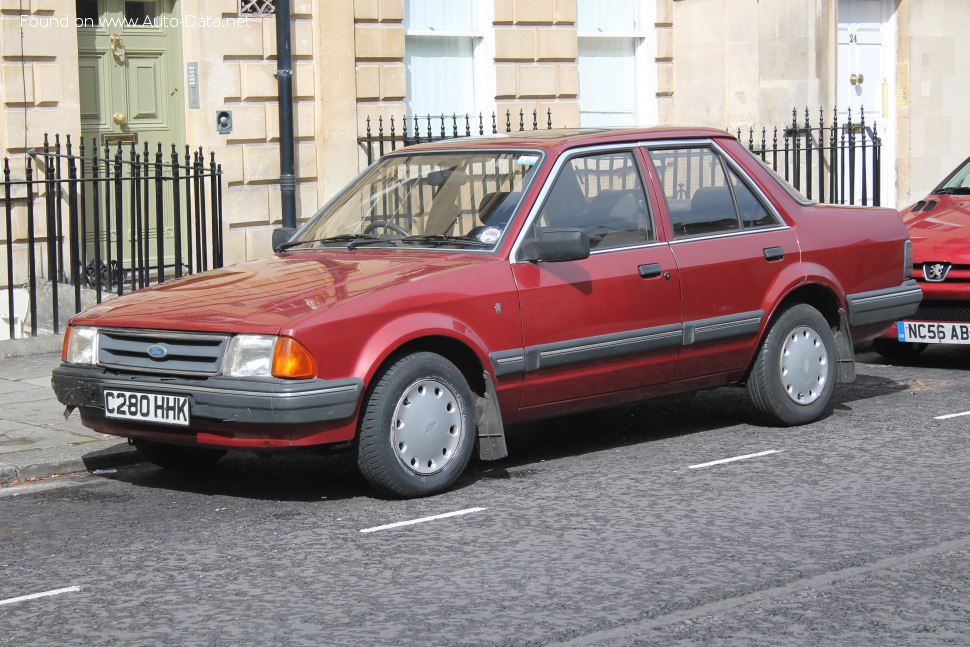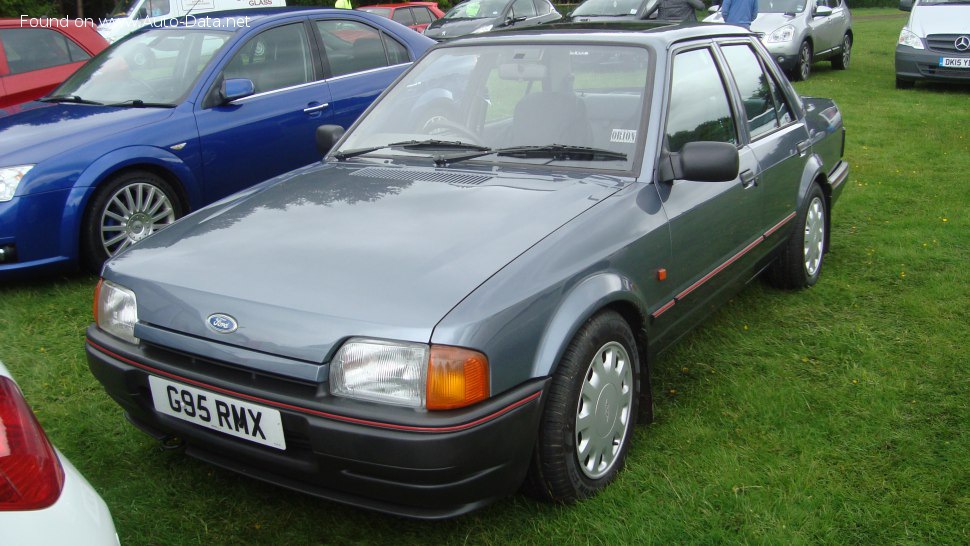
The Ford Orion II (AFF) represents a significant chapter in Ford of Europe’s product strategy during the mid-to-late 1980s. Launched in 1986 as the second generation of the Orion nameplate, this compact sedan was primarily designed for the European market, offering a more traditional three-box alternative to the immensely popular Ford Escort hatchback. While never officially sold in the United States, the Orion played a crucial role in Ford’s portfolio across the Atlantic, catering to buyers who preferred the perceived prestige and secure trunk space of a sedan over a hatchback’s versatility. The Orion II (AFF) built upon the success of its predecessor, refining its styling, improving interior comfort, and integrating contemporary powertrain technologies, such as the 1.6 CAT engine. Its production span from 1986 to 1990 cemented its position as a reliable and practical choice for families and fleet buyers across the continent.
The Ford Orion II (AFF): Engineering and Performance
Engine and Powertrain
At the heart of the Ford Orion II (AFF) 1.6 CAT (90 Hp) was a naturally aspirated 1.6-liter inline-four gasoline engine, a workhorse powerplant that was ubiquitous across Ford’s European lineup during the era. Generating a respectable 90 horsepower, this engine provided a balance of adequate performance for daily driving and reasonable fuel economy. The “CAT” designation signifies the inclusion of a catalytic converter, a crucial emissions control device that was becoming increasingly common and, in some markets, mandatory during the late 1980s. This technology helped reduce harmful exhaust gases, reflecting a growing environmental consciousness within the automotive industry.
The 1.6-liter unit was renowned for its robust construction and ease of maintenance, characteristics that made the Orion a popular choice for budget-conscious consumers and fleet operators. While not designed for outright speed, the engine delivered its power smoothly and predictably, making it well-suited for both urban commuting and longer highway journeys typical of European driving conditions. The powertrain architecture, featuring an internal combustion engine, was standard for its time, emphasizing proven reliability and cost-effectiveness. This engine, often paired with a manual transmission, offered an engaging if not overtly sporty driving experience, perfectly aligning with the Orion’s positioning as a practical and dependable family sedan.
Driving Dynamics
Sharing its underpinnings with the Ford Escort, the Ford Orion II (AFF) benefited from a well-established chassis. Its driving dynamics prioritized comfort and predictability over outright sportiness. The suspension setup, typically featuring MacPherson struts at the front and a torsion beam axle at the rear, provided a compliant ride that absorbed road imperfections effectively. Steering, often unassisted in base models but available with power assistance, offered decent feedback, making the car easy to maneuver in city traffic and stable at higher speeds. While the 90 horsepower engine didn’t turn the Orion into a performance car, its lightweight construction contributed to a nimble feel. The Orion II was engineered for the everyday driver, offering a reassuring and undemanding experience behind the wheel, a characteristic highly valued by its target demographic in Europe.
Design and Features of the Ford Orion II (AFF)
Exterior Design
The Ford Orion II (AFF) retained the classic three-box sedan silhouette that was a hallmark of its segment in the 1980s. Its design was clean, functional, and distinctly European, characterized by straight lines and a somewhat boxy profile that maximized interior space. While sharing its front fascia and many body panels with the contemporary Escort, the Orion differentiated itself with its integrated trunk, giving it a more formal and executive appearance compared to its hatchback sibling. The design ethos was one of understated elegance and practicality, avoiding overly flamboyant styling in favor of a timeless aesthetic that appealed to a broad range of buyers. The second generation saw subtle refinements over the original Orion, with updated grille designs, lighting elements, and improved panel fitment, contributing to a more modern and cohesive look for the late 1980s.
Interior and Comfort
Inside, the Ford Orion II (AFF) offered a straightforward and ergonomic cabin. The layout was typical of Ford models from the era, with clear instrumentation and logically placed controls. Interior materials, while durable and hard-wearing, were designed for longevity and ease of cleaning, reflecting the car’s role as a practical family vehicle. Seating was comfortable for four adults, with adequate legroom and headroom, particularly for a compact sedan of its time. The main advantage over the Escort hatchback was the Orion’s separate, more secure trunk, which offered a generous amount of luggage space, appealing to families and those who valued privacy for their belongings. Features, depending on the trim level, included basic amenities like manual window winders, a simple radio-cassette player, and perhaps optional extras such as central locking, power steering, and a sunroof, all considered luxuries in this segment during the late 1980s.
Safety and Technology (for its era)
In terms of safety, the Ford Orion II (AFF) adhered to the standards of its production period. This typically included three-point seatbelts for front occupants and outer rear passengers, basic crumple zones designed to absorb impact energy, and a robust body shell. Anti-lock braking systems (ABS) were still a premium feature, if available at all, and airbags were yet to become standard in this class. The primary technological advancement highlighted in the 1.6 CAT model was the catalytic converter, which represented a significant step forward in reducing automotive emissions. This technology, while now commonplace, was a key differentiator in the late 1980s, demonstrating Ford’s commitment to meeting evolving environmental regulations in Europe. The overall engineering focused on mechanical reliability and passive safety measures rather than active electronic aids.
Technical Specifications: Ford Orion II (AFF) 1.6 CAT (90 Hp)
| Category | Specification |
| Brand | Ford |
| Model | Orion |
| Generation | Orion II (AFF) |
| Type (Engine) | 1.6 CAT (90 Hp) |
| Start of Production | 1986 |
| End of Production | 1990 |
| Powertrain Architecture | Internal Combustion engine |
| Body Type | Sedan |
| Fuel Type | Petrol (Gasoline) |
| Power | 90 Hp |
| Engine Aspiration | Naturally aspirated engine |
Legacy and Market Impact of the Ford Orion II (AFF)
Market Position and Competitors
The Ford Orion II (AFF) carved out a distinct niche within the highly competitive European compact car segment. Positioned as a more formal and refined alternative to the ubiquitous Ford Escort hatchback, it appealed to a demographic that valued traditional sedan styling, a separate trunk, and a slightly more understated image. Its primary competitors included other European compact sedans such as the Opel Kadett E sedan (later Astra F sedan), the Volkswagen Jetta (based on the Golf), the Renault 9/11, and the Peugeot 309. The Orion offered a compelling package of reliability, affordability, and a spacious interior, making it a strong contender for private buyers seeking a dependable family car and for company fleets requiring economical and presentable vehicles. Its extensive dealer network and readily available parts further bolstered its market appeal across various European countries.
Cultural Significance and Enduring Appeal
The Ford Orion II (AFF) may not have achieved the iconic status of some of its more performance-oriented contemporaries, but its legacy is one of unwavering practicality and reliability. It became a familiar sight on European roads, a testament to its solid engineering and broad appeal. For many, it represented a sensible and trustworthy mode of transport, a workhorse that consistently delivered on its promises. Its role as a common family car or fleet vehicle meant it was often the first car for many drivers or a reliable steed for countless businesses. Today, the Orion II is increasingly recognized as a classic car, appreciated for its unpretentious design, mechanical simplicity, and the nostalgic connection it offers to a bygone era of European motoring. While its direct lineage eventually gave way to models like the Ford Focus sedan, the Orion’s contribution to Ford’s European success and its enduring reputation as a dependable compact sedan remain significant. It stands as a symbol of practical, accessible motoring that defined an entire generation of vehicles.