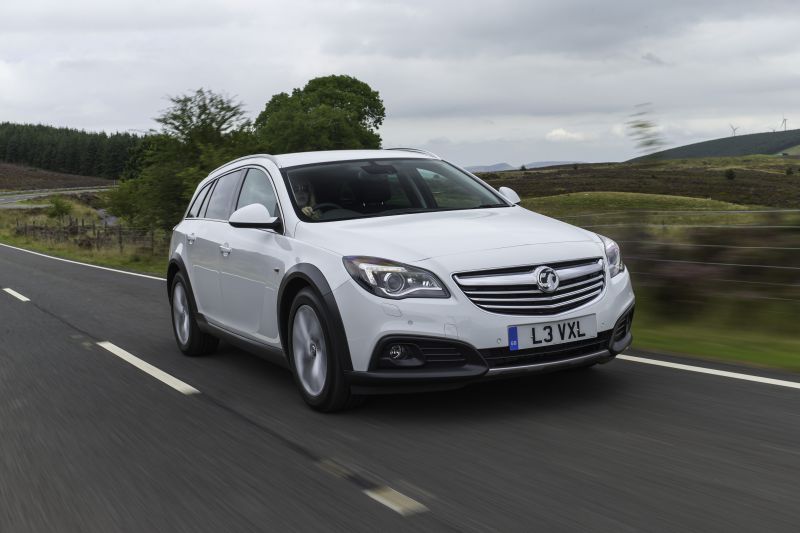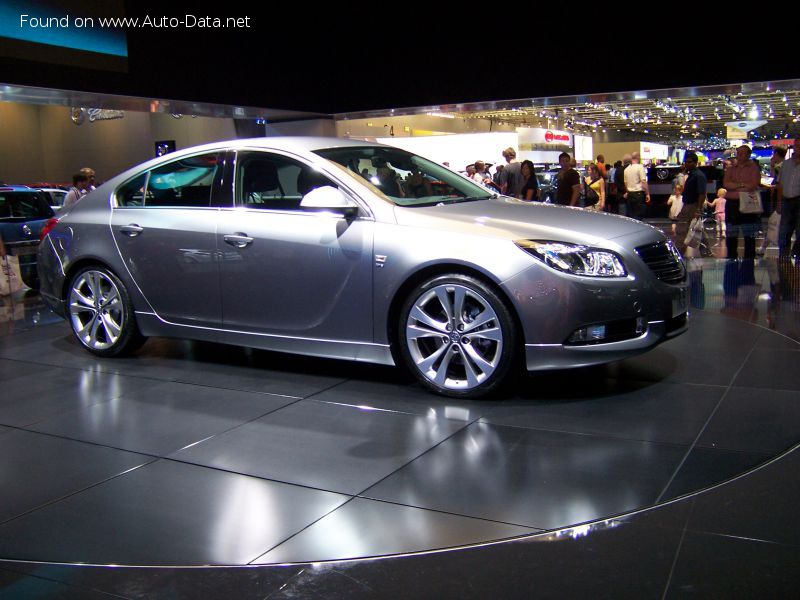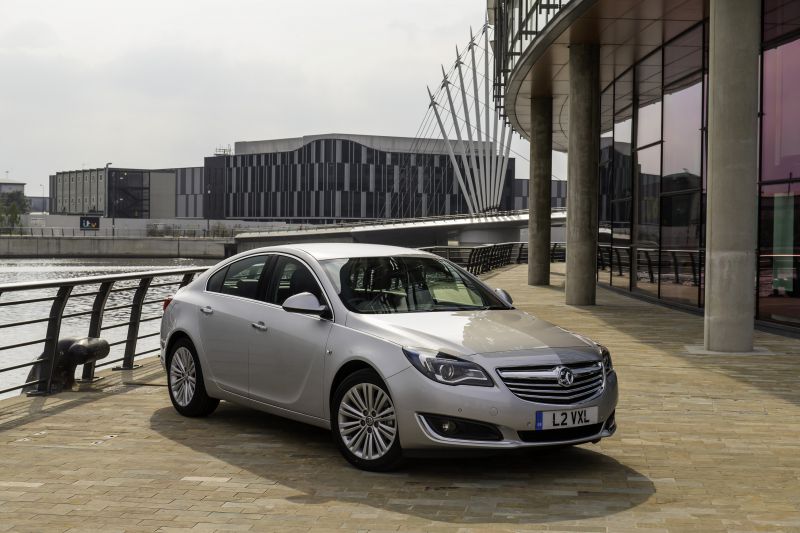
The Vauxhall Insignia I Hatchback (facelift 2013) 2.0i Turbo ecoTEC (250 Hp) Automatic represents a significant refresh of Vauxhall’s first-generation D-segment offering, designed primarily for the United Kingdom market. As the British sibling to the Opel Insignia, this vehicle played a crucial role in Vauxhall’s lineup from its introduction in 2008, with this particular facelifted model produced between 2013 and 2017. Positioned as a stylish and practical family car, as well as a popular choice for fleet buyers, the Insignia aimed to blend executive car aesthetics with mainstream accessibility. This iteration, featuring a potent 2.0-liter turbocharged ecoTEC engine and an automatic transmission, delivered a compelling combination of performance, efficiency, and modern features for its era, competing fiercely in a highly contested European segment.
Engine & Performance of the Vauxhall Insignia I Hatchback (facelift 2013)
At the heart of this specific Insignia variant lies a robust 2.0-liter (1998 cm3 or 121.93 cu. in.) inline four-cylinder ecoTEC engine. This powerplant, identified by codes A20NHT or B20NHT, benefits from a turbocharger and intercooler, along with direct fuel injection and a DOHC valvetrain. It produces an impressive 250 horsepower at 5300 rpm, translating to a power output of 125.1 horsepower per liter. Equally significant is the substantial torque figure of 400 Nm (295.02 lb.-ft.), available across a broad rev range from 2500 to 4000 rpm. This wide torque band ensures responsive acceleration and strong pulling power, whether navigating city streets or cruising on the highway.
Power is channeled to the front wheels via a smooth 6-speed automatic transmission, a configuration chosen for its balance of convenience and efficiency. The powertrain architecture employs a front, transverse engine layout, driving the front wheels. This setup contributes to the car’s dynamic stability and predictable handling characteristics. Performance figures for this model are competitive for its class: it accelerates from 0 to 60 mph in a brisk 7.3 seconds (0-100 km/h in 7.7 seconds) and can reach a maximum speed of 152.24 mph (245 km/h).
Despite its potent performance, the ecoTEC designation signifies a focus on efficiency. The combined fuel economy for the Vauxhall Insignia I Hatchback (facelift 2013) is rated at 7.9 l/100 km, which translates to approximately 29.8 US mpg. Urban consumption stands at 11.4 l/100 km (20.6 US mpg), while extra-urban driving yields a more economical 5.9 l/100 km (39.9 US mpg). With CO2 emissions of 186 g/km, the vehicle complies with Euro 5 emission standards, reflecting a commitment to environmental considerations prevalent during its production years. The 70-liter (18.49 US gallon) fuel tank provides a commendable range, reducing the frequency of refueling stops.
Design & Features
The 2013 facelift brought a refreshed aesthetic to the Insignia, enhancing its already sleek and aerodynamic profile. The Insignia I Hatchback maintains a five-door, five-seat configuration, prioritizing practicality and passenger comfort. Its overall length of 190.63 inches (4842 mm) and width of 73.07 inches (1856 mm) give it a substantial road presence, while the 107.76-inch (2737 mm) wheelbase contributes to a stable ride and generous interior space. The design language, characterized by flowing lines and a coupe-like roofline for the hatchback, aimed to give it a more premium feel than its Vectra predecessor.
Inside, the facelift addressed criticisms of the original model’s button-heavy dashboard, introducing a more streamlined and intuitive infotainment system, often featuring a larger touchscreen interface. The focus was on improving ergonomics and material quality. As a family-oriented car, the Insignia offers considerable versatility. The hatchback body style provides excellent cargo flexibility, with a minimum trunk space of 18.72 cu. ft. (530 liters). When the rear seats are folded down, this expands significantly to a cavernous 51.91 cu. ft. (1470 liters), making it capable of hauling substantial loads.
Safety features for this generation included standard equipment like ABS (Anti-lock Braking System), with advanced driver-assistance systems becoming available depending on the trim level. The independent McPherson strut front suspension with coil springs and an anti-roll bar, combined with an independent multi-link rear suspension, provided a comfortable yet controlled ride. Braking performance was handled by ventilated discs at the front and disc brakes at the rear. The vehicle rides on 225/55 R17 tires mounted on 17-inch wheel rims, striking a good balance between ride comfort and handling dynamics.
Technical Specifications
| Category | Specification |
| General Information | |
| Brand | Vauxhall |
| Model | Insignia I Hatchback (facelift 2013) |
| Engine Type | 2.0i Turbo ecoTEC (250 Hp) Automatic |
| Production Years | 2013 – 2017 |
| Body Type | Hatchback |
| Seats | 5 |
| Doors | 5 |
| Performance Specifications | |
| Fuel Consumption (Urban) | 11.4 l/100 km |
| Fuel Consumption (Extra Urban) | 5.9 l/100 km |
| Fuel Consumption (Combined) | 7.9 l/100 km |
| CO2 Emissions | 186 g/km |
| Fuel Type | Petrol (Gasoline) |
| Acceleration 0-60 mph | 7.3 sec |
| Acceleration 0-100 km/h | 7.7 sec |
| Maximum Speed | 245 km/h |
| Emission Standard | Euro 5 |
| Weight-to-Power Ratio | 6.7 kg/Hp |
| Weight-to-Torque Ratio | 4.2 kg/Nm |
| Engine Specifications | |
| Power | 250 Hp @ 5300 rpm |
| Power per liter | 125.1 Hp/l |
| Torque | 400 Nm @ 2500-4000 rpm |
| Engine Layout | Front, Transverse |
| Engine Model/Code | A20NHT, B20NHT |
| Engine Displacement | 1998 cm3 |
| Number of Cylinders | 4 |
| Engine Configuration | Inline |
| Cylinder Bore | 86 mm |
| Piston Stroke | 86 mm |
| Valves per Cylinder | 4 |
| Fuel Injection System | Direct injection |
| Engine Aspiration | Turbocharger, Intercooler |
| Valvetrain | DOHC |
| Engine Oil Capacity | 6 l |
| Coolant Capacity | 8 l |
| Space, Volume, and Weights | |
| Kerb Weight | 1664 kg |
| Maximum Weight | 2175 kg |
| Maximum Load | 511 kg |
| Trunk Space (Minimum) | 530 l |
| Trunk Space (Maximum) | 1470 l |
| Fuel Tank Capacity | 70 l |
| Permitted Trailer Load (with brakes) | 1800 kg |
| Permitted Trailer Load (without brakes) | 750 kg |
| Dimensions | |
| Length | 4842 mm |
| Width | 1856 mm |
| Width (including mirrors) | 2084 mm |
| Height | 1498 mm |
| Wheelbase | 2737 mm |
| Front Overhang | 1027 mm |
| Rear Overhang | 1078 mm |
| Minimum Turning Circle | 11.4 m |
| Drivetrain, Brakes, and Suspension | |
| Drivetrain Architecture | Front-wheel drive, Internal Combustion Engine |
| Drive Wheel | Front wheel drive |
| Number of Gears | 6 |
| Type of Gearbox | Automatic transmission |
| Front Suspension | Independent, McPherson with coil spring and anti-roll bar |
| Rear Suspension | Independent multi-link suspension |
| Front Brakes | Ventilated discs |
| Rear Brakes | Disc |
| Assisting Systems | ABS (Anti-lock braking system) |
| Tires Size | 225/55 R17 |
| Wheel Rims Size | 17 inches |
Legacy and Market Impact of the Vauxhall Insignia I Hatchback (facelift 2013)
The Vauxhall Insignia, and specifically the facelifted first generation, carved out a significant niche in the highly competitive European D-segment. In the UK, Vauxhall is a household name, and the Insignia was its flagship family car, competing directly with established rivals such as the Ford Mondeo, Volkswagen Passat, Skoda Superb, and Peugeot 508. Its appeal lay in a combination of stylish design, a comfortable ride, practical interior space, and a strong value proposition. The availability of powerful yet efficient engines like the 2.0i Turbo ecoTEC (250 Hp) helped it stand out in a market increasingly focused on both performance and running costs.
The Insignia was particularly popular among corporate fleet buyers due to its attractive pricing, comprehensive equipment levels, and respectable fuel economy for a car of its size and power. For private buyers, it offered a more upscale alternative to traditional family hatchbacks, without venturing into premium brand territory. The facelift in 2013 was crucial in keeping the Insignia fresh against newer competitors, addressing some of the initial model’s ergonomic criticisms and updating its technological offerings.
While the Vauxhall Insignia was not sold directly in the United States under the Vauxhall badge, its Opel counterpart, the Opel Insignia, served as the basis for several models in the General Motors family globally. Most notably for the US market, the Opel Insignia was rebadged as the Buick Regal, demonstrating the platform’s versatility and the underlying engineering quality. This connection highlights the Insignia’s importance beyond its primary European markets, showcasing GM’s strategy of global platform sharing.
The first-generation Insignia, including its facelifted iteration, proved to be a successful model for Vauxhall, bridging the gap between its more humble predecessors and the evolving demands of the modern automotive market. It cemented Vauxhall’s position as a serious contender in the mid-size segment, leading the way for its successor, the Insignia B (or Insignia Grand Sport/Sports Tourer), which continued the lineage of offering a compelling package of style, practicality, and dynamic capability. The Vauxhall Insignia I Hatchback (facelift 2013) 2.0i Turbo ecoTEC (250 Hp) Automatic remains a testament to European automotive engineering, balancing family practicality with engaging performance.