The Renault Espace IV (Phase II) 2.0 dCi (173 Hp) represents a significant chapter in the history of the Multi-Purpose Vehicle (MPV). While the minivan segment in North America was largely defined by American, Japanese, and European manufacturers offering vehicles for the US market, the Espace carved out a substantial niche for itself in Europe. The fourth generation, particularly the Phase II refresh introduced in 2006, exemplified Renault’s commitment to a versatile, comfortable, and efficient family vehicle, powered by the capable 2.0 dCi diesel engine. Though never officially sold in the United States or Canada, the Espace’s influence on the evolution of family transportation is undeniable, embodying a distinct European approach to practicality and interior flexibility.
The Renault Espace IV (Phase II) 2.0 dCi: A European Icon
The Renault Espace pioneered the MPV segment in Europe, launching in 1984 and quickly becoming a sales success. By the time the fourth generation arrived in 2002, and was refined with the Phase II update in 2006, the Espace had become a cultural icon. This iteration focused on refining the existing formula, offering a blend of performance, efficiency, and practicality that resonated with European drivers. The 2.0 dCi engine was central to this appeal, providing a balance of power and fuel economy that was particularly valued in a market with consistently higher fuel prices than North America. The Espace IV (Phase II) was designed to cater to families needing space and versatility, without sacrificing driving enjoyment.
Engine & Performance
The heart of the 2006-2009 Renault Espace IV (Phase II) 2.0 dCi is the M9R 2.0-liter inline four-cylinder diesel engine. This powerplant delivers 173 horsepower at 3750 rpm and a robust 265.52 lb-ft of torque from as low as 1750 rpm. This torque-rich characteristic provides strong acceleration and effortless hauling capabilities, making the Espace surprisingly agile for its size. The engine is paired with a precise 6-speed manual transmission, driving the front wheels. Performance figures include a 0-60 mph time of 9.3 seconds and a top speed of 126.76 mph. The 2.0 dCi engine incorporates a Commonrail direct fuel injection system, a turbocharger, and an intercooler, allowing it to meet stringent Euro 4 emission standards. Fuel economy is rated at 32.2 US mpg (7.3 l/100 km) combined, and with an 83-liter (21.93 US gal) fuel tank, the Espace offers an excellent driving range.
Design & Features
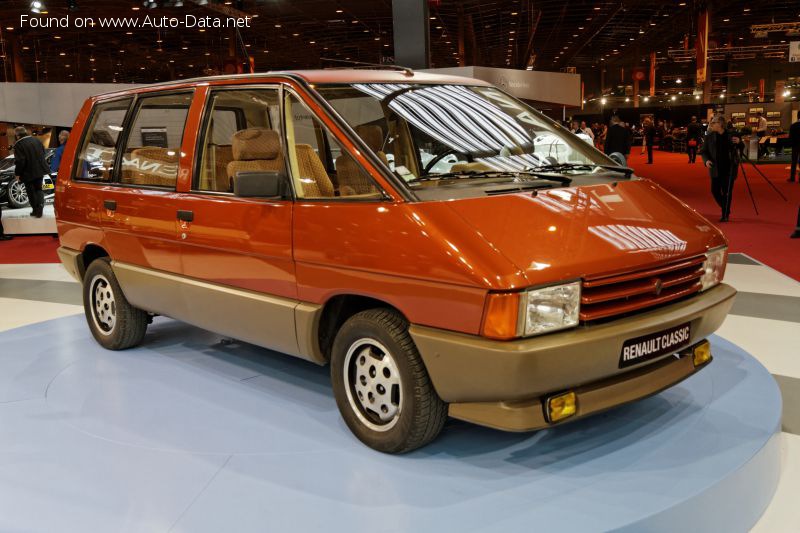
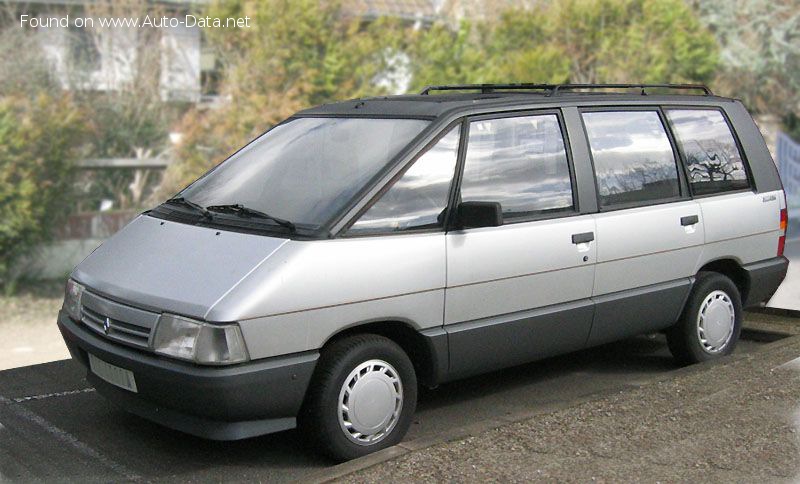
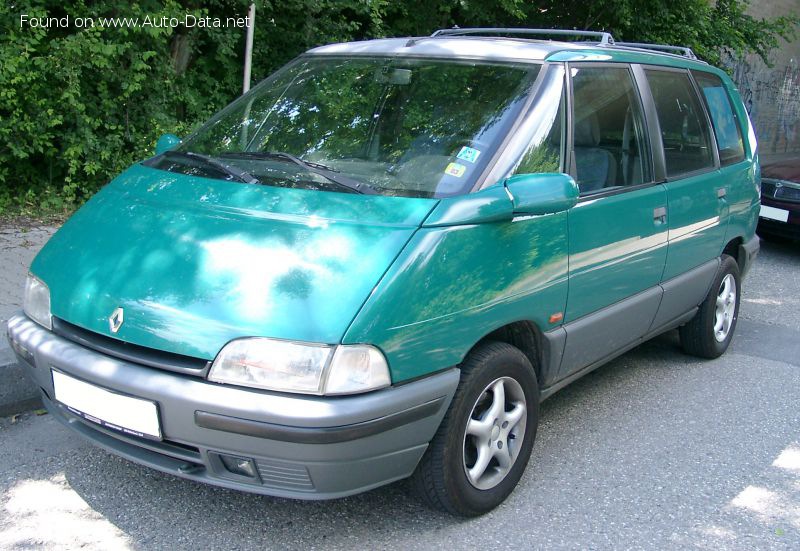
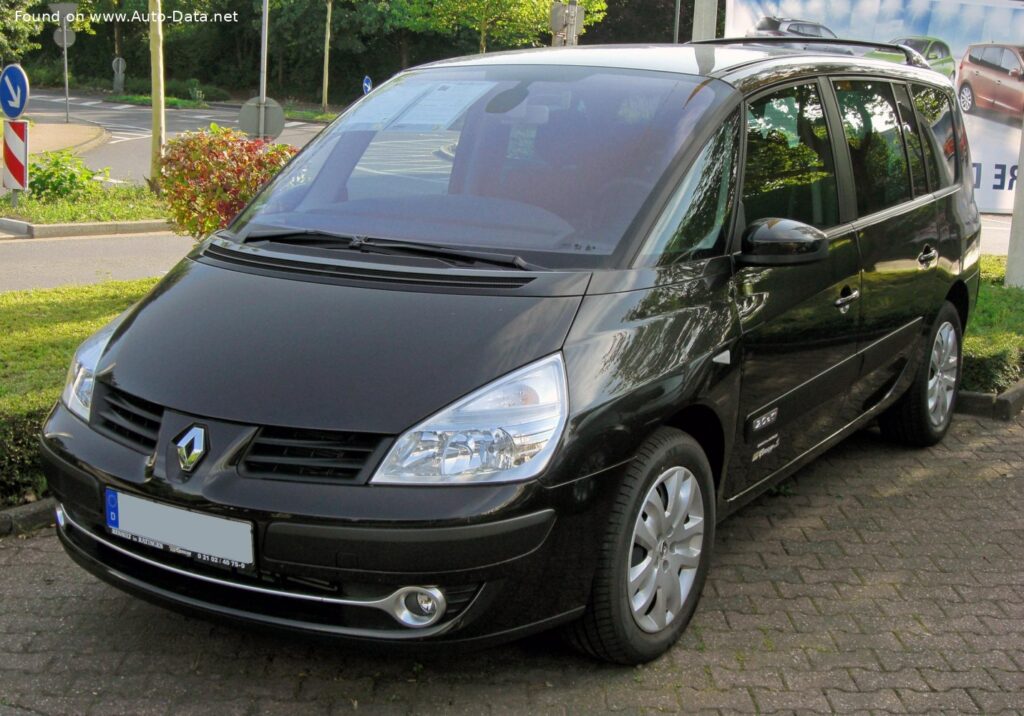
The Renault Espace IV continued the “monobox” design language established by its predecessors. The Phase II refresh brought subtle styling updates to the front and rear, along with new wheel designs and interior enhancements. The aerodynamic silhouette, characterized by a steeply raked windshield and expansive glass areas, creates a bright and airy cabin. The Espace’s interior is its defining feature, offering seven individual seats that can be easily slid, folded, or removed to configure the cabin for various needs. This modularity allows for a maximum cargo capacity of 101 cubic feet (2860 liters) with all seats folded, or a usable 10.28 cubic feet (291 liters) with all seats in place. Safety was a key consideration, with the Espace IV achieving a five-star Euro NCAP crash test rating. Standard safety features included ABS and a comprehensive airbag system. The vehicle’s independent McPherson front suspension and semi-independent rear suspension, combined with ventilated disc brakes up front and solid discs at the rear, provide a comfortable ride and stable handling.
Market Context and Legacy
Renault withdrew from the North American market before the Espace IV (Phase II) was released, meaning it was never officially available for sale in the US or Canada. Had it been introduced, it would have faced stiff competition from established minivans like the Chrysler Town & Country, Honda Odyssey, and Toyota Sienna. The Espace’s diesel focus and distinct European design would have likely positioned it as a niche offering, appealing to buyers seeking something different from the conventional American minivan formula. While pricing is speculative, it would likely have been positioned competitively with higher trim levels of existing minivans or early crossover SUVs. Despite its absence from North American roads, the Renault Espace IV (Phase II) 2.0 dCi remains a significant vehicle, representing a unique approach to family transportation and influencing the development of MPVs worldwide. Its emphasis on efficiency, modularity, and a refined driving experience continues to resonate with drivers seeking a versatile and practical vehicle.
| General Information | |
| Brand | Renault |
| Model | Espace |
| Generation | Espace IV (Phase II, 2006) |
| Type (Engine) | 2.0 dCi (173 Hp) |
| Start of Production | 2006 year |
| End of Production | 2009 year |
| Powertrain Architecture | Internal Combustion engine |
| Body Type | Minivan, MPV |
| Seats | 7 |
| Doors | 5 |
| Performance Specifications | |
| Fuel Consumption (Urban) | 9.1 l/100 km / 25.8 US mpg |
| Fuel Consumption (Extra Urban) | 6.4 l/100 km / 36.8 US mpg |
| Fuel Consumption (Combined) | 7.3 l/100 km / 32.2 US mpg |
| CO2 Emissions | 193 g/km |
| Fuel Type | Diesel |
| Acceleration 0 – 60 mph | 9.3 sec |
| Acceleration 0 – 100 km/h | 9.8 sec |
| Maximum Speed | 204 km/h / 126.76 mph |
| Emission Standard | Euro 4 |
| Weight-to-Power Ratio | 10.7 kg/Hp, 93.3 Hp/tonne |
| Weight-to-Torque Ratio | 5.2 kg/Nm, 194.1 Nm/tonne |
| Engine Specifications | |
| Power | 173 Hp @ 3750 rpm |
| Power per Litre | 86.7 Hp/l |
| Torque | 360 Nm @ 1750 rpm / 265.52 lb.-ft. @ 1750 rpm |
| Engine Layout | Front, Transverse |
| Engine Model/Code | M9R |
| Engine Displacement | 1995 cm3 / 121.74 cu. in. |
| Number of Cylinders | 4 |
| Engine Configuration | Inline |
| Cylinder Bore | 84 mm / 3.31 in. |
| Piston Stroke | 90 mm / 3.54 in. |
| Compression Ratio | 16:1 |
| Number of Valves per Cylinder | 4 |
| Fuel Injection System | Diesel Commonrail |
| Engine Aspiration | Turbocharger, Intercooler |
| Valvetrain | DOHC |
| Engine Oil Capacity | 6.6 l / 6.97 US qt |
| Space, Volume, and Weights | |
| Kerb Weight | 1855 kg / 4089.57 lbs. |
| Max. Weight | 2555 kg / 5632.81 lbs. |
| Max Load | 700 kg / 1543.24 lbs. |
| Trunk (Boot) Space – Minimum | 291 l / 10.28 cu. ft. |
| Trunk (Boot) Space – Maximum | 2860 l / 101 cu. ft. |
| Fuel Tank Capacity | 83 l / 21.93 US gal |
| Max. Roof Load | 80 kg / 176.37 lbs. |
| Permitted Trailer Load with Brakes (12%) | 2000 kg / 4409.25 lbs. |
| Permitted Trailer Load without Brakes | 750 kg / 1653.47 lbs. |
| Permitted Towbar Download | 80 kg / 176.37 lbs. |
| Dimensions | |
| Length | 4656 mm / 183.31 in. |
| Width | 1860 mm / 73.23 in. |
| Width Including Mirrors | 1894 mm / 74.57 in. |
| Height | 1728 mm / 68.03 in. |
| Wheelbase | 2803 mm / 110.35 in. |
| Front Track | 1574 mm / 61.97 in. |
| Rear (Back) Track | 1556 mm / 61.26 in. |
| Ride Height (Ground Clearance) | 120 mm / 4.72 in. |
| Minimum Turning Circle (Diameter) | 11.3 m / 37.07 ft. |
| Drivetrain, Brakes, and Suspension Specifications | |
| Drivetrain Architecture | The Internal combustion engine (ICE) drives the front wheels of the vehicle. |
| Drive Wheel | Front wheel drive |
| Number of Gears and Type of Gearbox | 6 gears, manual transmission |
| Front Suspension | Independent type McPherson |
| Rear Suspension | Semi-independent, coil spring |
| Front Brakes | Ventilated discs |
| Rear Brakes | Disc |
| Assisting Systems | ABS (Anti-lock braking system) |
| Steering Type | Steering rack and pinion |
| Tires Size | 225/55 R17 |
| Wheel Rims Size | 17 |