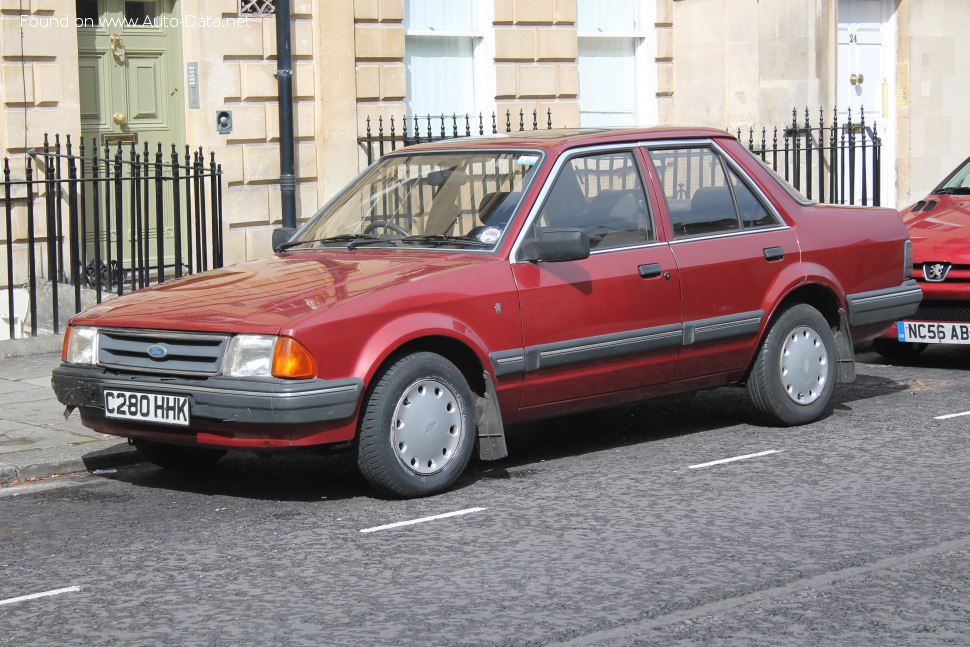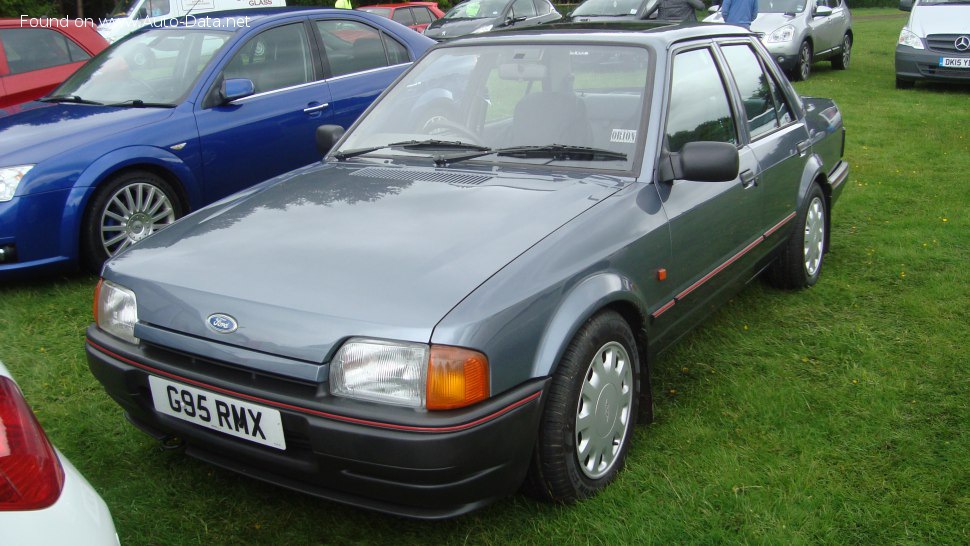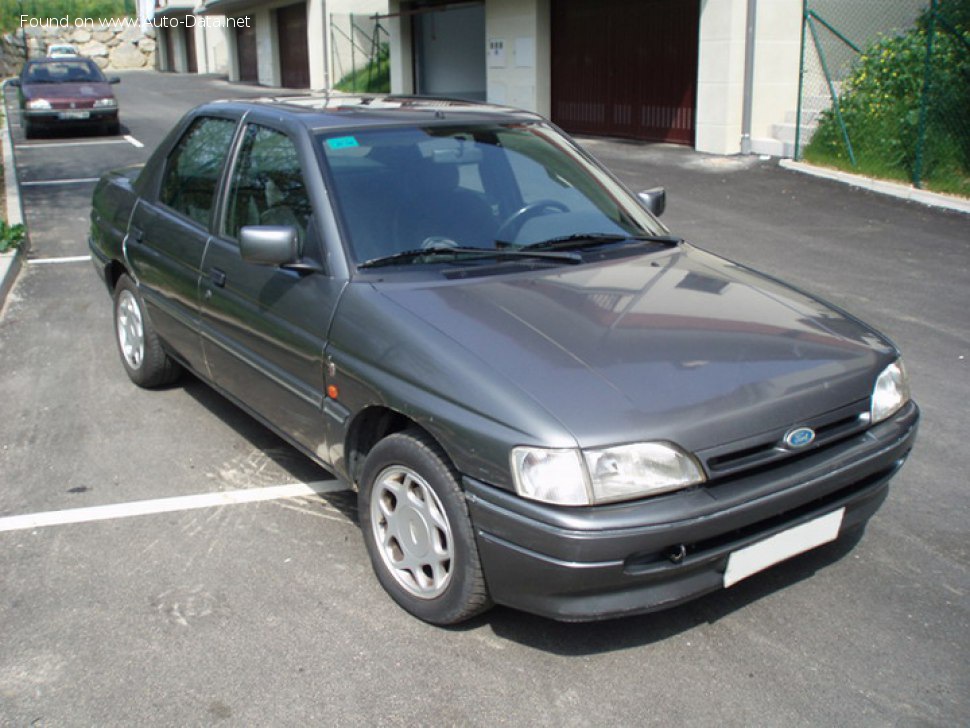
While the North American automotive landscape of the early 1990s was undergoing significant shifts, with domestic manufacturers battling fierce import competition and evolving consumer demands, across the Atlantic, Ford was refining its strategy for the European market. A key player in this strategy was the Ford Orion, a compact sedan that served as a more formal, three-box variant of the wildly popular Ford Escort. Among its various iterations, the Ford Orion III (GAL) 1.3 (60 Hp) represented a fundamental, no-frills offering designed for economy and practicality, a true workhorse for the everyday European driver.
Although the Orion itself never officially graced North American showrooms, its underlying platform and design philosophy shared significant DNA with its transatlantic cousins, such as the Ford Escort and Tempo. Understanding the Orion’s role provides a fascinating glimpse into Ford’s global engineering efforts and the distinct priorities of different automotive markets during a pivotal era. For North American enthusiasts, it offers a window into the parallel universe of European motoring, where compact, efficient sedans like the Orion held a significant place in the hearts and driveways of millions.
The Ford Orion III (GAL) 1.3 (60 Hp): An Overview
The third generation of the Ford Orion, internally designated GAL, made its debut in 1990, coinciding with the launch of the fifth-generation European Ford Escort. The Orion III (GAL) was produced from 1990 to 1993, specifically catering to those who preferred the traditional sedan silhouette over the Escort’s hatchback and estate (wagon) body styles. The 1.3-liter variant, with its modest 60 horsepower output, was positioned as an entry-level model, prioritizing fuel efficiency and low running costs above all else.
In an era that was slowly moving away from the boxy designs of the 1980s towards more aerodynamic and rounded forms, the Orion III struck a balance. Its design, while clearly related to the Escort, presented a more mature and conventional appearance. This appealed to a segment of the market that valued understated elegance and practicality, often families or fleet buyers looking for reliable, economical transport without unnecessary frills. The Orion III embodied Ford’s commitment to providing a diverse range of options within its compact segment, ensuring there was an Escort-derived model to suit almost every taste and budget in Europe.
Design Language and Era Context
The early 1990s marked a transition period in automotive design. Gone were the sharp angles and slab-sided profiles that defined many 1980s cars. Ford, like many manufacturers, was embracing a ‘softer’ aesthetic, characterized by rounded edges, integrated bumpers, and more cohesive body lines. The Orion III (GAL) exemplified this trend, featuring a smoother, more aerodynamic profile compared to its predecessors. While not revolutionary, its design was clean, functional, and inoffensive, fitting seamlessly into the contemporary European streetscape.
The sedan body style itself was a statement of practicality. With a separate boot (trunk), it offered secure and often larger luggage capacity than its hatchback sibling, a crucial factor for families. The interior, while spartan in the 1.3-liter variant, was ergonomically sound, with controls logically placed and materials chosen for durability. This focus on utility and longevity over ostentatious luxury was a hallmark of economy cars from this era, reflecting a consumer base that valued robust engineering and straightforward functionality.
Engine & Performance: A Pragmatic Heart
At the core of the Ford Orion III (GAL) 1.3 (60 Hp) lay a naturally aspirated 1.3-liter petrol (gasoline) engine, identified by the engine codes J4B or J6A. This powerplant was a testament to Ford’s experience in developing reliable, cost-effective engines for mass-market vehicles. Producing a modest 60 horsepower, its design priority was not blistering acceleration or high-speed performance, but rather dependable urban and suburban motoring, coupled with excellent fuel economy.
In an era before widespread turbocharging or complex hybrid systems, a naturally aspirated 1.3-liter engine was a common sight in entry-level compact cars. While specific torque figures are not provided, one can infer that the engine’s torque output would have been equally modest, likely peaking at lower RPMs to facilitate easy driving around town. The engine’s strength lay in its simplicity, ease of maintenance, and proven reliability, making it an ideal choice for drivers seeking minimal running costs and predictable performance. For many European drivers, the 60 Hp was perfectly adequate for daily commutes and family errands, embodying the practical spirit of the Orion.
Features: Simplicity and Functionality
As a vehicle from the early 1990s, especially an entry-level economy model, the Ford Orion III (GAL) 1.3 (60 Hp) naturally lacked the advanced infotainment, sophisticated ADAS (Advanced Driver-Assistance Systems), or pervasive connectivity found in modern cars. Its “features” were defined by fundamental utility and robust construction, reflecting the technological capabilities and consumer expectations of its time.
The primary feature of the Orion III was its practical sedan body, offering a secure and weather-protected trunk space, often a preferred choice over hatchbacks for its perceived security and traditional styling. Inside, the cabin prioritized functionality. While not luxurious, the seating was designed for comfort on longer journeys, and the basic heating and ventilation systems were effective. Standard equipment would typically include a basic AM/FM radio, perhaps with a cassette player, manual windows, and manual mirrors. Power steering might have been an option or standard on higher trims, but for the 1.3 (60 Hp) model, it was often a luxury. Safety features were rudimentary by today’s standards, limited to three-point seatbelts, and a sturdy body structure, with airbags still a rarity in this segment.
Innovation for the Orion III wasn’t about groundbreaking technology, but rather about delivering reliable, affordable transportation. Its robust mechanicals, straightforward design, and ease of repair were its biggest selling points, making it a dependable choice for budget-conscious buyers and fleet operators across Europe.
Technical Specifications
| Category | Specification |
| Brand | Ford |
| Model | Orion |
| Generation | Orion III (GAL) |
| Type (Engine) | 1.3 (60 Hp) |
| Start of production | 1990 year |
| End of production | 1993 year |
| Powertrain Architecture | Internal Combustion engine |
| Body type | Sedan |
| Fuel Type | Petrol (Gasoline) |
| Power | 60 Hp |
| Engine Model/Code | J4B, J6A |
| Engine aspiration | Naturally aspirated engine |
| Engine oil capacity | 3.25 l (3.43 US qt | 2.86 UK qt) |
| Drivetrain | Internal Combustion engine |
Market Legacy: A European Workhorse
The Ford Orion III (GAL) 1.3 (60 Hp), while a silent chapter in North American automotive history, carved out a significant niche in the European market. Launched in 1990, its MSRP would have been highly competitive, positioning it as an accessible family sedan. For context, a brand new Ford Escort in North America around the same time (1990-1993) could range from approximately $8,000 to $12,000 USD, depending on trim and options. The Orion, as a slightly more upscale Escort variant in Europe, would have been priced accordingly, offering excellent value for money in its segment.
In Europe, the Orion faced a crowded field of competitors. Its primary rivals included other popular compact sedans such as the Vauxhall Astra (and its sedan variant, the Belmont or Astra Saloon), the Volkswagen Jetta (the sedan version of the Golf), the Renault 19, and the Opel Kadett. These vehicles all vied for the attention of budget-conscious families and fleet managers, emphasizing reliability, fuel efficiency, and practical interior space.
North American drivers, while not encountering the Orion directly, were familiar with its philosophical equivalents. The Ford Escort in the U.S. and Canada, alongside competitors like the Chevrolet Cavalier, Honda Civic, and Toyota Corolla, filled a similar role as affordable, reliable compact cars. These models were often the first new car for many young drivers or the second family car, valued for their economy and ease of ownership.
Reception of the Orion III (GAL) 1.3 (60 Hp) by European drivers was generally positive within its intended segment. It was praised for its robust build quality, comfortable ride, and excellent fuel economy – crucial factors in markets with higher fuel prices and taxes. While critics might have found the 60 Hp engine somewhat underpowered for spirited driving, especially when fully loaded or on longer motorway journeys, it was widely accepted as perfectly adequate for urban and suburban commuting. Its reputation for reliability and low maintenance costs solidified its standing as a sensible, dependable choice.
Today, the Ford Orion III (GAL) 1.3 (60 Hp) is not a high-value collector’s item in the same vein as performance Fords of the era. However, it holds a certain charm as an overlooked classic, a tangible piece of everyday European motoring history. Its collectibility lies in its representation of a bygone era of straightforward, unpretentious family transport. Well-preserved examples are increasingly rare, and they serve as a nostalgic reminder of the cars that reliably served millions, embodying the pragmatic spirit of Ford’s European compact car strategy.