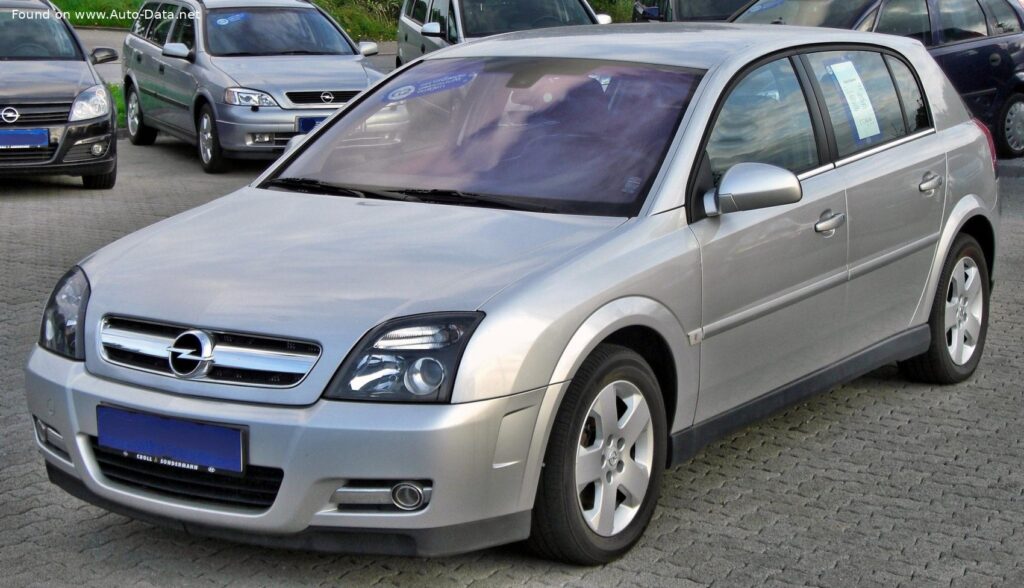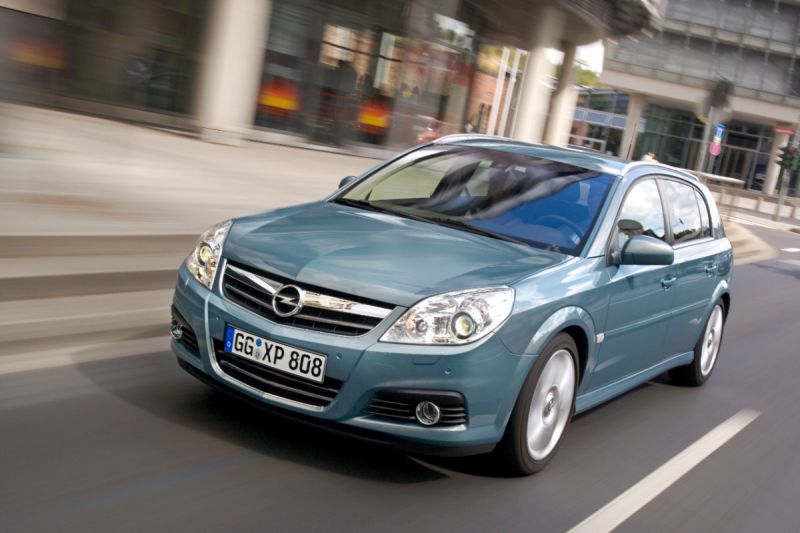
The Opel Signum (facelift 2005), specifically the 2.8i V6 24V Turbo (230 Hp) model, was a distinctive and somewhat unconventional vehicle within the European D-segment. Produced from July 2005 to October 2006, this generation aimed to bridge the gap between traditional executive sedans, practical station wagons, and the emerging trend of multi-purpose vehicles (MPVs). Based on the extended platform of the Opel Vectra C, the Signum was conceived as a premium-segment hatchback, offering enhanced rear passenger space and unparalleled interior versatility. While never officially sold in the United States, the Opel Signum played a significant role in Opel’s European strategy, demonstrating the brand’s engineering capabilities and willingness to explore new body styles.
The Opel Signum: A Unique European Executive Hatchback
The Signum targeted buyers seeking executive-level comfort and features combined with exceptional practicality, all within a sleek, five-door hatchback design. The 2.8i V6 Turbo variant represented the pinnacle of the Signum lineup, offering a compelling blend of performance and refinement. It was a bold attempt to carve out a niche in a competitive market, appealing to those who desired something different from the standard executive car offerings.
Engine & Performance
At the heart of the Opel Signum (facelift 2005) 2.8i V6 24V Turbo lies a sophisticated powertrain engineered for spirited driving and confident highway cruising. The engine, internally designated as Z28NEL, is a 2.8-liter (2792 cubic centimeters or 170.38 cubic inches) V6 unit, equipped with 24 valves (four per cylinder) and multi-port fuel injection. The inclusion of a turbocharger and intercooler distinguished this engine, a setup typically found in higher-performance vehicles. This forced induction system enabled the compact V6 to generate 230 horsepower at 5500 revolutions per minute (rpm), resulting in an impressive power-per-liter ratio of 82.4 horsepower per liter.
The engine also delivered 330 Newton-meters (Nm), equivalent to 243.4 pound-feet (lb.-ft.) of torque, across a broad rev range, thanks to the turbocharger. This ensured strong acceleration from low speeds and effortless overtaking capabilities. Power was transmitted to the front wheels via a precise 6-speed manual transmission, providing an engaging driving experience. This combination allowed the Signum to accelerate from 0 to 60 miles per hour in 7.2 seconds and reach a top speed of 151 miles per hour (243 km/h). Despite its performance focus, Opel also prioritized efficiency, achieving approximately 15 US miles per gallon in urban driving and 30.9 US miles per gallon on the highway. The vehicle’s weight-to-power ratio of 6.9 kilograms per horsepower (or 145.6 Hp per tonne) underscored its dynamic potential.
Design & Features
The Opel Signum’s body style is classified as a 5-door hatchback, but its design went beyond this simple categorization. The 2005 facelift brought aesthetic updates, including a revised front fascia with a more prominent grille, updated headlights, and redesigned bumpers, aligning its appearance with contemporary Opel design language. Its dimensions – 183.11 inches (4651 mm) in length and 70.79 inches (1798 mm) in width – gave it a substantial road presence.
The true innovation of the Signum lay in its interior. Built on an extended wheelbase of 111.42 inches (2830 mm) – significantly longer than the standard Vectra sedan – the Signum prioritized rear passenger comfort and cargo flexibility. It featured five seats, but the rear bench was uniquely designed with individual, adjustable seats that could slide fore and aft, recline, and even fold flat, offering unparalleled adaptability. This “FlexSpace” system allowed owners to prioritize legroom, cargo volume, or a combination of both. Trunk space ranged from a respectable 12.89 cubic feet (365 liters) to a cavernous 49.79 cubic feet (1410 liters) with the rear seats folded. The chassis featured independent coil spring suspension at both the front and rear, tuned for a comfortable yet composed ride. Disc brakes on all four wheels, coupled with an Anti-lock Braking System (ABS), ensured confident stopping power. Standard 225/50 R17 tires on 17-inch wheels provided a balance of grip and ride quality. The drag coefficient of 0.32 Cd contributed to both fuel efficiency and reduced wind noise.
Technical Specifications
| Category | Specification |
| Brand | Opel |
| Model | Signum |
| Generation | Signum (facelift 2005) |
| Type (Engine) | 2.8i V6 24V Turbo (230 Hp) |
| Production Start | July, 2005 |
| Production End | October, 2006 |
| Powertrain Architecture | Internal Combustion Engine |
| Body Type | Hatchback |
| Seats | 5 |
| Doors | 5 |
| Fuel Consumption (Urban) | 15.7 l/100 km |
| Fuel Consumption (Extra Urban) | 7.6 l/100 km |
| Fuel Type | Petrol (Gasoline) |
| Acceleration 0 – 60 mph | 7.2 seconds |
| Acceleration 0 – 100 km/h | 7.6 seconds |
| Maximum Speed | 243 km/h |
| Weight-to-Power Ratio | 6.9 kg/Hp |
| Engine Power | 230 Hp @ 5500 rpm |
| Power per Liter | 82.4 Hp/l |
| Torque | 330 Nm |
| Engine Displacement | 2792 cm3 |
| Number of Cylinders | 6 |
| Engine Configuration | V-engine |
| Kerb Weight | 1580 kg |
| Trunk (Boot) Space – Minimum | 365 l |
| Trunk (Boot) Space – Maximum | 1410 l |
| Fuel Tank Capacity | 60 l |
| Length | 4651 mm |
| Width | 1798 mm |
| Wheelbase | 2830 mm |
| Drag Coefficient (Cd) | 0.32 |
The Opel Signum, particularly the 2.8i V6 Turbo variant, occupies a unique position in Opel’s history. It was an ambitious attempt to create a new niche in the European D-segment, blending executive comfort, performance, and interior flexibility. While it faced challenges in achieving significant sales volumes due to its unconventional design, the Signum showcased Opel’s engineering prowess and innovative spirit. It remains a testament to Opel’s willingness to experiment and offer a compelling alternative to traditional executive cars.