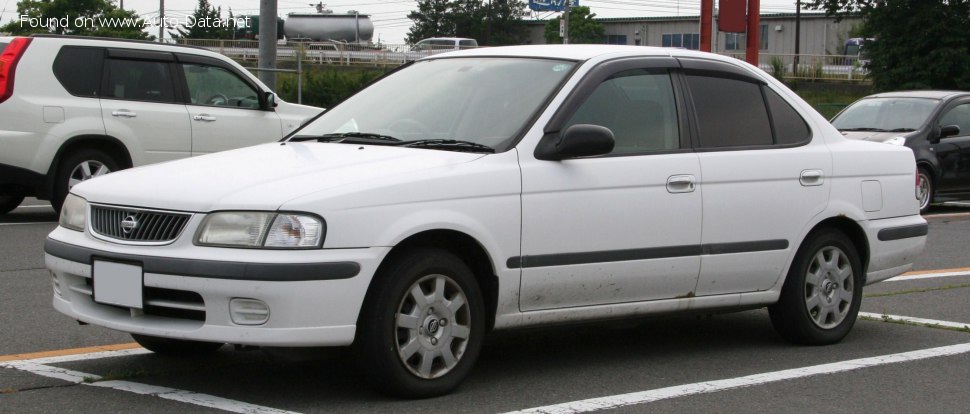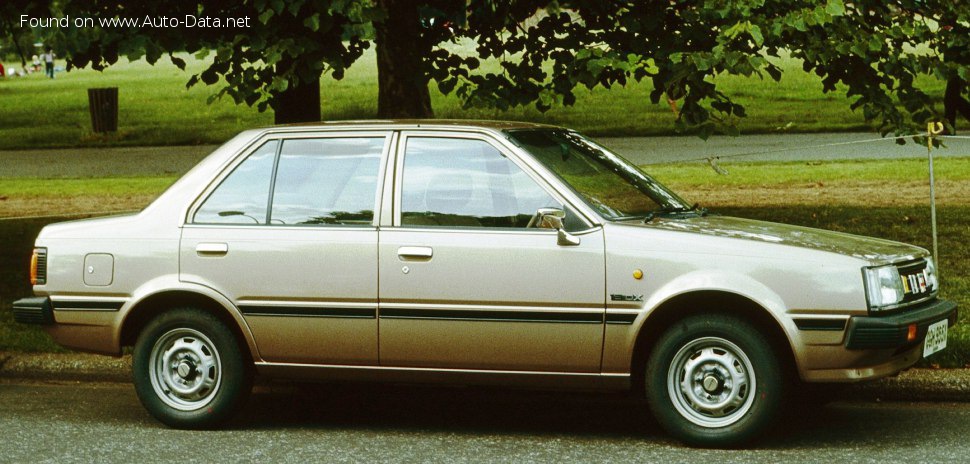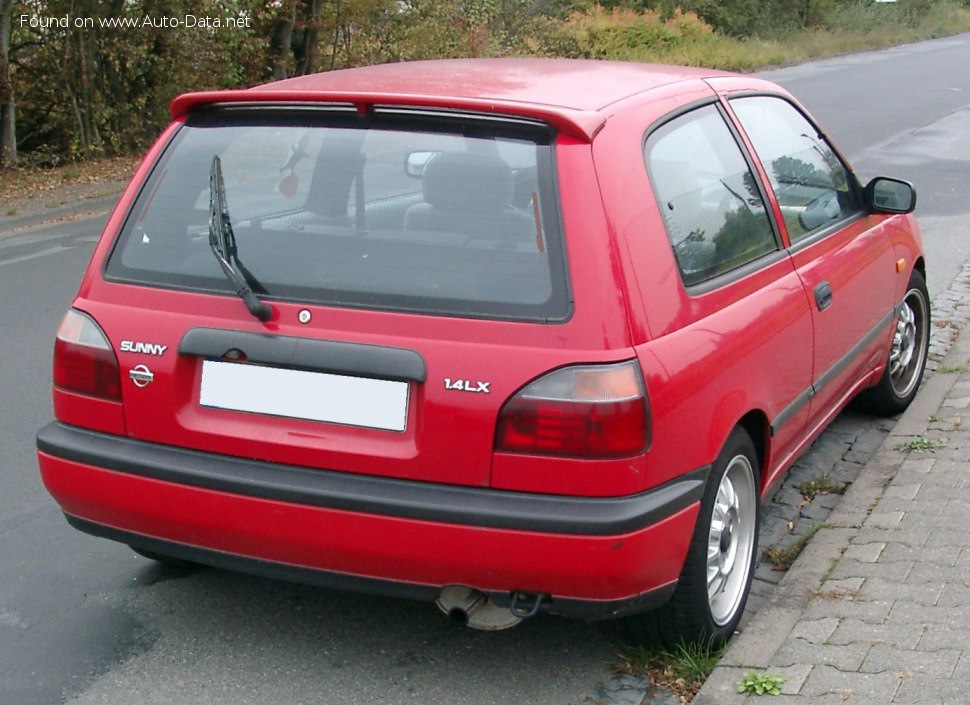
The Nissan Sunny, known in various markets as the Sentra, Pulsar, or Tsuru, has been a cornerstone of Nissan’s global compact car lineup for decades. The third generation of the Sunny hatchback, internally designated N14, represented a significant evolution for the model, emphasizing practicality, efficiency, and reliability. Produced from 1990 to 1995, the Nissan Sunny III Hatch (N14) 3 doors 2.0 D (75 Hp) specifically catered to markets where fuel economy and robust performance were paramount, particularly in Europe and parts of Asia. While gasoline variants of the N14 generation were sold worldwide, including in North America as the Sentra, this particular 2.0-liter diesel, 3-door hatchback model was primarily targeted at European consumers and other regions valuing diesel’s longevity and low running costs over outright performance.
This iteration of the Sunny built upon a strong foundation of dependability, offering a no-frills, honest approach to compact motoring. Its design reflected the prevailing automotive trends of the early 1990s, characterized by smoother lines and improved aerodynamics compared to its predecessors. For the diesel variant, the focus remained squarely on delivering a durable, economical, and competent daily driver capable of handling diverse driving conditions.
Engine and Performance: The Robust 2.0 D (75 Hp) Powertrain
At the heart of the Nissan Sunny III Hatch (N14) 3 doors 2.0 D (75 Hp) was the CD20 engine, a naturally aspirated 2.0-liter (120.46 cubic inches) inline-four diesel unit. This engine was engineered for durability and fuel efficiency, hallmarks of Nissan’s diesel offerings during that era. It produced 75 horsepower at 4800 rpm and a respectable 97.36 pound-feet of torque at a low 2800 rpm. The power delivery characteristics of this engine made it well-suited for urban commuting and steady highway cruising, where its strong low-end torque compensated for its modest horsepower.
Paired exclusively with a 5-speed manual transmission, the front-wheel-drive Sunny 2.0 D delivered a combined fuel economy of an impressive 39.9 US miles per gallon (5.9 liters per 100 km). This figure was a significant selling point in markets where fuel prices were consistently high. Performance-wise, the 2.0 D was not built for speed; it achieved 0-60 mph in a calculated 14.6 seconds and had a top speed of 99.42 mph (160 km/h). These figures placed it firmly within the realm of practical, economical compact cars, designed to get occupants and their cargo from point A to point B reliably and efficiently, rather than with exhilarating acceleration. Its high compression ratio of 22.2:1 and precombustion chamber injection system were typical of diesel technology of the period, ensuring efficient fuel combustion and robust operation.
Design and Features: Practicality in a Compact Package
The Nissan Sunny III Hatch (N14) 3 doors presented a straightforward and functional design. As a 3-door hatchback, it offered a sporty yet practical aesthetic, popular among younger drivers or those needing a compact vehicle with versatile cargo space. Measuring 156.5 inches in length, 66.54 inches in width, and 54.92 inches in height, with a wheelbase of 95.67 inches, the N14 Sunny was a true compact car, adept at navigating crowded city streets and fitting into tight parking spaces.
Despite its compact exterior, the Sunny N14 was designed to accommodate five occupants, though the rear seating in the 3-door configuration was best suited for shorter journeys or two adults. The hatchback body style provided excellent cargo flexibility, with a minimum trunk space of 9.89 cubic feet (280 liters) that could expand significantly to 34.96 cubic feet (990 liters) by folding down the rear seats. This made it a highly practical choice for small families or individuals who frequently transported gear.
Underneath, the N14 featured a conventional but effective suspension setup: wishbones at the front and spring struts at the rear, providing a comfortable and predictable ride quality. Braking was handled by ventilated discs at the front and drum brakes at the rear, a common and cost-effective solution for compact cars of its time. Notably, the inclusion of ABS (Anti-lock Braking System) as an assisting system highlighted Nissan’s commitment to safety, even in its economy models, making it a more advanced offering than some competitors. Hydraulic power steering made maneuvering effortless, further enhancing its appeal as a city car. Standard tire size was 175/70 R13, reflecting its modest performance and focus on efficiency.
Market Positioning
The Sunny N14, particularly the diesel variant, occupied a unique niche in the European market. It competed with other compact hatchbacks like the Volkswagen Golf, Ford Escort, and Opel Astra, but distinguished itself through its diesel engine option, offering superior fuel economy and lower running costs. This made it an attractive alternative for drivers prioritizing practicality and affordability over outright performance or luxury.
Interior and Trim Levels
The interior of the Sunny III Hatch was functional and durable, prioritizing practicality over lavish appointments. Trim levels varied depending on the market, but generally included basic cloth upholstery, a simple dashboard layout, and minimal ornamentation. Features like a radio/cassette player and power windows were often available as options. The focus was on providing a comfortable and reliable driving environment without unnecessary frills.
Technical Specifications
| General Information | |
|---|---|
| Brand | Nissan |
| Model | Sunny |
| Generation | Sunny III Hatch (N14) 3 doors |
| Type (Engine) | 2.0 D (75 Hp) |
| Start of Production | 1990 year |
| End of Production | 1995 year |
| Powertrain Architecture | Internal Combustion engine |
| Body type | Hatchback |
| Seats | 5 |
| Doors | 3 |
| Performance Specs | |
| Fuel Consumption (combined) | 5.9 l/100 km (39.9 US mpg) |
| Fuel Type | Diesel |
| Acceleration 0 – 60 mph (Calculated) | 14.6 sec |
| Maximum Speed | 99.42 mph (160 km/h) |
| Weight-to-Power Ratio | 14.4 kg/Hp, 69.4 Hp/tonne |
| Weight-to-Torque Ratio | 8.2 kg/Nm, 122.2 Nm/tonne |
| Engine Specs | |
| Power | 75 Hp @ 4800 rpm |
| Power per Liter | 38 Hp/l |
| Torque | 132 Nm (97.36 lb.-ft.) @ 2800 rpm |
| Engine Layout | Front, Transverse |
| Engine Model/Code | CD20 |
| Engine Displacement | 1974 cm³ (120.46 cu. in.) |
| Number of Cylinders | 4 |
| Engine Configuration | Inline |
| Cylinder Bore | 84.5 mm (3.33 in.) |
| Piston Stroke | 88 mm (3.46 in.) |
| Compression Ratio | 22.2:1 |
| Number of Valves per Cylinder | 2 |
| Fuel Injection System | Precombustion chamber injection |
| Engine Aspiration | Naturally aspirated engine |
| Valvetrain | OHC |
| Engine Oil Capacity | 4.7 l (4.97 US qt) |
| Coolant Capacity | 5.7 l (6.02 US qt) |
| Space, Volume, and Weights | |
| Kerb Weight | 1080 kg (2380.99 lbs.) |
| Max. Weight | 1545 kg (3406.14 lbs.) |