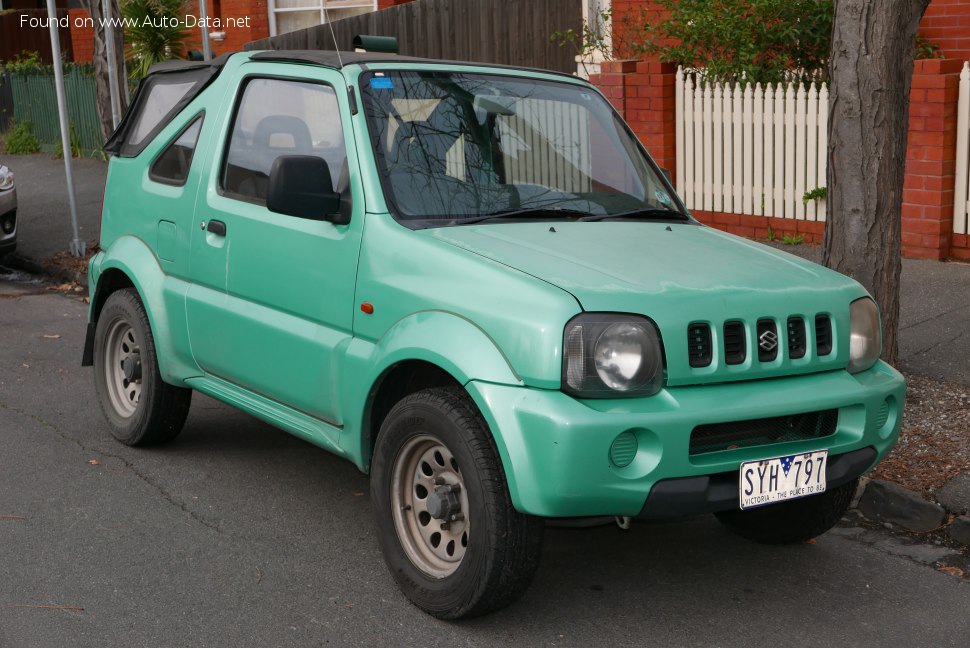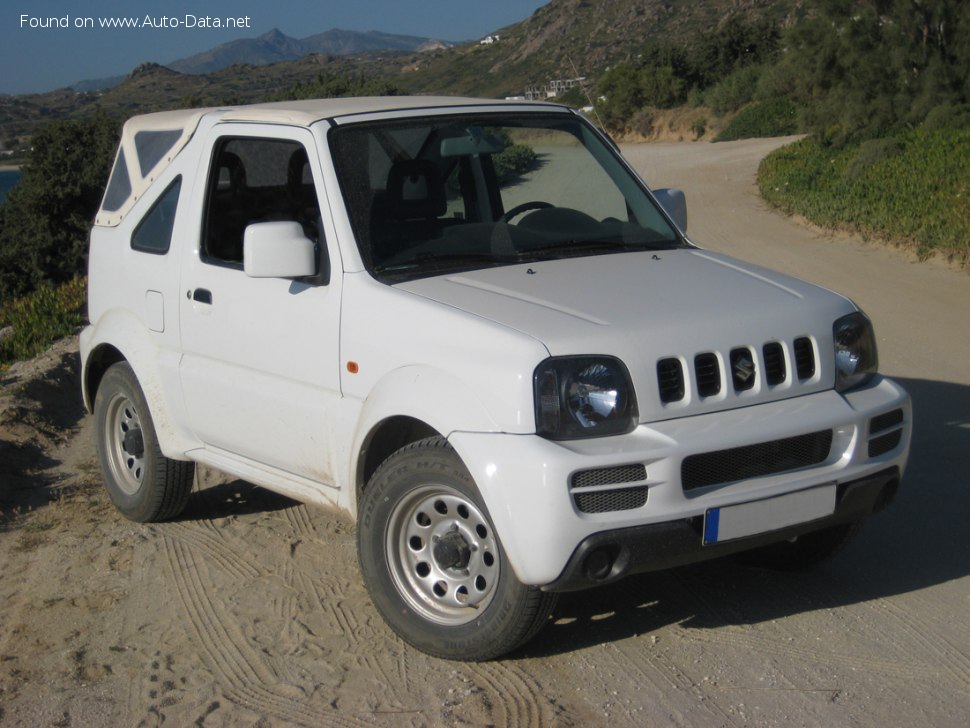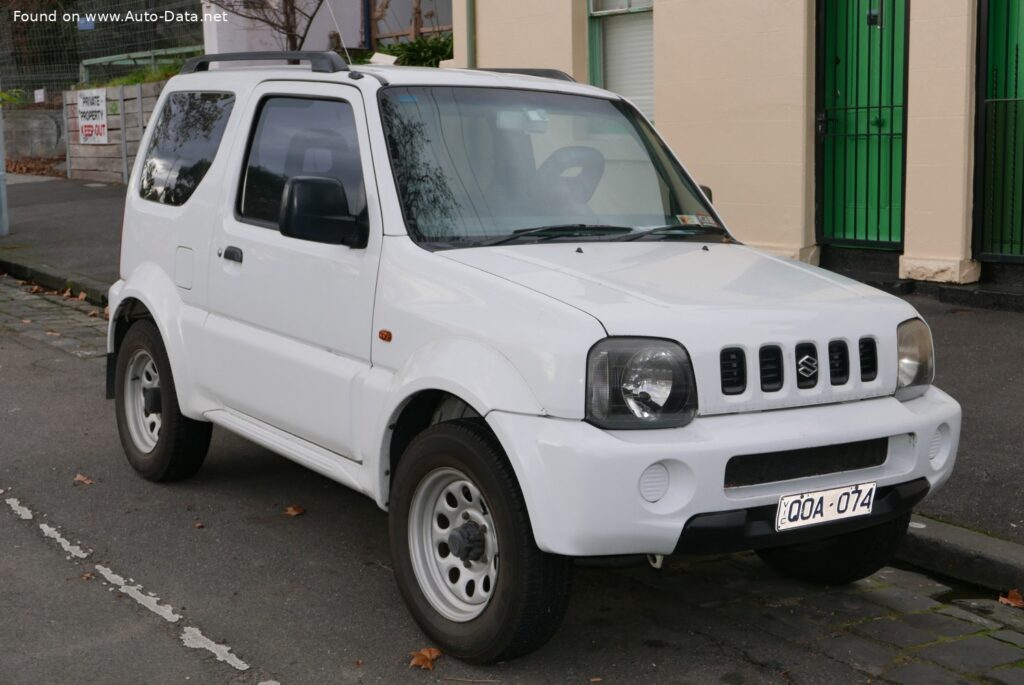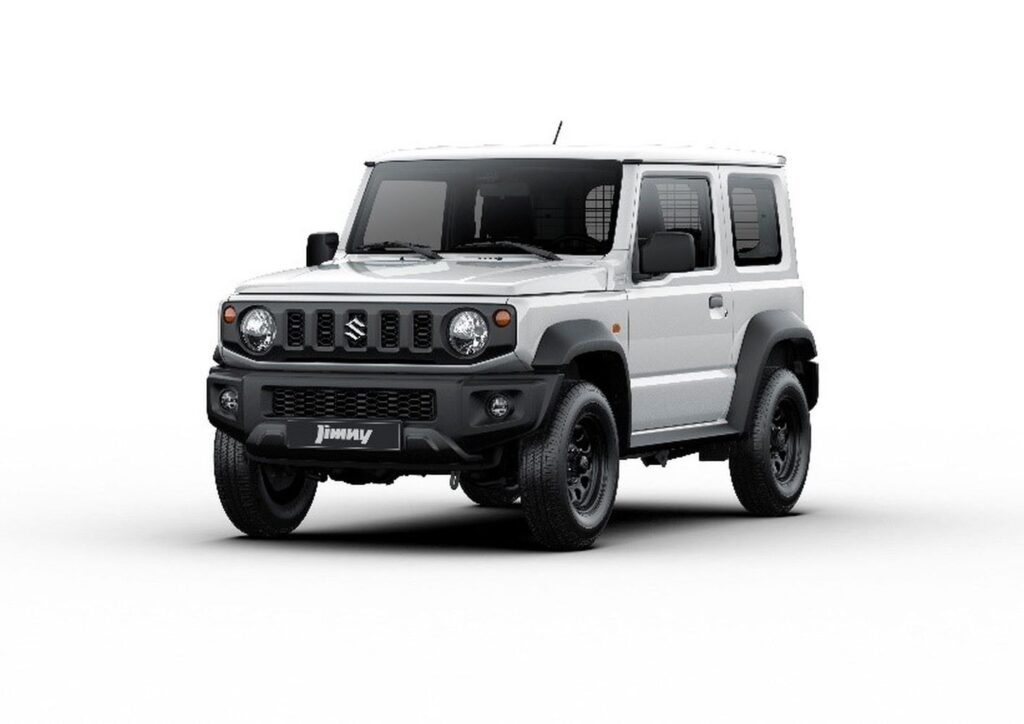
The Suzuki Jimny IV (3-door) 1.5 (102 Hp) ALLGRIP PRO 2-Seater represents the fourth generation of Suzuki’s revered compact off-road vehicle, embodying a philosophy of rugged capability in a diminutive package. Launched in September 2020, this specific variant, configured as a two-seater light commercial vehicle, was a strategic move by Suzuki to continue offering the popular Jimny in markets with stringent emissions regulations, particularly in Europe. While not officially sold in the United States, the Jimny has garnered a cult following globally for its authentic, no-frills approach to off-roading, positioning itself as a unique offering in a market increasingly dominated by crossover SUVs.
The Suzuki Jimny IV: A Modern Off-Road Icon
Built on a traditional body-on-frame chassis with rigid axles and a part-time four-wheel-drive system, the Jimny IV proudly carries forward the legacy of its predecessors, dating back to the iconic LJ and SJ series. This 2-seater model, featuring the ALLGRIP PRO system, underscores its utilitarian purpose and commitment to serious off-road performance, making it a favorite among enthusiasts, utility users, and those seeking a highly capable vehicle that defies its small dimensions.
Engine & Performance
Under the hood, the Suzuki Jimny IV (3-door) 1.5 (102 Hp) ALLGRIP PRO 2-Seater is powered by Suzuki’s K15B engine, a naturally aspirated 1.5-liter (1462 cm³ or 89.22 cu. in.) inline-four gasoline unit. This engine is longitudinally mounted at the front, a classic layout for rear-wheel-drive and four-wheel-drive vehicles, optimizing weight distribution and allowing for robust drivetrain components. It features a multi-port manifold injection system and Variable Valve Timing (VVT), contributing to its efficiency and responsiveness.
The K15B engine delivers 102 horsepower at 6000 rpm, with a power-per-liter rating of 69.8 Hp/l. Torque output stands at 95.88 lb.-ft. (130 Nm) at 4000 rpm. While these figures may seem modest by modern standards, they are perfectly suited to the Jimny’s lightweight construction and intended use. With a curb weight of just 2403.04 lbs. (1090 kg), the Jimny boasts a favorable weight-to-power ratio of 10.7 kg/Hp (93.6 Hp/tonne) and a weight-to-torque ratio of 8.4 kg/Nm (119.3 Nm/tonne). This combination ensures ample grunt for tackling challenging terrains and provides a surprisingly sprightly feel in urban environments.
Power is channeled through a robust 5-speed manual transmission, offering direct control and engagement for the driver, a preferred choice for many off-road purists. The ALLGRIP PRO drivetrain architecture is a part-time four-wheel-drive system, meaning the engine primarily drives the front wheels, with the rear wheels engaged through an electrically or mechanically operated clutch when 4WD is selected. This system, combined with a low-range transfer gear, provides exceptional traction and control in demanding off-road conditions, allowing the Jimny to punch far above its weight class. Performance metrics for this variant include a top speed of 90.1 mph (145 km/h). Fuel economy, based on the NEDC combined cycle, is rated at 38.6 US mpg (6.1 l/100 km), with urban consumption at 32.7 US mpg (7.2 l/100 km) and extra-urban at 43.6 US mpg (5.4 l/100 km). CO2 emissions are between 138-174 g/km, adhering to Euro 6 emission standards, which was a key factor in its reclassification as a light commercial vehicle in some markets.
Design & Features
The design of the fourth-generation Jimny is a deliberate homage to its utilitarian heritage, featuring a boxy, retro-inspired aesthetic that is both functional and iconic. This 3-door off-road vehicle measures a compact 143.5 inches (3645 mm) in length, 64.76 inches (1645 mm) in width, and 67.72 inches (1720 mm) in height, making it incredibly maneuverable in tight spaces, whether on city streets or narrow trails. The short wheelbase of 88.58 inches (2250 mm) further enhances its agility and breakover angle.
A defining characteristic of this specific model is its 2-seater configuration. By removing the rear seats, Suzuki transformed the Jimny from a passenger vehicle into a light commercial vehicle in certain markets. This change was crucial for circumventing stricter emissions regulations that would have otherwise made the passenger version economically unfeasible to sell. The removal of the rear seats dramatically increases the cargo capacity, offering a substantial minimum trunk space of 30.48 cu. ft. (863 liters), making it a highly practical option for businesses or individuals requiring significant load-carrying capability in a small, off-road package.
Off-road prowess is engineered into every aspect of its design. The Jimny boasts an impressive ground clearance of 8.27 inches (210 mm), ensuring it can clear obstacles with ease. Its approach angle of 37°, departure angle of 49°, and ramp-over (breakover) angle of 28° are class-leading among compact vehicles, rivaling much larger and more expensive dedicated off-roaders. The robust suspension system consists of coil springs and rigid axles both front and rear, providing maximum articulation and durability over rough terrain. Steering is handled by a cone worm with recirculation balls system, known for its robustness in off-road applications, albeit with a less direct feel than modern rack-and-pinion setups. Braking is managed by disc brakes at the front and drum brakes at the rear, complemented by an Anti-lock Braking System (ABS) for enhanced safety. The vehicle rides on 195/80 R15 tires mounted on 15-inch wheel rims, a practical size for off-road performance and ride comfort. The interior, while functional and hard-wearing, reflects its utilitarian nature, designed for ease of cleaning and durability in demanding conditions.
Technical Specifications
| Category | Specification |
| Brand | Suzuki |
| Model | Jimny |
| Generation | Jimny IV (3-door) |
| Type (Engine) | 1.5 (102 Hp) ALLGRIP PRO 2-Seater |
| Start of Production | September, 2020 |
| Powertrain Architecture | Internal Combustion Engine |
| Body Type | Off-road vehicle |
| Seats | 2 |
| Doors | 3 |
| CO2 Emissions (WLTP) | 173-174 g/km |
| Fuel Consumption (Urban, NEDC) | 7.2 l/100 km (32.7 US mpg) |
| Fuel Consumption (Extra Urban, NEDC) | 5.4 l/100 km (43.6 US mpg) |
| Fuel Consumption (Combined, NEDC) | 6.1 l/100 km (38.6 US mpg) |
| CO2 Emissions (NEDC) | 138 g/km |
| Fuel Type | Petrol (Gasoline) |
| Maximum Speed | 145 km/h (90.1 mph) |
| Emission Standard | Euro 6 |
| Weight-to-Power Ratio | 10.7 kg/Hp (93.6 Hp/tonne) |
| Weight-to-Torque Ratio | 8.4 kg/Nm (119.3 Nm/tonne) |
| Power | 102 Hp @ 6000 rpm |
| Power per Liter | 69.8 Hp/l |
| Torque | 130 Nm @ 4000 rpm (95.88 lb.-ft. @ 4000 rpm) |
| Engine Layout | Front, Longitudinal |
| Engine Model/Code | K15B |
| Engine Displacement | 1462 cm³ (89.22 cu. in.) |
| Number of Cylinders | 4 |
| Engine Configuration | Inline |
| Cylinder Bore | 74 mm (2.91 in.) |
| Piston Stroke | 85 mm (3.35 in.) |
| Compression Ratio | 10:1 |
| Valves per Cylinder | 4 |
| Fuel Injection System | Multi-port manifold injection |
| Engine Aspiration | Naturally aspirated engine |
| Valvetrain | VVT |
| Engine Oil Capacity | 3.6 l (3.8 US qt) |
| Coolant Capacity | 5 l (5.28 US qt) |
| Kerb Weight | 1090 kg (2403.04 lbs.) |
| Max. Weight | 1435 kg (3163.63 lbs.) |
| Max Load | 345 kg (760.59 lbs.) |
| Trunk (Boot) Space – Minimum | 863 l (30.48 cu. ft.) |
| Fuel Tank Capacity | 40 l (10.57 US gal) |
| Length | 3645 mm (143.5 in.) |
| Width | 1645 mm (64.76 in.) |
| Height | 1720 mm (67.72 in.) |
| Wheelbase | 2250 mm (88.58 in.) |
| Front Track | 1395 mm (54.92 in.) |
| Rear (Back) Track | 1405 mm (55.31 in.) |
| Ride Height (Ground Clearance) | 210 mm (8.27 in.) |
| Minimum Turning Circle (Turning Diameter) | 9.8 m (32.15 ft.) |
| Approach Angle | 37° |
| Departure Angle | 49° |
| Ramp-over (Breakover) Angle | 28° |
| Drivetrain Architecture | ICE drives front wheels permanently, rear wheels driven through clutch if necessary. |
| Drive Wheel | All-wheel drive (4×4) |
| Number of Gears and Type of Gearbox | 5 gears, manual transmission |
| Front Suspension | Coil spring, Rigid axle suspension |
| Rear Suspension | Rigid axle suspension, Coil spring |
| Front Brakes | Disc |
| Rear Brakes | Drum |
| Assisting Systems | ABS (Anti-lock braking system) |
| Steering Type | Cone worm with recirculation balls |
| Tires Size | 195/80 R15 |
| Wheel Rims Size | 15 |
Legacy and Market Impact
The Suzuki Jimny IV, particularly the 2-seater ALLGRIP PRO variant, has cemented its reputation as a modern classic and a highly capable off-roader with a unique market position. Its design, reminiscent of classic utility vehicles like the Mercedes-Benz G-Wagen or even early Land Rovers, has earned it nicknames such as “mini G-Wagen,” highlighting its serious off-road credentials in a remarkably compact and affordable package. While its passenger version faced challenges with strict European emissions standards, the strategic reintroduction as a light commercial 2-seater allowed Suzuki to maintain the Jimny’s presence in a crucial market, catering to a strong demand for its robust capabilities.
In its primary markets across Europe, Asia, and Australia, the Jimny competes in a niche where direct rivals are few. Most other compact SUVs prioritize on-road comfort and efficiency over genuine off-road prowess, making the Jimny almost unrivaled in its segment for extreme terrain capability. Vehicles like the Dacia Duster 4×4 or various subcompact crossovers might offer all-wheel drive, but none match the Jimny’s ladder frame, rigid axles, and low-range transfer case for true rock-crawling and trail performance. More capable off-roaders, such as the Jeep Wrangler or Land Rover Defender, are significantly larger, heavier, and substantially more expensive, placing them in a different league entirely.
The Jimny’s legacy is built on a foundation of reliability, durability, and a fun-to-drive character. It appeals to a diverse audience, from off-road enthusiasts and adventurers seeking a nimble and unpretentious vehicle to farmers and utility workers who require a compact yet tough workhorse. The 2-seater configuration, with its generous cargo volume, further enhances its appeal as a practical utility vehicle, proving that serious capability doesn’t have to come in a large, intimidating package. The fourth-generation Jimny has also had a significant cultural impact, becoming a beloved vehicle for customization and personalization, reflecting its owners’ adventurous spirits. Its robust construction and simple mechanics make it relatively easy to maintain and modify, further deepening its connection with its dedicated fan base. Ultimately, the Suzuki Jimny IV (3-door) 1.5 (102 Hp) ALLGRIP PRO 2-Seater stands as a testament to Suzuki’s commitment to building authentic, capable off-road vehicles, ensuring that the spirit of the compact 4×4 continues to thrive in an evolving automotive landscape.