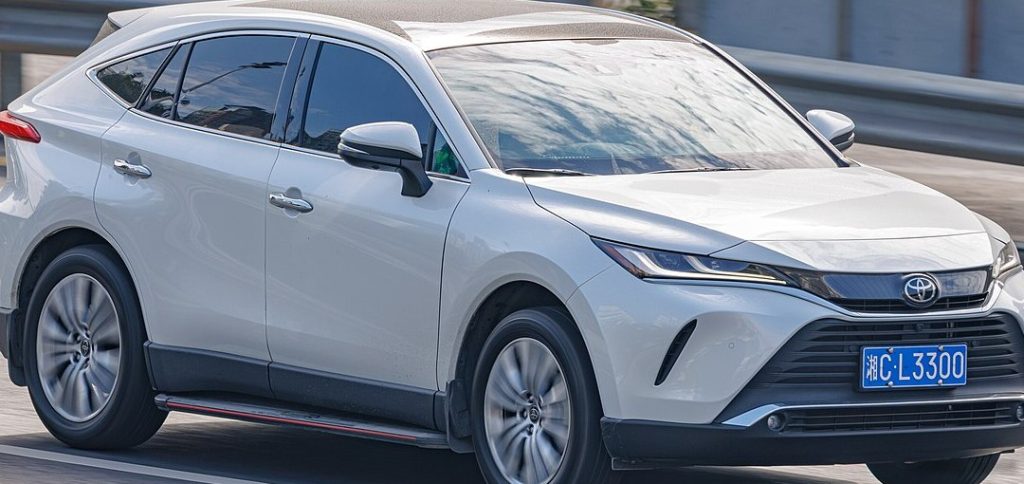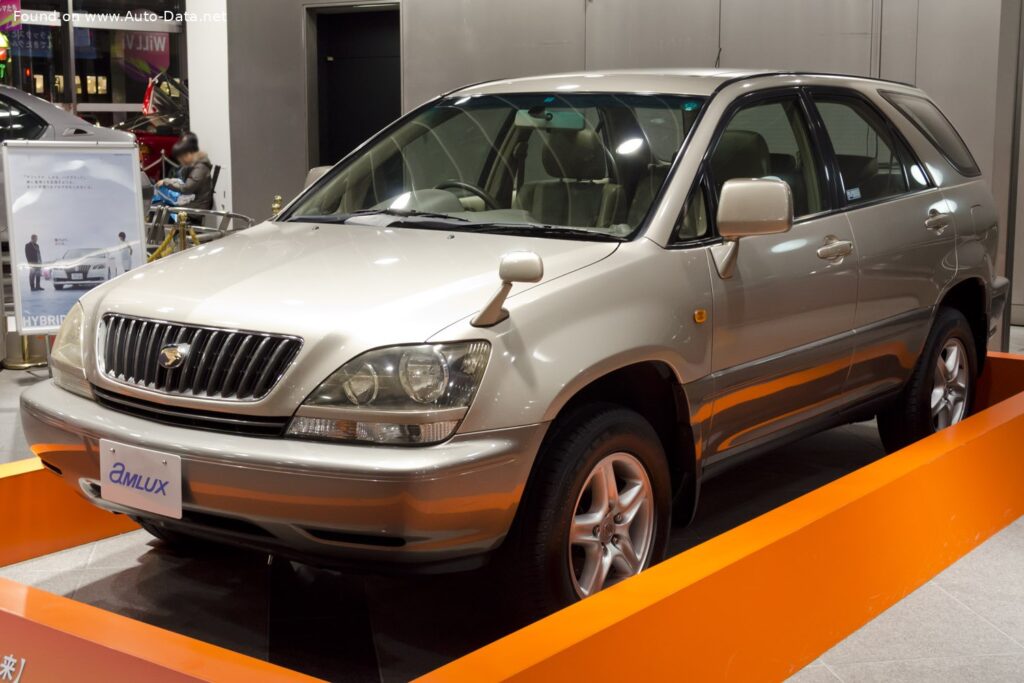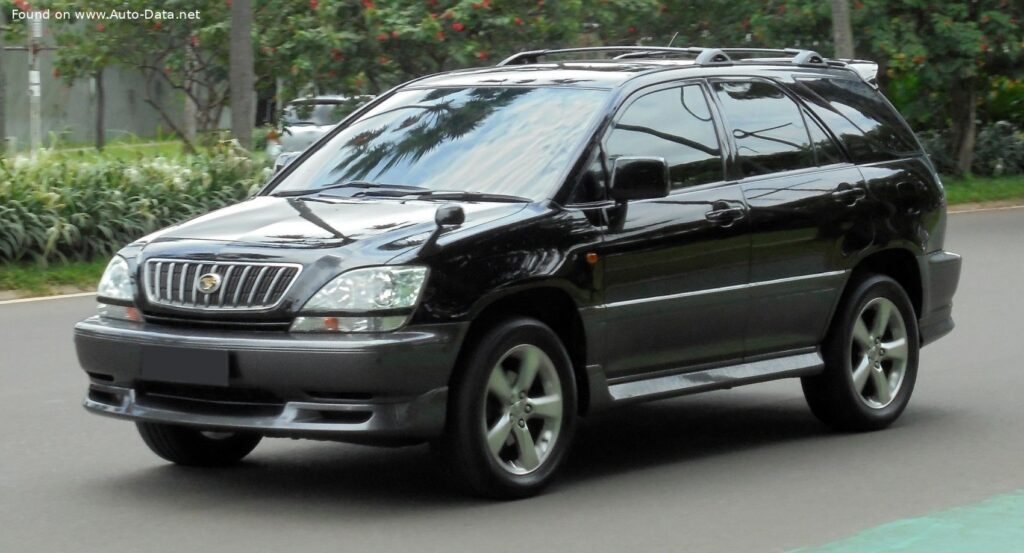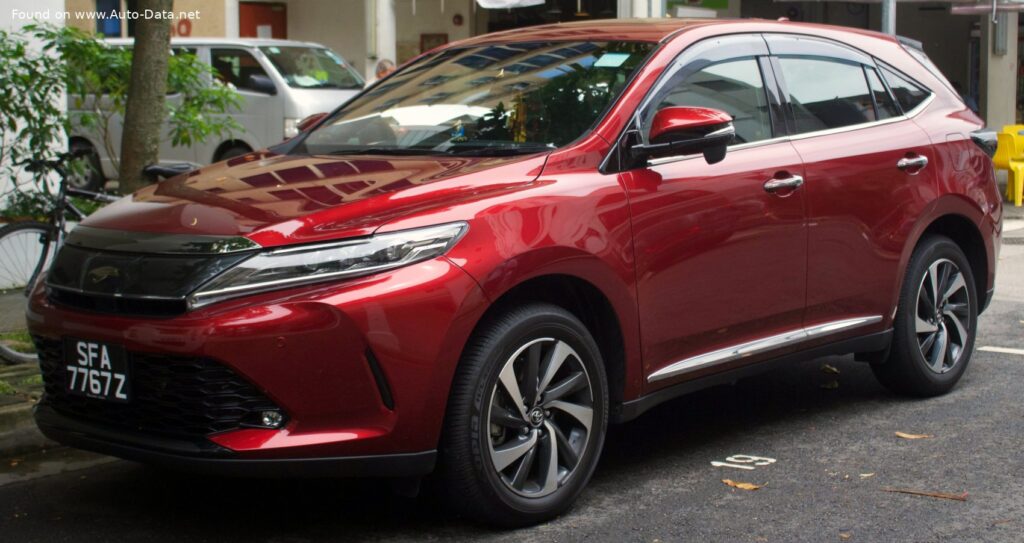
The Toyota Harrier III (XU60, facelift 2017) represents Toyota’s expertise in the premium crossover SUV segment, primarily targeted towards the Japanese and Asian markets. Globally recognized as the Lexus RX in many regions, the Harrier maintains a distinct identity and strong presence in its home markets. Positioned as a sophisticated and luxurious mid-size SUV, the Harrier III (XU60, facelift 2017) offered a refined driving experience, advanced technology, and compelling design appealing to consumers seeking an upscale vehicle without the Lexus branding. This iteration, produced from 2017 to 2020, featured enhanced styling, improved features, and a powerful turbocharged powertrain, solidifying its reputation as a segment leader.
The Toyota Harrier III (XU60, facelift 2017): A Market-Specific Crossover
The XU60 generation Harrier, launched in 2013, marked a shift from its shared platform with the Lexus RX, adopting a derivative of the Toyota RAV4’s New MC platform. This allowed Toyota to tailor the vehicle specifically for its intended markets, prioritizing comfort, urban maneuverability, and a unique aesthetic. The 2017 facelift revitalized the model, integrating Toyota’s evolving design language and incorporating crucial technological upgrades. The 2.0 T (231 Hp) 4WD ECT variant, the focus of this article, represented the performance peak of the lineup, combining robust power with the security of all-wheel-drive.
Engine & Performance: The 8AR-FTS Powertrain
The 2017 facelifted Toyota Harrier III’s performance variant is powered by the 8AR-FTS engine, a 2.0-liter (121.93 cu. in.) inline-four gasoline unit. This powerplant exemplifies Toyota’s engineering philosophy of combining efficiency with spirited performance through forced induction. Equipped with a twin-scroll turbocharger and an intercooler, the engine delivers 231 horsepower between 5200-5600 rpm. This output, impressive for its displacement, results in a power-per-liter rating of 115.6 Hp/l, showcasing the engine’s advanced design and tuning.
Critically for everyday driving, the 8AR-FTS generates 258.15 lb.-ft. of torque, available from a remarkably low 1650 rpm and sustained up to 4000 rpm. This broad torque band ensures responsive acceleration and effortless overtaking, making the Harrier confident in both city traffic and on the highway. The engine utilizes a direct injection fuel system, optimizing fuel delivery for power and efficiency, while a DOHC (Double Overhead Camshaft) valvetrain with four valves per cylinder further enhances combustion efficiency and engine breathing.
Power is managed by a 6-speed Super ECT (Electronically Controlled Transmission) automatic gearbox, known for its smooth shifts and reliability. This transmission is paired with an advanced all-wheel-drive (4WD) system, providing enhanced traction and stability, particularly in adverse weather or light off-road conditions. Despite its performance capabilities, the Harrier 2.0 T maintains a combined fuel economy of 30.5 US mpg (7.7 l/100 km), a testament to the engine’s efficiency and the vehicle’s optimized powertrain. With a kerb weight ranging from 3747.86 to 3836.04 lbs, the Harrier achieves a weight-to-power ratio of 7.4 kg/Hp (135.9 Hp/tonne), indicating a lively and engaging driving experience.
Design & Features: Elegance and Functionality
The Toyota Harrier III (XU60, facelift 2017) presents a sleek and modern SUV design, meticulously crafted to exude sophistication. Its body type is a classic 5-door SUV configuration, comfortably seating five occupants. The facelift introduced subtle but impactful changes, including revised front and rear bumpers, a more aggressive grille, and updated lighting signatures, often featuring LED technology, giving the vehicle a sharper, contemporary look.
Measuring 186.02 inches in length, 72.24 inches in width, and 66.54 inches in height, the Harrier balances road presence and urban maneuverability. Its 104.72-inch wheelbase contributes to a spacious interior and stable ride. The exterior styling is characterized by flowing lines, a distinctive “floating roof” effect created by blacked-out D-pillars, and an aerodynamic profile. Wheel options include 18-inch and 19-inch alloy rims, with tires sized 235/55 R18 100H or 235/50 R19 99V, respectively, enhancing both aesthetics and handling.
Inside, the Harrier offers a premium cabin experience. Specific interior features vary by trim, but the facelifted model typically boasts high-quality materials, soft-touch surfaces, and meticulous craftsmanship. Key features often include an advanced infotainment system with a large touchscreen display, automatic climate control, multi-function steering wheel controls, and a suite of driver-assistance technologies. Safety is paramount, with essential systems such as ABS (Anti-lock Braking System), multiple airbags, and a robust chassis. The steering system utilizes electric power steering with a rack-and-pinion setup, ensuring precise and light steering for city driving, with a minimum turning circle of 36.75 feet. The suspension features an independent McPherson strut setup at the front and a double wishbone system at the rear, providing a comfortable ride and composed handling. Braking performance is handled by ventilated discs at the front and solid discs at the rear.
Technical Specifications: Toyota Harrier III (XU60, facelift 2017) 2.0 T (231 Hp) 4WD ECT
| Category | Specification |
| Brand | Toyota |
| Model | Harrier |
| Generation | Harrier III (XU60, facelift 2017) |
| Type (Engine) | 2.0 T (231 Hp) 4WD ECT |
| Start of Production | 2017 |
| End of Production | 2020 |
| Powertrain Architecture | Internal Combustion engine |
| Body type | SUV |
| Seats | 5 |
| Doors | 5 |
| Fuel consumption (combined) | 7.7 l/100 km (30.5 US mpg) |
| Fuel Type | Petrol (Gasoline) |
| Weight-to-power ratio | 7.4 kg/Hp (135.9 Hp/tonne) |
| Weight-to-torque ratio | 4.9 kg/Nm (205.9 Nm/tonne) |
| Power | 231 Hp @ 5200-5600 rpm |
| Power per liter | 115.6 Hp/l |
| Torque | 350 Nm (258.15 lb.-ft.) @ 1650-4000 rpm |
| Engine layout | Front, Transverse |
| Engine Model/Code | 8AR-FTS |
| Engine displacement | 1998 cm3 (121.93 cu. in.) |
| Number of cylinders | 4 |
| Engine configuration | Inline |
| Cylinder Bore | 86 mm (3.39 in.) |
| Piston Stroke | 86 mm (3.39 in.) |
| Number of valves per cylinder | 4 |
| Fuel injection system | Direct injection |
| Engine aspiration | Turbocharger, Intercooler |
| Valvetrain | DOHC |
| Kerb Weight | 1700-1740 kg (3747.86 – 3836.04 lbs.) |
| Length | 4725 mm (186.02 in.) |
| Width | 1835 mm (72.24 in.) |
| Height | 1690 mm (66.54 in.) |
| Wheelbase | 2660 mm (104.72 in.) |
Legacy & Market Impact
The Toyota Harrier III (XU60, facelift 2017) continued the model’s tradition of offering a blend of luxury, reliability, and practicality in its core markets. In Japan, the Harrier became a premium domestic SUV, often chosen by consumers desiring Lexus-level refinement but preferring a Toyota badge. Its reputation for build quality, ride comfort, and resale value remained strong. Competitors included the Nissan Murano, Mazda CX-5 and CX-8, and Honda CR-V. The Harrier distinguished itself with unique styling, leaning towards elegance rather than aggression. The 2.0-liter turbocharged engine in the facelifted XU60 enhanced its competitiveness, offering a more dynamic driving experience.
Historically, the Harrier played a role in establishing the premium crossover segment, being the progenitor of the Lexus RX. While the XU60 generation diverged in platform, it maintained a connection to its luxurious sibling, bringing similar design philosophies and technological advancements to a broader audience. The 2017 facelift ensured the Harrier remained relevant through 2020. Its success paved the way for the fourth-generation Harrier, continuing to build upon this legacy.
The Toyota Harrier III (XU60, facelift 2017) exemplifies Toyota’s strategic market segmentation and ability to deliver premium vehicles tailored to regional preferences. Its blend of sophisticated design, advanced engineering, and robust performance ensured its enduring popularity and cemented its place in the evolution of the modern crossover SUV.