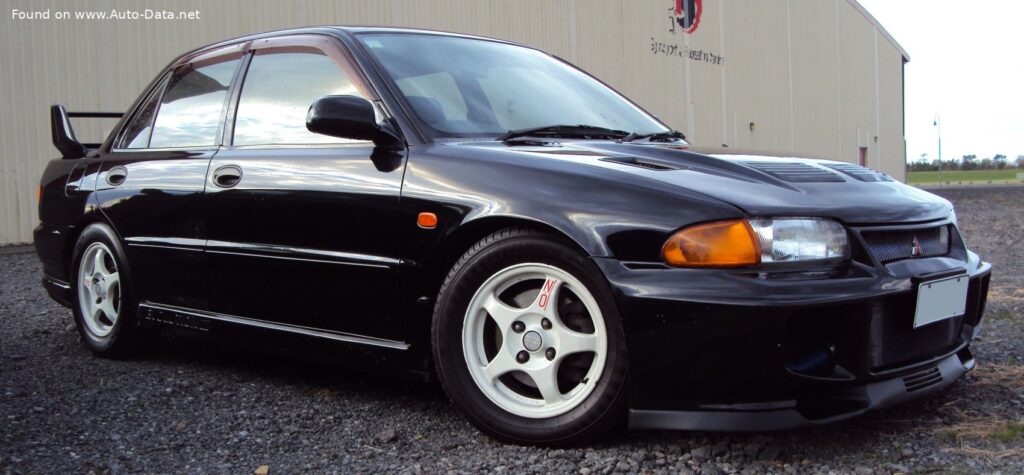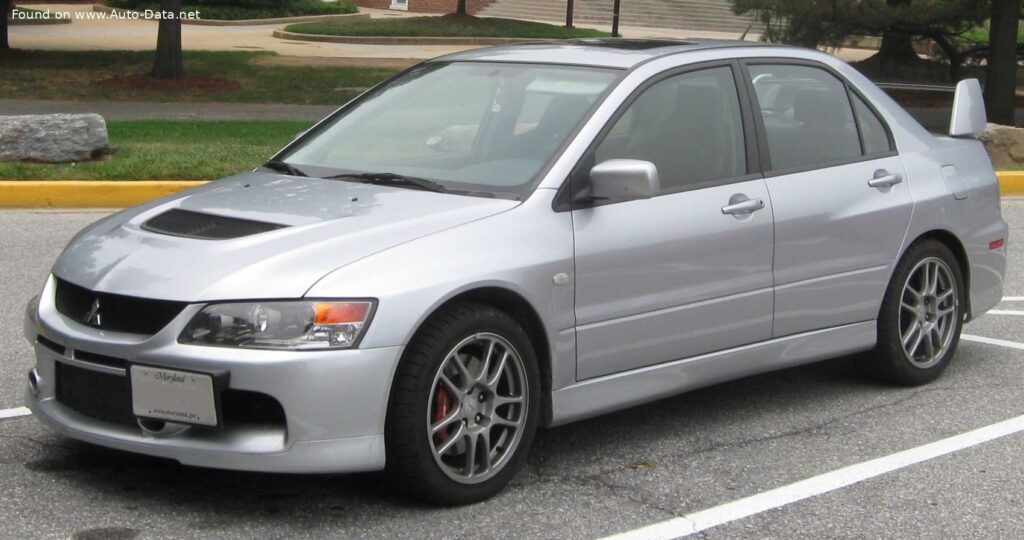
The Mitsubishi Lancer VI 1.8 GSR (205 Hp), produced between 1996 and 2000, represents a significant chapter in the storied history of Mitsubishi’s performance sedans. Falling within the sixth generation of the Lancer lineage, this particular variant carved out a distinct niche in markets outside the United States, particularly in Japan, Europe, and Australia. While not a full-blown Lancer Evolution, the GSR trim offered an enticing blend of rally-bred engineering, turbocharged performance, and all-wheel-drive capability in a more understated and accessible package. It served as a crucial bridge, delivering much of the performance ethos of its more extreme Evo siblings without the same level of aggressive styling or price tag.
During its production run, the Lancer VI 1.8 GSR (205 Hp) quickly gained a reputation among enthusiasts as a potent compact sedan, embodying Mitsubishi’s commitment to motorsport-derived road cars. Its four-door sedan body type, coupled with a five-seat interior, maintained a level of practicality often sought after by buyers, while its advanced powertrain architecture promised an exhilarating driving experience. This article delves into the technical prowess, design philosophy, and enduring legacy of the Mitsubishi Lancer VI 1.8 GSR (205 Hp), a vehicle that remains a cherished icon for many automotive aficionados worldwide.
Engine & Performance: The Heart of the Mitsubishi Lancer VI 1.8 GSR (205 Hp)
Powertrain Configuration and Output
At the core of the Mitsubishi Lancer VI 1.8 GSR (205 Hp) lies a meticulously engineered 1.8-liter (111.92 cu. in.) inline four-cylinder engine. This powerplant, positioned transversely at the front, was a testament to Mitsubishi’s expertise in forced induction technology. Equipped with a turbocharger, the engine produced a robust 205 horsepower at 6000 rpm, a remarkable output for its displacement in the late 1990s. The power per liter figure of 111.8 Hp/l underscored the efficiency and high-performance tuning of this unit. Complementing the impressive horsepower was a substantial peak torque of 275 Nm (202.83 lb.-ft.) delivered at a relatively low 3000 rpm, ensuring strong acceleration and flexible power delivery across the rev range.
The engine featured a multi-port manifold injection system, providing precise fuel delivery for optimal combustion. With a compression ratio of 9.1:1 and four valves per cylinder, the engine was designed for both efficiency and high-rpm performance. These specifications translated into a vehicle with a compelling weight-to-power ratio of 6.1 kg/Hp (162.7 Hp/tonne) and a weight-to-torque ratio of 4.6 kg/Nm (218.3 Nm/tonne), indicating a car that was eager to accelerate and responsive to driver inputs. The engine’s robust design, featuring an 81 mm (3.19 in.) cylinder bore and an 89 mm (3.5 in.) piston stroke, ensured durability under spirited driving conditions.
Driving Dynamics and Drivetrain
A defining characteristic of the Mitsubishi Lancer VI 1.8 GSR (205 Hp) was its sophisticated drivetrain. Power was routed through a precise 5-speed manual transmission, offering drivers direct control over the engine’s output and enhancing the engaging driving experience. Crucially, the GSR featured an all-wheel-drive (4×4) system, a hallmark of Mitsubishi’s rally-inspired performance models. This system provided exceptional traction and stability, especially when navigating challenging road conditions or pushing the car through corners. The all-wheel drive, combined with the turbocharged engine, allowed the GSR to put its power down effectively, minimizing wheel spin and maximizing acceleration.
The chassis was designed to complement the powerful drivetrain. The front suspension utilized a wishbone setup, known for its ability to provide precise wheel control and a comfortable ride. At the rear, a spring strut configuration offered a good balance of handling prowess and everyday usability. Stopping power was handled by ventilated disc brakes at the front and solid disc brakes at the rear, ensuring confident deceleration. An Anti-lock Braking System (ABS) was included as a standard assisting system, enhancing safety under hard braking. Steering was managed by a hydraulic rack and pinion system, providing direct feedback and a connected feel to the road, further solidifying the GSR’s reputation as a driver’s car.
Design & Features
Exterior and Interior Aesthetics
The Mitsubishi Lancer VI 1.8 GSR (205 Hp) adopted the conventional yet sporty styling of the sixth-generation Lancer sedan. With a length of 167.32 inches (4250 mm), a width of 66.54 inches (1690 mm), and a height of 55.31 inches (1405 mm), it maintained a compact footprint, contributing to its agility. The wheelbase of 98.43 inches (2500 mm) provided a stable platform, while the front track of 57.09 inches (1450 mm) and rear track of 57.48 inches (1460 mm) ensured a confident stance. Unlike the more flamboyant Lancer Evolution models, the GSR typically featured a more subdued exterior, often distinguishable by subtle aerodynamic enhancements like a small rear spoiler and unique alloy wheels, hinting at its performance capabilities without overtly announcing them. The 195/55 R15 tires provided a balanced blend of grip and ride comfort.
Inside, the Lancer VI 1.8 GSR (205 Hp) offered a functional and driver-focused cabin. As a 4-door, 5-seat sedan, it provided practical space for occupants and their belongings. The minimum trunk (boot) space of 14.83 cu. ft. (420 liters) was ample for daily use or weekend trips. While interior amenities were appropriate for its era, the emphasis was on ergonomics and driver engagement. Supportive seats, clear instrumentation, and well-placed controls were typical, reflecting its performance-oriented nature. The overall design language was clean and purposeful, prioritizing usability over lavish luxury, aligning with its role as a performance compact for enthusiasts.
Chassis and Safety Systems
The structural integrity of the Lancer VI contributed to its overall safety and handling characteristics. With a kerb weight of 2777.82 lbs. (1260 kg) and a maximum permissible weight of 3384.1 lbs. (1535 kg), the vehicle struck a balance between robustness and agility. The maximum load capacity of 606.27 lbs. (275 kg) further underscored its practicality.
Beyond the active safety provided by its all-wheel-drive system and responsive steering, the inclusion of ABS (Anti-lock Braking System) was a significant safety feature for the late 1990s. This system helped drivers maintain steering control during emergency braking maneuvers, preventing wheel lock-up. The hydraulic power steering system further enhanced control and reduced driver fatigue, making the car manageable in urban environments while still providing the necessary feedback for spirited driving. The combination of a robust chassis, advanced drivetrain, and essential safety features ensured that the Mitsubishi Lancer VI 1.8 GSR (205 Hp) offered a well-rounded and confidence-inspiring driving experience for its time.
Technical Specifications
| Category | Specification |
| Brand | Mitsubishi |
| Model | Lancer |
| Generation | Lancer VI |
| Type (Engine) | 1.8 GSR (205 Hp) |
| Start of Production | 1996 year |
| End of Production | 2000 year |
| Powertrain Architecture | Internal Combustion engine |
| Body Type | Sedan |
| Seats | 5 |
| Doors | 4 |
| Performance Specs | |
| Fuel Type | Petrol (Gasoline) |
| Weight-to-Power Ratio | 6.1 kg/Hp, 162.7 Hp/tonne |
| Weight-to-Torque Ratio | 4.6 kg/Nm, 218.3 Nm/tonne |
| Engine Specs | |
| Power | 205 Hp @ 6000 rpm |
| Power per Liter | 111.8 Hp/l |
| Torque | 275 Nm @ 3000 rpm (202.83 lb.-ft. @ 3000 rpm) |
| Engine Layout | Front, Transverse |
| Engine Displacement | 1834 cm3 (111.92 cu. in.) |
| Number of Cylinders | 4 |
| Engine Configuration | Inline |
| Cylinder Bore | 81 mm (3.19 in.) |
| Piston Stroke | 89 mm (3.5 in.) |
| Compression Ratio | 9.1:1 |
| Number of Valves per Cylinder | 4 |
| Fuel Injection System | Multi-port manifold injection |
| Engine Aspiration | Turbocharger |
| Space, Volume and Weights | |
| Kerb Weight | 1260 kg (2777.82 lbs.) |
| Max. Weight | 1535 kg (3384.1 lbs.) |
| Max Load | 275 kg (606.27 lbs.) |
| Trunk (boot) Space – Minimum | 420 l (14.83 cu. ft.) |
| Fuel Tank Capacity | 50 l (13.21 US gal | 11 UK gal) |
| Dimensions | |
| Length | 4250 mm (167.32 in.) |
| Width | 1690 mm (66.54 in.) |
| Height | 1405 mm (55.31 in.) |
| Wheelbase | 2500 mm (98.43 in.) |
| Front Track | 1450 mm (57.09 in.) |
| Rear (Back) Track | 1460 mm (57.48 in.) |
| Drivetrain, Brakes and Suspension Specs | |
| Drive Wheel | All wheel drive (4×4) |
| Number of Gears and Type of Gearbox | 5 gears, manual transmission |
| Front Suspension | Wishbone |
| Rear Suspension | Spring Strut |
| Front Brakes | Ventilated discs |
| Rear Brakes | Disc |
| Assisting Systems | ABS (Anti-lock braking system) |
| Steering Type | Steering rack and pinion |
| Power Steering | Hydraulic Steering |
| Tires Size | 195/55 R15 |
Legacy and Market Impact
Reputation and Competitors
The Mitsubishi Lancer VI 1.8 GSR (205 Hp) earned a formidable reputation as a highly capable and engaging performance sedan. While often overshadowed by its more extreme Lancer Evolution counterparts, the GSR was appreciated for offering much of the Evo’s underlying technology and driving feel in a more understated and often more affordable package. It was lauded for its robust turbocharged engine, tenacious all-wheel-drive grip, and the communicative nature of its manual transmission and hydraulic steering. Enthusiasts often viewed it as a superb platform for tuning and modification, given the inherent strength of its powertrain and chassis.
In its primary markets, the Lancer GSR competed with a range of compact performance cars that offered a blend of practicality and excitement. Key rivals included variants of the Subaru Impreza WRX, which shared a similar rally-derived, turbocharged all-wheel-drive philosophy. Other competitors might have included front-wheel-drive hot hatches like the Honda Civic Type R (EK9 generation) or performance-oriented sedans from Nissan or Toyota, though few matched the GSR’s specific combination of turbocharging and AWD in its segment. Its slightly subdued styling also meant it appealed to buyers who desired performance without drawing excessive attention, contrasting with the more aggressive aesthetics of some of its rivals.
Historical Significance and Enthusiast Appeal
The Mitsubishi Lancer VI 1.8 GSR (205 Hp) holds significant historical importance as a crucial component of Mitsubishi’s performance legacy in the late 20th century. It effectively democratized rally-bred technology, making turbocharged engines and sophisticated all-wheel-drive systems accessible to a broader audience than the limited-production Evolution models. This allowed Mitsubishi to solidify its image as a manufacturer capable of producing exciting, high-performance vehicles that drew a direct line from its World Rally Championship successes to its street cars.
For many enthusiasts, the Lancer GSR represents a “golden era” of Japanese performance cars, characterized by mechanical purity, driver involvement, and a focus on engineering over electronic aids. Its absence from the official U.S. market has also elevated its status among American enthusiasts, making it a coveted “forbidden fruit” imported through various channels. Today, the Mitsubishi Lancer VI 1.8 GSR (205 Hp) is remembered not just for its impressive specifications but for its role in shaping the landscape of compact performance cars, influencing subsequent generations of sport sedans, and continuing to be a highly respected and sought-after classic among those who appreciate genuine driving dynamics and a rich motorsport heritage. Its blend of power, grip, and practicality ensures its place as a revered icon in automotive history.