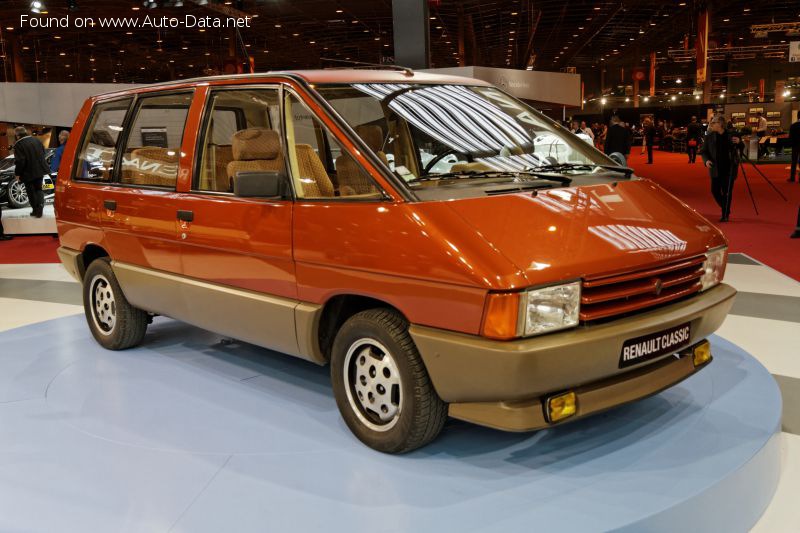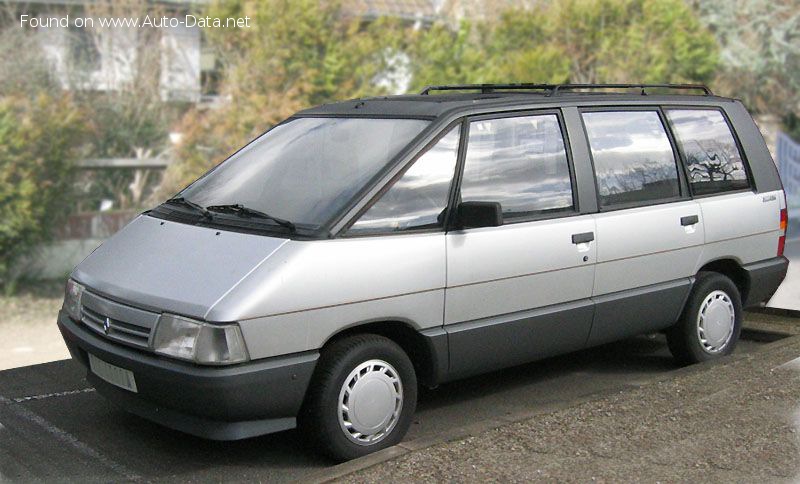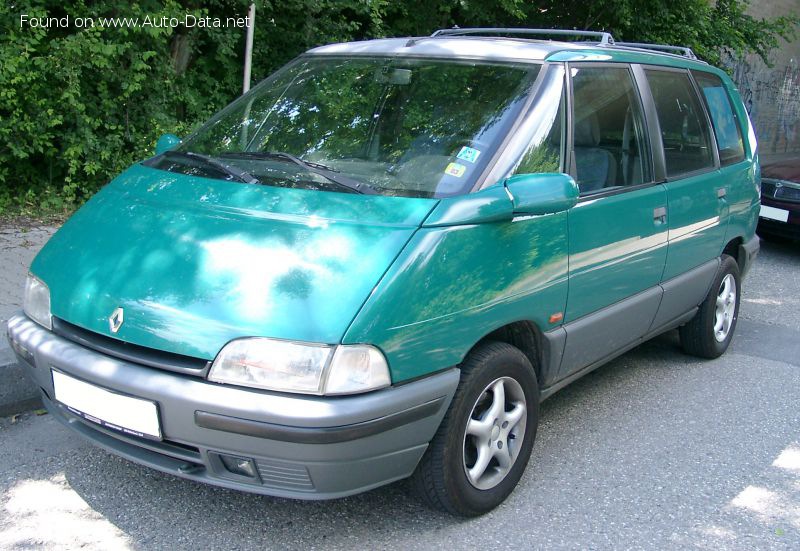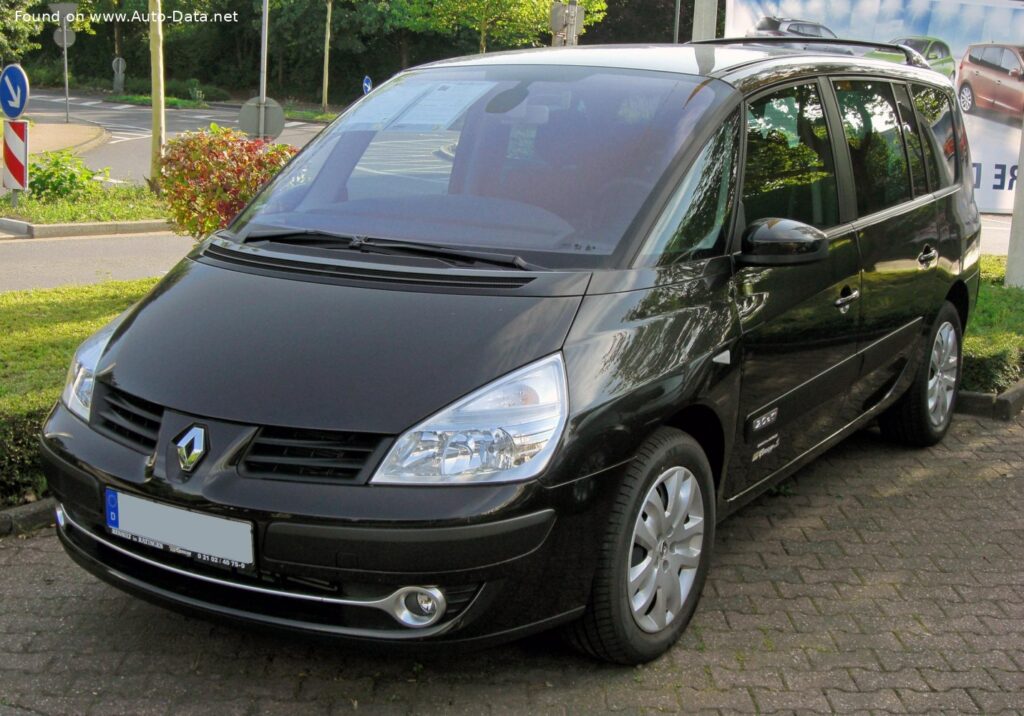
The Renault Espace IV (Phase II, 2006) represents a significant iteration of one of Europe’s most influential multi-purpose vehicles (MPVs). Launched in 2006 as a mid-cycle refresh (Phase II) of the fourth-generation Espace, this model continued Renault’s pioneering legacy in the family minivan segment. While never officially sold in the United States, the Espace has been a staple on European roads for decades, synonymous with spaciousness, versatility, and innovative design. The 2006 Phase II model, particularly with the 2.2 dCi (139 Hp) engine, was a popular choice for families seeking a practical, comfortable, and efficient vehicle capable of accommodating seven passengers and their luggage. It faced stiff competition in its home market but retained its reputation for bold styling and a focus on occupant well-being.
Renault Espace IV (Phase II, 2006) 2.2 dCi: A Detailed Overview
Engine & Performance
Under the hood, the Renault Espace IV (Phase II, 2006) 2.2 dCi featured a robust 2.2-liter (2188 cm3 or 133.52 cubic inches) inline-four diesel engine, designated with the G9T engine code. This powertrain was a cornerstone of the Espace lineup, offering a blend of usable power and respectable fuel economy, a crucial factor in the European market. The engine delivered a healthy 139 horsepower at 4000 rpm, which for a large family vehicle, provided adequate motivation for everyday driving and highway cruising. More importantly, its torque output was a substantial 236.02 pound-feet (320 Nm), available from a low 1750 rpm. This strong low-end torque was instrumental in providing brisk acceleration from a standstill and effortless overtaking, especially when the vehicle was fully loaded.
Power was delivered to the front wheels via a 5-speed automatic transmission, a common choice for its smooth operation and ease of use in urban environments, though some enthusiasts might have preferred a manual option for greater engagement. Performance figures for this 2.2 dCi variant included an acceleration from 0 to 60 mph in a calculated 13.2 seconds, and a top speed of 114.95 mph (185 km/h). While not sports car territory, these numbers were perfectly respectable for a vehicle of its size and purpose.
Fuel efficiency was a key selling point for diesel engines in Europe, and the Espace 2.2 dCi did not disappoint. It achieved a combined fuel economy of 25.6 US mpg (9.2 liters per 100 km), with urban consumption rated at 19.6 US mpg (12 liters per 100 km) and an impressive 31.4 US mpg (7.5 liters per 100 km) on extra-urban cycles. These figures, combined with an 83-liter (21.93 US gallon) fuel tank, provided a considerable cruising range, making it ideal for long family road trips. The engine complied with the Euro 4 emission standard, reflecting the environmental regulations of its era, with CO2 emissions of 244 g/km.
Design & Features
The Renault Espace IV (Phase II, 2006) maintained the distinctive, futuristic design language introduced with the fourth generation in 2002. As a minivan or MPV, its primary focus was on maximizing interior space and flexibility. The vehicle boasted a 5-door, 7-seat configuration, making it a highly practical choice for larger families or those requiring flexible seating arrangements. The rear seats could typically be removed or folded flat, transforming the Espace from a passenger carrier into a voluminous cargo hauler. With a minimum trunk space of 10.28 cubic feet (291 liters) and a cavernous maximum of 101 cubic feet (2860 liters) with the rear seats removed, its utility was unmatched in many segments.
Measuring 183.31 inches (4656 mm) in length, 73.23 inches (1860 mm) in width (74.57 inches or 1894 mm including mirrors), and 68.03 inches (1728 mm) in height, the Espace had a substantial road presence. Its wheelbase of 110.35 inches (2803 mm) contributed to a stable ride and generous interior room. Despite its size, a relatively tight minimum turning circle of 37.07 feet (11.3 meters) aided maneuverability in city settings.
From a safety perspective, the 2006 Espace was equipped with an Anti-lock Braking System (ABS) as standard, enhancing control during emergency braking. The braking system utilized ventilated discs at the front and solid discs at the rear, providing confident stopping power for a vehicle of its weight. The suspension setup featured an independent McPherson type at the front and a semi-independent, coil spring system at the rear, tuned for a comfortable ride quality characteristic of family-oriented vehicles. The 225/60 R16 tires on 16-inch wheels provided a good balance of comfort and grip. Practical features like a maximum roof load of 176.37 pounds (80 kg) and impressive towing capacities—4409.25 pounds (2000 kg) with brakes and 1653.47 pounds (750 kg) without—further underscored its versatility for active families.
Technical Specifications: Renault Espace IV (Phase II, 2006) 2.2 dCi (139 Hp)
| Category | Specification |
| General Information | |
| Brand | Renault |
| Model | Espace |
| Generation | Espace IV (Phase II, 2006) |
| Engine Type | 2.2 dCi (139 Hp) |
| Production Start | 2006 |
| Production End | 2007 |
| Body Type | Minivan, MPV |
| Seats | 7 |
| Doors | 5 |
| Performance Specifications | |
| Fuel Consumption (Urban) | 19.6 US mpg |
| Fuel Consumption (Extra Urban) | 31.4 US mpg |
| Fuel Consumption (Combined) | 25.6 US mpg |
| CO2 Emissions | 244 g/km |
| Fuel Type | Diesel |
| Acceleration 0-60 mph | 13.2 sec |
| Maximum Speed | 114.95 mph |
| Emission Standard | Euro 4 |
| Weight-to-Power Ratio | 14.2 kg/Hp |
| Engine Specifications | |
| Power | 139 Hp @ 4000 rpm |
| Torque | 236.02 lb.-ft. @ 1750 rpm |
| Engine Layout | Front, Transverse |
| Engine Model/Code | G9T |
| Engine Displacement | 2.2 Liters (133.52 cu. in.) |
| Number of Cylinders | 4 Inline |
| Cylinder Bore | 3.43 in. (87 mm) |
| Piston Stroke | 3.62 in. (92 mm) |
| Compression Ratio | 18:1 |
| Valves per Cylinder | 4 |
| Fuel Injection System | Diesel Commonrail |
| Engine Aspiration | Turbocharger, Intercooler |
| Valvetrain | DOHC |
| Engine Oil Capacity | 6.66 US qt |
| Coolant Capacity | 9.62 US qt |
| Dimensions, Volume & Weights | |
| Kerb Weight | 4343.11 lbs. (1970 kg) |
| Max. Weight | 5809.18 lbs. (2635 kg) |
| Max Load | 1466.07 lbs. (665 kg) |
| Trunk (boot) Space – Minimum | 10.28 cu. ft. (291 l) |
| Trunk (boot) Space – Maximum | 101 cu. ft. (2860 l) |
| Fuel Tank Capacity | 21.93 US gal (83 l) |
| Max. Roof Load | 176.37 lbs. (80 kg) |
| Permitted Trailer Load (with brakes) | 4409.25 lbs. (2000 kg) |
| Permitted Trailer Load (without brakes) | 1653.47 lbs. (750 kg) |
| Length | 183.31 in. (4656 mm) |
| Width | 73.23 in. (1860 mm) |
| Width (incl. mirrors) | 74.57 in. (1894 mm) |
| Height | 68.03 in. (1728 mm) |
| Wheelbase | 110.35 in. (2803 mm) |
| Front Track | 61.97 in. (1574 mm) |
| Rear Track | 61.26 in. (1556 mm) |
| Ride Height (Ground Clearance) | 4.72 in. (120 mm) |
| Minimum Turning Circle | 37.07 ft. (11.3 m) |
| Drivetrain, Brakes & Suspension | |
| Drivetrain Architecture | Front-wheel drive |
| Gearbox Type | 5 gears, automatic transmission |
| Front Suspension | Independent type McPherson |
| Rear Suspension | Semi-independent, coil spring |
| Front Brakes | Ventilated discs |
| Rear Brakes | Disc |
| Assisting Systems | ABS (Anti-lock braking system) |
| Steering Type | Steering rack and pinion |
| Tire Size | 225/60 R16 |
| Wheel Rims Size | 16 inches |
Legacy and Market Impact: The Enduring Appeal of the Espace
The Renault Espace has a storied history as one of the automotive world’s original and most successful minivans. Its initial launch in 1984, long before the term “MPV” became commonplace, revolutionized family transport in Europe, offering unprecedented levels of space and modularity. The fourth generation, introduced in 2002 and refreshed in 2006, continued this tradition, adapting to evolving consumer preferences and stricter environmental standards. The Renault Espace IV (Phase II, 2006) with its 2.2 dCi engine was a testament to Renault’s commitment to the segment, even as SUVs began to gain traction.
In its primary European market, the Espace competed fiercely with other established players in the large MPV segment, such as the Ford Galaxy, Volkswagen Sharan, Peugeot 807, and Citroën C8. What set the Espace apart was often its distinctive styling – a blend of minivan practicality with a more car-like aesthetic – and its focus on interior design, comfort, and safety innovations. The Phase II refresh brought subtle but important updates, keeping the model competitive in a rapidly changing market.
The 2.2 dCi engine, while offering solid performance and efficiency for its time, was part of a broader shift towards diesel powertrains in Europe, lauded for their fuel economy and torque characteristics. The Espace’s robust build, combined with its flexible interior and comfortable ride, cemented its reputation as a reliable and highly functional family vehicle. Its ability to serve as both a comfortable long-distance cruiser and a practical urban transporter contributed significantly to its enduring popularity.
While the Espace never crossed the Atlantic to the American market, its influence on global automotive design and the concept of the family vehicle is undeniable. It helped define the MPV segment, showcasing how a vehicle could be both utilitarian and stylish, prioritizing passenger comfort and versatility. The Renault Espace IV (Phase II, 2006) stands as a robust example of a European automotive icon, a vehicle that expertly blended practicality, technology, and distinctive design to meet the complex demands of families across the continent during the mid-2000s. Its legacy continues to shape the evolution of family vehicles, even as the market shifts towards crossover and SUV designs.