
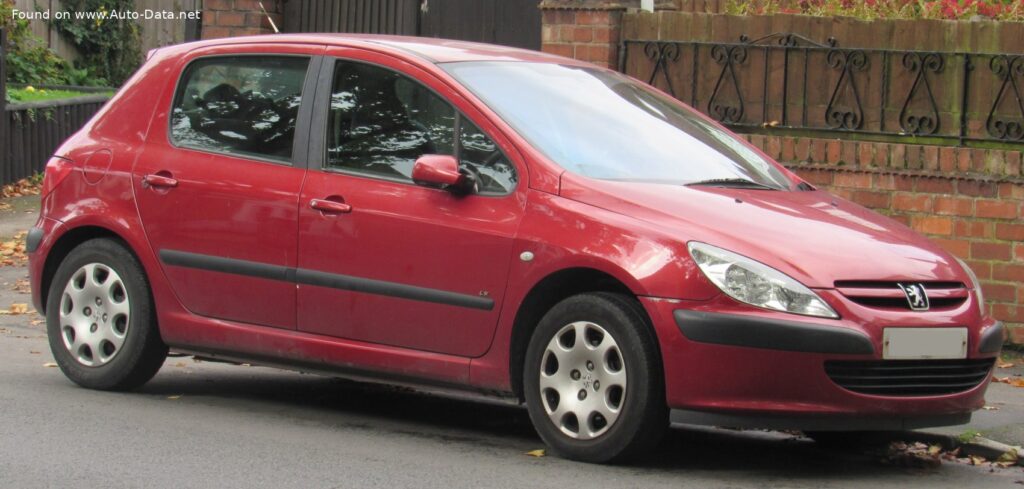
The Peugeot 307 2.0 HDI (136 Hp) was a mainstay of the European compact car market between 2003 and 2005. Classified as a C-segment vehicle, it represented Peugeot’s offering in a highly competitive class, succeeding the popular 306. The 307 aimed to improve upon its predecessor with a distinctive “tall boy” design, prioritizing interior space and visibility. Recognized as the European Car of the Year in 2002, the 307, and specifically the 2.0 HDI variant, became known for its blend of practicality, fuel efficiency, and respectable performance. This model catered to drivers seeking an economical yet capable vehicle for both daily commutes and longer journeys.
Engine & Performance
The 2003-2005 Peugeot 307 2.0 HDI (136 Hp) was powered by a 2.0-liter (1997 cm3 or 121.86 cu. in.) inline-four turbodiesel engine, designated RHR DW10BTED4. This engine showcased Peugeot’s expertise in diesel technology, incorporating a common rail fuel injection system, a turbocharger, and an intercooler. These features enabled the engine to produce 136 horsepower at 4000 rpm and 236.02 lb.-ft. (320 Nm) of torque at just 2000 rpm. The readily available torque, a hallmark of diesel engines, provided strong in-gear acceleration and confident performance in diverse driving scenarios.
The engine was paired with a 6-speed manual transmission, delivering power to the front wheels. This combination allowed the 307 2.0 HDI to accelerate from 0 to 60 mph in 9.3 seconds, reaching a top speed of 125.52 mph (202 km/h). However, the vehicle’s true strength lay in its fuel economy. It achieved a combined fuel economy of 43.6 US mpg (5.4 l/100 km), with highway figures reaching an impressive 52.3 US mpg (4.5 l/100 km). These figures were exceptional for the time, making it an economical choice for European drivers, particularly those who frequently traveled long distances. The vehicle’s CO2 emissions were rated at 142 g/km, meeting the Euro 4 emission standard, a significant environmental achievement for a diesel vehicle of that era.
Design & Features
The Peugeot 307 was available in both 3-door and 5-door hatchback body styles, featuring a distinctive design that balanced practicality with aesthetics. Its “tall boy” architecture, characterized by a high roofline and steeply raked windshield, created a spacious and airy cabin. This design not only enhanced headroom for all five occupants but also improved outward visibility, contributing to a more comfortable and confident driving experience. The vehicle measured 165.43 inches (4202 mm) in length, 68.11 inches (1730 mm) in width, and 59.53 inches (1512 mm) in height.
The interior offered seating for five passengers and a practical trunk space of 12.04 cu. ft. (341 liters) with the rear seats up, expanding to 46.9 cu. ft. (1328 liters) when folded down. The vehicle’s kerb weight was 2943.17 lbs. (1335 kg), with a maximum permissible load of 1009.72 lbs. (458 kg). The chassis featured a front suspension with a spring strut (MacPherson strut equivalent) design and a rear torsion beam setup, providing a balance between ride comfort and handling stability. Braking was handled by ventilated discs at the front and solid discs at the rear, equipped with an Anti-lock Braking System (ABS), a crucial safety feature for vehicles of this class. Hydraulic power steering, a rack and pinion system, offered good feedback and maneuverability, particularly in urban environments, with a minimum turning circle of 36.52 ft. (11.13 m). The car rode on 205/55 R16 tires mounted on 16-inch wheel rims, offering a compromise between grip and ride comfort.
Peugeot 307 Technical Specifications
Below are the detailed technical specifications for the 2003-2005 Peugeot 307 2.0 HDI (136 Hp).
| Category | Specification |
| General Information | |
| Brand | Peugeot |
| Model | 307 |
| Generation | 307 |
| Type (Engine) | 2.0 HDI (136 Hp) |
| Start of Production | 2003 |
| End of Production | 2005 |
| Powertrain Architecture | Internal Combustion Engine |
| Body Type | Hatchback |
| Seats | 5 |
| Doors | 3-5 |
| Performance Specs | |
| Fuel Consumption (City) | 33.1 US mpg (7.1 l/100 km) |
| Fuel Consumption (Highway) | 52.3 US mpg (4.5 l/100 km) |
| Fuel Consumption (Combined) | 43.6 US mpg (5.4 l/100 km) |
| CO2 Emissions | 142 g/km |
| Fuel Type | Diesel |
| Acceleration 0-60 mph | 9.3 sec |
| Acceleration 0-62 mph (0-100 km/h) | 9.8 sec |
| Maximum Speed | 125.52 mph (202 km/h) |
| Emission Standard | Euro 4 |
| Weight-to-Power Ratio | 9.8 kg/Hp (101.9 Hp/tonne) |
| Weight-to-Torque Ratio | 4.2 kg/Nm (239.7 Nm/tonne) |
| Engine Specs | |
| Power | 136 Hp @ 4000 rpm |
| Power per Liter | 68.1 Hp/l |
| Torque | 236.02 lb.-ft. (320 Nm) @ 2000 rpm |
| Engine Layout | Front, Transverse |
| Engine Model/Code | RHR DW10BTED4 |
| Engine Displacement | 2.0 liters (1997 cm3 / 121.86 cu. in.) |
| Number of Cylinders | 4 |
| Engine Configuration | Inline |
| Cylinder Bore | 3.35 in. (85 mm) |
| Piston Stroke | 3.46 in. (88 mm) |
| Compression Ratio | 17.6:1 |
| Valves per Cylinder | 4 |
| Fuel Injection System | Diesel Commonrail |
| Engine Aspiration | Turbocharger, Intercooler |
| Valvetrain | DOHC |
| Engine Oil Capacity | 5.55 US qt (5.25 l) |
| Coolant Capacity | 8.56 US qt (8.1 l) |
| Space, Volume and Weights | |
| Kerb Weight | 2943.17 lbs. (1335 kg) |
| Max. Weight (Gross Vehicle Weight) | 3952.89 lbs. (1793 kg) |
| Max Load | 1009.72 lbs. (458 kg) |
| Trunk Space (Min) | 12.04 cu. ft. (341 l) |
| Trunk Space (Max) | 46.9 cu. ft. (1328 l) |
| Fuel Tank Capacity | 15.85 US gal (60 l) |
| Permitted Trailer Load (with brakes) | 3086.47 lbs. (1400 kg) |
| Permitted Trailer Load (without brakes) | 1543.24 lbs. (700 kg) |
| Dimensions | |
| Length | 165.43 in. (4202 mm) |
| Width | 68.11 in. (1730 mm) |
| Height | 59.53 in. (1512 mm) |
| Wheelbase | 102.68 in. (2608 mm) |
| Front Track | 59.25 in. (1505 mm) |
| Rear Track | 59.06 in. (1500 mm) |
| Ride Height (Ground Clearance) | 4.72 in. (120 mm) |
| Drag Coefficient (Cd) | 0.31 |
| Minimum Turning Circle | 36.52 ft. (11.13 m) |
| Drivetrain, Brakes and Suspension Specs | |
| Drivetrain Architecture | Front-wheel drive, Internal Combustion Engine |
| Drive Wheel | Front Wheel Drive |
| Number of Gears | 6 |
| Type of Gearbox | Manual Transmission |
| Front Suspension | Spring Strut |
| Rear Suspension | Torsion Beam |
| Front Brakes | Ventilated Discs |
| Rear Brakes | Disc |
| Assisting Systems | ABS (Anti-lock Braking System) |
| Steering Type | Steering rack and pinion |
| Power Steering | Hydraulic Steering |
| Tire Size | 205/55 R16 |
| Wheel Rims Size | 16 inches |
Legacy and Market Impact
The Peugeot 307 2.0 HDI (136 Hp) established a strong presence in the European compact car segment during its production run. It directly competed with models like the Volkswagen Golf, Ford Focus, Opel Astra, and Renault Mégane. The 307 distinguished itself through its practical design, robust diesel performance, and exceptional fuel economy. In an era of growing diesel popularity in Europe, driven by its efficiency and lower running costs, the 307 2.0 HDI offered a compelling package that appealed to a broad range of drivers, from families to business users.
The “Car of the Year” award in 2002 recognized its innovative design and engineering, particularly its spacious interior and dynamic capabilities. The 2.0 HDI (136 Hp) engine gained a reputation for its smooth power delivery, reliability, and impressive torque, making it ideal for long-distance travel. The vehicle’s strong sales performance significantly contributed to Peugeot’s market share in the C-segment, solidifying its position in the European automotive market. While not available in the United States, the 307 exemplified European consumer preferences, demonstrating how a well-engineered diesel engine could redefine expectations for performance and efficiency in a compact family car. Its legacy influenced subsequent Peugeot models, including the 308, continuing the brand’s commitment to design, practicality, and advanced powertrain technologies.
