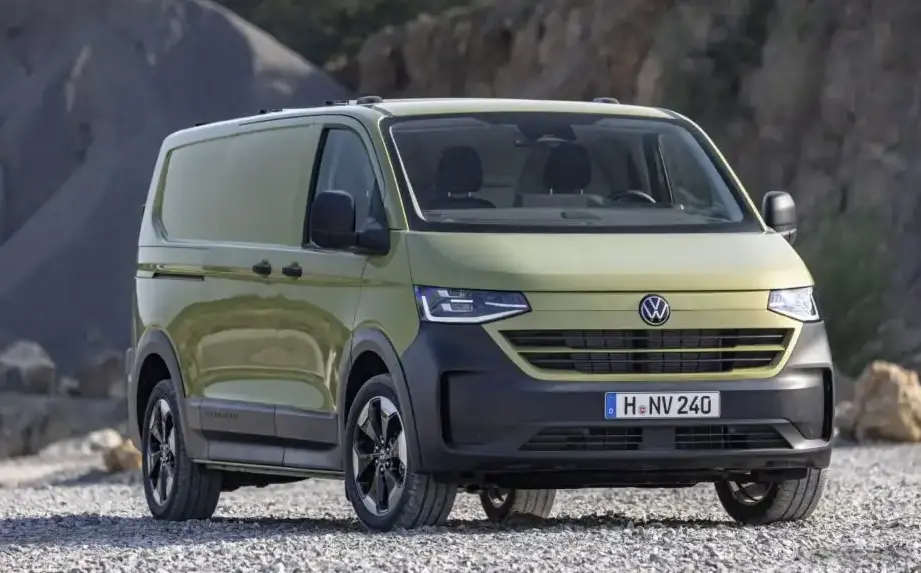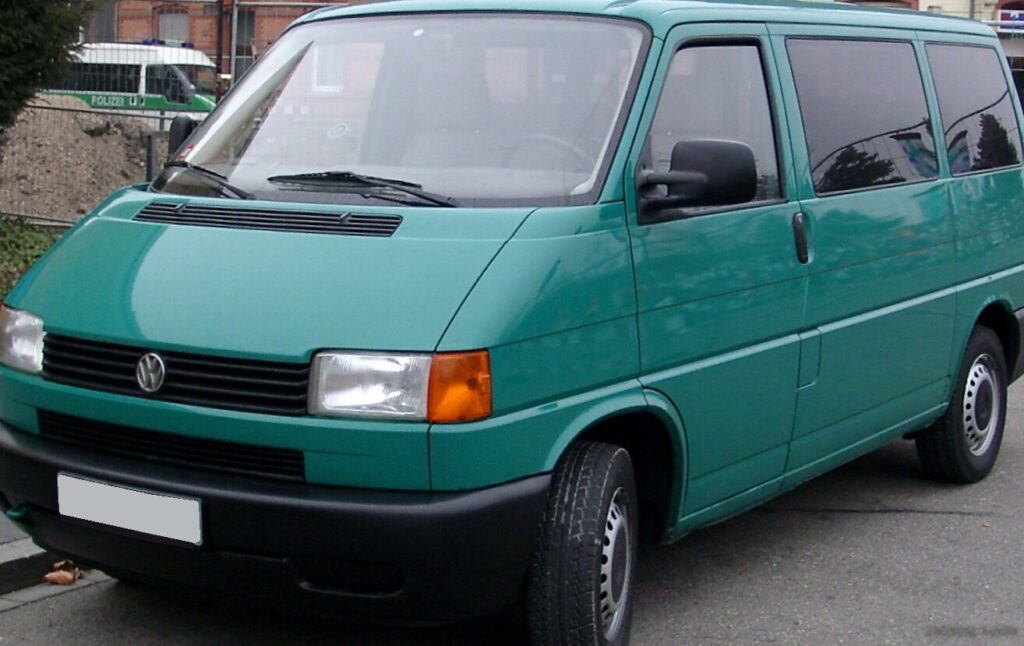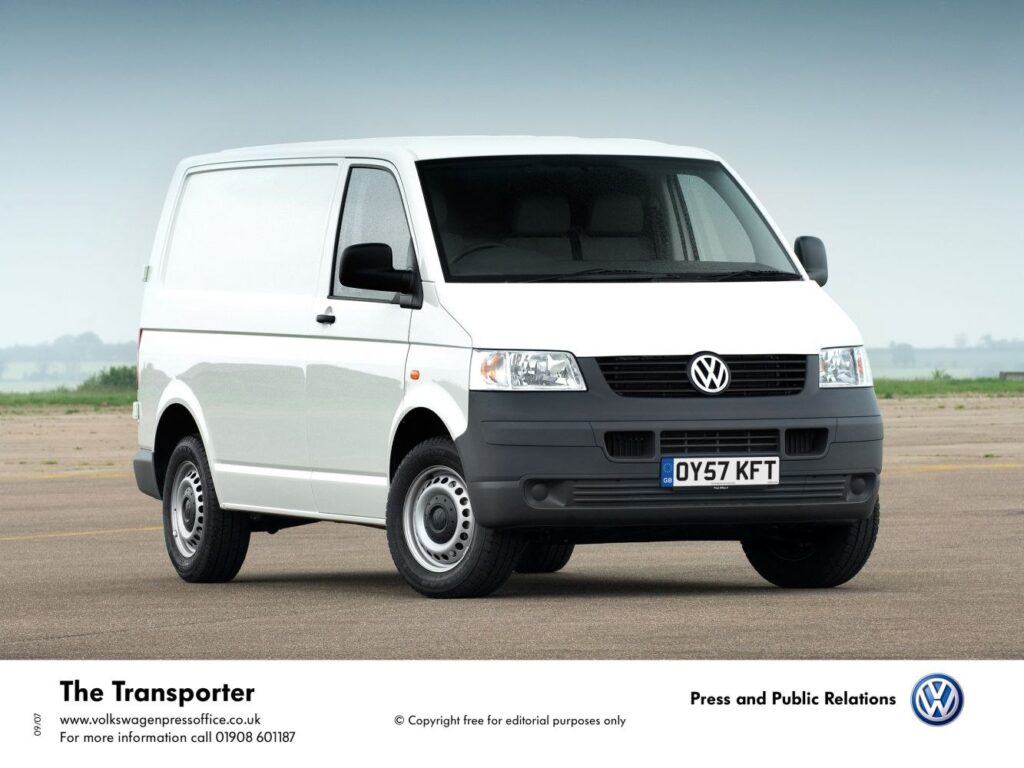
The Volkswagen Transporter (T5) Panel Van represents the fifth generation of Volkswagen’s iconic light commercial vehicle range, a lineage that traces its roots back to the original Type 2 “Bus” of the 1950s. Introduced in 2003, the T5 generation continued the Transporter’s legacy of versatility, robust engineering, and practicality, primarily serving the demanding commercial markets of Europe and other international regions where it was a staple for businesses and tradespeople. The specific variant, the 2.5 TDI (174 Hp) L1H2, was a particularly potent and capable model within the T5 lineup, produced between 2003 and 2006. This configuration, denoted by “L1H2,” signifies a standard wheelbase (L1) combined with a high roof (H2), optimizing cargo capacity for a wide range of professional applications. While the Transporter series is not typically sold in the United States, it holds immense significance as a benchmark in the European light commercial vehicle segment, known for its blend of performance, efficiency, and durable construction.
Volkswagen Transporter (T5) Panel Van: A European Workhorse
Origins and Market Position
The Volkswagen Transporter has a storied history, beginning with the original Type 2, which quickly became a symbol of freedom and practicality. The T5 continued this tradition, evolving into a modern workhorse designed to meet the needs of European businesses. Unlike many American vans focused on passenger comfort, the T5 prioritized cargo capacity, durability, and operational efficiency. It competed directly with models like the Mercedes-Benz Vito, Ford Transit, and Renault Trafic, establishing itself as a leader in the segment.
Engine & Performance
The Volkswagen Transporter (T5) Panel Van 2.5 TDI (174 Hp) L1H2 was powered by a 2.5-liter, five-cylinder inline diesel engine (Engine Code: EA153 / AXE). This engine was a cornerstone of Volkswagen’s commercial vehicle offerings, known for its robust construction and reliable performance. Utilizing a single overhead camshaft (SOHC) valvetrain with two valves per cylinder, the engine employed Volkswagen’s advanced pump-nozzle (unit injector) fuel injection system. This technology allowed for precise fuel delivery, maximizing power output and fuel economy.
The engine, coupled with a turbocharger and intercooler, produced 174 horsepower at 3500 rpm. However, the true strength of this powerplant lay in its torque output. It generated an impressive 295.02 lb.-ft. of torque, available across a broad range from 2000 to 2300 rpm. This high torque figure was crucial for handling heavy loads and maintaining momentum, essential for commercial applications. Power was delivered to the front wheels through a smooth and durable 6-speed manual transmission, providing optimal gearing for both city driving and highway cruising.
Performance figures for the 2.5 TDI L1H2 were respectable for a commercial vehicle. Acceleration from 0 to 60 mph was achieved in 11.8 seconds, with a top speed of 113.09 mph. Fuel economy was also a strong point, with an extra-urban consumption of approximately 36.2 US mpg. The engine met Euro 3 emission standards, reflecting the environmental regulations of the time. The vehicle’s weight-to-power ratio was 10.9 kg/Hp (24.03 lbs/Hp), indicating a favorable balance between power and weight for a panel van.
Design & Features
The design of the Volkswagen Transporter (T5) Panel Van prioritized functionality and durability. The L1H2 configuration, with its standard length and high roof, provided a substantial cargo volume of up to 236.61 cubic feet. This generous space, combined with a maximum payload capacity of 1973.14 lbs., made it ideal for transporting goods, tools, and equipment. The van typically featured 4-5 doors, including a sliding side door for easy cargo access and rear barn doors for convenient loading and unloading.
The T5 L1H2 measured 192.52 inches in length, 74.96 inches in width (88.27 inches including mirrors), and 85.04 inches in height. Its 118.11-inch wheelbase contributed to a stable ride, while a minimum turning circle of 39.04 feet aided maneuverability in urban environments. The vehicle featured an independent suspension system, with McPherson struts and an anti-roll bar at the front, and an independent coil spring system with a transverse stabilizer and trailing arms at the rear. This sophisticated suspension ensured a comfortable ride even when fully loaded, along with predictable handling.
Safety features included an Anti-lock Braking System (ABS) and ventilated disc brakes (12.13 x 1.16 inches front, 11.57 x 0.87 inches rear). Hydraulic power steering, a rack and pinion system, provided precise control and ease of maneuvering. Standard tire size was 215/65 R16, mounted on 6.5J x 16-inch wheel rims, offering a balance of load-carrying capacity and ride comfort. The interior was designed for 2-3 occupants, offering a utilitarian yet functional workspace.
Technical Specifications
| Category | Specification |
| General Information | |
| Brand | Volkswagen |
| Model | Transporter |
| Generation | Transporter (T5) Panel Van |
| Type (Engine) | 2.5 TDI (174 Hp) L1H2 |
| Production Start | 2003 |
| Production End | 2006 |
| Powertrain Architecture | Internal Combustion Engine |
| Body Type | Van |
| Seats | 2-3 |
| Doors | 4-5 |
| Performance Specifications | |
| Fuel Consumption (Extra Urban) | 36.2 US mpg |
| Fuel Type | Diesel |
| Acceleration 0-60 mph | 11.8 seconds |
| Maximum Speed | 113.09 mph |
| Emission Standard | Euro 3 |
| Weight-to-Power Ratio | 24.03 lbs/Hp |
| Weight-to-Torque Ratio | 10.58 lbs/lb.-ft. |
| Engine Specifications | |
| Power | 174 Hp @ 3500 rpm |
| Power per Liter | 70.7 Hp/l |
| Torque | 295.02 lb.-ft. @ 2000-2300 rpm |
| Engine Layout | Front, Transverse |
| Engine Model/Code | EA153 / AXE |
| Engine Displacement | 2.46 Liters (150.12 cu. in.) |
| Number of Cylinders | 5 |
| Engine Configuration | Inline |
| Cylinder Bore | 3.19 in. |
| Piston Stroke | 3.76 in. |
| Compression Ratio | 18.5:1 |
| Valves per Cylinder | 2 |
| Fuel Injection System | Pump-nozzle (Unit Injector) |
| Engine Aspiration | Turbocharger, Intercooler |
| Valvetrain | SOHC |
| Engine Oil Capacity | 7.82 US qt |
| Coolant Capacity | 7.5 US qt |
| Space, Volume and Weights | |
| Kerb Weight | 4199.81 – 4640.73 lbs. |
| Max. Weight (GVWR) | 6172.94 – 6613.87 lbs. |
| Max Load (Payload) | 1973.14 lbs. |
| Trunk (Boot) Space – Maximum | 236.61 cu. ft. |
| Fuel Tank Capacity | 21.13 US gal |
| Permitted Trailer Load with Brakes (8%) | 5511.56 lbs. |
| Permitted Trailer Load with Brakes (12%) | 5511.56 lbs. |
| Permitted Trailer Load without Brakes | 1653.47 lbs. |
| Permitted Towbar Download | 220.46 lbs. |
| Dimensions | |
| Length | 192.52 in. |
| Width | 74.96 in. |
| Width Including Mirrors | 88.27 in. |
| Height | 85.04 in. |
| Wheelbase | 118.11 in. |
| Front Track | 64.09 in. |
| Rear (Back) Track | 64.09 in. |
| Front Overhang | 35.2 in. |
| Rear Overhang | 39.21 in. |
| Ride Height (Ground Clearance) | 6.5 in. |
| Minimum Turning Circle | 39.04 ft. |
| Approach Angle | 22° |
| Departure Angle | 16° |
| Ramp-over (Brakeover) Angle | 14° |
| Wading Depth | 11.81 in. |
| Drivetrain, Brakes and Suspension | |
| Drivetrain Architecture | Front-wheel drive, Internal Combustion Engine |
| Drive Wheel | Front wheel drive |
| Number of Gears and Type of Gearbox | 6 gears, manual transmission |
| Front Suspension | Independent, McPherson with coil spring and anti-roll bar |
| Rear Suspension | Independent coil spring, Transverse stabilizer, Trailing arm |
| Front Brakes | Ventilated discs, 12.13 x 1.16 in. |
| Rear Brakes | Ventilated discs, 11.57 x 0.87 in. |
| Assisting Systems | ABS (Anti-lock Braking System) |
| Steering Type | Steering rack and pinion |
| Power Steering | Hydraulic Steering |
| Tires Size | 215/65 R16 |
| Wheel Rims Size | 6.5J x 16 |
Legacy and Market Impact
The Volkswagen Transporter (T5) Panel Van, particularly robust variants like the 2.5 TDI (174 Hp) L1H2, cemented its reputation as a leading light commercial vehicle in its primary European market. It continued the Transporter’s long-standing tradition of being the benchmark for practicality, reliability, and versatility in the van segment. The T5, following the success of its T4 predecessor, was a critical model for Volkswagen Commercial Vehicles, offering a diverse range of configurations to suit various business needs, from logistics and construction to passenger transport (as the Multivan or California camper).
In its competitive landscape, the T5 faced strong rivals such as the Mercedes-Benz Vito, Ford Transit Custom, and Renault Trafic. However, the Transporter consistently stood out for its car-like driving dynamics, high build quality, and strong resale value. The 2.5 TDI engine was particularly praised for its potent performance and impressive longevity, making it a favorite among operators who required both power for heavy loads and efficiency for operational costs. Its robust drivetrain, advanced independent suspension, and well-engineered chassis contributed to a comfortable and stable driving experience, often superior to many of its contemporaries.
The T5 generation also saw improvements in safety and driver comfort, incorporating features that were becoming standard in passenger cars. Its enduring design and mechanical resilience meant that many T5s continued to serve their owners reliably for well over a decade, contributing to its strong secondary market. The Volkswagen Transporter (T5) Panel Van became synonymous with dependability and efficiency for European businesses, building upon a heritage that spans over 70 years and continues to evolve with subsequent generations like the T6 and T7. Its impact lies in its consistent ability to meet the rigorous demands of commercial use while offering an experience that elevated it beyond a mere utility vehicle.