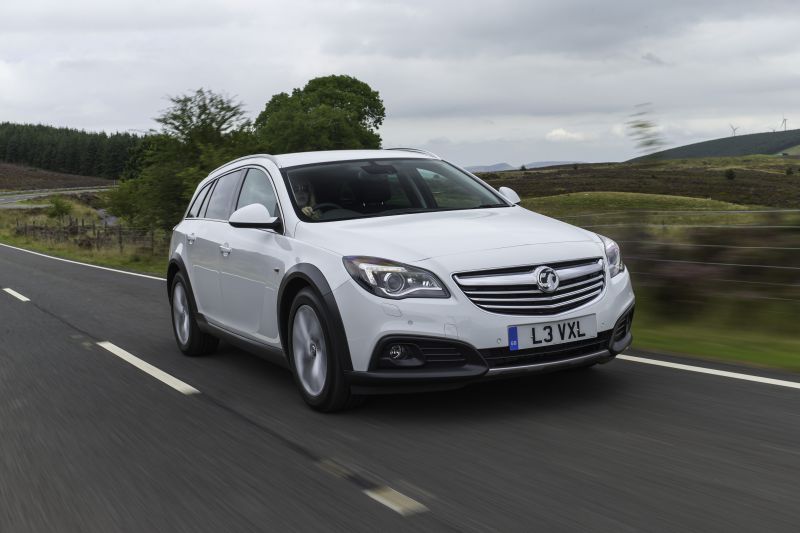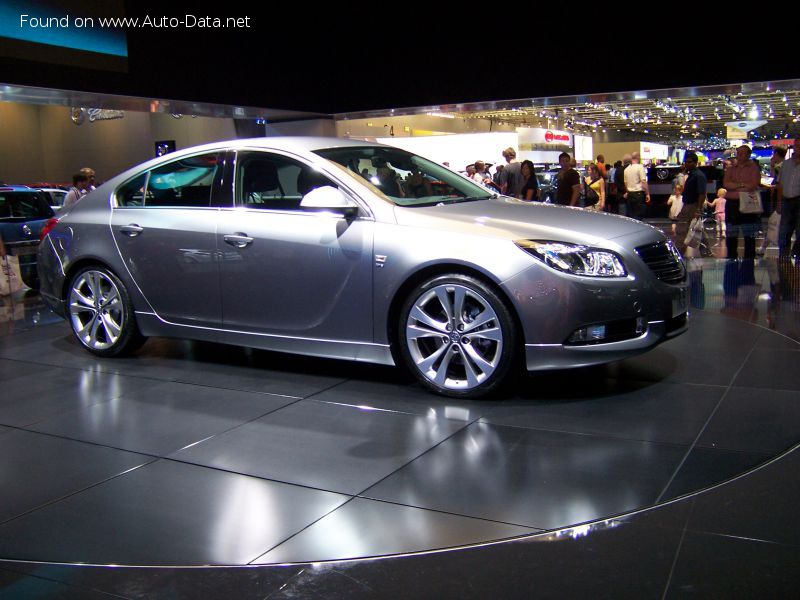
The Vauxhall Insignia I Saloon (facelift 2013) 1.4i Turbo ecoTEC (140 Hp) Start/Stop represents a significant iteration of Vauxhall’s flagship D-segment (mid-size) offering for the British market. Launched in 2014 as part of the refreshed first-generation Insignia line-up, this particular variant emphasized efficiency and modern driving dynamics, positioning itself as a compelling choice for families and fleet buyers across the United Kingdom and continental Europe (where it was sold as the Opel Insignia). While the Vauxhall brand is exclusive to the UK, the Insignia platform itself was a global General Motors product, underpinning models like the Buick Regal in the United States, albeit with different powertrain configurations and badging. The 2013 facelift brought a more refined exterior, an updated interior, and a host of technological improvements, including a focus on downsized, turbocharged engines like the 1.4-liter ecoTEC unit, designed to meet increasingly stringent emissions standards like Euro 6 while offering a balance of performance and fuel economy.
During its production run from 2014 to 2017, this Insignia variant showcased Vauxhall’s commitment to delivering a sophisticated and practical vehicle that could compete effectively against established rivals in a highly competitive segment. Its blend of a spacious sedan body, a responsive turbocharged engine, and efficiency-enhancing features like the Start/Stop system made it a well-rounded contender for those seeking a comfortable and economical daily driver.
Engine & Performance of the Vauxhall Insignia I Saloon
At the heart of this particular Vauxhall Insignia is the 1.4-liter (1364 cm³ or 83.24 cu. in.) Turbo ecoTEC gasoline engine, designated B14NET. This inline four-cylinder unit is a testament to the trend of engine downsizing, delivering robust performance typically associated with larger displacement engines, but with enhanced fuel efficiency. The engine features a sophisticated architecture, including a DOHC (Double Overhead Camshaft) valvetrain with VVT (Variable Valve Timing), multi-port manifold injection, and is boosted by a turbocharger with an intercooler to optimize air intake and power delivery.
The engine generates a respectable 140 horsepower (Hp) at a broad range of 4900-6000 revolutions per minute (rpm). More impressively for a small-displacement unit, it produces 200 Nm (147.51 lb.-ft.) of torque, available from a low 1850 rpm and sustained up to 4900 rpm. This wide torque band ensures responsive acceleration and flexible driving, reducing the need for frequent gear changes, especially in urban environments or when overtaking. Power is sent to the front wheels via a smooth-shifting 6-speed manual transmission, a common and preferred choice in the European market for its driver engagement and efficiency benefits.
Performance figures for the Insignia 1.4i Turbo ecoTEC are competitive for its class and engine size. It can accelerate from 0 to 60 mph in a calculated 10.4 seconds (0-100 km/h in 10.9 seconds) and reach a maximum speed of 126.76 mph (204 km/h). These figures indicate that while not a sports sedan, it offers ample power for highway cruising and daily commuting. The inclusion of a Start/Stop system further enhances its efficiency, automatically shutting off the engine when the vehicle is stationary and restarting it seamlessly when the driver intends to move, thereby reducing fuel consumption and emissions in city traffic. This system, combined with the ecoTEC engine’s inherent efficiency, results in impressive fuel economy figures: an urban consumption of 34.6 US mpg, an extra-urban (highway) consumption of 54.7 US mpg, and a combined average of 45.2 US mpg. With CO2 emissions of 123 g/km, the vehicle complies with the stringent Euro 6 emission standard, making it an environmentally conscious choice for its time.
Design & Features
The 2013 facelift of the Vauxhall Insignia I Saloon brought a more contemporary and premium aesthetic to the large sedan. The body type remained a classic four-door sedan, designed to comfortably seat five occupants. The exterior redesign included a wider, lower grille, revised headlamps with LED daytime running lights, and updated tail lamps, giving the car a more assertive and modern presence on the road. Its dimensions are substantial for a mid-size sedan, measuring 190.63 inches (4842 mm) in length, 73.07 inches (1856 mm) in width (82.05 inches or 2084 mm including mirrors), and 58.98 inches (1498 mm) in height, with a generous wheelbase of 107.76 inches (2737 mm). These dimensions contribute to a spacious cabin and a substantial road presence.
Inside, the facelifted Insignia received a significant overhaul, focusing on improved ergonomics and material quality. While specific interior features are not detailed in the provided data, a vehicle of this segment and era would typically offer a comprehensive infotainment system, climate control, power windows and mirrors, and a range of comfort-oriented amenities. The trunk space is notably generous, offering a minimum of 17.66 cubic feet (500 liters), which can expand to a maximum of 35.84 cubic feet (1015 liters) with the rear seats folded, providing ample cargo capacity for luggage or larger items.
Underneath its sleek exterior, the Insignia utilized a well-engineered chassis designed for comfort and confident handling. The front suspension employs an independent McPherson strut setup with coil springs and an anti-roll bar, while the rear features an independent multi-link suspension. This combination provides a compliant ride quality, effectively absorbing road imperfections, while maintaining stability and control. Braking performance is handled by ventilated discs at the front and solid discs at the rear, complemented by an Anti-lock Braking System (ABS) for enhanced safety during emergency stops. The car rides on 215/60 R16 tires fitted to 16-inch wheel rims, a common specification for balancing comfort, grip, and efficiency. The minimum turning circle of 37.4 feet (11.4 meters) indicates reasonable maneuverability for a vehicle of its size.
Technical Specifications
| Category | Specification |
| General Information | |
| Brand | Vauxhall |
| Model | Insignia |
| Generation | Insignia I Saloon (facelift 2013) |
| Type (Engine) | 1.4i Turbo ecoTEC (140 Hp) Start/Stop |
| Start of Production | 2014 year |
| End of Production | 2017 year |
| Powertrain Architecture | Internal Combustion engine |
| Body type | Sedan |
| Seats | 5 |
| Doors | 4 |
| Performance Specs | |
| Fuel consumption (economy) – urban | 6.8 l/100 km (34.6 US mpg) |
| Fuel consumption (economy) – extra urban | 4.3 l/100 km (54.7 US mpg) |
| Fuel consumption (economy) – combined | 5.2 l/100 km (45.2 US mpg) |
| CO2 emissions | 123 g/km |
| Fuel Type | Petrol (Gasoline) |
| Acceleration 0 – 60 mph | 10.4 sec |
| Acceleration 0 – 100 km/h | 10.9 sec |
| Maximum speed | 204 km/h (126.76 mph) |
| Emission standard | Euro 6 |
| Weight-to-power ratio | 10.8 kg/Hp (92.5 Hp/tonne) |
| Weight-to-torque ratio | 7.6 kg/Nm (132.2 Nm/tonne) |
| Engine Specs | |
| Power | 140 Hp @ 4900-6000 rpm |
| Power per liter | 102.6 Hp/l |
| Torque | 200 Nm (147.51 lb.-ft.) @ 1850-4900 rpm |
| Engine layout | Front, Transverse |
| Engine Model/Code | B14NET |
| Engine displacement | 1364 cm³ (83.24 cu. in.) |
| Number of cylinders | 4 |
| Engine configuration | Inline |
| Cylinder Bore | 72.5 mm (2.85 in.) |
| Piston Stroke | 82.6 mm (3.25 in.) |
| Compression ratio | 9.5:1 |
| Number of valves per cylinder | 4 |
| Fuel injection system | Multi-port manifold injection |
| Engine aspiration | Turbocharger, Intercooler |
| Valvetrain | DOHC, VVT |
| Engine oil capacity | 4 l (4.23 US qt) |
| Coolant | 9 l (9.51 US qt) |
| Engine systems | Start & Stop System |
| Space, Volume and Weights | |
| Kerb Weight | 1513 kg (3335.59 lbs.) |
| Trunk (boot) space – minimum | 500 l (17.66 cu. ft.) |
| Trunk (boot) space – maximum | 1015 l (35.84 cu. ft.) |
| Fuel tank capacity | 70 l (18.49 US gal) |
| Permitted trailer load with brakes (12%) | 1250 kg (2755.78 lbs.) |
| Permitted trailer load without brakes | 730 kg (1609.37 lbs.) |
| Dimensions | |
| Length | 4842 mm (190.63 in.) |
| Width | 1856 mm (73.07 in.) |
| Width including mirrors | 2084 mm (82.05 in.) |
| Height | 1498 mm (58.98 in.) |
| Wheelbase | 2737 mm (107.76 in.) |
| Front overhang | 1027 mm (40.43 in.) |
| Rear overhang | 1078 mm (42.44 in.) |
| Minimum turning circle (turning diameter) | 11.4 m (37.4 ft.) |
| Drivetrain, Brakes and Suspension Specs | |
| Drivetrain Architecture | The Internal combustion engine (ICE) drives the front wheels of the vehicle. |
| Drive wheel | Front wheel drive |
| Number of gears and type of gearbox | 6 gears, manual transmission |
| Front suspension | Independent, type McPherson with coil spring and anti-roll bar |
| Rear suspension | Independent multi-link suspension |
| Front brakes | Ventilated discs |
| Rear brakes | Disc |
| Assisting systems | ABS (Anti-lock braking system) |
| Tires size | 215/60 R16 |
| Wheel rims size | 16 |
The Vauxhall Insignia I, particularly in its facelifted 2013 guise, played a crucial role in Vauxhall’s product portfolio as its primary offering in the competitive European D-segment. This segment was dominated by strong contenders like the Ford Mondeo, Volkswagen Passat, Skoda Superb, Mazda 6, and Peugeot 508. The Insignia aimed to differentiate itself through a combination of sleek design, a comfortable and refined driving experience, and compelling value for money, especially in the fleet market where it was a popular choice.
The introduction of efficient powertrains like the 1.4i Turbo ecoTEC (140 Hp) Start/Stop variant was key to its market appeal, catering to buyers increasingly concerned with running costs and environmental impact. Its excellent combined fuel economy of 45.2 US mpg and Euro 6 compliance made it an attractive proposition for both private owners and corporate fleets looking to minimize their carbon footprint and fuel expenditures. This engine variant highlighted Vauxhall’s commitment to modern engine technology, demonstrating that a relatively large sedan could be powered efficiently by a downsized, turbocharged gasoline engine without sacrificing too much in terms of performance.
The Insignia earned a reputation for its comfortable ride, spacious interior, and composed handling, making it a capable long-distance cruiser. While perhaps not as dynamically sharp as some rivals, its emphasis on refinement and practicality resonated with its target audience. The 2013 facelift helped to keep the model visually fresh and technologically relevant against newer competitors, extending its competitive life until its eventual replacement.
Globally, the Insignia platform underscored General Motors’ strategy of developing versatile architectures that could be adapted for different markets and brands. In the United States, the Opel Insignia (the continental European counterpart to the Vauxhall) was rebadged and sold as the Buick Regal, inheriting many of its European-tuned driving characteristics and premium aspirations. This cross-pollination of engineering and design showcased the Insignia’s fundamental strengths and its ability to appeal to a broader international audience, even if the Vauxhall brand itself remained a UK-specific entity.
Ultimately, the Vauxhall Insignia I Saloon, particularly the efficient 1.4i Turbo ecoTEC model, left a legacy as a practical, comfortable, and economical choice in the mid-size sedan segment. It successfully balanced modern engine technology with traditional sedan virtues, solidifying Vauxhall’s position in a segment that, while facing growing pressure from SUVs, remained crucial for the brand’s image and sales volume. Its production concluded in 2017, making way for the second-generation Insignia (known as the Insignia Grand Sport), which continued to build upon the foundation of efficiency, technology, and design established by its predecessor.