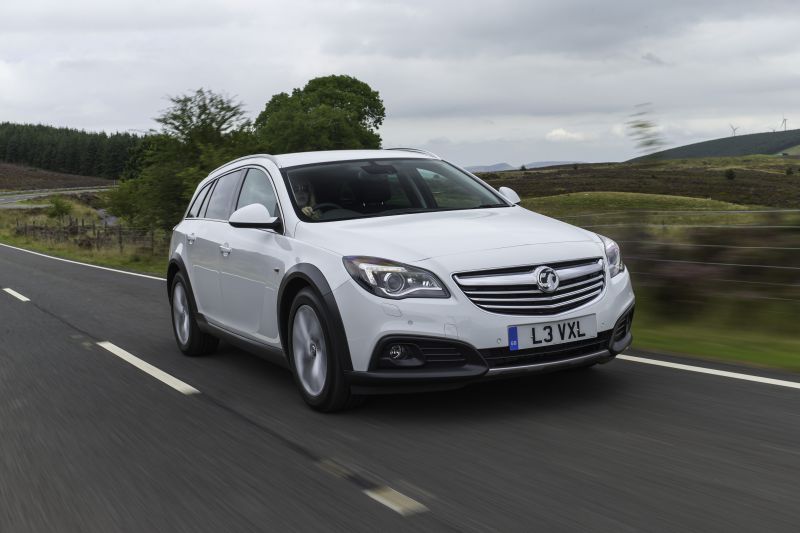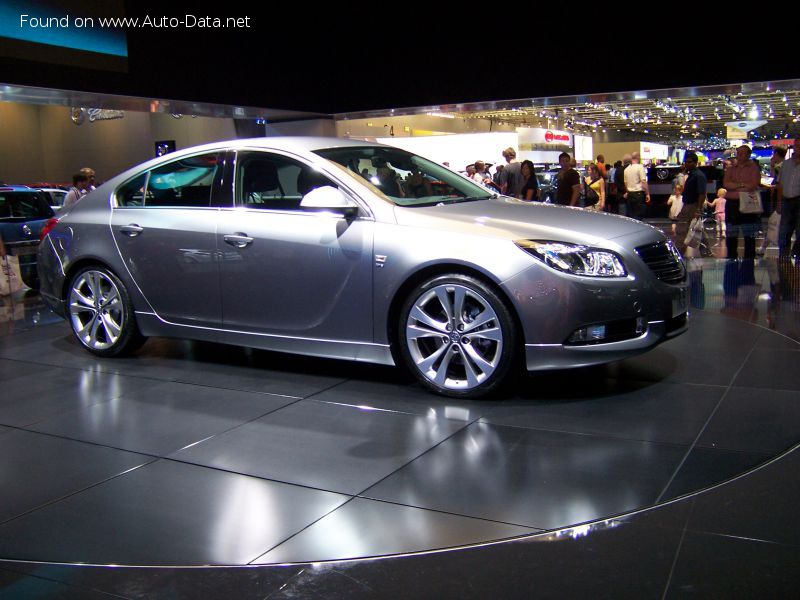
The Vauxhall Insignia I Saloon (facelift 2013) represents a significant offering from the British marque, serving as its primary contender in the competitive mid-size sedan segment across the United Kingdom. Known as the Opel Insignia in mainland Europe and later rebadged as the Buick Regal in North America and China, this vehicle underscored General Motors’ global platform strategy. The 2013 facelift brought a refreshed aesthetic, enhanced interior technology, and updated powertrains, aiming to maintain its appeal against rivals like the Ford Mondeo (Fusion in the US) and Volkswagen Passat. This particular variant, equipped with the 1.6i Turbo ecoTEC (170 Hp) engine and an automatic transmission, aimed to strike a balance between spirited performance and commendable fuel efficiency, a crucial factor in the European market.
The Vauxhall Insignia I Saloon (facelift 2013): A European Mid-Size Contender
Produced from 2013 until 2017, this generation of the Insignia was designed as a four-door sedan, offering seating for five occupants. Its powertrain architecture centered around an internal combustion engine driving the front wheels, a common and practical setup for its segment. The facelifted model sought to refine the original Insignia’s formula, which had garnered praise for its styling and ride comfort since its initial introduction in 2008.
Engine & Performance
Under the hood, the Vauxhall Insignia I Saloon (facelift 2013) 1.6i Turbo ecoTEC (170 Hp) Automatic featured a sophisticated 1.6-liter (1598 cm³ or 97.52 cubic inches) inline-four engine. This powerplant, designated by codes A16XHT or B16SHL, was a prime example of General Motors’ ecoTEC family, emphasizing both performance and environmental responsibility. Utilizing direct fuel injection, a turbocharger, and an intercooler, the engine delivered a robust 170 horsepower at a relatively low 4250 revolutions per minute. This low-RPM power peak is indicative of the engine’s torque-centric design, making it highly suitable for everyday driving and offering a flexible powerband.
Torque output was equally impressive for its displacement, generating 260 Newton-meters (191.77 lb.-ft.) across a broad range from 1650 to 4250 rpm. This wide torque band, characteristic of modern turbocharged engines, contributed significantly to the vehicle’s drivability and responsiveness. Mated to a 6-speed automatic transmission, the power was seamlessly delivered to the front wheels. This combination allowed the Insignia to accelerate from 0 to 60 mph in a respectable 9.4 seconds, with a top speed of 129.87 mph (209 km/h). These figures positioned it competitively within its class, offering sufficient performance for highway cruising and confident overtaking maneuvers.
The “ecoTEC” designation highlighted the engine’s focus on efficiency. The combined fuel consumption was rated at 35.6 US mpg (6.6 l/100 km), with urban consumption at 25.8 US mpg (9.1 l/100 km) and extra-urban figures reaching an impressive 45.2 US mpg (5.2 l/100 km). CO2 emissions stood at 155 g/km, meeting the Euro 5 emission standard, which was current for its time. The engine’s layout was front, transverse, contributing to efficient packaging and maximizing interior space. With a DOHC valvetrain and 4 valves per cylinder, the engine was designed for optimal breathing and power delivery throughout its rev range.
Design & Features
The 2013 facelift of the Vauxhall Insignia I Saloon brought a more refined and contemporary appearance to the mid-size sedan. The exterior received updates to the grille, headlights, and bumpers, lending it a sharper, more sophisticated look while retaining the original model’s distinctive silhouette. The sedan body type, with its four doors and five-seat configuration, emphasized practicality and comfort for families and business users alike. Its dimensions were substantial for its class, measuring 190.63 inches (4842 mm) in length, 73.07 inches (1856 mm) in width (82.05 inches or 2084 mm including mirrors), and 58.98 inches (1498 mm) in height, providing a commanding road presence.
The interior of the facelifted Insignia also saw significant improvements, particularly in material quality and technological integration. While specific features like infotainment screens or advanced driver-assistance systems would vary by trim level, the general focus was on an ergonomic layout and improved user experience. The trunk capacity was generous, offering a minimum of 17.66 cubic feet (500 liters) and expanding to 35.84 cubic feet (1015 liters) with the rear seats folded, making it highly practical for luggage or larger cargo. The vehicle’s curb weight stood at 3556.06 lbs (1613 kg), contributing to a solid and planted feel on the road.
Safety features for the era included standard Antilock Braking System (ABS), a crucial component for maintaining control during emergency braking. The suspension system comprised an independent McPherson strut setup with coil springs and an anti-roll bar at the front, paired with an independent multi-link suspension at the rear, providing a balanced ride that absorbed road imperfections while maintaining composure during cornering. Braking was handled by ventilated discs at the front and disc brakes at the rear, ensuring adequate stopping power. The car rode on 225/55 R17 tires, mounted on 17-inch wheel rims, which offered a good blend of ride comfort and grip.
Technical Specifications
| Category | Specification |
| General Information | |
| Brand | Vauxhall |
| Model | Insignia |
| Generation | Insignia I Saloon (facelift 2013) |
| Type (Engine) | 1.6i Turbo ecoTEC (170 Hp) Automatic |
| Start of Production | 2013 |
| End of Production | 2017 |
| Powertrain Architecture | Internal Combustion engine |
| Body type | Sedan |
| Seats | 5 |
| Doors | 4 |
| Performance Specifications | |
| Fuel consumption (economy) – urban | 9.1 l/100 km |
| Fuel consumption (economy) – extra urban | 5.2 l/100 km |
| Fuel consumption (economy) – combined | 6.6 l/100 km |
| CO2 emissions | 155 g/km |
| Fuel Type | Petrol (Gasoline) |
| Acceleration 0 – 60 mph | 9.4 sec |
| Maximum speed | 209 km/h |
| Emission standard | Euro 5 |
| Engine Specifications | |
| Power | 170 Hp @ 4250 rpm |
| Torque | 260 Nm @ 1650-4250 rpm |
| Engine layout | Front, Transverse |
| Engine Model/Code | A16XHT, B16SHL |
| Engine displacement | 1598 cm³ |
| Number of cylinders | 4 |
| Engine configuration | Inline |
| Space, Volume and Weights | |
| Kerb Weight | 1613 kg |
| Trunk (boot) space – minimum | 500 l |
| Trunk (boot) space – maximum | 1015 l |
| Fuel tank capacity | 70 l |
| Dimensions | |
| Length | 4842 mm |
| Width | 1856 mm |
| Height | 1498 mm |
| Drivetrain, Brakes and Suspension Specifications | |
| Drivetrain Architecture | The Internal combustion engine (ICE) drives the front wheels of the vehicle. |
| Drive wheel | Front wheel drive |
| Number of gears and type of gearbox | 6 gears, automatic transmission |
Legacy & Market Impact
The Vauxhall Insignia I Saloon, particularly the facelifted version from 2013-2017, played a crucial role in Vauxhall’s lineup in the United Kingdom. It was positioned as a premium yet accessible mid-size sedan, offering a blend of stylish design, comfortable ride quality, and a well-equipped interior. In the highly competitive European D-segment, it faced formidable rivals such as the Ford Mondeo, Volkswagen Passat, and even entries from premium marques like the BMW 3 Series and Audi A4, albeit at a different price point. The Insignia’s strength lay in offering a compelling package of space, features, and attractive styling for its price.
Its “ecoTEC” engines, like the 1.6i Turbo variant, were instrumental in addressing the growing demand for fuel efficiency and lower emissions in Europe, without sacrificing too much in terms of performance. The availability of an automatic transmission further broadened its appeal, catering to drivers seeking convenience in urban environments and on long commutes. The Insignia’s reputation for being a comfortable long-distance cruiser and a practical family car was well-established, making it a popular choice for both private buyers and fleet operators.
Globally, the Insignia’s platform was a testament to General Motors’ strategy of developing versatile architectures that could be adapted for various markets. Its rebadging as the Opel Insignia across mainland Europe and as the Buick Regal in North America highlighted its international significance and the underlying engineering quality. While it never achieved the same market penetration as some of its German rivals, the Vauxhall Insignia I Saloon solidified Vauxhall’s presence in a segment that was slowly but surely being eroded by the rise of SUVs. Its legacy is one of a dependable, stylish, and efficient sedan that offered substantial value and comfort, contributing significantly to Vauxhall’s brand image during its production years.
The 2013 facelift ensured the Insignia remained relevant and competitive through its final years of the first generation, paving the way for its successor. It stood as a strong representation of European automotive engineering, balancing design flair with practical considerations and modern powertrain technology.