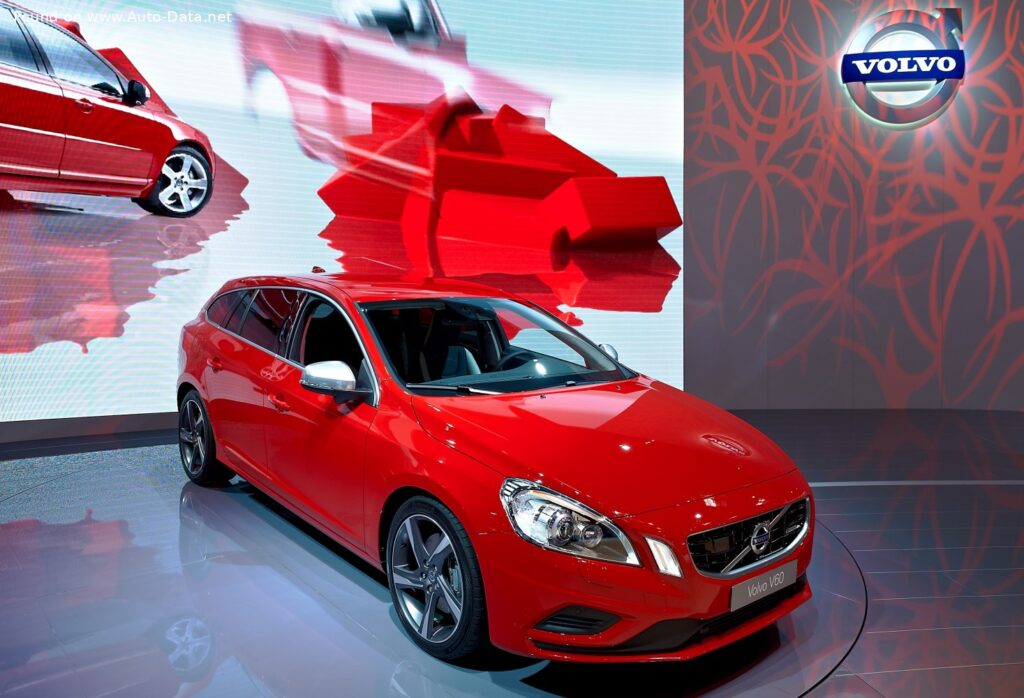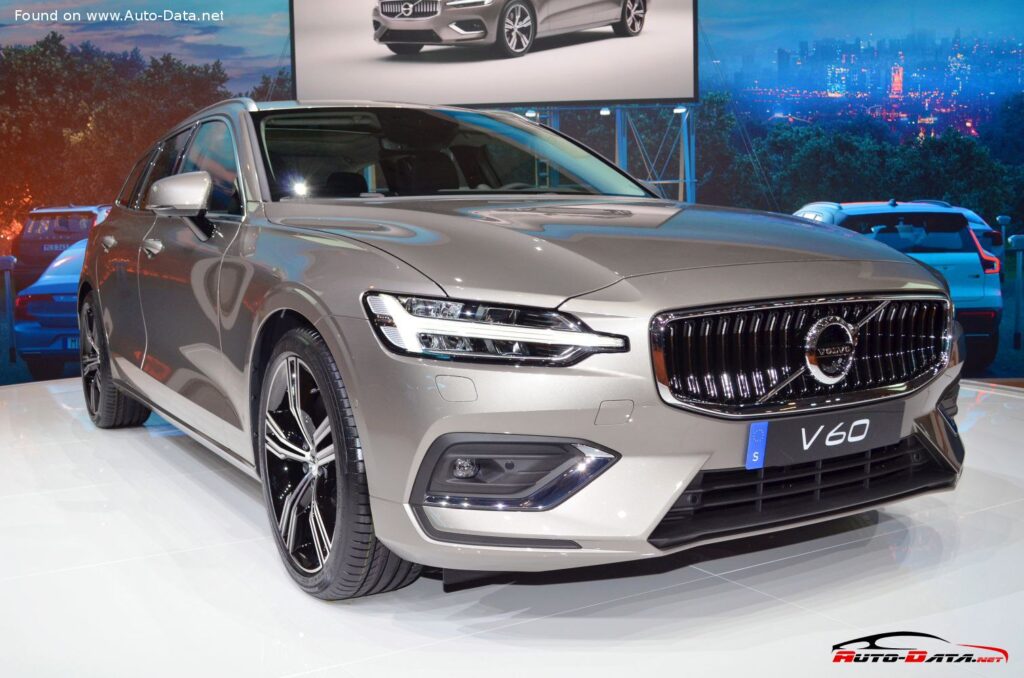
The Volvo V60 II 2.0 B4 (197 Hp) Mild Hybrid DCT represents the second generation of Volvo’s mid-size premium station wagon, a vehicle type where the Swedish automaker has consistently demonstrated expertise. Introduced in 2018, the V60 II, and specifically this B4 Mild Hybrid variant launched in February 2022, embodies Volvo’s commitment to electrification and efficiency within its traditional internal combustion engine offerings. Targeted primarily at the European market, where station wagons – known as “estates” – remain popular due to their practicality and driving dynamics, the V60 II B4 Mild Hybrid combines a gasoline engine with a mild-hybrid system to deliver a balanced performance profile for modern driving needs.
Engine & Performance: The Electrified Powertrain
The Volvo V60 II 2.0 B4 Mild Hybrid DCT is powered by a 2.0-liter (1969 cm3 or 120.16 cu. in.) inline four-cylinder gasoline engine, designated B420T5. This engine utilizes direct fuel injection, a turbocharger, and an intercooler to optimize both power output and fuel economy. A DOHC valvetrain with four valves per cylinder further enhances airflow and combustion efficiency. The engine achieves a compression ratio of 12:1, producing 197 horsepower (Hp) between 4750 and 5250 rpm, equating to 100.1 Hp per liter.
A key feature of this model is its mild-hybrid system. This MHEV setup integrates a 14 Hp electric motor, producing 29.5 lb.-ft. (40 Nm) of torque, directly into the transmission. This mild-hybrid system, also known as a power-assist or battery-assisted hybrid vehicle (BAHV), enhances efficiency and performance without requiring external charging. It assists the gasoline engine during acceleration, recovers energy during deceleration and braking, and contributes to a smoother Start & Stop system operation. This integration reduces fuel consumption and CO2 emissions, allowing the V60 B4 to meet Euro 6d emission standards.
Power is delivered to the front wheels via a 7-speed automatic dual-clutch transmission (DCT). This combination allows for a 0 to 60 mph acceleration time of 7.2 seconds (calculated) or 0 to 62 mph (0-100 km/h) in 7.6 seconds. The vehicle’s top speed is electronically limited to 111.85 mph (180 km/h), a common practice for modern European premium vehicles, prioritizing safety and efficiency. The engine generates 221.27 lb.-ft. (300 Nm) of torque between 1500 and 4200 rpm, providing responsive performance in various driving scenarios.
Fuel efficiency is a significant benefit of the mild-hybrid system. The combined WLTP fuel consumption ranges from 6.2 to 6.9 liters per 100 km, translating to 37.9 to 34.1 US mpg. Combined with a 15.85 US gallon (60-liter) fuel tank, this provides a substantial driving range.
Design & Features: Scandinavian Elegance and Practicality
The Volvo V60 II showcases Volvo’s contemporary design language, characterized by clean lines, elegant proportions, and a Scandinavian aesthetic. As a five-door, five-seat station wagon, it blends visual appeal with practicality. Its dimensions are 188.11 inches (4778 mm) in length, 72.83 inches (1850 mm) in width (80.31 inches or 2040 mm including mirrors), and 56.38 inches (1432 mm) in height. The 113.07-inch (2872 mm) wheelbase contributes to a spacious cabin and a comfortable ride. A drag coefficient (Cd) of 0.29 enhances aerodynamic efficiency, improving fuel economy and reducing wind noise.
The interior offers a premium experience with high-quality materials, ergonomic design, and a minimalist aesthetic. Volvo prioritizes safety, and the V60 II is equipped with a comprehensive suite of advanced driver-assistance systems (ADAS), including City Safety (autonomous emergency braking), Lane Keeping Aid, Run-off Road Mitigation, and Blind Spot Information System (BLIS).
The station wagon body style provides exceptional practicality. The V60 II offers a minimum trunk space of 18.33 cu. ft. (519 liters), expanding to 50.54 cu. ft. (1431 liters) with the rear seats folded. This makes it suitable for families, outdoor activities, or substantial cargo needs. The vehicle also has a permitted trailer load of 3968.32 lbs (1800 kg) with brakes, highlighting its versatility.
The chassis features a double wishbone front suspension and a unique leaf spring rear suspension, both with transverse stabilizers. This setup delivers a comfortable yet engaging driving experience. Disc brakes are used on all wheels, with sizes varying depending on the configuration (e.g., 296×28-371×32 mm front, 302×12-320×20 mm rear), ensuring strong stopping power. Electric power steering provides precise control, with a turning circle ranging from 37.4 to 39.7 feet (11.4-12.1 meters). Tire and wheel options range from 215/60 R16 to 245/35 R20, allowing for customization.
Technical Specifications: Volvo V60 II 2.0 B4 Mild Hybrid DCT
| Specification | Value |
| General Information | |
| Brand | Volvo |
| Model | V60 |
| Generation | V60 II |
| Type (Engine) | 2.0 B4 (197 Hp) Mild Hybrid DCT |
| Start of Production | February, 2022 |
| Powertrain Architecture | MHEV (Mild Hybrid Electric Vehicle) |
| Body Type | Station wagon (estate) |
| Seats | 5 |
| Doors | 5 |
| Performance Specifications | |
| Combined Fuel Consumption (WLTP) | 6.2-6.9 l/100 km (37.9 – 34.1 US mpg) |
| CO2 Emissions (WLTP) | 140-156 g/km |
| Fuel Type | Petrol (Gasoline) |
| Acceleration 0 – 60 mph (Calculated) | 7.2 sec |
| Acceleration 0 – 62 mph (0-100 km/h) | 7.6 sec |
| Maximum Speed | 111.85 mph (180 km/h) |
| Braking Distance 100 km/h – 0 | 35 m |
| Emission Standard | Euro 6d |
| Electric Cars and Hybrids Specs | |
| Electric Motor Power | 14 Hp |
| Electric Motor Torque | 29.5 lb.-ft. (40 Nm) |
| Electric Motor Location | Integrated into the transmission |
| Internal Combustion Engine Specs | |
| Power | 197 Hp @ 4750-5250 rpm |
| Power per Liter | 100.1 Hp/l |
| Torque | 221.27 lb.-ft. (300 Nm) @ 1500-4200 rpm |
| Maximum Engine Speed | 6000 rpm |
| Engine Layout | Front, Transverse |
| Engine Model/Code | B420T5 |
| Engine Displacement | 2.0 l (1969 cm3 / 120.16 cu. in.) |
| Number of Cylinders | 4 |
| Engine Configuration | Inline |
| Cylinder Bore | 3.23 in. (82 mm) |
| Piston Stroke | 3.67 in. (93.2 mm) |
| Compression Ratio | 12:1 |
| Number of Valves per Cylinder | 4 |
| Fuel Injection System | Direct injection |
| Engine Aspiration | Turbocharger, Intercooler |
| Valvetrain | DOHC |
| Engine Oil Capacity | 6.45 US qt (6.1 l) |
| Engine Systems | Start & Stop System, Particulate filter |
| Space, Volume and Weights | |
| Trunk Space – Minimum | 18.33 cu. ft. (519 l) |
| Trunk Space – Maximum | 50.54 cu. ft. (1431 l) |
| Fuel Tank Capacity | 15.85 US gal (60 l) |
| Max. Roof Load | 165.35 lbs (75 kg) |
| Permitted Trailer Load with Brakes (12%) | 3968.32 lbs (1800 kg) |
| Permitted Trailer Load without Brakes | 1653.47 lbs (750 kg) |
| Dimensions | |
| Length | 188.11 in. (4778 mm) |
| Width | 72.83 in. (1850 mm) |
| Width with Mirrors Folded | 75.43 in. (1916 mm) |
| Width Including Mirrors | 80.31 in. (2040 mm) |
| Height | 56.38 in. (1432 mm) |
| Wheelbase | 113.07 in. (2872 mm) |
| Front Track | 62.72 – 63.39 in. (1593-1610 mm) |
| Rear Track | 62.72 – 63.39 in. (1593-1610 mm) |
| Ride Height (Ground Clearance) | 5.59 in. (142 mm) |
| Drag Coefficient (Cd) | 0.29 |
| Minimum Turning Circle (Turning Diameter) | 37.4 – 39.7 ft. (11.4-12.1 m) |
| Drivetrain, Brakes and Suspension Specs | |
| Drivetrain Architecture | Front wheel drive MHEV (ICE and electric motor drive front wheels in mixed mode) |
| Drive Wheel | Front wheel drive |
| Number of Gears and Type of Gearbox | 7 gears, automatic transmission DCT |
| Front Suspension | Double wishbone, Transverse stabilizer |
| Rear Suspension | Transverse stabilizer, Leaf spring |
| Front Brakes | Disc, 296×28-371×32 mm |
| Rear Brakes | Disc, 302×12-320×20 mm |
| Assisting Systems | ABS (Anti-lock braking system) |
| Steering Type | Steering rack and pinion |
| Power Steering | Electric Steering |
| Tires Size | 215/60 R16; 225/50 R17; 235/45 R18; 235/40 R19; 245/35 R20 |
| Wheel Rims Size | 7J x 16; 7J x 17; 8J x 18; 8J x 19; 8J x 20 |
Legacy and Market Impact: The Volvo V60 II in the Premium Segment
The Volvo V60 II 2.0 B4 (197 Hp) Mild Hybrid DCT continues Volvo’s strong tradition in the premium station wagon segment, particularly in Europe. While the V60 isn’t as prominent in the US market as Volvo’s SUVs (XC60, XC90), it remains a key component of Volvo’s European lineup, offering a compelling alternative to sedans and SUVs. Its main competitors include the BMW 3 Series Touring, Audi A4 Avant, and Mercedes-Benz C-Class Estate, as well as the Skoda Superb Combi and Volkswagen Passat Variant.
The V60 stands out with its Scandinavian design, prioritizing elegance, functionality, and a less aggressive aesthetic than some German rivals. Volvo’s commitment to safety and its reputation for durable, family-oriented vehicles also provide a competitive edge. The integration of the B4 mild-hybrid powertrain is particularly significant, addressing consumer demand for improved fuel efficiency and lower emissions without the complexity of a plug-in hybrid. This positions the V60 B4 as an environmentally conscious choice, helping owners meet emission regulations and potentially benefit from tax incentives.
The V60 II’s versatility broadens its market appeal, attracting families needing cargo space and safety features, as well as professionals seeking a stylish and comfortable vehicle. Its balanced performance, combined with the mild-hybrid technology, ensures its continued relevance in a changing automotive landscape. The 2022 update, featuring the B4 engine and DCT, reinforces Volvo’s electrification strategy, offering a step towards a fully electric future while enhancing efficiency and refinement in its current models. The V60 II thus solidifies Volvo’s position as a leader in innovative, safe, and sustainable transportation.