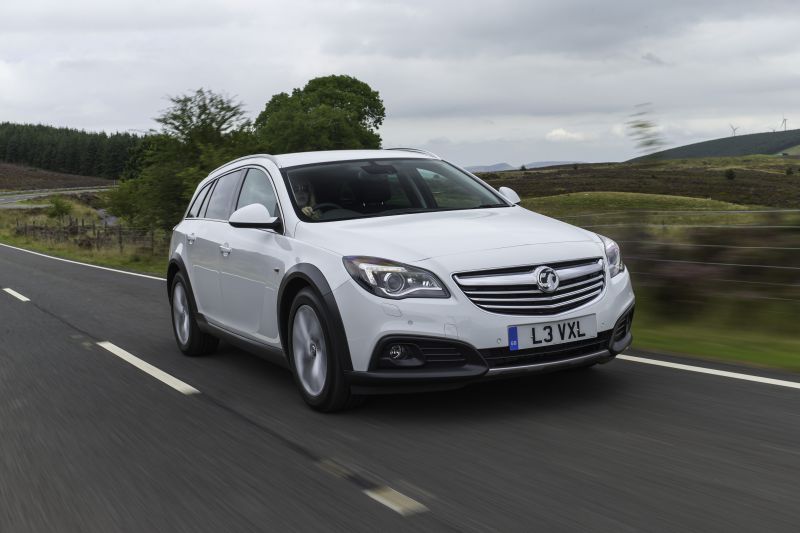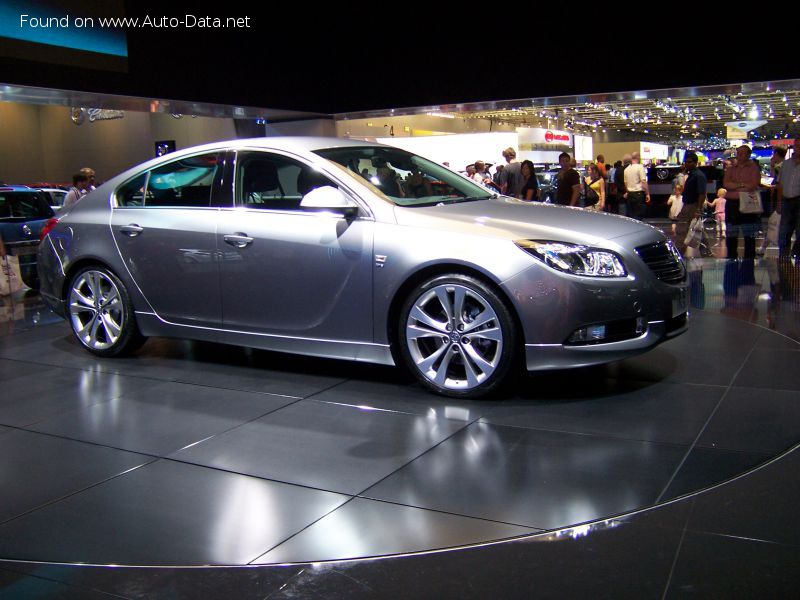
The Vauxhall Insignia I Saloon (facelift 2013) represents a significant iteration of Vauxhall’s flagship mid-size sedan, primarily targeted at the highly competitive European and United Kingdom markets. Known as the Opel Insignia in most other European countries, and later as the Buick Regal in North America, this vehicle served as a crucial model in General Motors’ global D-segment strategy. The first generation Insignia, launched in 2008, received a comprehensive facelift for the 2013 model year, bringing updated styling, improved interior quality, and a range of refined powertrains. Among these, the 2.0 CDTi BiTurbo ecoTEC (195 Hp) Start/Stop variant stood out as a performance-oriented yet highly efficient diesel option, designed to appeal to both fleet buyers and private customers seeking a blend of power, economy, and sophisticated features. This particular model, produced from 2013 to 2015, underscored Vauxhall’s commitment to advanced diesel technology and driver-centric innovations, positioning it as a formidable competitor against established rivals in its class.
Engine & Performance: The 2.0 CDTi BiTurbo ecoTEC Diesel
At the heart of the Vauxhall Insignia I Saloon (facelift 2013) 2.0 CDTi BiTurbo ecoTEC (195 Hp) Start/Stop lies a highly advanced diesel engine, designated with the internal code A20DTR. This 2.0-liter (1956 cm3 or 119.36 cu. in.) inline-four cylinder unit is a testament to modern diesel engineering, featuring a sophisticated BiTurbo setup with an intercooler. The twin-turbocharger system is engineered to deliver a broad power band, ensuring robust acceleration from low RPMs and sustained performance at higher speeds. It generates an impressive 195 horsepower at 4000 rpm, translating to a substantial 99.7 Hp per liter, a strong figure for a diesel engine of its era. More critically for everyday driving, the engine produces a significant 295.02 lb.-ft. of torque, available across a wide range from 1750 to 2500 rpm. This ample torque allows for effortless overtaking and confident highway cruising.
Power is channeled to the front wheels via a precise 6-speed manual transmission, offering engaging driver control. The powertrain enables the Insignia to accelerate from 0 to 60 mph in a swift 8.3 seconds, with a top speed reaching 142.29 mph. These figures highlight the car’s capability to deliver strong performance while maintaining remarkable efficiency. The “ecoTEC” designation signifies Vauxhall’s focus on ecological technology, integrating features like a Start/Stop system that automatically shuts off the engine when the vehicle is stationary, reducing fuel consumption and emissions in urban environments. This, combined with a particulate filter, helps the vehicle meet Euro 5 emission standards, with CO2 emissions rated at 125 g/km. The combined fuel economy is particularly noteworthy, achieving an estimated 50 US mpg, making it an exceptionally economical choice for long-distance travel and daily commuting alike.
Design & Features: Refined Aesthetics and Practicality
The 2013 facelift brought a series of aesthetic and functional enhancements to the Vauxhall Insignia I Saloon, refining its already sleek and aerodynamic profile. As a four-door sedan (or saloon, as it’s known in the UK), the Insignia maintains its commanding presence, characterized by a length of 190.63 inches, a width of 73.07 inches (82.05 inches including mirrors), and a height of 58.98 inches. The facelift introduced a wider, lower grille, new headlight and taillight designs featuring LED technology, and revised bumpers, giving the car a more contemporary and premium appearance. The long wheelbase of 107.76 inches contributes to a spacious cabin and stable ride quality.
Inside, the Insignia I Saloon offers seating for five occupants, with a focus on comfort and ergonomics. The interior received significant updates during the facelift, including a redesigned center console with fewer buttons, a new infotainment system, and higher-quality materials, enhancing the overall tactile experience. Practicality is a strong suit, with a generous trunk capacity ranging from 17.66 cu. ft. with all seats up, expanding to an impressive 35.84 cu. ft. when the rear seats are folded down. The vehicle also boasts a substantial fuel tank capacity of 18.49 US gallons, providing an extended driving range, especially when paired with the efficient diesel engine.
The Insignia is well-equipped in terms of chassis and safety. It features an independent front suspension with McPherson struts and an anti-roll bar, complemented by an independent multi-link rear suspension, a setup designed to balance ride comfort with dynamic handling. Braking is handled by ventilated discs at the front and disc brakes at the rear, supported by an Anti-lock Braking System (ABS) for enhanced stopping power and control. The vehicle rides on 225/55 R17 tires, mounted on 17-inch wheel rims, providing a good balance of grip and ride compliance. With a minimum turning circle of 37.4 feet, the Insignia is surprisingly maneuverable for its size, aiding in urban driving and parking.
Technical Specifications
| Feature | Specification |
|---|---|
| General Information | |
| Brand | Vauxhall |
| Model | Insignia |
| Generation | Insignia I Saloon (facelift 2013) |
| Type (Engine) | 2.0 CDTi BiTurbo ecoTEC (195 Hp) Start/Stop |
| Start of production | 2013 year |
| End of production | 2015 year |
| Powertrain Architecture | Internal Combustion engine |
| Body type | Sedan |
| Seats | 5 |
| Doors | 4 |
| Performance Specs | |
| Fuel consumption (urban) | 5.8 l/100 km (40.6 US mpg) |
| Fuel consumption (extra urban) | 4.1 l/100 km (57.4 US mpg) |
| Fuel consumption (combined) | 4.7 l/100 km (50 US mpg) |
| CO2 emissions | 125 g/km |
| Fuel Type | Diesel |
| Acceleration 0 – 60 mph | 8.3 sec |
| Maximum speed | 229 km/h (142.29 mph) |
| Emission standard | Euro 5 |
| Weight-to-power ratio | 8.5 kg/Hp (117.2 Hp/tonne) |
| Weight-to-torque ratio | 4.2 kg/Nm (240.4 Nm/tonne) |
| Engine Specs | |
| Power | 195 Hp @ 4000 rpm |
| Power per liter | 99.7 Hp/l |
| Torque | 400 Nm @ 1750-2500 rpm (295.02 lb.-ft.) |
| Engine layout | Front, Transverse |
| Engine Model/Code | A20DTR |
| Engine displacement | 1956 cm3 (2.0 liters / 119.36 cu. in.) |
| Number of cylinders | 4 |
| Engine configuration | Inline |
| Cylinder Bore | 83 mm (3.27 in.) |
| Piston Stroke | 90.4 mm (3.56 in.) |
| Number of valves per cylinder | 4 |
| Fuel injection system | Diesel Commonrail |
| Engine aspiration | BiTurbo, Intercooler |
| Valvetrain | DOHC |
| Engine oil capacity | 4.5 l (4.76 US qt) |
| Coolant | 9 l (9.51 US qt) |
| Engine systems | Start & Stop System, Particulate filter |
| Space, Volume and Weights | |
| Kerb Weight | 1664 kg (3668.49 lbs.) |
| Trunk (boot) space – minimum | 500 l (17.66 cu. ft.) |
| Trunk (boot) space – maximum | 1015 l (35.84 cu. ft.) |
| Fuel tank capacity | 70 l (18.49 US gal) |
| Permitted trailer load with brakes (12%) | 1700 kg (3747.86 lbs.) |
| Permitted trailer load without brakes | 750 kg (1653.47 lbs.) |
| Dimensions | |
| Length | 4842 mm (190.63 in.) |
| Width | 1856 mm (73.07 in.) |
| Width including mirrors | 2084 mm (82.05 in.) |
| Height | 1498 mm (58.98 in.) |
| Wheelbase | 2737 mm (107.76 in.) |
| Front overhang | 1027 mm (40.43 in.) |
| Rear overhang | 1078 mm (42.44 in.) |
| Minimum turning circle (turning diameter) | 11.4 m (37.4 ft.) |
| Drivetrain, Brakes and Suspension Specs | |
| Drivetrain Architecture | Front wheel drive Internal Combustion engine |
| Drive wheel | Front wheel drive |
| Number of gears and type of gearbox | 6 gears, manual transmission |
| Front suspension | Independent, type McPherson with coil spring and anti-roll bar |
| Rear suspension | Independent multi-link suspension |
| Front brakes | Ventilated discs |
| Rear brakes | Disc |
| Assisting systems | ABS (Anti-lock braking system) |
| Tires size | 225/55 R17 |
| Wheel rims size | 17 inches |
Legacy and Market Presence in the European Automotive Landscape
The Vauxhall Insignia I Saloon (facelift 2013) played a vital role in Vauxhall’s product lineup and the broader European D-segment. It was designed to compete head-on with established segment leaders such as the Ford Mondeo, Volkswagen Passat, and even entry-level premium sedans like the BMW 3 Series and Audi A4, albeit typically offering a more value-oriented proposition. Its strong performance, particularly with the 2.0 CDTi BiTurbo engine, combined with impressive fuel economy, made it a popular choice for business fleets and company car drivers across the UK and continental Europe. The Insignia’s ability to blend executive styling with practical family car attributes ensured its widespread appeal.
Beyond its primary markets, the Insignia’s platform and design were instrumental in General Motors’ global strategy. It formed the basis for the second-generation Buick Regal in North America, signaling a shift towards more globally unified product development for GM. This cross-branding strategy underscored the Insignia’s robust engineering and adaptable design, allowing it to cater to diverse market demands. The facelifted model, with its enhanced aesthetics, refined interior, and advanced diesel technology, bolstered its reputation for offering a compelling package of comfort, safety, and efficiency.
While later generations of the Insignia would continue to evolve, the 2013 facelifted model with the 2.0 CDTi BiTurbo ecoTEC engine stands as a testament to a period when diesel powertrains were at the forefront of efficiency and performance in Europe. It showcased Vauxhall’s capability to deliver a sophisticated and competitive vehicle in a demanding segment, leaving a legacy as a well-rounded and impactful player in the modern European automotive landscape before the industry’s eventual pivot away from diesel.