
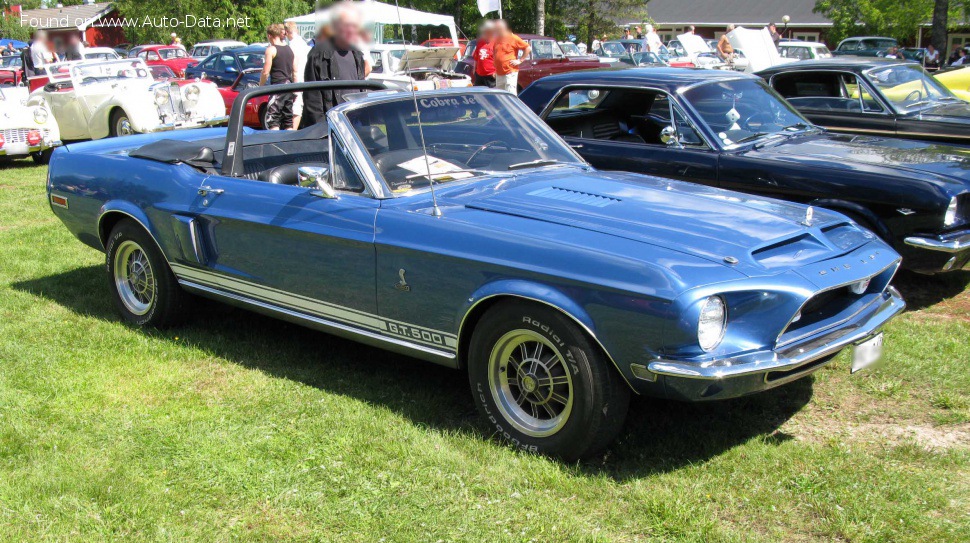
The Ford Shelby I Cabrio GT 350 4.7 V8 (310 Hp) Automatic stands as a quintessential representation of American muscle and performance, a potent blend of Ford’s widespread appeal and Carroll Shelby’s legendary racing prowess. Introduced during the golden age of pony cars, this specific model, produced between 1966 and 1970, marked a unique chapter in the Shelby Mustang lineage. While the Shelby GT350 is most famously associated with its fastback coupe variant, the “Cabrio” designation denotes the rare and highly desirable convertible version, offering an open-air driving experience without compromising the raw power and aggressive styling that defined the Shelby brand. This first-generation Shelby convertible was more than just a Mustang with a bigger engine; it was a meticulously engineered performance machine, designed to dominate both on the street and, in spirit, on the track, embodying the very essence of American automotive exhilaration.
The Genesis of a Legend: Ford Shelby I Cabrio GT 350 4.7 V8 (310 Hp) Automatic
The collaboration between Ford Motor Company and racing legend Carroll Shelby began in the mid-1960s, aiming to transform the popular Ford Mustang into a formidable competitor. The GT350 was the initial result of this partnership, conceived primarily for SCCA (Sports Car Club of America) production class racing. While the GT350 was largely known for its fastback coupe form, the introduction of a convertible variant, particularly the Shelby I Cabrio, added a layer of exclusivity and appeal, catering to enthusiasts who desired the Shelby performance package in a more relaxed, open-top format. The 1966 model year was particularly significant, marking the first time Shelby offered a convertible version of the GT350, albeit in very limited numbers. These cars were built by Shelby American in Los Angeles, California, taking standard Mustang bodies and extensively modifying them to meet Shelby’s rigorous performance standards.
Engine & Performance
At the core of the Ford Shelby I Cabrio GT 350 4.7 V8 (310 Hp) Automatic was a highly tuned version of Ford’s venerable 289 cubic inch (4.7-liter) small-block V8 engine. While the standard Mustang 289 was a capable powerplant, Shelby American took it to new heights. Designated as the “K-Code” High-Performance 289, this engine in Shelby trim produced a formidable 310 horsepower at 6000 rpm, a significant jump from its stock output. This impressive power output was achieved through a series of enhancements, including a larger four-barrel carburetor (typically a Holley), a high-rise aluminum intake manifold, specific cylinder heads, and a performance camshaft. The engine’s naturally aspirated architecture, combined with its robust V-engine configuration and two valves per cylinder, delivered a visceral driving experience synonymous with the era.
Torque was equally impressive, with the engine generating 446 Nm (328.95 lb.-ft.) at 4200 rpm. This ample torque, delivered relatively low in the rev range, provided strong acceleration and a thrilling surge of power that defined the muscle car experience. Power was sent to the rear wheels via a 3-speed automatic transmission, a choice that, while perhaps less common for pure performance enthusiasts who often preferred manual gearboxes, made the GT350 Cabrio more accessible and enjoyable for cruising. Despite the automatic, the car retained its aggressive character, with a curb weight of approximately 1350 kg (2976 pounds) resulting in an excellent weight-to-power ratio of 4.4 kg/Hp, or 229.6 Hp/tonne. This meant the Cabriolet was surprisingly nimble and responsive for a car of its size and era, capable of delivering exhilarating straight-line performance and a captivating exhaust note that announced its presence.
Design & Features
The Ford Shelby I Cabrio GT 350 4.7 V8 (310 Hp) Automatic was instantly recognizable, blending the iconic lines of the first-generation Mustang with distinctive Shelby modifications. As a two-door convertible with seating for four, it offered a unique combination of performance and open-air enjoyment. Shelby’s design enhancements were both functional and aesthetic. The exterior typically featured a fiberglass hood with a functional scoop to feed cool air to the potent V8, side scoops for brake cooling (though sometimes non-functional on later models), and distinctive Shelby badging. Many GT350s, including the convertibles, were also adorned with classic racing stripes, further accentuating their performance pedigree. The overall length of 4613 mm (181.61 inches) and a width of 1732 mm (68.19 inches) gave the car a purposeful and athletic stance, while the relatively low height of 1300 mm (51.18 inches) contributed to its sporty profile.
Inside, the GT350 Cabrio maintained a driver-focused cockpit. While retaining much of the Mustang’s interior, Shelby added specific touches such as a wood-rimmed steering wheel, auxiliary gauges (oil pressure, amp meter), and often a special Shelby console. The convertible top, whether manually or power-operated depending on the specific model year and options, allowed occupants to fully immerse themselves in the driving experience, feeling the wind and hearing the glorious roar of the V8 engine. For its era, the car featured advanced braking for a performance vehicle, with disc brakes at the front providing superior stopping power, complemented by drum brakes at the rear. The robust chassis, coupled with a performance-tuned suspension (often including larger sway bars and Koni shock absorbers, though specifics could vary), ensured that the Shelby Cabrio could handle its considerable power with confidence, making it not just a straight-line bruiser but also a capable handler for its time.
Technical Specifications
| Brand | Ford |
| Model | Shelby |
| Generation | Shelby I Cabrio |
| Type (Engine) | GT 350 4.7 V8 (310 Hp) Automatic |
| Start of Production | 1966 year |
| End of Production | 1970 year |
| Powertrain Architecture | Internal Combustion engine |
| Body type | Cabriolet |
| Seats | 4 |
| Doors | 2 |
| Fuel Type | Petrol (Gasoline) |
| Weight-to-power ratio | 4.4 kg/Hp (229.6 Hp/tonne) |
| Weight-to-torque ratio | 3 kg/Nm (330.4 Nm/tonne) |
| Power | 310 Hp @ 6000 rpm |
| Power per liter | 65.6 Hp/l |
| Torque | 446 Nm @ 4200 rpm (328.95 lb.-ft. @ 4200 rpm) |
| Engine layout | Front, Longitudinal |
| Engine displacement | 4727 cm3 (288.46 cu. in. / 4.7 liters) |
| Number of cylinders | 8 |
| Engine configuration | V-engine |
| Cylinder Bore | 101.6 mm (4 in.) |
| Piston Stroke | 72.89 mm (2.87 in.) |
| Compression ratio | 10.5:1 |
| Number of valves per cylinder | 2 |
| Fuel injection system | Carburetor |
| Engine aspiration | Naturally aspirated engine |
| Kerb Weight | 1350 kg (2976.24 lbs) |
| Fuel tank capacity | 61 l (16.11 US gal) |
| Length | 4613 mm (181.61 in.) |
| Width | 1732 mm (68.19 in.) |
| Height | 1300 mm (51.18 in.) |
| Wheelbase | 2743 mm (107.99 in.) |
| Front track | 1435 mm (56.5 in.) |
| Rear (Back) track | 1448 mm (57.01 in.) |
| Minimum turning circle (turning diameter) | 11.6 m (38.06 ft.) |
| Drivetrain Architecture | The Internal combustion engine (ICE) drives the rear wheels of the vehicle. |
| Drive wheel | Rear wheel drive |
| Number of gears and type of gearbox | 3 gears, automatic transmission |
| Front brakes | Disc |
| Rear brakes | Drum |
Legacy and Market Impact
The Ford Shelby I Cabrio GT 350 4.7 V8 (310 Hp) Automatic holds an indelible place in automotive history, not just as a high-performance variant of the Mustang, but as a symbol of American ingenuity and racing spirit. Its reputation is stellar, revered by enthusiasts and collectors worldwide for its rarity, performance, and the legendary name of Carroll Shelby attached to it. While convertibles were generally produced in smaller numbers than their fastback counterparts, the Shelby GT350 Cabrio is particularly rare, with only a handful built in 1966. This scarcity significantly contributes to its desirability and value in the classic car market today, where pristine examples command premium prices.
In its primary market, the United States, the Shelby GT350 Cabrio competed in a fierce segment against other iconic American muscle cars. Key rivals included the Chevrolet Corvette, particularly the C2 generation, which offered sophisticated independent suspension and powerful V8 options. Other competitors from the burgeoning pony car and muscle car segments included the Pontiac GTO, Plymouth Barracuda, and later, the Chevrolet Camaro. However, the Shelby GT350 distinguished itself with its direct lineage to racing, its more focused performance modifications, and the unique cachet of Carroll Shelby’s engineering touch. Unlike some of its competitors that focused purely on brute force, the Shelby GT350, even in convertible form, offered a more integrated performance package with improved handling and braking capabilities.
The historical significance of the Shelby I Cabrio GT 350 cannot be overstated. It was a critical component of Ford’s “Total Performance” strategy, showcasing what could be achieved when a mainstream car was handed over to a performance visionary. It helped solidify the Mustang’s image as a versatile platform, capable of being transformed from an affordable commuter into a track-ready beast or a high-performance cruiser. Its impact on car culture is profound, inspiring countless imitations and cementing the Shelby name as synonymous with high-octane American performance. Today, the Ford Shelby I Cabrio GT 350 4.7 V8 (310 Hp) Automatic is not just a collectible car; it’s a cherished piece of American heritage, a rolling testament to an era when horsepower reigned supreme and driving was an unadulterated passion.
