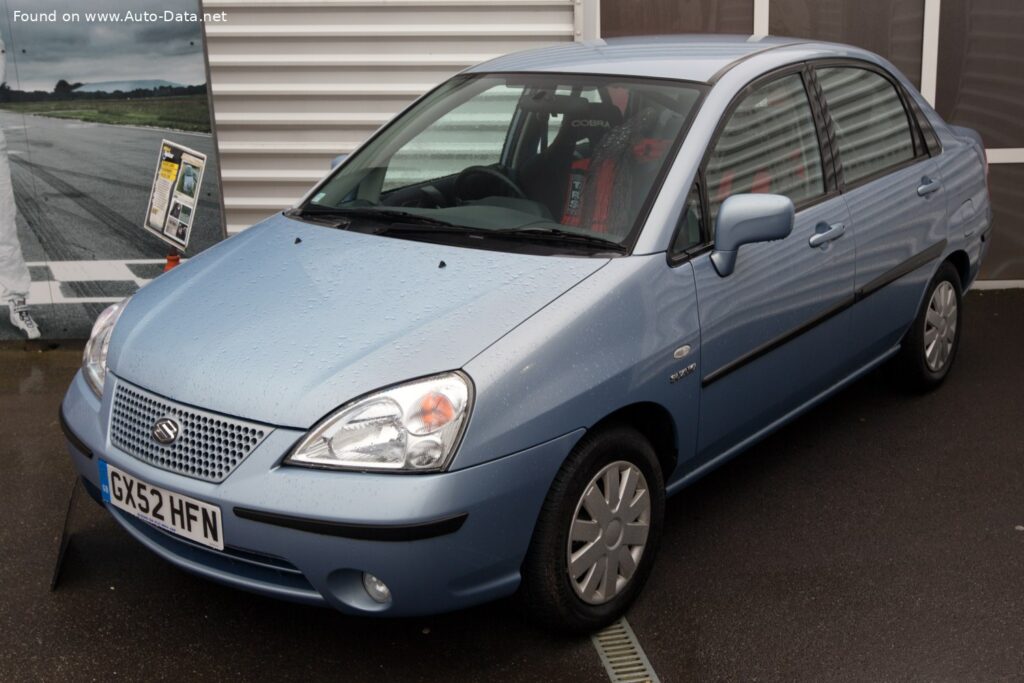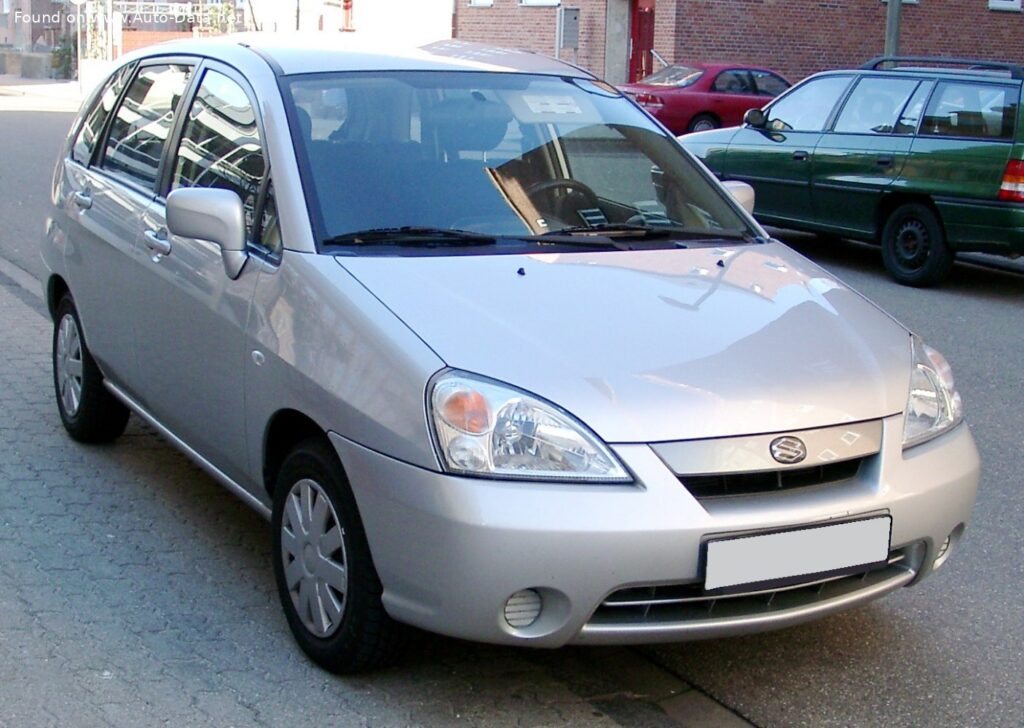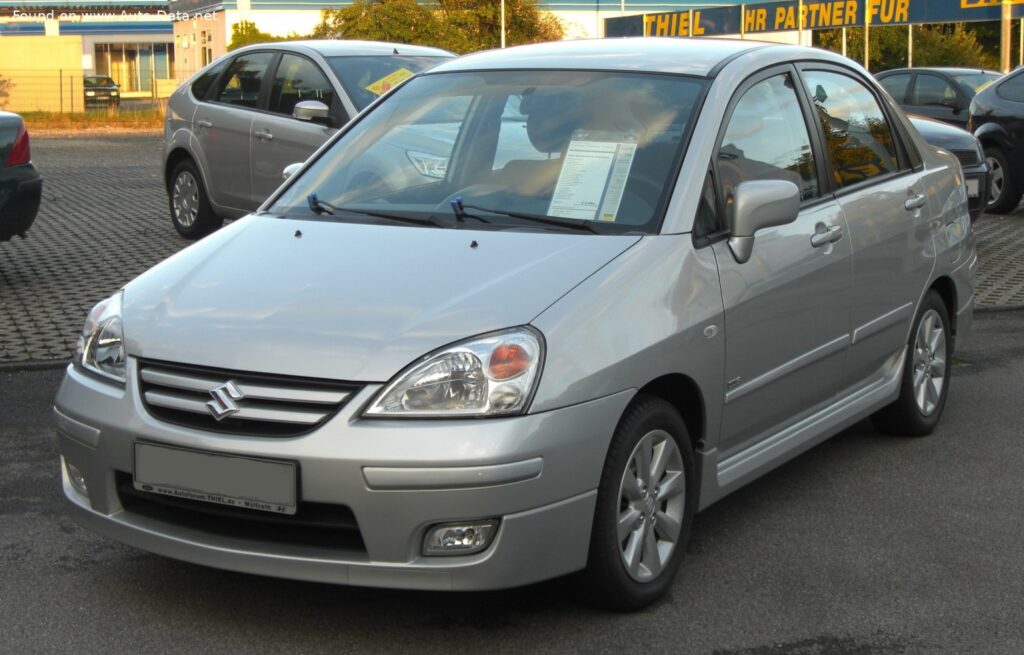
The Suzuki Liana Sedan I (facelift 2004) represents a significant evolution of Suzuki’s compact family car, known globally for its practicality and value. Introduced in 2004 as a refreshed iteration of the first-generation Liana, this model aimed to enhance its appeal in key international markets, particularly in Europe and Asia, where it competed in the highly contested C-segment. While not a primary fixture in the North American market under the Liana nameplate (it was briefly sold as the Suzuki Aerio in the US), its global presence underscored Suzuki’s commitment to offering robust, affordable, and often uniquely equipped vehicles. The facelift brought subtle but impactful changes to its styling and potentially some refinements to its mechanicals, ensuring it remained competitive through its production run until 2007.
The Liana, an acronym often cited as standing for “Life In A New Age,” was designed as a versatile platform available in both sedan and hatchback configurations. The particular variant under review, the 1.6i (107 Hp) 4WD sedan, highlights a distinctive characteristic for its class: the availability of an all-wheel-drive (AWD) system. This feature set the Liana apart from many of its front-wheel-drive (FWD) competitors, offering enhanced traction and stability, especially in regions prone to adverse weather conditions. This article delves into the specifics of this intriguing compact sedan, examining its powertrain, design, features, and overall market impact from the perspective of an international automotive expert.
Engine & Performance of the Suzuki Liana Sedan I (facelift 2004)
At the heart of the Suzuki Liana Sedan I (facelift 2004) 1.6i 4WD lies Suzuki’s venerable M16A inline-four engine. This naturally aspirated gasoline (petrol) unit, with a displacement of 1586 cubic centimeters (approximately 1.6 liters or 96.78 cubic inches), was engineered for a balance of efficiency and reliable performance. It features a Double Overhead Camshaft (DOHC) valvetrain with 4 valves per cylinder, a configuration common for optimizing airflow and combustion efficiency in its era. Fuel delivery was managed by a multi-port manifold injection system, a proven technology for precise fuel metering.
The M16A engine in this application produced a respectable 107 horsepower (HP) at 5500 revolutions per minute (rpm), translating to a power-per-liter output of 67.5 HP/liter. Torque figures stood at 144 Newton-meters (Nm), or 106.21 pound-feet (lb.-ft.), delivered at a relatively accessible 4000 rpm. This torque curve suggested a user-friendly engine, providing sufficient pulling power in everyday driving scenarios without needing to constantly rev high. The engine’s compression ratio of 9.7:1 was typical for a naturally aspirated unit of its time, balancing performance with the ability to run on standard gasoline grades.
Power was transmitted to all four wheels via a 5-speed manual transmission, a choice that underscored the vehicle’s practical and engaging driving philosophy. The all-wheel-drive (4×4) system was a notable differentiator in the compact sedan segment, offering improved grip and confidence, particularly in slippery conditions or light off-pavement excursions, although the Liana was primarily designed for paved roads. The vehicle’s top speed was rated at 165 km/h (approximately 102.53 mph), which was adequate for highway cruising within speed limits prevalent in its target markets.
In terms of fuel economy, the Liana 1.6i 4WD offered competitive figures for an all-wheel-drive sedan of its size and power. Official combined cycle consumption was rated at 7.4 liters per 100 kilometers, translating to an estimated 31.8 US miles per gallon (MPG). Urban driving saw consumption rise to 9.0 l/100 km (26.1 US MPG), while extra-urban (highway) driving improved to 6.5 l/100 km (36.2 US MPG). These figures, alongside its Euro 4 emission standard compliance, indicated a reasonably efficient and environmentally conscious vehicle for its time. With a curb weight of 2711.69 pounds (1230 kg), the Liana achieved a weight-to-power ratio of 11.5 kg/HP (87 HP/tonne) and a weight-to-torque ratio of 8.5 kg/Nm (117.1 Nm/tonne), suggesting a lively but not overly powerful driving experience.
Design & Features
The Suzuki Liana Sedan I (facelift 2004) maintained the practical and unassuming design language of its predecessor, with the facelift introducing subtle enhancements to keep its aesthetics current. As a four-door, five-seat sedan, its primary focus was on functionality and interior space, catering to families and individuals seeking a reliable daily driver. The exterior styling was characterized by clean lines and a somewhat conservative profile, designed for broad appeal rather than dramatic flair. The facelift typically involved revisions to the front fascia, including headlights, grille, and bumper, to give it a fresher, more modern appearance. Similar subtle tweaks might have been applied to the rear lights and bumper.
Measuring 171.26 inches (4350 mm) in length, 66.54 inches (1690 mm) in width, and 57.24 inches (1454 mm) in height, with a wheelbase of 97.64 inches (2480 mm), the Liana Sedan offered a compact footprint while striving for maximum interior volume. These dimensions placed it squarely in the compact car segment, offering maneuverability in urban environments while providing sufficient cabin space for five occupants, though the rear middle seat might have been best suited for shorter journeys. The four-door configuration ensured easy access for all passengers.
Inside, the Liana’s cabin was designed with ergonomics and durability in mind. While material quality might not have rivaled premium European offerings, it was robust and functional, built to withstand the rigors of everyday use. Standard features for the 2004 facelift model would have included power windows, central locking, and potentially air conditioning, depending on the trim level and market. Safety was addressed with the inclusion of an Anti-lock Braking System (ABS), a crucial active safety feature for preventing wheel lock-up during hard braking and maintaining steering control. Airbags, particularly for the driver and front passenger, would also have been standard in most markets, reflecting the increasing emphasis on occupant protection during this period. The relatively high roofline, a characteristic carried over from the pre-facelift model, contributed to good headroom for occupants, enhancing overall comfort.
Technical Specifications
| Category | Specification |
| General Information | Brand |
| Suzuki | |
| Model | |
| Liana | |
| Generation | |
| Liana Sedan I (facelift 2004) | |
| Type (Engine) | |
| 1.6i (107 Hp) 4WD | |
| Production Start | |
| 2004 year | |
| Production End | |
| 2007 year | |
| Powertrain Architecture | |
| Internal Combustion Engine | |
| Body type | |
| Sedan | |
| Seats | |
| 5 | |
| Doors | |
| 4 | |
| Performance Specs | Fuel Consumption (Urban) |
| 9 l/100 km | |
| 26.1 US mpg | |
| Fuel Consumption (Extra Urban) | |
| 6.5 l/100 km | |
| 36.2 US mpg | |
| Fuel Consumption (Combined) | |
| 7.4 l/100 km | |
| 31.8 US mpg | |
| Fuel Type | |
| Petrol (Gasoline) | |
| Maximum Speed | |
| 165 km/h | |
| 102.53 mph | |
| Emission Standard | |
| Euro 4 | |
| Weight-to-Power Ratio | |
| 11.5 kg/Hp | |
| 87 Hp/tonne | |
| Weight-to-Torque Ratio | |
| 8.5 kg/Nm | |
| 117.1 Nm/tonne | |
| Engine Specs | Power |
| 107 Hp @ 5500 rpm | |
| Power per Liter | |
| 67.5 Hp/l | |
| Torque | |
| 144 Nm @ 4000 rpm | |
| 106.21 lb.-ft. @ 4000 rpm | |
| Engine Layout | |
| Front, Transverse | |
| Engine Model/Code | |
| M16A | |
| Engine Displacement | |
| 1586 cm3 | |
| 1.6 Liters / 96.78 cu. in. | |
| Number of Cylinders | |
| 4 | |
| Engine Configuration | |
| Inline | |
| Cylinder Bore | |
| 78 mm | |
| 3.07 in. | |
| Piston Stroke | |
| 83 mm | |
| 3.27 in. | |
| Compression Ratio | |
| 9.7:1 | |
| Valves per Cylinder | |
| 4 | |
| Fuel Injection System | |
| Multi-port manifold injection | |
| Engine Aspiration | |
| Naturally aspirated engine | |
| Valvetrain | |
| DOHC | |
| Engine Oil Capacity | |
| 4.1 l | |
| 4.33 US qt | |
| Coolant Capacity | |
| 6.9 l | |
| 7.29 US qt | |
| Space, Volume and Weights | Kerb Weight |
| 1230 kg | |
| 2711.69 lbs. | |
| Dimensions | Length |
| 4350 mm | |
| 171.26 in. | |
| Width | |
| 1690 mm | |
| 66.54 in. | |
| Height | |
| 1454 mm | |
| 57.24 in. | |
| Wheelbase | |
| 2480 mm | |
| 97.64 in. | |
| Drivetrain, Brakes and Suspension | Drive Wheel |
| All wheel drive (4×4) | |
| Gearbox | |
| 5 gears, manual transmission | |
| Assisting Systems | |
| ABS (Anti-lock braking system) |
Legacy and Market Impact
The Suzuki Liana, particularly its facelifted first generation, carved out a niche for itself in the global compact car market as a sensible, reliable, and often uniquely capable option. While it never achieved the sales dominance of segment leaders like the Toyota Corolla, Honda Civic, or Volkswagen Golf/Jetta, its distinct offerings, especially the availability of all-wheel drive in a compact sedan, gave it a unique selling proposition. In markets like Europe, where compact sedans and hatchbacks are highly competitive, the Liana appealed to buyers seeking a no-nonsense, durable vehicle with added traction for varying weather conditions, often at a more accessible price point than AWD offerings from other brands.
Its primary competitors varied by region but generally included other compact sedans such as the Ford Focus, Opel Astra, Renault Mégane, and various models from Asian manufacturers like the Hyundai Elantra and Kia Cerato. What set the Liana apart was its reputation for mechanical robustness and straightforward engineering, hallmarks of Suzuki vehicles. The M16A engine, for instance, proved to be a durable and well-understood unit, contributing to the car’s overall reliability and ease of maintenance.
The Liana’s legacy is perhaps best understood as a testament to Suzuki’s philosophy of building practical, value-oriented cars. It wasn’t designed to be a segment leader in terms of luxury or performance, but rather a dependable workhorse that could handle diverse driving conditions. Its presence in various markets, including its brief stint as the Aerio in North America, demonstrated Suzuki’s ambition to be a global player, adapting its products to different consumer needs. The Liana also gained a degree of pop culture recognition in some regions, notably as the “Reasonably Priced Car” on the British motoring show *Top Gear*, which, while satirical, also highlighted its accessible nature.
Ultimately, the Suzuki Liana Sedan I (facelift 2004) 1.6i (107 Hp) 4WD was a solid, if unspectacular, performer in its segment. It provided a compelling package for buyers prioritizing all-weather capability, fuel efficiency (for an AWD vehicle), and Suzuki’s renowned reliability, all wrapped in a practical sedan body. Its impact was not in revolutionizing the automotive landscape, but in consistently delivering on the promise of dependable and affordable transportation, reinforcing Suzuki’s image as a manufacturer of honest, hard-working vehicles that punch above their weight in terms of utility and longevity.