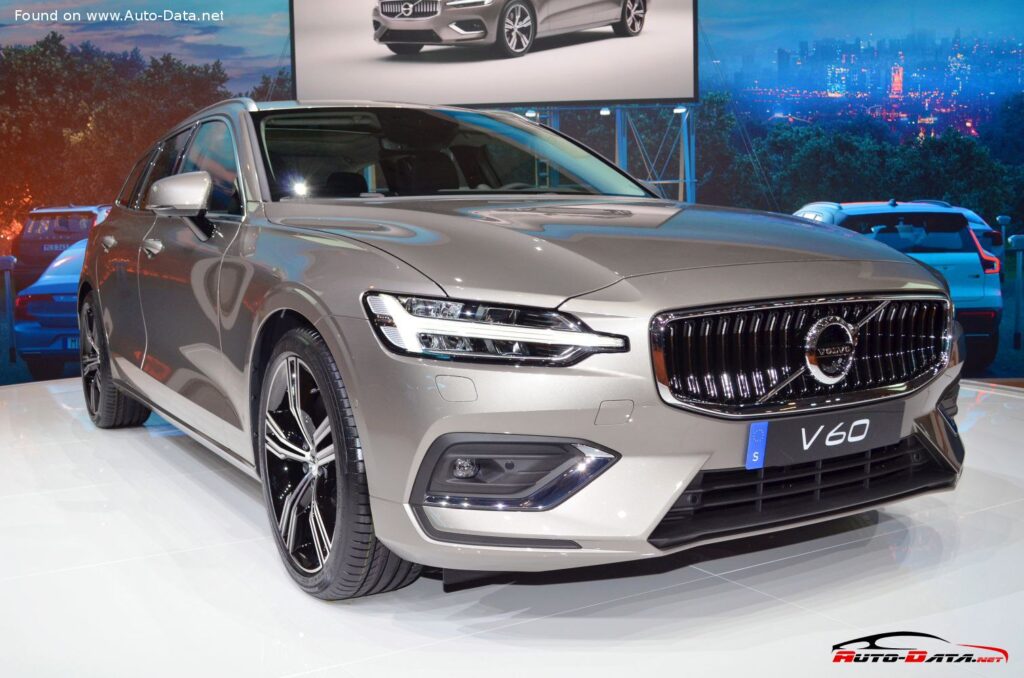
The Volvo V60 II 2.0 D4 (190 Hp) AWD Automatic represents the second generation of Volvo’s mid-size premium station wagon, a body style commonly known as an “estate” in European markets. Introduced in July 2018, this model is built on Volvo’s Scalable Product Architecture (SPA) platform, shared with the S90, V90, and XC60. The V60 II marked a substantial advancement in design, technology, and driving dynamics for the V60 lineage. The 2.0 D4 (190 Hp) AWD Automatic variant was particularly popular in Europe, offering a blend of diesel performance, all-wheel-drive capability, and Volvo’s renowned safety and practicality. Production of this specific model concluded in July 2020, positioning it within a competitive segment dominated by German luxury brands as a distinctly Scandinavian alternative.
Engine & Performance: The Drive-E Diesel Powertrain
The Volvo V60 II 2.0 D4 (190 Hp) AWD Automatic is powered by Volvo’s Drive-E family 2.0-liter (1969 cm³, or 120.16 cu. in.) inline four-cylinder diesel engine, designated D4204T14. This engine exemplifies modern diesel technology, incorporating a common rail fuel injection system and a twin-turbocharger setup with an intercooler. This configuration generates 190 horsepower at 4250 rpm, alongside 295.02 lb.-ft. (400 Nm) of torque, readily available from low engine speeds. The ample torque provides strong acceleration and pulling power, making the V60 D4 suitable for long-distance travel and towing applications.
Power is transmitted through an 8-speed automatic transmission, delivering smooth and precise gear changes that optimize both performance and fuel economy. An All-Wheel Drive (AWD) system enhances traction and stability in diverse driving conditions, from slippery surfaces to light off-road environments, increasing the V60’s versatility. Performance figures indicate a 0 to 60 mph acceleration time of 7.2 seconds (calculated) and a top speed of 136.7 mph (220 km/h). Despite its performance capabilities, the D4 engine achieves commendable fuel efficiency, with a combined WLTP fuel consumption ranging from 36.2 to 42.8 US mpg (5.5-6.5 l/100 km) and CO2 emissions between 145-169 g/km, reflecting Volvo’s commitment to environmental responsibility, particularly within the European market.
Design & Features: Scandinavian Aesthetics and Practicality
The design of the Volvo V60 II embodies contemporary Scandinavian aesthetics – elegant, understated, and functional. As a station wagon (estate), it features five doors and seating for five passengers. The exterior is characterized by clean lines, a muscular stance, and Volvo’s signature “Thor’s Hammer” LED daytime running lights, contributing to a distinctive and upscale appearance. The V60 II measures 187.44 inches (4761 mm) in length and 72.83 inches (1850 mm) in width, striking a balance between interior space and maneuverability.
The interior of the V60 II offers a luxurious and intuitively designed cabin. High-quality materials, meticulous craftsmanship, and a minimalist layout create a serene and sophisticated environment. The Sensus infotainment system, featuring a large, portrait-oriented touchscreen, serves as the central control hub for vehicle functions, providing connectivity and convenience. Safety is a core Volvo value, and the V60 II includes a comprehensive suite of advanced safety and driver-assistance systems, building upon Volvo’s decades-long leadership in automotive safety. Practicality is enhanced by a generous trunk space of 18.68 cu. ft. (529 liters) with the rear seats up, expanding to 50.89 cu. ft. (1441 liters) with the seats folded. A maximum roof load capacity of 165.35 lbs (75 kg) and a towing capacity of 4409.25 lbs (2000 kg) with brakes further contribute to the V60’s versatility for families and active lifestyles.
Technical Specifications: Volvo V60 II 2.0 D4 (190 Hp) AWD Automatic
| Category | Specification |
| General Information | |
| Brand | Volvo |
| Model | V60 |
| Generation | V60 II |
| Type (Engine) | 2.0 D4 (190 Hp) AWD Automatic |
| Start of Production | July, 2018 |
| End of Production | July, 2020 |
| Powertrain Architecture | Internal Combustion engine |
| Body Type | Station wagon (estate) |
| Seats | 5 |
| Doors | 5 |
| Performance Specs | |
| Fuel consumption at Low speed (WLTP) | 7.3-8.0 l/100 km (32.2 – 29.4 US mpg) |
| Fuel consumption at Medium speed (WLTP) | 5.9-6.7 l/100 km (39.9 – 35.1 US mpg) |
| Fuel consumption at High speed (WLTP) | 4.8-5.7 l/100 km (49 – 41.3 US mpg) |
| Fuel consumption at Very High speed (WLTP) | 5.3-6.4 l/100 km (44.4 – 36.8 US mpg) |
| Combined fuel consumption (WLTP) | 5.5-6.5 l/100 km (42.8 – 36.2 US mpg) |
| CO2 emissions (WLTP) | 145-169 g/km |
| Fuel consumption (economy) – combined | 4.9-5.1 l/100 km (48 – 46.1 US mpg) |
| CO2 emissions (NEDC equivalent) | 128-135 g/km |
| Fuel Type | Diesel |
| Acceleration 0 – 60 mph | 7.2 sec |
| Acceleration 0 – 100 km/h | 7.6 sec |
| Maximum Speed | 220 km/h (136.7 mph) |
| Braking Distance (100 km/h – 0) | 35 m (114.8 ft) |
| Engine Specs | |
| Power | 190 Hp @ 4250 rpm |
| Power per liter | 96.5 Hp/l |
| Torque | 400 Nm (295.02 lb.-ft.) |
| Maximum Engine Speed | 5000 rpm |
| Engine Layout | Front, Transverse |
| Engine Model/Code | D4204T14 |
| Engine Displacement | 1969 cm³ (120.16 cu. in.) |
| Number of Cylinders | 4 |
| Engine Configuration | Inline |
| Cylinder Bore | 82 mm (3.23 in.) |
| Piston Stroke | 93.2 mm (3.67 in.) |
| Compression Ratio | 15.8:1 |
| Number of Valves per Cylinder | 4 |
| Fuel Injection System | Diesel Commonrail |
| Engine Aspiration | Twin-Turbo, Intercooler |
| Valvetrain | DOHC |
| Engine Oil Capacity | 5.2 l (5.49 US qt) |
| Space, Volume and Weights | |
| Trunk (boot) Space – Minimum | 529 l (18.68 cu. ft.) |
| Trunk (boot) Space – Maximum | 1441 l (50.89 cu. ft.) |
| Fuel Tank Capacity | 60 l (15.85 US gal) |
| AdBlue Tank | 11.5 l (3.04 US gal) |
| Max. Roof Load | 75 kg (165.35 lbs.) |
| Permitted Trailer Load with Brakes (12%) | 2000 kg (4409.25 lbs.) |
| Permitted Trailer Load without Brakes | 750 kg (1653.47 lbs.) |
| Dimensions | |
| Length | 4761 mm (187.44 in.) |
| Width | 1850 mm (72.83 in.) |
| Height | 1432 mm (56.38 in.) |
Legacy & Market Impact: The Modern Volvo V60 II D4 AWD
The Volvo V60 II D4 AWD strengthened Volvo’s position in the premium mid-size segment, particularly in markets where diesel engines and station wagons are popular. In Europe, the V60 competed with the Audi A4 Avant, BMW 3 Series Touring, and Mercedes-Benz C-Class Estate. The D4 AWD offered a compelling package of efficient performance, all-wheel drive, and a refined driving experience.
The V60 II, and the D4 engine, demonstrated Volvo’s commitment to powertrain diversity during the industry’s transition towards electrification. Its refined diesel engine provided excellent fuel economy and torque, valued by European consumers. The car’s elegant design, luxurious interior, and practical wagon body style offered an alternative to the growing SUV market, appealing to buyers who appreciated sophisticated design and driving dynamics without sacrificing utility. The V60 II, built on the SPA platform, benefited from Volvo’s latest safety innovations and connectivity features, ensuring its competitiveness throughout its production run. Ultimately, the Volvo V60 II 2.0 D4 (190 Hp) AWD Automatic reinforced Volvo’s reputation for producing vehicles that are aesthetically pleasing, technologically advanced, safe, and practical.