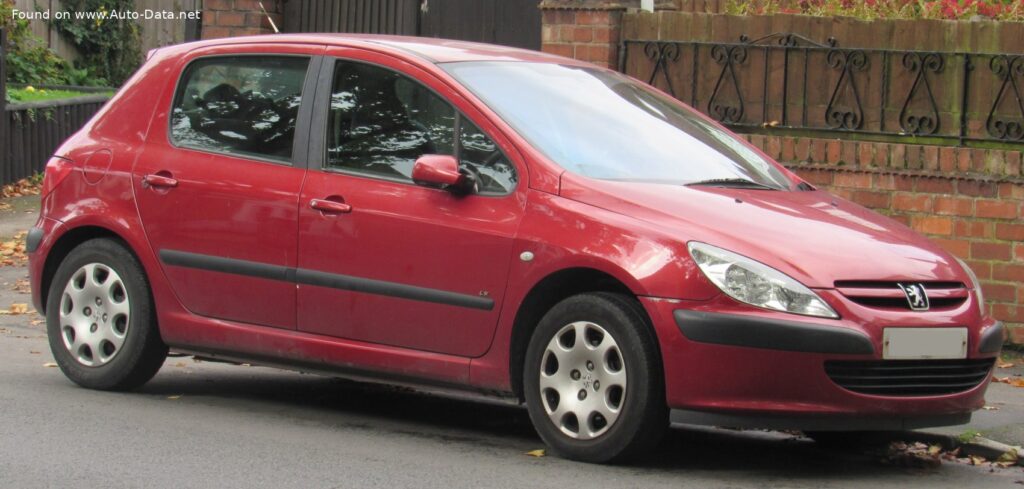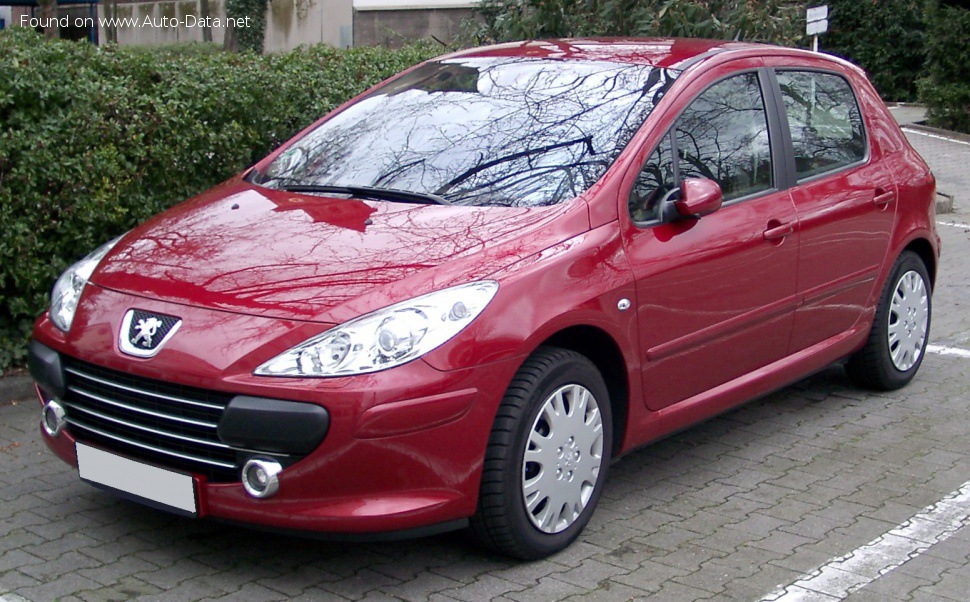
The Peugeot 307, first introduced in 2001, quickly established itself as a significant contender in the highly competitive European C-segment, a market dominated by compact family cars. Succeeding the popular Peugeot 306, the 307 aimed to offer greater interior space, improved safety, and a more sophisticated driving experience. In 2005, Peugeot introduced a comprehensive facelift for the 307, refreshing its aesthetics and updating its technical specifications to maintain its appeal against a wave of new rivals. Among the various powertrains offered, the Peugeot 307 (facelift 2005) 2.0i (177 Hp) variant stood out as a performance-oriented option. This particular model, produced from 2005 to 2008, combined the practicality of a hatchback with a spirited engine, appealing to European consumers who desired a blend of everyday usability and engaging driving dynamics. While never officially imported to the United States, the 307 played a crucial role in Peugeot’s global strategy, embodying the brand’s commitment to design, comfort, and engineering prowess in its primary markets.
The Peugeot 307 (facelift 2005) 2.0i: A European Compact Car
The Peugeot 307, particularly the facelifted 2005 model, represents a significant chapter in the evolution of the French automaker’s compact car offerings. Positioned within the C-segment, it competed directly with vehicles like the Volkswagen Golf, Ford Focus, and Renault Mégane. The 2.0i variant, with its 177 horsepower engine, offered a more engaging driving experience than the base models, catering to a segment of buyers seeking a balance between practicality and performance. Its design and features reflected a focus on passenger comfort, safety, and a distinctive French aesthetic.
Engine & Performance: The RFK EW10J4S Powertrain
At the heart of the Peugeot 307 (facelift 2005) 2.0i (177 Hp) lies the RFK EW10J4S engine, a naturally aspirated 2.0-liter (1997 cm³, or 121.86 cubic inches) inline-four gasoline unit. This engine was designed to deliver a compelling blend of power and responsiveness for a vehicle in its class. It produced 177 horsepower at 7000 rpm, indicating a performance-oriented tuning strategy. Torque output was rated at 148.99 lb.-ft. (202 Nm) at 4750 rpm, providing ample pulling power throughout the usable rev range.
The engine’s architecture featured a DOHC (Double Overhead Camshaft) valvetrain with four valves per cylinder, contributing to its efficient breathing and high-revving capability. A compression ratio of 11:1 further enhanced combustion efficiency, while a multi-port fuel injection system ensured precise fuel delivery. Power was channeled to the front wheels via a slick-shifting 5-speed manual transmission, offering a direct and engaging driving experience typical of European hatchbacks.
Performance figures were respectable for its time. The 307 2.0i could accelerate from 0 to 60 mph in 8.4 seconds, reaching a top speed of 136.7 mph (220 km/h). Fuel economy was rated at 28 US mpg (8.4 l/100 km) combined, with 19.9 US mpg (11.8 l/100 km) in urban driving and 36.2 US mpg (6.5 l/100 km) on the highway. CO2 emissions were 200 g/km, meeting Euro 4 emission standards. The vehicle’s kerb weight of 2835.14 lbs (1286 kg) resulted in a weight-to-power ratio of 7.3 kg/Hp, or 137.6 Hp per tonne, contributing to its agile character.
Design & Features: Practicality and Refinement
The Peugeot 307 (facelift 2005) retained the core design elements of the pre-facelift model but incorporated subtle yet impactful changes. The exterior received a refreshed front fascia, featuring a more prominent grille and redesigned headlights, aligning it with Peugeot’s evolving corporate identity. Its distinctive high-roofline design, a hallmark of the 307, was maintained, contributing to its spacious interior and excellent outward visibility. The vehicle was offered as a versatile hatchback, available with either 3 or 5 doors, catering to a wide range of buyers.
Inside, the 307 offered seating for five occupants, with comfortable and supportive seats. The interior design prioritized ergonomics and quality materials, creating an inviting cabin environment. Practicality was a key strength, with a minimum trunk (boot) space of 12.04 cu. ft. (341 l) expanding to 46.9 cu. ft. (1328 l) with the rear seats folded down.
The 307’s dimensions were well-proportioned for a compact car: 165.83 inches (4212 mm) in length, 68.74 inches (1746 mm) in width, and 59.45 inches (1510 mm) in height. A wheelbase of 102.68 inches (2608 mm) contributed to a stable ride and generous interior volume. The vehicle featured a front track of 58.94 inches (1497 mm) and a rear track of 58.74 inches (1492 mm), providing a solid stance. Ground clearance was 4.72 inches (120 mm), and the drag coefficient (Cd) was 0.31, indicating a reasonably aerodynamic design.
The 307 (facelift 2005) was equipped with ventilated disc brakes at the front and disc brakes at the rear, complemented by an Anti-lock Braking System (ABS). Steering was managed by a responsive rack and pinion system. The 2.0i variant came standard with 205/50 R17 V tires mounted on 17-inch wheel rims, providing a good balance of grip and ride comfort. The front-wheel-drive architecture, powered by a transverse-mounted internal combustion engine, was a conventional and proven setup for this segment.
Technical Specifications
| Category | Specification |
| General Information | |
| Brand | Peugeot |
| Model | 307 |
| Generation | 307 (facelift 2005) |
| Type (Engine) | 2.0i (177 Hp) |
| Start of Production | 2005 year |
| End of Production | 2008 year |
| Powertrain Architecture | Internal Combustion engine |
| Body Type | Hatchback |
| Seats | 5 |
| Doors | 3-5 |
| Performance Specs | |
| Fuel Consumption (Urban) | 11.8 l/100 km |
| Fuel Consumption (Extra Urban) | 6.5 l/100 km |
| Fuel Consumption (Combined) | 8.4 l/100 km |
| CO2 Emissions | 200 g/km |
| Fuel Type | Petrol (Gasoline) |
| Acceleration 0 – 60 mph | 8.4 sec |
| Maximum Speed | 220 km/h |
| Emission Standard | Euro 4 |
| Weight-to-Power Ratio | 7.3 kg/Hp |
| Engine Specs | |
| Power | 177 Hp @ 7000 rpm |
| Torque | 202 Nm @ 4750 rpm |
| Engine Layout | Front, Transverse |
| Engine Model/Code | RFK EW10J4S |
| Engine Displacement | 1997 cm³ |
| Number of Cylinders | 4 |
| Engine Configuration | Inline |
The Peugeot 307, including the facelifted 2005 generation, secured a significant position in the competitive European compact car market. Its rivals included the Volkswagen Golf, Ford Focus, Renault Mégane, and Opel Astra. The 307 distinguished itself with its French design, spacious interior, and comfortable ride. The 2.0i variant offered a more dynamic driving experience, appealing to buyers seeking a blend of practicality and performance. The 307’s success in Europe paved the way for the 308, and its legacy remains as a versatile and well-engineered vehicle that embodied Peugeot’s commitment to design and innovation.