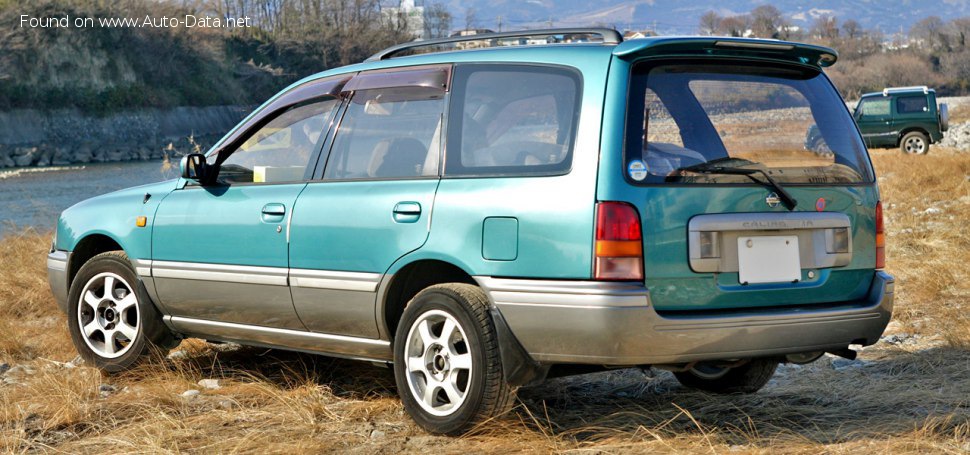
The Nissan Sunny, a nameplate with a long and storied history in global automotive markets, represents a lineage of compact cars renowned for their practicality, economy, and reliability. The third generation of the Sunny Wagon, internally designated Y10, continued this legacy, specifically the Nissan Sunny III Wagon (Y10) with the 1.6 i 16V (90 Hp) engine variant. Produced from 1992 to 2000, this station wagon model served as a versatile and dependable family vehicle and commercial workhorse across numerous international markets, particularly in Europe and Asia, where compact wagons enjoyed significant popularity. While not directly sold as a “Sunny Wagon” in the United States, its platform siblings, such as the Nissan Sentra Wagon or the AD Van, shared much of its underlying engineering and philosophy, reinforcing Nissan’s commitment to robust and efficient small vehicles.
Nissan Sunny III Wagon (Y10): A Detailed Overview
The Y10 generation marked a period of evolution for Nissan’s compact offerings, blending contemporary design cues with proven mechanicals. The wagon body style, in particular, capitalized on the demand for increased cargo capacity without sacrificing the maneuverability and fuel efficiency inherent to the compact segment. The 1.6-liter engine variant, with its 90 horsepower output, struck a commendable balance between performance for daily driving and economical operation, making it a pragmatic choice for a wide array of consumers seeking a no-nonsense vehicle.
Engine & Performance: The Heart of the Nissan Sunny III Wagon (Y10)
At the core of the Nissan Sunny III Wagon (Y10) 1.6 i 16V (90 Hp) lies Nissan’s GA16DS engine, a naturally aspirated, 1.6-liter (1597 cm3 or 97.45 cu. in.) inline four-cylinder powerplant. This engine, known for its robust construction and smooth operation, featured a Double Overhead Camshaft (DOHC) valvetrain with four valves per cylinder, totaling 16 valves. This configuration allowed for efficient air intake and exhaust, contributing to both power delivery and fuel economy. Fueling was managed by a multi-port manifold injection system, a standard and reliable technology for the era, ensuring precise fuel delivery to each cylinder.
The engine produced a respectable 90 horsepower at 6000 rpm, which, when combined with a torque output of 100.31 lb.-ft. (136 Nm) peaking at 4000 rpm, provided adequate motivation for the compact wagon. Power was routed to the front wheels via a five-speed manual transmission, a common and efficient setup that offered drivers direct control over the vehicle’s dynamics. This powertrain allowed the Sunny Wagon to accelerate from 0 to 60 mph in a competitive 10.6 seconds, with a top speed reaching 107.5 mph (173 km/h).
Fuel efficiency was a key selling point for the Sunny Y10. The 1.6-liter engine achieved a combined fuel consumption rating of 32.2 US miles per gallon (7.3 l/100 km), making it an economical choice for both city commuting and longer journeys. With a 13.21 US gallon (50-liter) fuel tank, the Sunny Wagon offered a practical driving range, further enhancing its appeal as a cost-effective vehicle. The engine’s layout was front, transverse, driving the front wheels, a typical and space-efficient arrangement for compact cars of this period.
Design & Features
The design of the Nissan Sunny III Wagon (Y10) was characterized by its functional and unpretentious aesthetic, prioritizing utility and interior volume. As a five-door, five-seat station wagon, it offered significant practicality. The exterior featured clean lines, a relatively tall profile, and a sensible footprint, measuring 164.37 inches in length, 65.55 inches in width, and 59.84 inches in height. The wheelbase of 94.49 inches contributed to a stable ride while maintaining a compact turning radius suitable for urban environments.
Inside, the Sunny Wagon was designed for durability and ease of use. The five-seat configuration provided comfortable seating for occupants, while the true strength of the wagon body lay in its cargo capacity. With the rear seats in place, the trunk offered a generous 16.24 cubic feet (460 liters) of space. Folding down the rear seats dramatically expanded this to an impressive 56.5 cubic feet (1600 liters), transforming the vehicle into a highly capable hauler for families, small businesses, or recreational activities.
The Y10 generation incorporated features aimed at enhancing both driving comfort and safety for its time. The vehicle was equipped with a hydraulic power steering system, making maneuvering easier, especially at low speeds. For braking, the front wheels featured ventilated discs, providing effective stopping power and heat dissipation, while the rear utilized drum brakes. An Anti-lock Braking System (ABS) was available as an assisting system, a crucial safety enhancement for the early to mid-1990s, helping drivers maintain steering control during emergency braking. The suspension system, with a wishbone setup at the front and spring struts at the rear, provided a comfortable and predictable ride, suitable for varied road conditions. The vehicle rode on 175/65 R14 tires, a common size for compact cars, balancing grip and ride comfort.
Technical Specifications
| General Information | |
| Brand | Nissan |
| Model | Sunny |
| Generation | Sunny III Wagon (Y10) |
| Engine Type | 1.6 i 16V (90 Hp) |
| Production Start | 1992 |
| Production End | 2000 |
| Powertrain Architecture | Internal Combustion Engine |
| Body Type | Station wagon (estate) |
| Seats | 5 |
| Doors | 5 |
| Performance Specifications | |
| Fuel Consumption (Combined) | 32.2 US mpg (7.3 l/100 km) |
| Fuel Type | Petrol (Gasoline) |
| Acceleration 0-60 mph | 10.6 sec |
| Maximum Speed | 107.5 mph (173 km/h) |
| Weight-to-Power Ratio | 12 kg/Hp (83.6 Hp/tonne) |
| Weight-to-Torque Ratio | 7.9 kg/Nm (126.4 Nm/tonne) |
| Engine Specifications | |
| Power | 90 Hp @ 6000 rpm |
| Power per Liter | 56.4 Hp/l |
| Torque | 100.31 lb.-ft. (136 Nm) @ 4000 rpm |
| Engine Layout | Front, Transverse |
| Engine Model/Code | GA16DS |
| Engine Displacement | 1.6 Liters (1597 cm3, 97.45 cu. in.) |
| Number of Cylinders | 4 |
| Engine Configuration | Inline |
| Cylinder Bore | 2.99 in. (76 mm) |
| Piston Stroke | 3.46 in. (88 mm) |
| Compression Ratio | 9.8:1 |
| Valves per Cylinder | 4 |
| Fuel Injection System | Multi-port manifold injection |
| Engine Aspiration | Naturally aspirated engine |
| Valvetrain | DOHC |
| Engine Oil Capacity | 3.38 US qt (3.2 l) |
| Coolant Capacity | 5.81 US qt (5.5 l) |
| Dimensions, Volume, and Weights | |
| Kerb Weight | 2372.17 lbs. (1076 kg) |
| Max. Weight | 3461.26 lbs. (1570 kg) |
| Max Load | 1089.08 lbs. (494 kg) |
| Trunk Space (Minimum) | 16.24 cu. ft. (460 l) |
| Trunk Space (Maximum) | 56.5 cu. ft. (1600 l) |
| Fuel Tank Capacity | 13.21 US gal (50 l) |
| Length | 164.37 in. (4175 mm) |
| Width | 65.55 in. (1665 mm) |
| Height | 59.84 in. (1520 mm) |
| Wheelbase | 94.49 in. (2400 mm) |
| Front Track | 56.5 in. (1435 mm) |
| Rear Track | 56.5 in. (1435 mm) |
| Drivetrain, Brakes, and Suspension | |
| Drivetrain Architecture | Front-wheel drive (ICE drives front wheels) |
| Drive Wheel | Front wheel drive |
| Gearbox | 5 gears, manual transmission |
| Front Suspension | Wishbone |
| Rear Suspension | Spring Strut |
| Front Brakes | Ventilated discs |
| Rear Brakes | Drum |
| Assisting Systems | ABS (Anti-lock braking system) |
| Steering Type | Steering rack and pinion |
| Power Steering | Hydraulic Steering |
| Tires Size | 175/65 R14 |
Legacy and Market Impact
The Nissan Sunny III Wagon (Y10) 1.6 i 16V (90 Hp) carved out a significant niche in the global automotive landscape, particularly in markets where practicality, affordability, and reliability were paramount. While the “Sunny” name was not typically used for this wagon variant in North America (where the equivalent was often the Sentra Wagon or the more commercially focused AD Van), its reputation for bulletproof mechanicals and low running costs transcended regional branding. In Europe, Asia, and other international markets, it competed fiercely with other compact wagons and hatchbacks like the Toyota Corolla Wagon, Honda Civic Wagon, Opel Astra Caravan, and Ford Escort Estate.
Its legacy is built on its reputation as a no-frills, dependable workhorse. Owners appreciated its spacious interior, especially the expansive cargo area, which made it ideal for families, small tradespeople, or anyone needing to transport goods regularly. The GA16DS engine, in particular, was lauded for its longevity and ease of maintenance, contributing to the Sunny Wagon’s low total cost of ownership. This made it a popular choice in developing economies and as a fleet vehicle.
The Y10 generation, and specifically the wagon, demonstrated Nissan’s engineering prowess in creating globally relevant vehicles that could adapt to diverse consumer needs and road conditions. Its robust construction and straightforward design meant it could withstand the rigors of daily use for many years, cementing its place as a reliable choice in the used car market even decades after its production ceased. The availability of ABS, even as an option, showcased Nissan’s commitment to integrating emerging safety technologies into its mainstream compact offerings, enhancing its competitive edge during the 1990s. The Nissan Sunny III Wagon (Y10), therefore, stands as a testament to Nissan’s ability to produce practical, efficient, and enduring vehicles that met the real-world demands of millions of drivers worldwide.