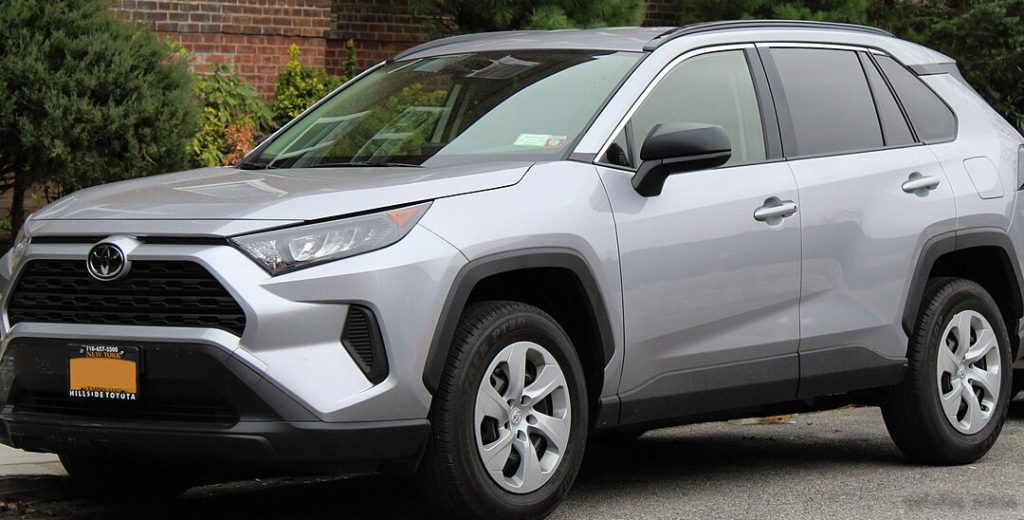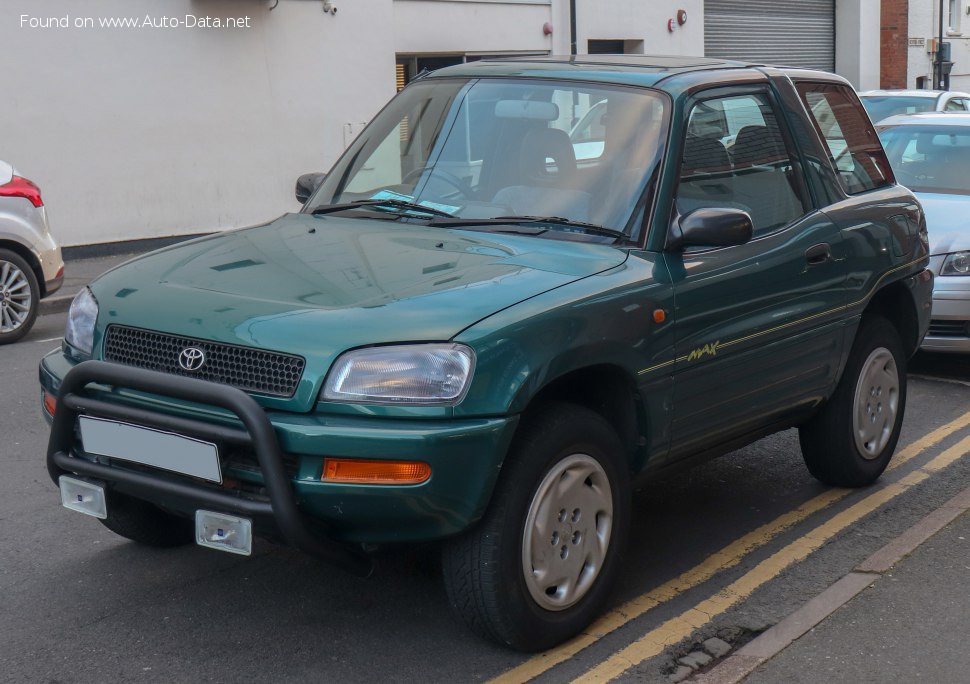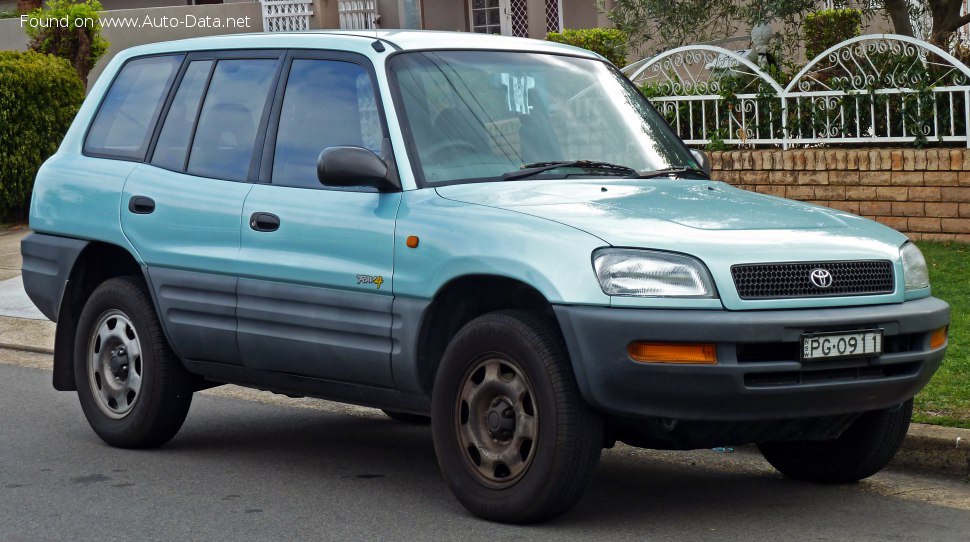
The Toyota RAV4, a pioneer in the compact SUV segment, has consistently redefined expectations for utility, comfort, and reliability since its debut. The fourth generation, known internally as the XA40 series, built upon this legacy, and its mid-cycle refresh, the Toyota RAV4 IV (facelift 2015), introduced a host of enhancements to keep it competitive in a rapidly evolving market. This particular variant, equipped with the 2.0 Valvematic (151 Hp) AWD powertrain, represented a balanced offering in key international markets, primarily outside of North America where different engine options were prevalent. It combined Toyota’s renowned engineering prowess with practical features, making it a compelling choice for families and adventurers seeking a versatile and efficient vehicle.
Launched in 2015 and produced until 2018, the facelifted RAV4 IV maintained its core identity as a five-door, five-seat SUV, but benefited from updated styling, improved interior materials, and enhanced technology. The 2.0-liter Valvematic engine, paired with an all-wheel-drive system and a six-speed manual transmission, underscored its commitment to driver engagement and capability. This model was particularly significant in European and Asian markets, where its blend of fuel efficiency, moderate power, and robust all-wheel-drive system resonated with a broad customer base looking for a capable yet economical compact SUV.
Engine & Performance of the Toyota RAV4 IV (facelift 2015)
At the heart of this particular Toyota RAV4 IV (facelift 2015) variant lies the 2.0-liter Valvematic engine, designated as the 3ZR-FAE. This naturally aspirated inline-four gasoline (petrol) engine is a testament to Toyota’s commitment to efficiency and smooth power delivery. With a displacement of 1987 cm3 (121.25 cu. in.), it produces a respectable 151 horsepower at 6200 rpm, translating to a power-per-liter output of 76 Hp/l. This power figure provides ample motivation for daily driving and light off-road excursions, without being overly thirsty.
Powertrain Details
The engine’s key technological highlight is Toyota’s Valvematic system, an advanced variable valve lift and timing mechanism. Unlike conventional variable valve timing systems that only adjust valve opening and closing times, Valvematic also continuously varies the amount the intake valves open. This allows for precise control over the air-fuel mixture, optimizing combustion efficiency across the engine’s entire operating range, leading to improved fuel economy and reduced emissions. Peak torque of 196 Nm (144.56 lb.-ft.) is achieved at 4000 rpm, ensuring a responsive feel in most driving conditions.
Power is channeled to all four wheels via an all-wheel-drive (4×4) system, providing enhanced traction and stability, especially in adverse weather conditions or on unpaved roads. The transmission for this specific model is a six-speed manual, offering drivers a more engaging and direct connection to the vehicle’s powertrain. This combination allows the RAV4 to accelerate from 0 to 60 mph in a competitive 9.4 seconds, with a top speed of 114.95 mph.
Fuel efficiency was a significant focus for the RAV4 IV. This 2.0 Valvematic AWD model achieves an impressive combined fuel economy of 35.1 US mpg (6.7 l/100 km). Urban consumption stands at 27.7 US mpg (8.5 l/100 km), while extra-urban driving yields 41.3 US mpg (5.7 l/100 km). These figures, combined with CO2 emissions of 155 g/km and Euro 6 W emission standard compliance, underscore its environmentally conscious design and economical operation, making it an attractive option in markets with strict emission regulations.
Design & Features
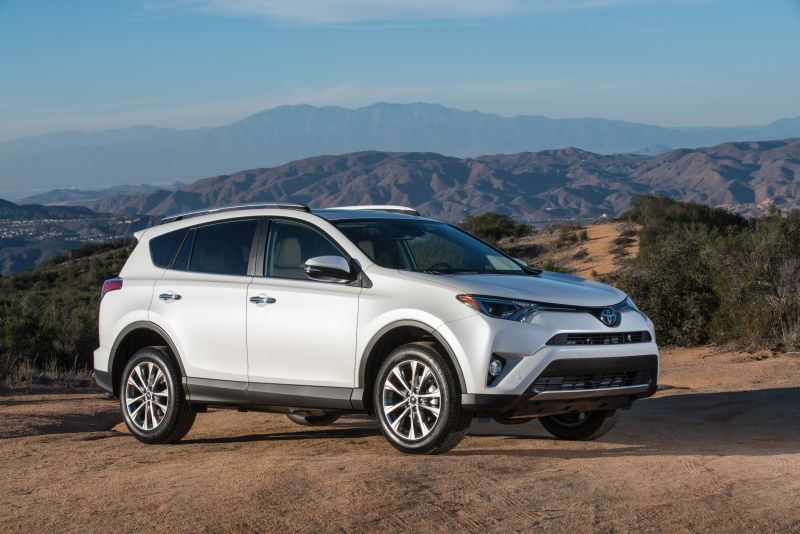
The Toyota RAV4 IV (facelift 2015) received a significant visual refresh, giving it a more modern and dynamic appearance. The exterior styling was updated with a redesigned front fascia, including a sleeker grille, new headlights with available LED technology, and revised bumpers. The rear also saw enhancements with updated taillights and a refreshed tailgate design. These changes aimed to give the RAV4 a more sophisticated and less utilitarian look, aligning it with contemporary automotive design trends.
As an SUV, the RAV4 IV is designed for practicality and versatility. Its dimensions are well-suited for both city driving and longer journeys, measuring 181.3 inches in length, 72.64 inches in width, and 65.94 inches in height. The wheelbase of 104.72 inches contributes to a stable ride and generous interior space. With a ground clearance of 6.42 inches, it offers sufficient capability for light off-road trails and navigating challenging urban environments. The minimum turning circle of 34.78 to 36.75 feet ensures maneuverability in tight spaces.
Interior and Cargo Versatility
Inside, the RAV4 IV (facelift 2015) offers a comfortable and well-appointed cabin for five occupants across two rows. The five-door configuration provides easy access for all passengers. The facelift brought refinements to interior materials, improving tactile quality and overall aesthetics. Ergonomics were carefully considered, with controls intuitively placed for the driver.
Cargo capacity is a strong suit for the RAV4. It provides a minimum trunk space of 19.32 cu. ft. (547 liters) with all seats in place, which is ample for daily errands and luggage. For larger items, the rear seats can be folded down, expanding the cargo volume to a substantial 61.27 cu. ft. (1735 liters), making it highly versatile for hauling gear, groceries, or sports equipment. The vehicle’s kerb weight ranges from 3284.89 to 3494.33 lbs. (1490-1585 kg), contributing to its stable road presence. It also boasts significant towing capabilities, with a permitted trailer load of 4409.25 lbs. (2000 kg) with brakes, and 1653.47 lbs. (750 kg) without brakes.
The drivetrain features an independent McPherson type front suspension and an independent trapezoidal lever rear suspension, providing a comfortable ride and confident handling. Braking is handled by ventilated discs at the front and disc brakes at the rear, supported by an Anti-lock Braking System (ABS) for optimal stopping performance. The electric power steering system, with a rack and pinion setup, offers light and precise control, enhancing the driving experience. Standard tire size is 225/65 R17 H, mounted on 6.5J or 7J 17-inch wheel rims.
Technical Specifications: Toyota RAV4 IV (facelift 2015) 2.0 Valvematic (151 Hp) AWD
| Category | Specification |
| General Information | Brand |
| Toyota | |
| Model | |
| RAV4 | |
| Generation | |
| RAV4 IV (facelift 2015) | |
| Type (Engine) | |
| 2.0 Valvematic (151 Hp) AWD | |
| Start of Production | |
| 2015 year | |
| End of Production | |
| 2018 year | |
| Powertrain Architecture | |
| Internal Combustion engine | |
| Body type | |
| SUV | |
| Seats | |
| 5 | |
| Doors | |
| 5 | |
| Performance Specs | Fuel consumption (economy) – urban |
| 8.5 l/100 km (27.7 US mpg) | |
| Fuel consumption (economy) – extra urban | |
| 5.7 l/100 km (41.3 US mpg) | |
| Fuel consumption (economy) – combined | |
| 6.7 l/100 km (35.1 US mpg) | |
| CO2 emissions | |
| 155 g/km | |
| Fuel Type | |
| Petrol (Gasoline) | |
| Acceleration 0 – 60 mph | |
| 9.4 sec | |
| Maximum speed | |
| 185 km/h (114.95 mph) | |
| Emission standard | |
| Euro 6 W | |
| Weight-to-power ratio | |
| 9.9 kg/Hp (101.3 Hp/tonne) | |
| Weight-to-torque ratio | |
| 7.6 kg/Nm (131.5 Nm/tonne) | |
| Engine Specs | Power |
| 151 Hp @ 6200 rpm | |
| Power per liter | |
| 76 Hp/l | |
| Torque | |
| 196 Nm @ 4000 rpm (144.56 lb.-ft. @ 4000 rpm) | |
| Engine layout | |
| Front, Transverse | |
| Engine Model/Code | |
| 3ZR-FAE | |
| Engine displacement | |
| 1987 cm3 (121.25 cu. in.) | |
| Number of cylinders | |
| 4 | |
| Engine configuration | |
| Inline | |
| Number of valves per cylinder | |
| 4 | |
| Fuel injection system | |
| Multi-port manifold injection | |
| Engine aspiration | |
| Naturally aspirated engine | |
| Valvetrain | |
| DOHC. Valvematic | |
| Engine oil capacity | |
| 4.2 l (4.44 US qt) | |
| Space, Volume and Weights | Kerb Weight |
| 1490-1585 kg (3284.89 – 3494.33 lbs.) | |
| Max. weight | |
| 2100 kg (4629.71 lbs.) | |
| Max load | |
| 515-610 kg (1135.38 – 1344.82 lbs.) | |
| Trunk (boot) space – minimum | |
| 547 l (19.32 cu. ft.) | |
| Trunk (boot) space – maximum | |
| 1735 l (61.27 cu. ft.) | |
| Fuel tank capacity | |
| 60 l (15.85 US gal) | |
| Permitted trailer load with brakes (12%) | |
| 2000 kg (4409.25 lbs.) | |
| Permitted trailer load without brakes | |
| 750 kg (1653.47 lbs.) | |
| Dimensions | Length |
| 4605 mm (181.3 in.) | |
| Width | |
| 1845 mm (72.64 in.) | |
| Height | |
| 1675 mm (65.94 in.) | |
| Wheelbase | |
| 2660 mm (104.72 in.) | |
| Front track | |
| 1560-1570 mm (61.42 – 61.81 in.) | |
| Rear (Back) track | |
| 1560-1570 mm (61.42 – 61.81 in.) | |
| Ride height (ground clearance) | |
| 163 mm (6.42 in.) | |
| Minimum turning circle (turning diameter) | |
| 10.6-11.2 m (34.78 – 36.75 ft.) | |
| Approach angle | |
| 19° | |
| Departure angle | |
| 23° | |
| Drivetrain, Brakes and Suspension Specs | Drive wheel |
| All wheel drive (4×4) | |
| Number of gears and type of gearbox | |
| 6 gears, manual transmission | |
| Front suspension | |
| Independent type McPherson | |
| Rear suspension | |
| Independent on trapezoidal lever | |
| Front brakes | |
| Ventilated discs | |
| Rear brakes | |
| Disc | |
| Assisting systems | |
| ABS (Anti-lock braking system) | |
| Steering type | |
| Steering rack and pinion | |
| Power steering | |
| Electric Steering | |
| Tires size | |
| 225/65 R17 H | |
| Wheel rims size | |
| 6.5J 17; 7J 17 |
Legacy and Market Impact of the Toyota RAV4 IV (facelift 2015)
The Toyota RAV4 has long been a foundational model in the compact SUV segment, and the fourth generation, particularly after its 2015 facelift, continued to solidify its position as a global bestseller. While the North American market primarily received larger displacement engines, this 2.0 Valvematic (151 Hp) AWD variant played a crucial role in Europe, Asia, and other international markets, offering a compelling blend of Toyota’s renowned reliability, practical SUV utility, and a more economical powertrain option.
In its primary markets, the Toyota RAV4 IV (facelift 2015) faced stiff competition from rivals such as the Nissan Qashqai (Rogue Sport in some markets), Honda CR-V, Mazda CX-5, Volkswagen Tiguan, and Ford Kuga (Escape in North America). Despite the intense competition, the RAV4 consistently stood out due to its robust build quality, strong resale value, and the perception of unwavering reliability that is synonymous with the Toyota brand. The facelift helped maintain its visual freshness against newer entrants, while the improved interior and technological features kept it competitive in terms of comfort and convenience.
The 2.0 Valvematic engine, specifically, was lauded for its smooth operation and impressive fuel economy figures, which were highly attractive in regions where fuel prices are higher and emission regulations are stringent. Paired with the capable all-wheel-drive system and the engaging six-speed manual transmission, it offered a driving experience that was both practical for urban environments and confident for light off-road excursions or adverse weather. This powertrain configuration underscored Toyota’s strategy to offer tailored options for diverse global market needs.
The RAV4’s historical significance lies in its pioneering role in popularizing the compact SUV concept. The fourth generation, including this facelifted model, continued to evolve this concept, blending car-like driving dynamics with SUV versatility. It contributed significantly to the segment’s growth, demonstrating that consumers desired vehicles that offered higher seating positions, greater cargo flexibility, and optional all-wheel-drive capability without the bulk or fuel penalty of traditional, body-on-frame SUVs.
Ultimately, the Toyota RAV4 IV (facelift 2015) 2.0 Valvematic (151 Hp) AWD cemented its legacy as a highly competent and well-rounded compact SUV. Its market impact was characterized by strong sales, high customer satisfaction, and a continued reinforcement of Toyota’s reputation for building dependable, efficient, and practical vehicles that meet the diverse needs of a global automotive audience. It paved the way for subsequent generations to further innovate and dominate the ever-growing compact SUV landscape.