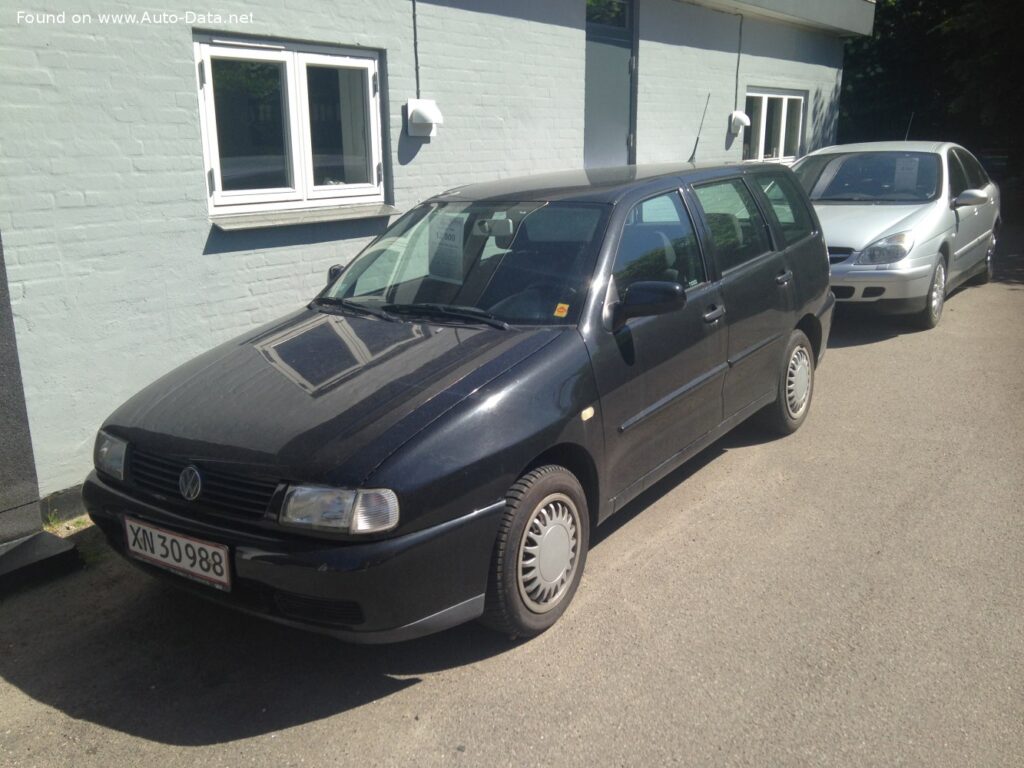
The Volkswagen Polo III Variant 1.6 (101 Hp) was a crucial extension of Volkswagen’s successful Polo supermini range, produced from 1994 to 2000. This iteration, particularly the 1.6-liter, 101 horsepower version, offered European buyers a practical and versatile estate car option within the subcompact segment. Unlike many of its competitors which focused solely on hatchback configurations, the Polo III Variant catered to those needing increased cargo capacity without the size and expense of a larger family car. It was primarily sold in Europe, where the demand for small, fuel-efficient estates remained strong, and wasn’t officially offered in the North American market. The Polo III Variant filled a niche for buyers needing a small, economical vehicle capable of handling larger loads, making it a popular choice for families and small businesses.
Volkswagen Polo III Variant: Development and Market Position
The Polo III, launched in 1994, was a thoroughly revised version of the Polo II, building upon its predecessor’s strengths while addressing some of its shortcomings. The Variant, introduced shortly after the hatchback, was designed to capitalize on the growing demand for compact estates. Volkswagen recognized a segment of the market that desired the maneuverability and running costs of a small car, but with the added practicality of a larger boot. The Polo III Variant wasn’t intended to compete directly with larger estates like the Volkswagen Passat Variant; instead, it aimed to undercut them on price and running costs while still providing a useful amount of cargo space. The car benefited from Volkswagen’s reputation for build quality and reliability, which further enhanced its appeal in a competitive market. It was positioned as a sensible and dependable choice, prioritizing functionality over outright performance or luxury.
Engine & Performance
The 1.6-liter inline-four engine powering the Polo III Variant 1.6 was a mainstay of the Volkswagen Group’s engine lineup during the 1990s. Producing 101 horsepower and approximately 107 lb-ft of torque, it provided adequate performance for everyday driving, although it wasn’t designed for rapid acceleration. The engine featured a single overhead camshaft and multipoint fuel injection, contributing to its relatively smooth operation and reasonable fuel economy. Power was delivered to the front wheels through either a five-speed manual transmission or an optional four-speed automatic. The manual transmission offered a more engaging driving experience and slightly better fuel efficiency, while the automatic provided added convenience, particularly in urban environments. Acceleration from 0 to 60 mph was typically around 11-12 seconds, and top speed was approximately 115 mph. While these figures aren’t particularly impressive by modern standards, they were competitive within the subcompact estate segment of the time. The engine’s durability and relatively simple design made it easy to maintain, contributing to the Polo III Variant’s reputation for reliability. The suspension setup, consisting of MacPherson struts at the front and a twist beam axle at the rear, provided a comfortable ride, although it wasn’t particularly sporty.
Design & Features
The Polo III Variant’s design was a practical and understated evolution of the Polo II. The estate body style extended the roofline rearward, creating a significantly larger cargo area compared to the hatchback. The rear window was also extended, improving visibility. The exterior styling was characterized by clean lines and a functional aesthetic, reflecting the car’s focus on practicality. Inside, the Polo III Variant offered a surprisingly spacious cabin for its size. The rear seats could be folded down to further increase cargo capacity, making it a versatile vehicle for carrying both passengers and luggage. The dashboard layout was simple and functional, with clearly labeled controls. Standard features typically included power steering, central locking, and electric front windows. Higher trim levels offered additional features such as air conditioning, alloy wheels, and a sunroof. Safety features were relatively basic by modern standards, but included seatbelts for all occupants and, on some models, ABS brakes. The Polo III Variant’s interior materials were durable and hard-wearing, designed to withstand the rigors of everyday use. The car’s overall design prioritized functionality and practicality over luxury or visual flair, making it a sensible and appealing choice for buyers seeking a reliable and versatile estate car.
The Polo III Variant’s impact wasn’t about groundbreaking innovation, but rather about providing a well-executed and affordable solution to a specific need. It demonstrated Volkswagen’s ability to adapt its existing platforms to create new models that catered to diverse market demands. The Variant’s success helped solidify the Polo’s position as a leading supermini in Europe, and paved the way for future generations of Polo estates.
Technical Specifications
| Engine Type | Inline-4, Petrol |
| Engine Displacement | 1.598 Liters (97.5 cu in) |
| Horsepower | 101 HP (75 kW) @ 5,200 rpm |
| Torque | 107 lb-ft (145 Nm) @ 3,200 rpm |
| Fuel System | Multipoint Fuel Injection |
| Transmission | 5-Speed Manual or 4-Speed Automatic |
| Drivetrain | Front-Wheel Drive |
| Brakes | Front: Ventilated Discs, Rear: Drums (ABS optional) |
| Suspension (Front) | MacPherson Struts |
| Suspension (Rear) | Twist Beam Axle |
| Curb Weight | Approximately 1,150 kg (2,535 lbs) |
| Top Speed | Approximately 115 mph (185 km/h) |
| 0-60 mph | Approximately 11-12 seconds |
| Fuel Economy (Combined) | Approximately 35-40 mpg (6.7-7.1 L/100km) |
| Cargo Capacity (Rear Seats Up) | Approximately 430 Liters (15.2 cu ft) |
| Cargo Capacity (Rear Seats Down) | Approximately 1,200 Liters (42.4 cu ft) |
| Production Years | 1994-2000 |