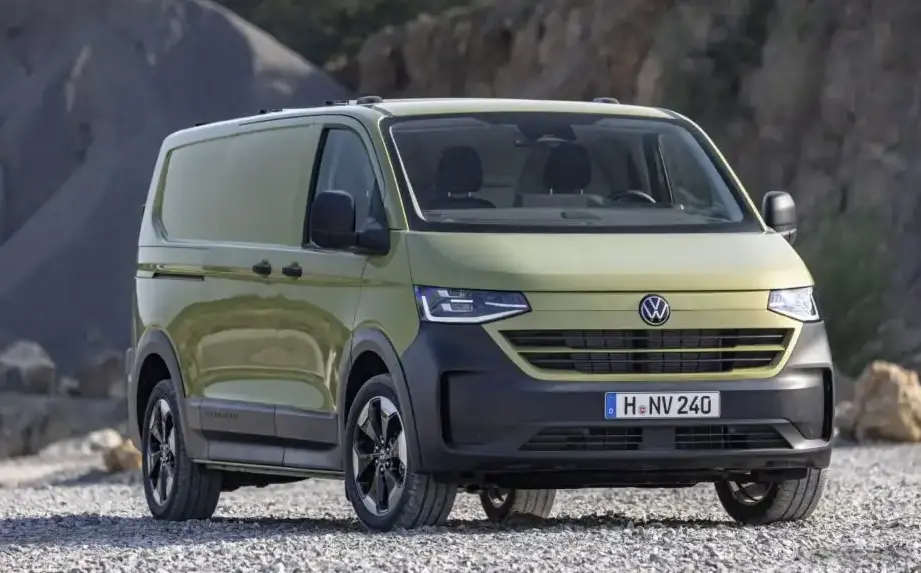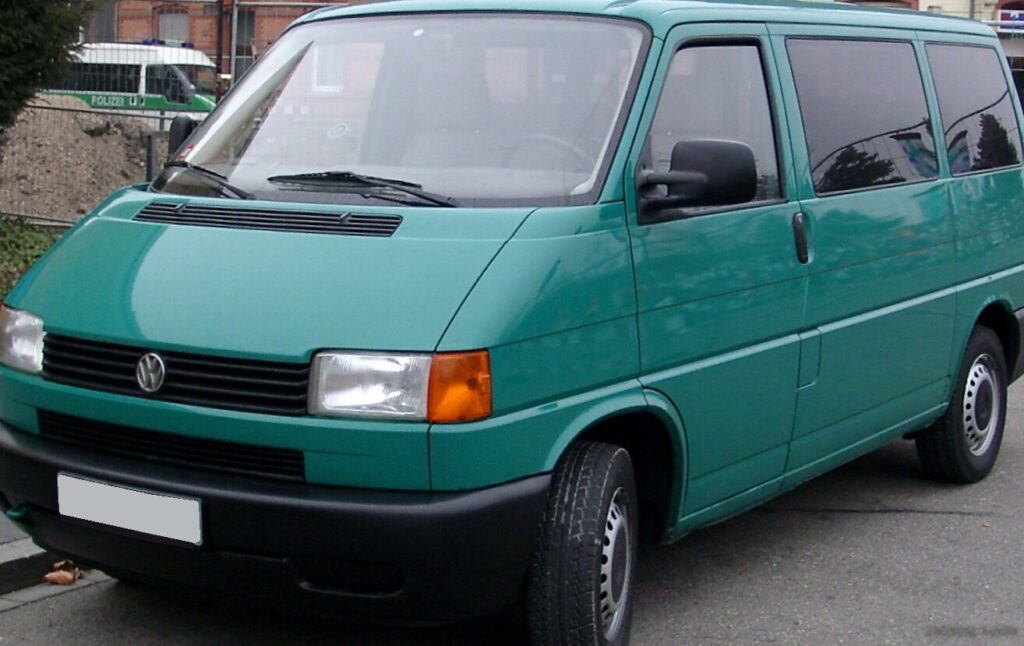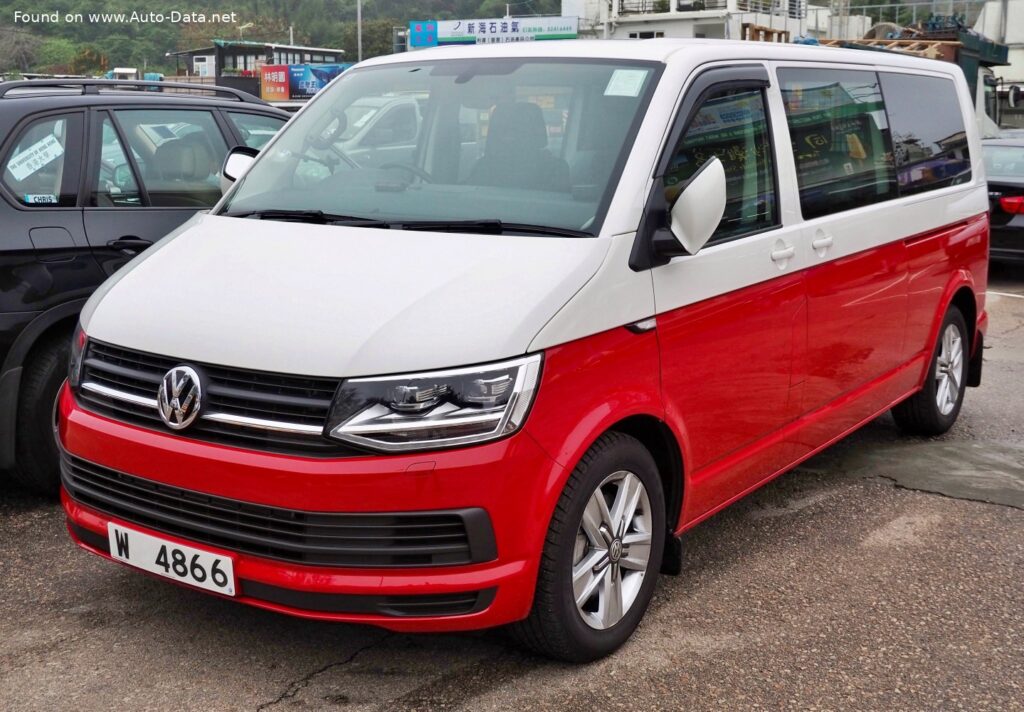
The Volkswagen Transporter (T6) Kombi represents the sixth generation of Volkswagen’s iconic light commercial vehicle (LCV) range, a lineage stretching back to the original Type 2 “Bus” in 1950. Produced from 2015 to 2019, the T6 generation continued the tradition of offering a highly versatile platform, catering to a broad spectrum of needs from commercial cargo hauling to passenger transport. This particular variant, the 2.0 TDI (102 Hp) L1H2, highlights the Transporter’s dedication to efficiency, robust utility, and adaptability within its primary markets, predominantly Europe and other international territories where such a vehicle is a cornerstone of business and family life. While this specific model is not commonly available in the United States, its design philosophy and engineering principles resonate with Volkswagen’s global reputation for quality and practicality.
Volkswagen Transporter (T6) Kombi: A European Workhorse
The T6 Kombi bridges the gap between a pure cargo van and a dedicated passenger minivan, offering flexible seating configurations for anywhere from 4 to 9 occupants, alongside substantial cargo capacity. The “L1H2” designation signifies a standard wheelbase (L1) combined with a high roof (H2), providing enhanced internal volume for both passengers and goods. Equipped with Volkswagen’s proven 2.0-liter TDI (Turbocharged Direct Injection) diesel engine, this model emphasizes fuel economy and dependable torque delivery over outright speed, making it an ideal choice for businesses and individuals requiring a reliable and cost-effective work or family vehicle.
Engine & Performance: The 2.0 TDI (102 Hp) L1H2 Powertrain
At the heart of the Volkswagen Transporter (T6) Kombi 2.0 TDI (102 Hp) L1H2 lies a 1,968 cubic inch (2.0-liter) inline-four turbocharged diesel engine, specifically the EA288 / CXGB code. This powerplant is engineered for durability and efficiency, delivering 102 horsepower (Hp) at a usable range of 3000 to 3750 revolutions per minute (rpm). Crucially for a commercial vehicle, the engine produces a healthy 184.39 pound-feet (lb.-ft.) of torque, available across a broad and accessible band from 1500 to 2750 rpm. This low-end torque is vital for hauling heavy loads, navigating urban environments, and ensuring confident acceleration even when fully laden.
The engine’s architecture features a front, transverse layout, driving the front wheels through a 5-speed manual transmission. This setup prioritizes fuel efficiency and straightforward maintenance. The diesel common rail fuel injection system, combined with a turbocharger and intercooler, ensures optimal combustion and power delivery, while adhering to the stringent Euro 6 emission standards. Further enhancing its eco-credentials, the T6 Kombi includes a Start & Stop System to reduce fuel consumption in stop-and-go traffic and a particulate filter to minimize emissions.
Performance figures reflect the vehicle’s utility-focused design. Acceleration from 0 to 60 mph is achieved in an estimated 15.7 seconds, with a top speed of 94.45 mph. While not designed for high-speed thrills, these figures are entirely adequate for its intended purpose. Fuel economy is a strong suit, with combined (NEDC) figures ranging from 33.6 to 41.3 US miles per gallon (mpg), making it a remarkably economical choice for businesses and long-distance travel. The 18.49 US gallon fuel tank, complemented by a 3.43 US gallon AdBlue tank, provides an excellent cruising range between fill-ups.
Design & Features: Practicality Meets Modernity
The Volkswagen Transporter (T6) Kombi 2.0 TDI (102 Hp) L1H2 embodies a design philosophy centered on functionality, robustness, and modern aesthetics. Its van body type, with 4-5 doors, offers excellent accessibility to both the cabin and the cargo area. The “L1H2” designation is particularly significant, indicating a standard length (193.07 inches) but a high roof (85.71 inches), which dramatically increases internal volume for cargo or comfortable headroom for passengers. The overall width is 74.96 inches (90.43 inches including mirrors), providing a substantial footprint for stability and interior space.
Inside, the Kombi’s flexibility shines with seating for 4 to 9 occupants, allowing it to easily switch roles from a crew van to a family transporter. The interior is designed to be hard-wearing and practical, with durable materials capable of standing up to the demands of daily commercial use. Despite its utilitarian nature, the T6 generation introduced refined touches and improved ergonomics compared to its predecessors, offering a more car-like driving experience and enhanced comfort for occupants.
Key features include a robust suspension system, with independent McPherson struts at the front and an independent coil spring wishbone setup at the rear, both equipped with anti-roll bars for improved handling and load stability. Braking is handled by ventilated discs both front (12.13 x 1.16 inches) and rear (11.57 x 0.87 inches), complemented by an Anti-lock Braking System (ABS) for enhanced safety. The hydraulic power steering system provides precise control, while the minimum turning circle of 39.04 feet aids maneuverability in tight urban spaces. Standard tire sizes typically range from 205/65 R16 to 215/65 R16, mounted on 6.5J x 16 inch wheel rims, balancing load capacity with ride comfort. The impressive maximum trunk space of 236.61 cubic feet underscores its utility as a serious cargo hauler, while a maximum roof load of 220.46 lbs. and a permitted trailer load with brakes of 4850.17 lbs. further expand its capabilities.
Technical Specifications
| Category | Specification |
| General Information | |
| Brand | Volkswagen |
| Model | Transporter |
| Generation | Transporter (T6) Kombi |
| Type (Engine) | 2.0 TDI (102 Hp) L1H2 |
| Production Years | 2015 – 2019 |
| Body Type | Van |
| Seats | 4-9 |
| Doors | 4-5 |
| Performance Specifications | |
| Fuel Consumption (Urban) | 26.7 – 34.6 US mpg |
| Fuel Consumption (Extra Urban) | 37.3 – 46.1 US mpg |
| Fuel Consumption (Combined) | 33.6 – 41.3 US mpg |
| CO2 Emissions (NEDC) | 149-184 g/km |
| Fuel Type | Diesel |
| Acceleration 0-60 mph | 15.7 seconds |
| Maximum Speed | 94.45 mph |
| Emission Standard | Euro 6 |
| Weight-to-Power Ratio | 59.2 Hp/tonne |
| Engine Specifications | |
| Power | 102 Hp @ 3000-3750 rpm |
| Torque | 184.39 lb.-ft. @ 1500-2750 rpm |
| Engine Layout | Front, Transverse |
| Engine Model/Code | EA288 / CXGB |
| Engine Displacement | 120.09 cu. in. (2.0 L) |
| Number of Cylinders | 4 Inline |
| Cylinder Bore | 3.19 inches |
| Piston Stroke | 3.76 inches |
| Compression Ratio | 15.5:1 |
| Valves per Cylinder | 4 |
| Fuel Injection System | Diesel Commonrail |
| Engine Aspiration | Turbocharger, Intercooler |
| Valvetrain | DOHC |
| Engine Oil Capacity | 7.82 US quarts |
| Engine Systems | Start & Stop System, Particulate filter |
| Space, Volume and Weights | |
| Kerb Weight | 3796.36 – 4572.39 lbs. |
| Max. Weight | 5732.02 – 7054.79 lbs. |
| Max Load | 1935.66 – 2482.41 lbs. |
| Trunk (Boot) Space – maximum | 236.61 cu. ft. |
| Fuel Tank Capacity | 18.49 US gallons |
| AdBlue Tank | 3.43 US gallons |
| Max. Roof Load | 220.46 lbs. |
| Permitted Trailer Load (with brakes) | 4850.17 lbs. |
| Permitted Trailer Load (without brakes) | 1653.47 lbs. |
| Permitted Towbar Download | 220.46 lbs. |
| Dimensions | |
| Length | 193.07 inches |
| Width | 74.96 inches |
| Width (including mirrors) | 90.43 inches |
| Height | 85.71 inches |
| Wheelbase | 118.11 inches |
| Front Overhang | 35.75 inches |
| Rear Overhang | 39.09 inches |
| Ride Height (Ground Clearance) | 7.91 inches |
| Minimum Turning Circle | 39.04 feet |
| Approach Angle | 21.2° |
| Departure Angle | 16.2° |
| Ramp-over (Brakeover) Angle | 13.7° |
| Drivetrain, Brakes and Suspension | |
| Drivetrain Architecture | Front-wheel drive ICE |
| Drive Wheel | Front-wheel drive |
| Number of Gears & Gearbox Type | 5 gears, manual transmission |
| Front Suspension | Independent, McPherson with coil spring and anti-roll bar |
| Rear Suspension | Independent coil spring, Wishbone, Transverse stabilizer |
| Front Brakes | Ventilated discs, 12.13 x 1.16 inches |
| Rear Brakes | Ventilated discs, 11.57 x 0.87 inches |
| Assisting Systems | ABS (Anti-lock braking system) |
| Steering Type | Steering rack and pinion |
| Power Steering | Hydraulic Steering |
| Tire Size | 205/65 R16; 215/65 R16 |
| Wheel Rims Size | 6.5J x 16 |
The Volkswagen Transporter series holds an almost mythical status in automotive history, evolving from the beloved “hippie bus” to a sophisticated modern commercial vehicle. The T6 generation, including the Kombi 2.0 TDI (102 Hp) L1H2, successfully built upon this rich heritage, maintaining its reputation as a benchmark for versatility, reliability, and residual value in its class. In its primary markets, particularly across Europe, the Transporter is more than just a vehicle; it’s an institution, a symbol of German engineering prowess, and a ubiquitous sight on roads, construction sites, and family vacations alike.
The T6 Kombi’s impact stems from its ability to perfectly balance robust utility with refined road manners. Unlike many of its competitors, the Transporter has consistently offered a driving experience that feels more akin to a passenger car than a traditional van, a trait highly valued by operators who spend long hours behind the wheel. The 2.0 TDI (102 Hp) variant, while not the most powerful, was a popular choice for its exceptional fuel efficiency and strong low-end torque, proving to be a highly cost-effective solution for businesses operating large fleets or individuals seeking economical long-term ownership. Its Euro 6 compliance also ensured its relevance in increasingly environmentally conscious urban zones.
In its competitive landscape, the Volkswagen Transporter (T6) faced formidable rivals such as the Ford Transit Custom, Mercedes-Benz Vito, Renault Trafic, and Opel Vivaro (Vauxhall Vivaro in the UK). What allowed the Transporter to consistently stand out was its premium positioning, superior build quality, and the breadth of its variant offerings, from pure panel vans to luxurious Caravelle and California camper models. The Kombi, in particular, offered a practical middle ground, appealing to tradespeople needing to carry both crew and equipment, or larger families requiring flexible seating and cargo space.
The T6 generation further cemented the Transporter’s status as a leader in the light commercial vehicle segment. Its robust chassis, dependable powertrain, and enduring design ensured strong demand throughout its production run and a healthy used vehicle market. The L1H2 configuration, with its ample interior height and manageable length, became a preferred choice for many applications, from mobile workshops to shuttle services. The legacy of the Transporter is one of continuous evolution, adapting to modern demands while retaining the core values of practicality, reliability, and a distinctive character that has captivated generations of owners and operators worldwide.