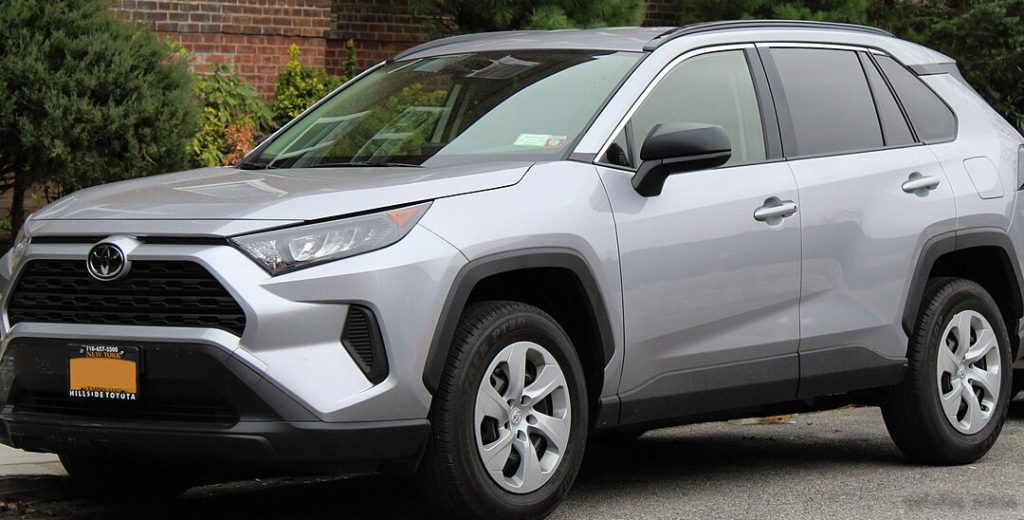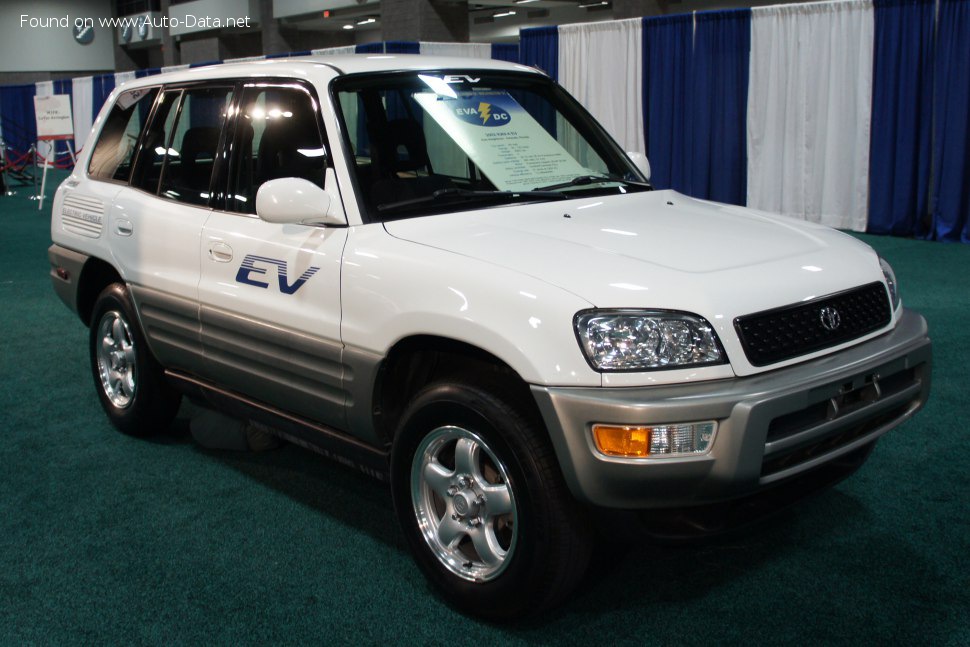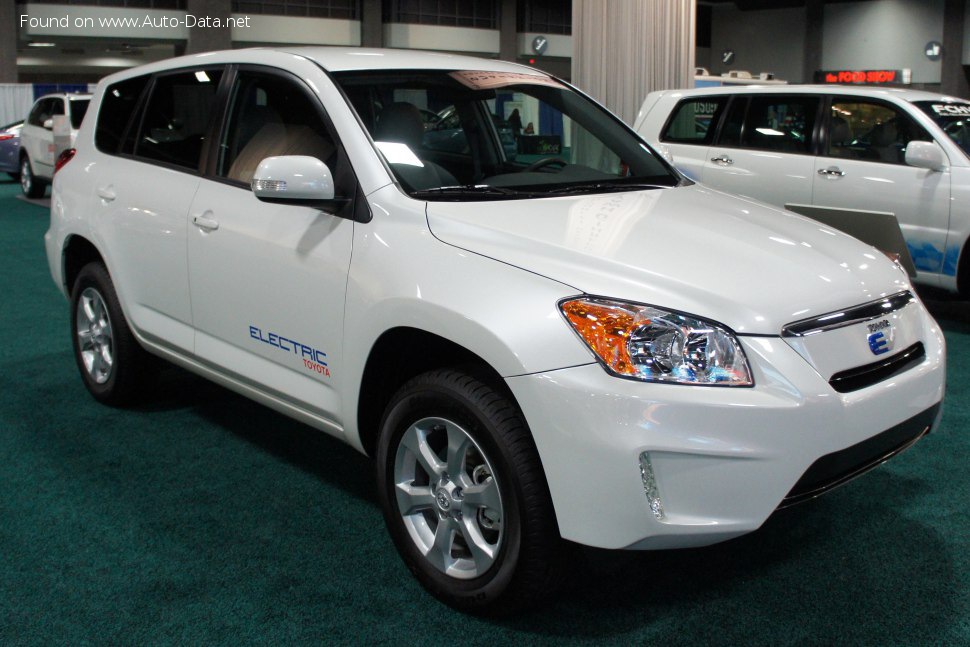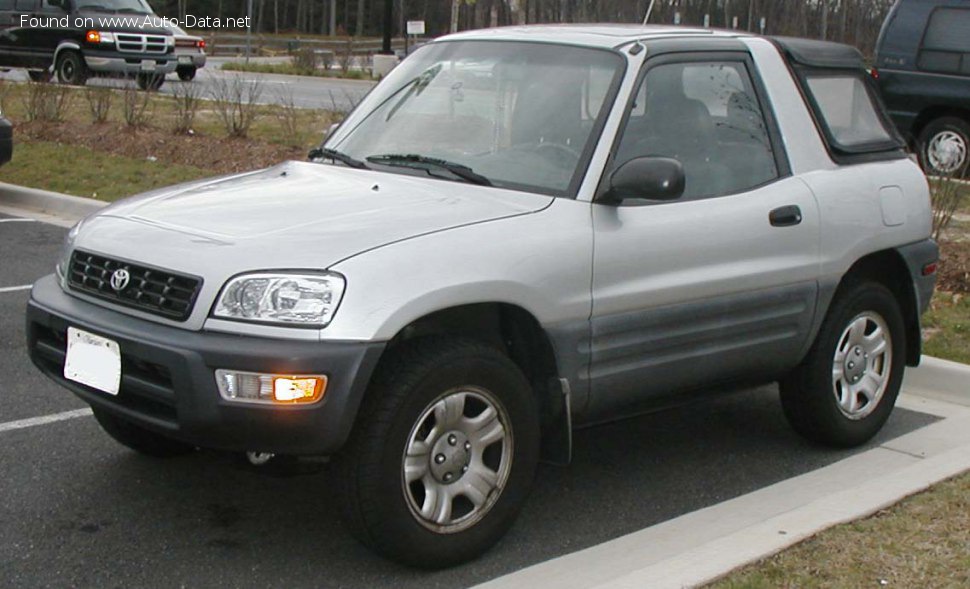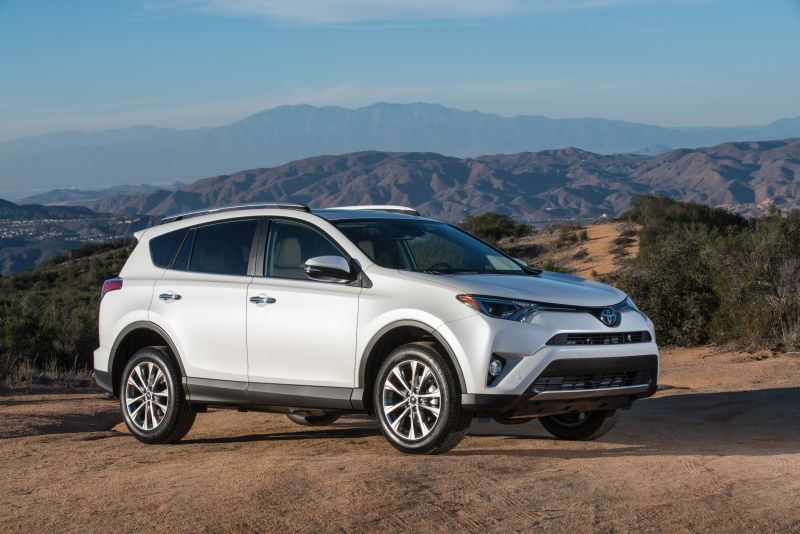
The Toyota RAV4 IV (facelift 2015) 2.5 (197 Hp) Hybrid AWD-i e-CVT represents a significant evolution in the compact SUV market, marking Toyota’s commitment to hybrid technology in one of its most popular global models. Introduced as part of the fourth-generation RAV4’s mid-cycle refresh in 2015, this specific variant brought a compelling blend of fuel efficiency, all-wheel-drive capability, and practical SUV utility to consumers. Positioned as a family-friendly and eco-conscious option, it carved out a substantial niche in the highly competitive compact crossover segment, particularly in North America and Europe, where demand for versatile and efficient vehicles was rapidly growing. This model was produced from 2015 to 2018, bridging the gap between the conventional gasoline-powered RAV4 and the subsequent fifth-generation’s even broader adoption of electrification.
Toyota RAV4 IV Hybrid: A Detailed Overview
The RAV4, originally introduced in 1994, pioneered the compact SUV segment. The fourth generation, launched in 2012, further refined the formula, and the 2015 facelift introduced the hybrid powertrain to the lineup. This hybrid variant was particularly important as it broadened the RAV4’s appeal to environmentally conscious buyers without sacrificing the practicality and capability expected of an SUV. It served as a crucial stepping stone in Toyota’s broader strategy to electrify its vehicle range.
Engine & Performance
At the heart of the Toyota RAV4 IV (facelift 2015) 2.5 (197 Hp) Hybrid AWD-i e-CVT lies Toyota’s renowned Hybrid Synergy Drive system, expertly adapted for SUV application. This Full Hybrid Electric Vehicle (FHEV) architecture combines a 2.5-liter naturally aspirated inline four-cylinder gasoline engine (code 2AR-FXE) with two electric motors, delivering a potent and efficient powertrain. The internal combustion engine, operating on an Atkinson cycle for enhanced thermal efficiency, produces 155 horsepower at 5700 rpm and 154.89 lb.-ft. of torque between 4200 and 4400 rpm. It features DOHC (Dual Overhead Camshaft) with Dual VVT-i (Variable Valve Timing with intelligence) to optimize valve timing across various engine speeds, balancing power and fuel economy.
Complementing the gasoline engine are two synchronous electric motors. The primary electric motor, integrated into the e-CVT transmission and driving the front wheels, generates 143 horsepower and a substantial 199.14 lb.-ft. of torque. A second, independent electric motor is strategically placed on the rear axle, providing 68 horsepower and 102.52 lb.-ft. of torque. This innovative setup forms the “AWD-i” (All-Wheel Drive with intelligence) system, eliminating the need for a mechanical driveshaft to the rear wheels. Instead, the rear wheels are powered electrically, allowing for seamless and intelligent torque distribution, enhancing traction and stability without the added weight and complexity of a traditional AWD system.
The combined system output for this RAV4 Hybrid is an impressive 197 horsepower, making it the most powerful variant in the fourth-generation RAV4 lineup. This power is managed by an electronic continuously variable transmission (e-CVT), which ensures smooth and responsive acceleration while optimizing fuel efficiency. Performance figures are competitive for the segment, with the RAV4 Hybrid accelerating from 0 to 60 mph in a brisk 7.9 seconds and reaching a top speed of 111.85 mph (180 km/h). Fuel economy is a standout feature, with a combined rating of 47 US mpg (5 liters per 100 km). This exceptional efficiency, especially for an all-wheel-drive SUV, was a major selling point. Urban driving yields 46.1 US mpg, while extra-urban driving achieves 48 US mpg, demonstrating the hybrid system’s effectiveness in various driving conditions. CO2 emissions are kept low at 117 g/km, meeting stringent Euro 6 W emission standards. The nickel-metal hydride (NiMH) battery, with a gross capacity of 1.6 kWh and a voltage of 244.8 V, is compactly located under the rear seats, maintaining cargo space. While it offers a modest all-electric range of approximately 0.62 miles (1 km), its primary role is to assist the gasoline engine, recover braking energy, and enable electric-only propulsion at low speeds, significantly contributing to the vehicle’s overall efficiency.
Design & Features
The Toyota RAV4 IV (facelift 2015) retained the robust and practical SUV body type that defined the RAV4 lineage, while the facelift introduced a refreshed exterior design. Updates included a more aggressive front fascia with redesigned headlights, a larger grille, and updated taillights, giving it a sharper and more contemporary appearance. Its five-door, five-seat configuration provides ample space for passengers and cargo, making it an ideal choice for families and active individuals.
Measuring 181.3 inches (4605 mm) in length, 72.64 inches (1845 mm) in width, and 65.94 inches (1675 mm) in height, the RAV4 Hybrid offered a commanding presence on the road. The 104.72-inch (2660 mm) wheelbase contributed to a stable ride and generous interior volume. With a ground clearance of 6.97 inches (177 mm), it was capable of handling light off-road excursions and challenging weather conditions.
Inside, the RAV4 Hybrid featured a well-appointed cabin focused on comfort and functionality. The facelift brought improved materials, updated trim, and enhanced sound insulation, contributing to a more refined driving experience. Key features for this era included a user-friendly infotainment system, available navigation, and a suite of safety technologies. Standard safety equipment typically included ABS (Anti-lock Braking System), multiple airbags, and stability control systems. Higher trims often offered advanced driver-assistance systems such as a pre-collision system, lane departure alert, and adaptive cruise control, reflecting Toyota’s commitment to safety in modern vehicles. Practicality was a cornerstone of the RAV4’s design. The trunk (boot) space was generous, offering a minimum of 17.69 cu. ft. (501 liters) with the rear seats up, expanding to an impressive 57.67 cu. ft. (1633 liters) when the rear seats were folded down, accommodating a wide range of cargo needs. The vehicle’s kerb weight ranged from 3725.81 to 3913.21 lbs. (1690-1775 kg), with a maximum permissible weight of 5004.49 lbs. (2270 kg). It also boasted a respectable towing capacity, capable of pulling a trailer with brakes up to 3637.63 lbs. (1650 kg), further enhancing its utility. The steering system, a rack and pinion type with electric power steering, provided precise and effortless maneuverability, complemented by a tight turning circle of 34.78 to 36.75 feet (10.6-11.2 meters).
Technical Specifications
| Category | Specification |
| General Information | |
| Brand | Toyota |
| Model | RAV4 |
| Generation | RAV4 IV (facelift 2015) |
| Type (Engine) | 2.5 (197 Hp) Hybrid AWD-i e-CVT |
| Start of Production | 2015 year |
| End of Production | 2018 year |
| Powertrain Architecture | FHEV (Full Hybrid Electric Vehicle) |
| Body Type | SUV |
| Seats | 5 |
| Doors | 5 |
| Performance Specs | |
| Fuel Consumption (Economy) – Urban | 5.1 l/100 km / 46.1 US mpg |
| Fuel Consumption (Economy) – Extra Urban | 4.9 l/100 km / 48 US mpg |
| Fuel Consumption (Economy) – Combined | 5 l/100 km / 47 US mpg |
| CO2 Emissions | 117 g/km |
| Fuel Type | Petrol (Gasoline) |
| Acceleration 0 – 60 mph | 7.9 sec |
| Acceleration 0 – 100 km/h | 8.3 sec |
| Maximum Speed | 180 km/h / 111.85 mph |
| Emission Standard | Euro 6 W |
| Weight-to-Power Ratio | 8.6 kg/Hp / 116.6 Hp/tonne |
| Weight-to-Torque Ratio | 8 kg/Nm / 124.3 Nm/tonne |
| Electric Cars and Hybrids Specs | |
| Gross Battery Capacity | 1.6 kWh |
| Battery Voltage | 244.8 V |
| Battery Technology | Nickel-metal hydride (NiMH) |
| Battery Location | Under the rear seats |
| All-Electric Range | 1 km / 0.62 mi |
| Electric Motor 1 Power | 143 Hp |
| Electric Motor 1 Torque | 270 Nm / 199.14 lb.-ft. |
| Electric Motor 1 Location | Integrated into the transmission |
| Electric Motor 1 Type | Synchronous |
| Electric Motor 2 Power | 68 Hp |
| Electric Motor 2 Torque | 139 Nm / 102.52 lb.-ft. |
| Electric Motor 2 Location | Rear axle, Transverse |
| Electric Motor 2 Type | Synchronous |
| System Power | 197 Hp |
| Internal Combustion Engine Specs | |
| Power | 155 Hp @ 5700 rpm. |
| Power per Liter | 62.1 Hp/l |
| Torque | 210 Nm @ 4200-4400 rpm. / 154.89 lb.-ft. @ 4200-4400 rpm. |
| Engine Layout | Front, Transverse |
| Engine Model/Code | 2AR-FXE |
| Engine Displacement | 2494 cm3 / 2.5 l / 152.19 cu. in. |
| Number of Cylinders | 4 |
| Engine Configuration | Inline |
| Cylinder Bore | 90 mm / 3.54 in. |
| Piston Stroke | 98 mm / 3.86 in. |
| Compression Ratio | 12.5:1 |
| Number of Valves per Cylinder | 4 |
| Fuel Injection System | Multi-port manifold injection |
| Engine Aspiration | Naturally aspirated engine |
| Valvetrain | DOHC. Dual VVT-i |
| Engine Oil Capacity | 4.4 l / 4.65 US qt |
| Coolant Capacity | 7.5 l / 7.93 US qt |
| Space, Volume and Weights | |
| Kerb Weight | 1690-1775 kg / 3725.81 – 3913.21 lbs. |
| Max. Weight | 2270 kg / 5004.49 lbs. |
| Max Load | 495-580 kg / 1091.29 – 1278.68 lbs. |
| Trunk (Boot) Space – Minimum | 501 l / 17.69 cu. ft. |
| Trunk (Boot) Space – Maximum | 1633 l / 57.67 cu. ft. |
| Fuel Tank Capacity | 56 l / 14.79 US gal |
| Permitted Trailer Load with Brakes (12%) | 1650 kg / 3637.63 lbs. |
| Permitted Trailer Load without Brakes | 750 kg / 1653.47 lbs. |
| Dimensions | |
| Length | 4605 mm / 181.3 in. |
| Width | 1845 mm / 72.64 in. |
| Height | 1675 mm / 65.94 in. |
| Wheelbase | 2660 mm / 104.72 in. |
| Front Track | 1560-1570 mm / 61.42 – 61.81 in. |
| Rear (Back) Track | 1560-1570 mm / 61.42 – 61.81 in. |
| Ride Height (Ground Clearance) | 177 mm / 6.97 in. |
| Minimum Turning Circle (Turning Diameter) | 10.6-11.2 m / 34.78 – 36.75 ft. |
| Approach Angle | 19° |
| Departure Angle | 22° |
| Drivetrain, Brakes and Suspension Specs | |
| Drivetrain Architecture | An Internal combustion engine (ICE) drives the front wheels, one electric motor drives the front wheels, one electric motor drives the rear wheels. There is an ability for running in full electric or mixed mode. |
| Drive Wheel | All wheel drive (4×4) |
| Number of Gears and Type of Gearbox | Automatic transmission e-CVT |
| Front Suspension | Independent type McPherson |
| Rear Suspension | Independent on trapezoidal lever |
| Front Brakes | Ventilated discs |
| Rear Brakes | Disc |
| Assisting Systems | ABS (Anti-lock braking system) |
| Steering Type | Steering rack and pinion |
| Power Steering | Electric Steering |
| Tires Size | 225/65 R17 H |
| Wheel Rims Size | 6.5J 17; 7J 17 |
Legacy and Market Impact
The Toyota RAV4 IV (facelift 2015) 2.5 (197 Hp) Hybrid AWD-i e-CVT played a pivotal role in solidifying the RAV4’s position as a leader in the compact SUV segment, particularly in the burgeoning hybrid market. By offering a compelling combination of power, all-weather capability, and segment-leading fuel economy, it successfully appealed to a broad demographic of buyers seeking both practicality and environmental consciousness. This model’s introduction was significant as it brought hybrid technology, previously associated primarily with passenger cars like the Prius, into the mainstream SUV segment, making it accessible to a wider audience.
In the North American market, the RAV4 Hybrid competed fiercely with established gasoline-powered rivals such as the Honda CR-V, Nissan Rogue, and Ford Escape. Its hybrid powertrain gave it a distinct advantage in fuel efficiency, a factor that became increasingly important to consumers. While other manufacturers were beginning to explore hybrid options, Toyota’s long-standing expertise in hybrid technology provided the RAV4 Hybrid with a reputation for reliability and efficiency that was hard to match. The AWD-i system, with its electrically powered rear axle, also offered a sophisticated and efficient alternative to conventional mechanical all-wheel-drive systems, further enhancing its appeal in regions with diverse climates.
Globally, the RAV4 Hybrid reinforced Toyota’s leadership in electrification and demonstrated the versatility of its Hybrid Synergy Drive system across different vehicle platforms. It contributed to the broader market trend towards more fuel-efficient and environmentally friendly SUVs. The success of this fourth-generation hybrid variant laid crucial groundwork for the even more ambitious electrification strategy seen in the subsequent fifth-generation RAV4, which would go on to offer an even wider range of hybrid and plug-in hybrid options.
The legacy of the 2015-2018 RAV4 Hybrid is one of innovation and influence. It proved that hybrid technology could be seamlessly integrated into a popular SUV without compromising performance, utility, or affordability. Its strong sales performance and positive critical reception underscored the growing consumer appetite for electrified vehicles, positioning the RAV4 as a benchmark for efficiency and reliability in the compact crossover class. Its impact is still felt today, as nearly every major competitor now offers some form of hybrid or electrified SUV, a testament to Toyota’s foresight and pioneering efforts with models like the RAV4 IV Hybrid.